Monstera Peru Slow Growth: Causes and Practical Fixes
Quick answer
A Monstera Peru may add leaves slowly when light is weak, temperatures have dipped, or its root zone stays wet and short of air. First, compare the newest leaf and node with the plant's recent pattern, then check light and mix moisture. If it is dim, move it gradually into brighter indirect light; do not fertilize or repot before checking the roots.
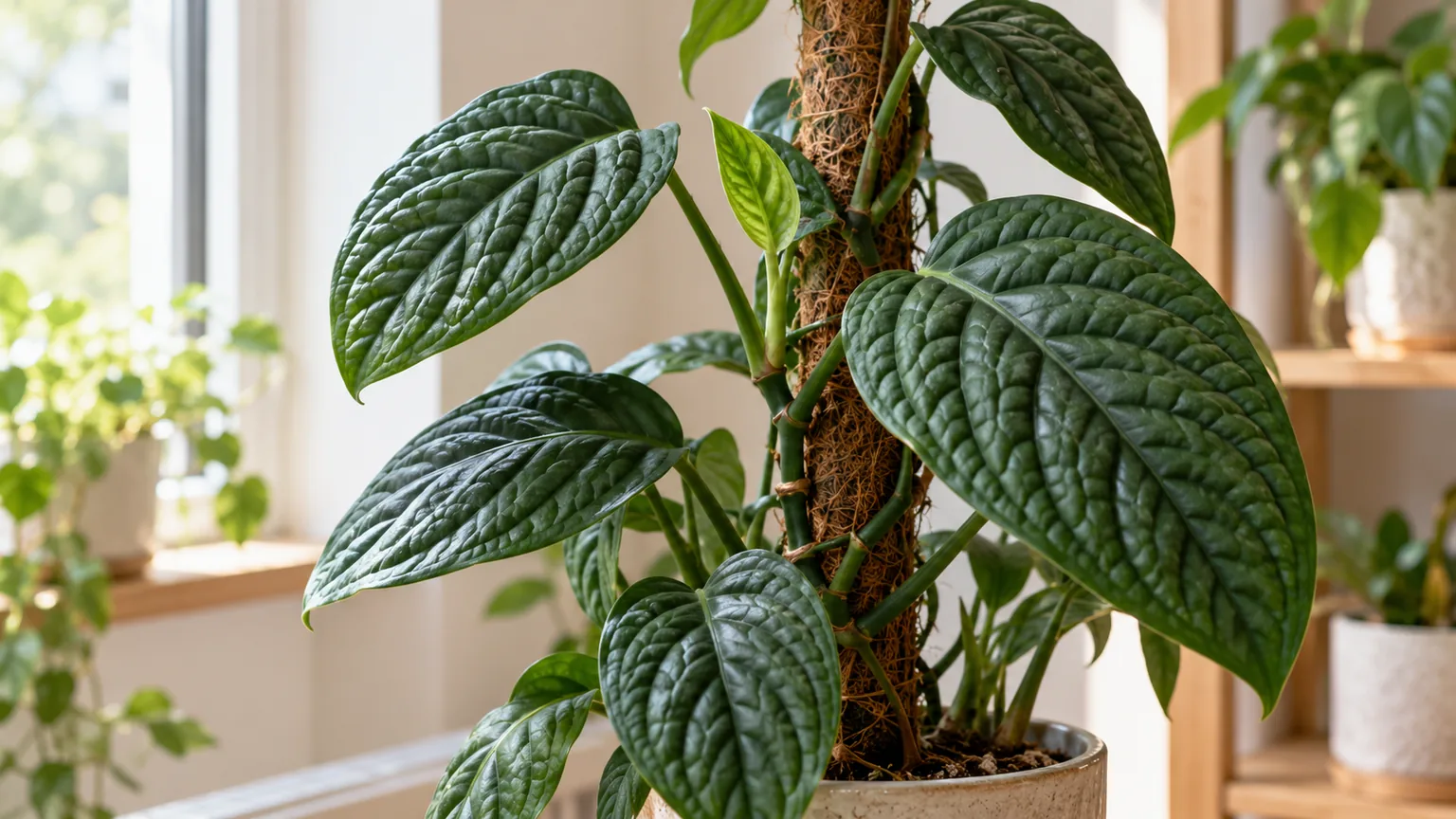
Slow Growth on Monstera Peru: Causes, Checks & Fixes
This guide covers slow growth on Monstera Peru. See also the general Slow Growth guide, watering, and light pages for this plant.
Slow Growth on Monstera Peru: Causes, Checks & Fixes
Slow growth is frustrating because a Monstera Peru can look perfectly healthy while adding no new leaf for weeks. A pause does not automatically mean the plant is failing. This is a compact climbing aroid, and its pace changes with the amount of useful light reaching the vine, the warmth of the room, and how quickly its potting mix dries. The best clue is a change from this plant’s own pattern, not a comparison with a faster-growing Monstera in a different home.
The plant sold as Monstera Peru is also labeled Monstera karstenianum. Kew’s Plants of the World Online lists that name as a synonym of Philodendron opacum (Kew synonym record). World Flora Online records the same synonymy (World Flora Online taxon record). The trade name remains useful here because it describes the familiar thick, strongly puckered leaves. This guide uses Monstera Peru for that recognizable houseplant form.
The general slow-growth guide explains shared causes. On Monstera Peru, the useful clues are more specific: whether the shoot is still extending at a node, whether new leaves are shrinking, whether the climbing stem is reaching toward a window, and whether the mix around its roots is staying wet between waterings.
What slow growth looks like on Monstera Peru
Look at the vine from its growing tip back toward the last few leaves. A genuine slowdown may look like a shoot that has not extended for a long stretch during the brighter part of the year, a new leaf that takes much longer to unfurl than the previous one, or successive leaves becoming smaller while the stem remains firm. A single pause is less informative than a pattern across two or three nodes.
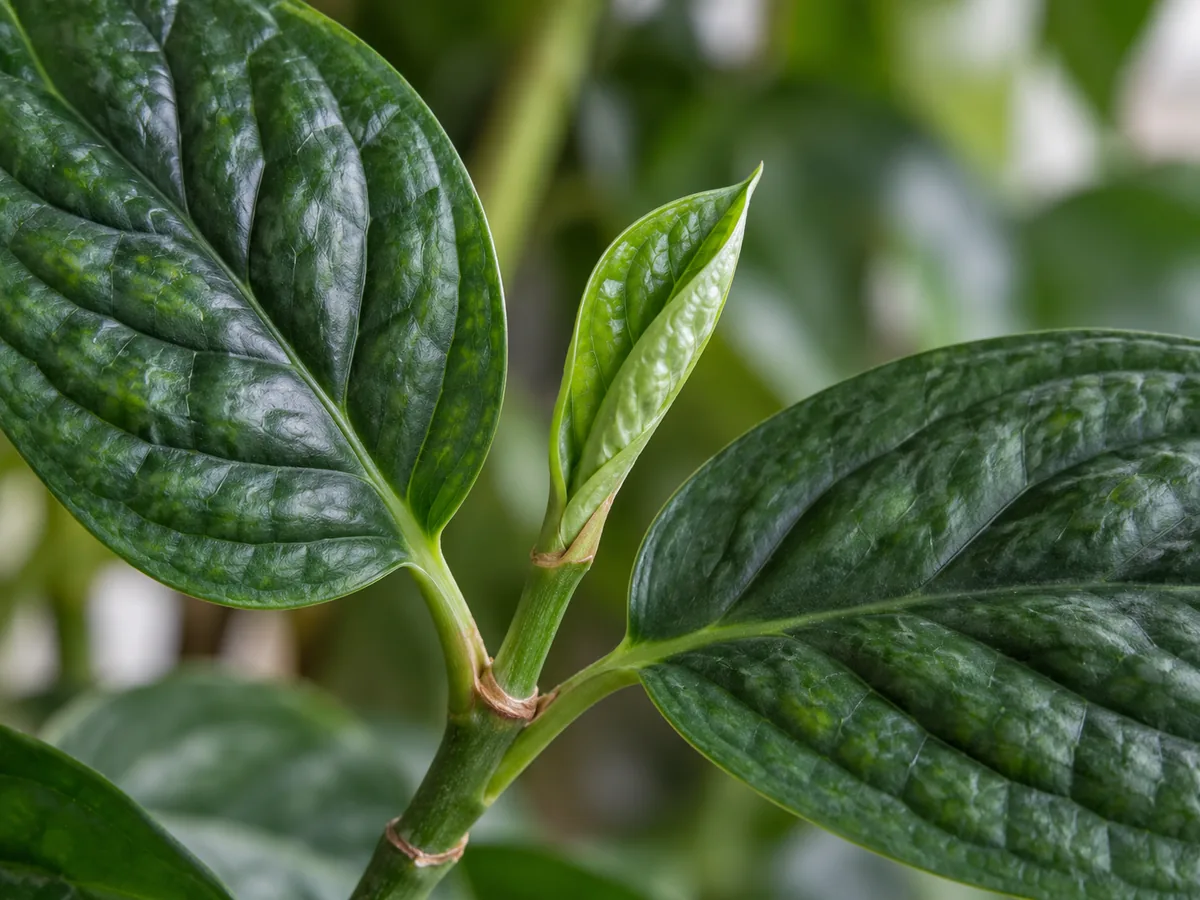
Compare the newest leaf and node with the last few leaves; one small leaf is a clue to investigate, not proof of a particular cause.
Do not use the absence of holes as a growth test. The thick, quilted surface is the feature owners buy this Peru form for; its leaves do not need to split for the plant to be growing well. Instead, watch whether a fresh leaf is opening from the active tip and whether the vine is lengthening. A new leaf that is smaller but healthy can reflect a recent move, lower light, or a young cutting establishing itself rather than a permanent decline.
Kew describes accepted Philodendron opacum as a climbing epiphyte, a growth habit that helps explain why the stem’s support and position matter indoors (Kew species account). A Peru trained up a stable board or pole can keep its leaves presented toward the light; an unsupported vine may wander along a shelf and shade its own growing tip. Support is not a growth treatment by itself, but the vine’s direction and exposure make it easier to inspect the next leaf and its node.
Read growth by Monstera Peru nodes, not leaf count alone
Find the newest leaf and the stem section just below it. The node is the point where a leaf attaches to the vine; a healthy active tip may show a small rolled leaf or a firm green point emerging near the next node. If that tip is intact and the leaves stay firm, a pause with no yellowing or soft tissue is often a reason to review conditions gradually rather than cut or unpot the plant.
Compare the newest two or three leaves with the older leaves below them. Similar-sized leaves with firm petioles and a stable stem suggest a slower rhythm more than a decline. A sharp reduction in size, long bare gaps between leaves, or a tip that stops while the vine stretches toward the window points more strongly to inadequate light. Marking the date when a leaf first appears in a simple phone note can help; memory tends to compress a slow month into “nothing has happened for ages.”
Separate a new leaf that is still opening from a shoot that has stopped. A folded leaf can take time to release, especially after a move or a change in humidity. Do not pull it open. Check again after several days, keep the plant away from drying heat vents, and avoid changing its position repeatedly. If the leaf remains stuck while its edges brown or the stem softens, look for a care problem rather than treating the delay as normal growth alone.
Why a climbing Monstera Peru slows indoors
Light reaches the vine unevenly
A bright room can still leave the plant in dim light if the pot sits far from a window, behind a curtain that blocks most daylight, or below a shelf. Monstera guidance from Penn State Extension recommends bright, indirect light rather than harsh direct sun (Penn State Monstera care). For Peru, notice the light at the leaves, not the brightness you perceive from across the room. If the newest leaves are smaller and the vine is leaning toward the window, weak light is a stronger explanation than a sudden need for fertilizer.
Check whether the growing tip has a clear view of the window. A support can hold the vine upright but can also turn leaves away from the light if ties are too tight or the pole is placed behind the plant. Rotate the pot a quarter-turn only when the plant is stable and the leaves are not being forced around; constant rotation makes it harder to tell whether the new position helped. The plant’s light guide gives the normal placement target, while not-enough-light on Monstera Peru covers the stronger clues such as long internodes and a vine that persistently reaches.
A wet root zone can pause the vine before leaves look sick
The top of a pot may seem dry while the lower mix remains heavy. If the pot still feels weighty several days after watering, drainage holes are blocked, or the mix has become dense, the roots may be short of air for too long. Clemson Extension explains that indoor watering needs vary with the plant, pot, mix, light, and growth stage, and warns that overwatering can deprive roots of oxygen (Clemson indoor-plant watering guidance). The water decision should follow the mix and the pot, not a weekday reminder.
For this climber, a sour smell, a persistently wet lower stem, or roots that are soft and dark are more concerning than a missing new leaf alone. If the mix dries at a reasonable pace and the roots and stem are firm, do not unpot simply because growth is slow. Follow the plant’s watering guide for the usual dry-down check; if it stays wet or the stem begins to soften, use the Peru overwatering guide or root-rot guide to decide whether inspection is warranted.
The climbing stem is shaded, unsupported, or crowded
Peru’s compact leaves can overlap around a support. If the newest tip sits behind older foliage or faces away from the window, the vine can receive less light than the lower leaves suggest. A tall pole with several tightly tied stems may also create a crowded center that is difficult to inspect. Trace the active stem with your eyes and check that its tip is visible, its petioles are not pinched by ties, and no neighboring plant is shading the newest leaf.
This plant’s climbing habit also makes a leaning or loose support worth checking. A stem that repeatedly slips down the pole may be harder to keep oriented toward light; a loose tie can be moved, but do not cinch the stem. If you want the vine to climb, choose one stable support and attach the stem loosely at a node. Read the plant’s repotting guide before changing the pot and support together; if the plant is healthy, a new pole is not an emergency cure for slow growth.
Seasonal light and room temperature change the pace
A Peru on a warm, bright summer windowsill may pause when days shorten and the room cools. The same pot then dries more slowly, so watering on the old summer rhythm can keep the root zone wet longer than intended. Check for a cold windowpane, an air-conditioner draft, or a heater that dries the growing tip. A seasonal pause with firm leaves and no worsening symptoms is different from a plant that loses leaves or develops soft stem tissue.
Do not force active growth with extra fertilizer during a dim, cool period. Wait for the room and daylight to improve, keep the pot away from cold drafts, and let the mix dry at its normal pace. A warm stable location is more useful than repeated moves between rooms. If conditions are suitable and active growth resumes, return to the usual feeding schedule rather than trying to “catch up” with concentrated fertilizer.
A dense mix or oversized pot can outlast the roots’ dry-down needs
A very large pot can hold more wet mix than a small Peru root system can use quickly. Fine, compacted media can have the same effect even when the pot has drainage holes. Penn State Extension’s Monstera guidance calls for well-draining potting media and amendments such as bark or perlite to improve drainage. For this plant, the practical sign is not the recipe alone: watch whether the mix remains heavy for many days and whether the bottom of the pot stays wet after the surface has dried.
Do not repot on the basis of slow growth alone. If the plant is firm and the mix dries between waterings, disturbing roots may add stress without correcting anything. If the soil has collapsed, drains poorly, or smells sour, compare it with the plant’s soil guide and inspect the root zone. A slightly root-bound plant can often remain in place while you correct light and watering; an unhealthy, persistently wet root zone is the reason to intervene sooner.
Recent change or an immature cutting can reset expectations
A recently purchased, shipped, repotted, or propagated Monstera Peru may spend time settling before it produces another leaf. A cutting also has fewer established roots and stored resources than a mature vine. Look for signs of adaptation: a firm node, roots continuing to develop, and no spreading leaf damage. Keep its location stable, protect it from extremes, and avoid treating every quiet week as evidence that the cutting needs food.
Repotting, pruning, or changing the support can temporarily alter where the plant directs its energy. If a mature vine was cut back, the next shoot may emerge from a node lower on the stem rather than from the former tip. Inspect the stem for a firm node before assuming the plant is dead. The pruning guide explains where healthy nodes matter when shaping this climbing plant; do not cut a sound stem just to provoke faster growth.
A first correction for slow growth
First, check the amount of light reaching the newest leaf. If the vine is in a dim corner, if the tip leans toward a window, or if its latest leaves are smaller with longer gaps between them, move the pot a little closer to bright filtered light. Make that one change and leave the plant there long enough to compare its next leaf. Avoid an abrupt move from deep shade to direct midday sun, which can scorch foliage and complicate the diagnosis.
If light is already strong and indirect, do not keep moving the pot. Check the mix instead: feel below the surface, lift the pot, and confirm that the drainage holes are open. Water only when the top 3–5 cm of mix have dried and the pot is noticeably lighter; then let excess water drain away. If the mix is still damp, wait rather than adding water on schedule. A wet, firm plant needs observation, not an extra drink.
If the plant has soft roots or a sour-smelling mix, root health becomes the priority. Slide the root ball out only when these signs justify the disturbance. Healthy roots are usually firm; remove only clearly mushy or hollow portions with clean snips, then use a pot with drainage and a loose, airy mix. If the roots are sound, return the plant to its pot and correct the dry-down, light, or temperature issue instead. Do not combine repotting, major pruning, stronger fertilizer, and a new location in one afternoon; you would lose the ability to see which change mattered.
Distinguish slow growth from lookalike problems
| What you notice | More likely explanation | Next check |
|---|---|---|
| A healthy tip pauses, but leaves stay firm and the mix dries normally | Seasonal slowdown or normal acclimation | Compare recent leaf dates and room light before changing care |
| Long spaces between leaves and a vine reaching toward the window | Light is too weak for compact growth | Check not-enough-light and improve filtered exposure |
| Stem is stretched and leaves sit far apart | Leggy growth from low light or lost support | Use the leggy-growth guide to choose between lighting and training fixes |
| Leaves yellow while the pot stays wet | Root-zone stress is more likely than a simple slow season | Compare yellow leaves and root-rot signs |
| Leaves droop, the pot is very light, and mix is dry | Underwatering may be limiting growth | Check the Peru underwatering guide before increasing the long-term schedule |
| New growth is distorted and you see fine webbing or moving specks | Inspect for pests rather than treating growth rate alone | Check the spider-mites guide and leaf undersides |
A small new leaf by itself does not identify a nutrient deficiency. If several leaves pale while the plant is actively growing, or if the plant has not been fed in a long time, review the fertilizer label and the care guide before feeding. Do not use fertilizer as a diagnostic test: salts can accumulate, and a weak root system will not become healthier because more nutrients were added.
When to escalate a root check
Unpotting is justified when the mix stays saturated despite a warm, bright location, the drainage holes are blocked or absent, the stem near the soil line becomes soft, or a sour smell persists. If you do inspect, look for roots that are brown-black, mushy, or whose outer layer slips off easily. A few older dark roots are not enough to diagnose rot; focus on whether a large portion of the root ball is soft and whether the stem is losing firmness.
If most roots remain firm, preserve them and address the growing conditions. If much of the root system has collapsed, remove only dead material and pot the surviving healthy section in a close-fitting container with open drainage. A viable vine cutting must include a node; a leaf without a node cannot reliably replace the whole plant. If the base and all nodes are soft or blackened, the plant may not be salvageable. Avoid promising recovery from a severe root loss, and do not keep a decayed stem in the same wet mix hoping it will restart.
How long recovery takes
Use the next leaf, not an exact number of days, as the main progress marker. Once light or dry-down improves, the plant still needs to produce and open a leaf; the response may take weeks and can extend through a seasonal shift. A quiet period after correction is not proof that the correction failed. Keep a simple record of the date, newest leaf, mix moisture, and location so you can evaluate the next growth point against the previous one.
A good response is a firm active tip, a leaf that opens without expanding damage, and normal drying between waterings. If a new leaf appears at a similar size and the node advances, keep the routine stable. If leaves continue shrinking, the vine stretches, or the pot remains wet, revisit the diagnosis rather than stacking more treatments. Old leaves will not become larger after light improves; judge the fix by the growth produced next.
Prevent another slow-growth stretch
Give the vine a stable spot with bright indirect light and enough clearance that the newest tip is not blocked by a shelf or another plant. Keep a climbing support secure but not wrapped tightly around the stem. Train the vine as it grows rather than repeatedly bending it into a new direction. Wipe dust gently from the puckered leaves when needed, because textured surfaces can hold debris and make small changes harder to see.
Use the pot as part of the diagnosis. A container with open drainage and a loose, chunky mix lets you judge moisture by feel and weight; a permanently heavy pot makes it harder to know when the roots are ready for water. Water thoroughly when the mix reaches its dry-down point, discard standing saucer water, and adjust the interval when light and temperature change. The Monstera Peru overview summarizes its routine, and the plant problems hub helps route a new symptom to the right guide.
Feed only when the vine is actively growing and the root zone is healthy, following the product label rather than increasing the dose to force a leaf. If you want more growth, first ask whether the plant has enough light, warmth, and healthy roots to use that feed. Fertilizer cannot create the energy the plant is not receiving from light, nor can it restore roots sitting in stagnant wet mix.
When to use this page vs other Monstera Peru guides
Use this page when the main change is that the vine is producing leaves more slowly or the newest leaves are getting smaller, while the plant remains mostly intact. If its growth is stretched toward a window, the more specific light and leggy-growth guides can help distinguish inadequate light from a support issue. If yellowing, drooping, wet mix, or root damage is the main concern, follow the matching watering or root guide first; the growth slowdown may be a secondary result. For a different care question, start from the Monstera Peru overview or the problem hub.
Related Monstera Peru guides
- Monstera Peru light guide: use it to set a stable bright-indirect position; this page explains how to read a stalled vine after checking that position.
- Monstera Peru watering guide: use it for the normal moisture and dry-down routine; use the overwatering and root-rot guides when the mix stays wet or the stem softens.
- Monstera Peru soil guide: use it to choose an airy mix and a suitable pot; this page covers how a slow dry-down can suppress the next leaf.
- Not enough light on Monstera Peru: use it when the vine leans, stretches, or makes smaller leaves; this guide compares that pattern with seasonal pauses and root-zone causes.
- Leggy growth on Monstera Peru: use it when the internodes are long and the stem is sparse; slow growth can occur without that elongated pattern.
- Root rot on Monstera Peru: use it for persistent wetness, soft roots, or a deteriorating base; do not unpot a firm plant only because it has paused.
Use the Plant Problem Diagnosis Tool to compare the plant’s visible symptoms and current care before changing several conditions at once.