Slow Growth on Passion Fruit: Sun, Cold & Root Checks
Quick answer
Slow growth on passion fruit (Passiflora edulis) is most often a cool-temperature pause, too little direct sun, or hungry roots in a poor or depleted mix — not a dying vine. Because this is a fast tropical climber that fruits only on new growth, a stall in shoot extension and tendril activity is the earliest warning. First step: move the container or confirm the planting spot receives full direct sun and daytime warmth, then check soil moisture and tendril tips before feeding or repotting.
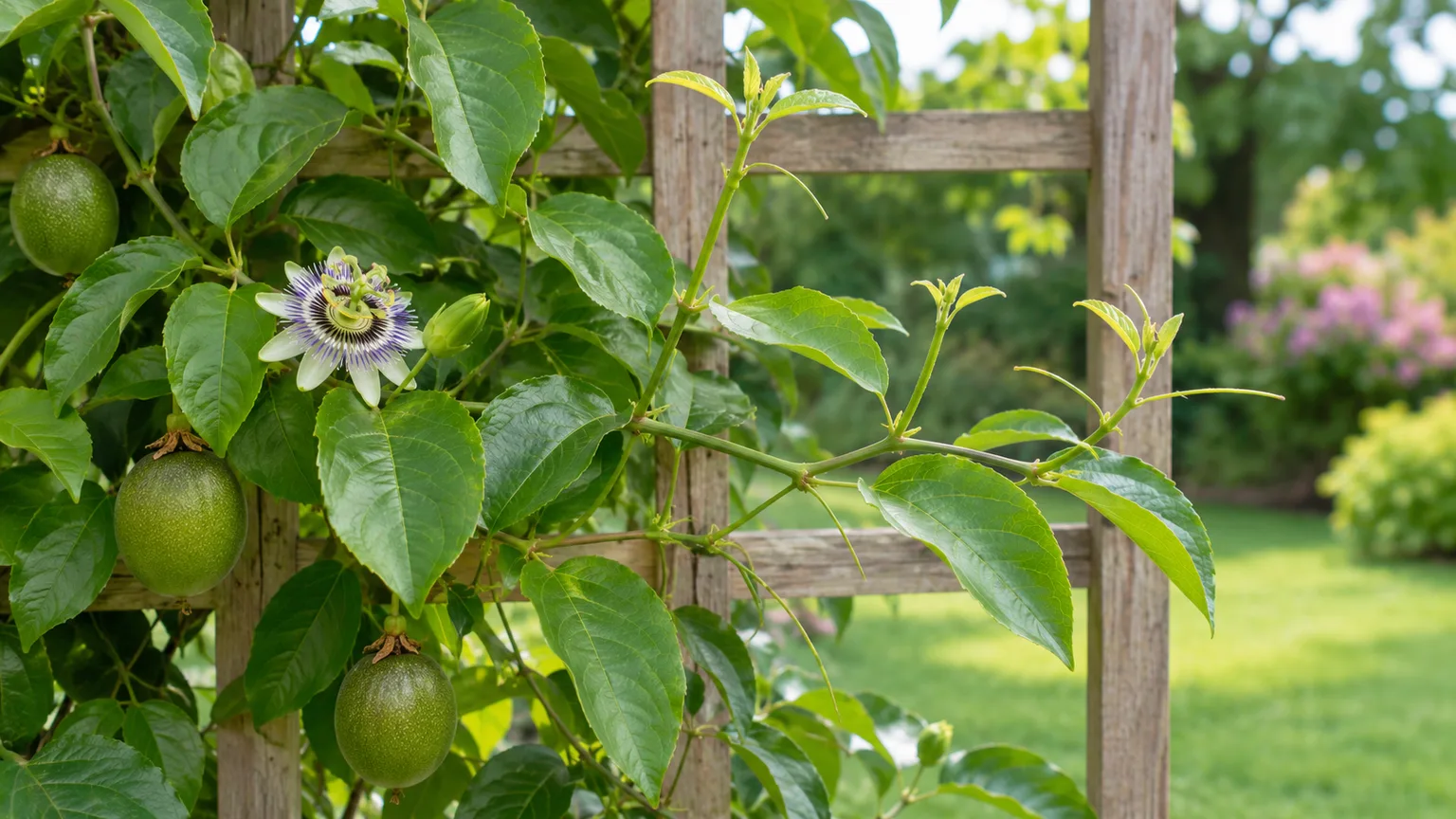
Slow Growth on Passion Fruit: Causes, Checks & Fixes
This guide covers slow growth on Passion Fruit. See also the general Slow Growth guide, watering, and light pages for this plant.
Slow Growth on Passion Fruit: Causes, Checks & Fixes
Quick answer
Slow growth on passion fruit (Passiflora edulis) almost always traces to environment before disease: too little direct sun, cool temperatures, hungry roots, soggy soil, or an aging vine. This species is a fast tropical and subtropical climber that can put on many metres of vine in a single warm season — so when shoot tips stop extending and tendrils stop grabbing, the vine is telling you an energy input is missing.
For how stalled vegetative momentum works across plants in general, see our slow growth hub. On passion fruit, the decisive clue is tendril behavior: actively growing tips reach, curl, and grip their trellis, while a stalled vine’s tips sit idle, small, or brown.
First step: move the container — or confirm the in-ground spot — into full direct sun today. Passion fruit needs full sun to produce its best blooms and fruit, roughly six or more hours of direct light on the leaves. Make that single change, wait two weeks, and judge only by new tip extension — do not repot, fertilize, or prune in the same week.
When to use this page vs other Passion Fruit guides
This guide covers a living vine that holds firm stems and leaves but stops extending — no new shoots, no tendril activity, no flower buds on fresh wood.
| Pattern on your vine | Most likely issue | Go here |
|---|---|---|
| Firm stems, green leaves, but no new shoot extension for weeks | Cool pause, low sun, hunger, or root restriction | This slow-growth guide |
| Stems tall and thin, stretching toward light with wide gaps between leaves | Shade-driven etiolation | Leggy Growth on Passion Fruit |
| Leaves yellowing, especially older foliage | Nitrogen or magnesium hunger, wet roots | Yellow Leaves on Passion Fruit |
| Soft stem base, sour soil, wilt that ignores watering | Root rot from waterlogging | Root Rot on Passion Fruit |
| Mix stays wet for days after watering | Drainage failure | Overwatering on Passion Fruit |
| Limp shoots, leaf drop, mix pulling from pot walls | Drought stress | Underwatering on Passion Fruit |
| Routine sun, water, and soil questions | General care baselines | Passion Fruit overview and problems hub |
What slow growth looks like on passion fruit
Because fruit forms only on new growth, a stall shows up first at the growing tips rather than as dramatic leaf damage:
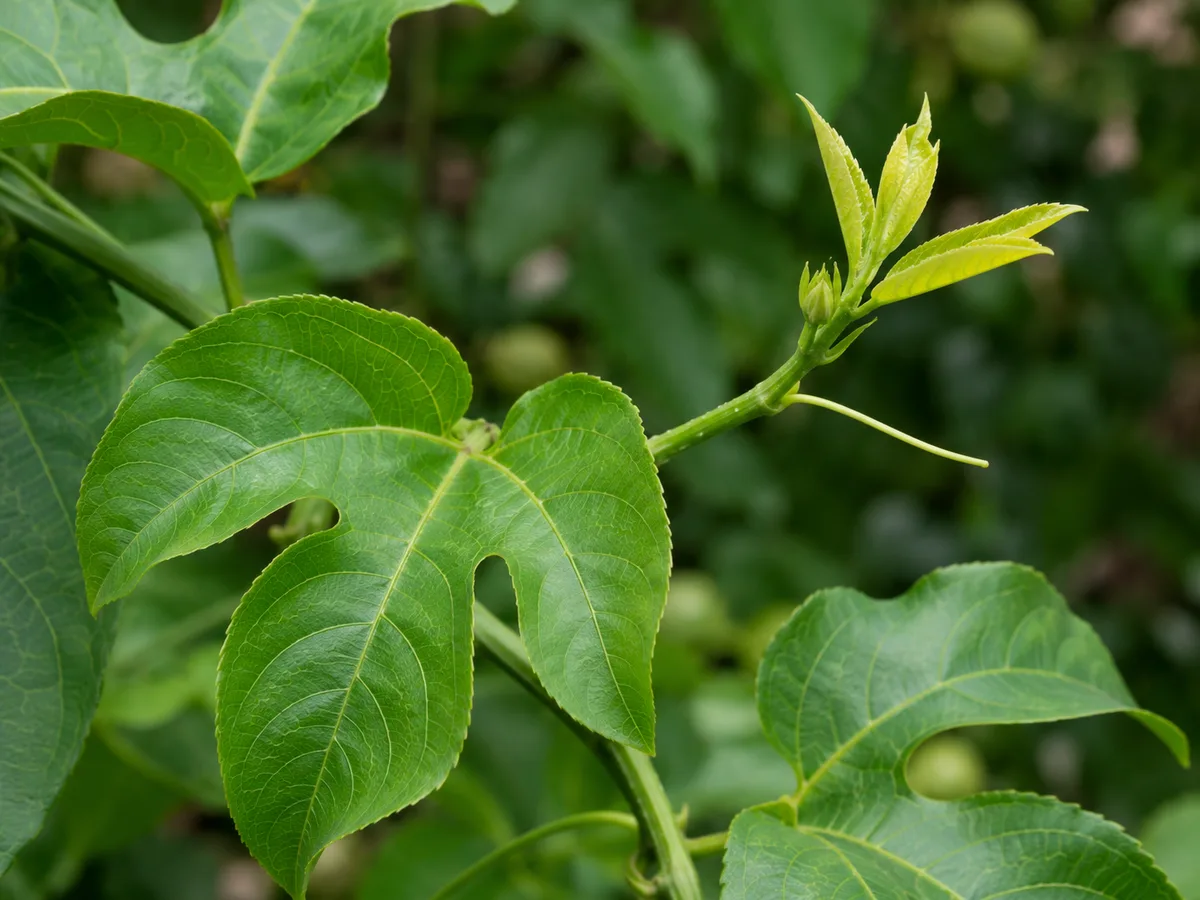
Firm older leaves alongside inactive tendrils and small shoot tips can signal that a passion fruit vine has paused its new growth.
- Idle tendrils. Healthy tips reach out daily and coil around the support within a day or two. Stalled tips sit short, straight, and inactive, sometimes browning at the very end.
- No new leaves at shoot tips for two or more weeks during warm weather, while older leaves stay green and firm.
- Shoots that emerge small and pale, with short soft growth that hardens off quickly instead of running along the wire.
- No flower buds on fresh wood through the normal warm-season bloom window.
- A vine that stays the same length month after month despite watering and feeding, sometimes with a dense congested middle and bare outer canes.
Normal slow periods that are not failure: a cool-season pause when nights turn cold, a two-to-three-week sulk after transplanting, and the gradual decline of a vine past its fifth year. Most vines live only five to seven years, with fruit production slowing after about three — a tired old vine is a replacement candidate, not a rescue project.
Why passion fruit stalls
Cool temperatures
Passion fruit thrives in USDA zones 10–12 and only rarely tolerates light frost. When days stay cool or nights dip, metabolism slows and shoot extension stops even though the vine looks alive. Container vines on cold patios or exposed to wind stall first. This is the most common cause of spring “it survived winter but won’t grow” complaints.
Too little direct sun
Shade is the most common fixable cause. The vine tolerates some shade in extreme heat, but needs full sun for its best growth and fruiting. Related passionflowers grow in full sun to part shade, and deep shade on P. edulis causes leaf drop and weak flowering. A vine under an eave, behind a fence, or crowded by neighboring plants simply cannot capture enough energy to extend.
Hungry roots in depleted soil
These are heavy feeders that need rich ground to sustain rapid growth. Starved vines produce small pale leaves and short shoots. Commercial growers use fertilizers around NPK 10-5-20, with emphasis on potassium, feeding two to four times a year starting in spring. Container vines exhaust their mix within a season. But note the trap: too much nitrogen pushes leafy growth at the expense of flowers and fruit, so a lush-but-fruitless vine is overfed, not underfed.
Waterlogged or compacted root zone
Passion fruit carries shallow roots that demand steady moisture with free drainage. In poorly drained wet soils root rot can occur, and related species need moist soil with good drainage — soggy ground suffocates fine roots and halts top growth before leaves yellow. Heavy clay, saucers left full, or compacted container mix all produce the same stall. Cross-check overwatering when the mix never dries.
Root-knot nematodes
Purple passion fruit types are notably vulnerable to root-knot nematodes, tiny worms that deform roots with bumps and knots and block water and nutrient delivery, stunting growth. Suspect nematodes when a vine stalls through warm, sunny weather despite correct watering and feeding. Confirmation requires inspecting the roots — galled, knotted rootlets are diagnostic.
Root-bound container
A vine that filled its pot stops growing because there is nowhere left to root. Signs include water running straight through, the mix drying within a day in warm weather, and roots circling the surface or escaping drainage holes. Review the repotting timing for vigorous container vines.
Old-vine decline
After the third year, extension and fruiting naturally taper, and by year five to seven most vines are spent. If your vine is old, congested with dead wood, and unresponsive to sun and feeding corrections, replacement with a young plant on fresh support wires is the honest fix.
How to confirm the cause
Work through these in order on a dry morning:
- Season and temperature. Are nights still cool or is the vine in a frost-prone or windy spot? Firm green stems with idle tips in cool weather point to a temperature pause — wait for sustained warmth rather than feeding.
- Direct sun hours. On a clear day, note when direct sun first hits the leaves and when it leaves. Under six hours means light is the prime suspect; check the light guide for placement baselines.
- Tendril-tip test. Inspect the five youngest shoot tips. Reaching, curling tendrils mean the vine is active. Short brown idle tips mean it is stalled — compare tips in sun vs shade on the same vine.
- Soil moisture at depth. Push a finger 2–3 cm into the mix per the watering guide. Soggy soil with a stalled vine means drainage trouble; bone-dry soil throughout means drought is masquerading as a stall.
- Drainage check. Water thoroughly and watch: it should flow freely from drainage holes with no standing water on the surface and no full saucer after 30 minutes.
- Root inspection. Slip container vines partly from the pot. White firm roots with visible soil mean room remains; a solid circling mat means root-bound; black mushy roots with sour smell redirect to root rot; bumpy knotted rootlets mean nematodes.
- Feeding history. No fertilizer since planting, or a full season in the same container mix, supports hunger — but only act on it after sun and drainage pass. Compare against the fertilizer guide and soil guide.
- Vine age. Over five years old with thinning extension despite good care supports natural decline.
First fix for passion fruit
Move the vine into full direct sun today — nothing else this week. Set containers in the sunniest frost-free position available, or prune back the branches, weeds, or shade cloth blocking an in-ground vine so direct light reaches the leaves for most of the day. Confirm the trellis still holds the vine into the light rather than letting it sprawl into shade.
This single change addresses the most common fixable stall. Do not fertilize, repot, or hard-prune in the same week — stacked changes hide which correction worked.
Step-by-step recovery
After the sun move, wait two weeks and judge only by new tip extension and tendril activity.
Light or temperature stall:
- Hold the sunny position; rotate containers weekly for even exposure.
- Keep the root zone evenly moist with free drainage — water thoroughly when the top 2–3 cm begin to dry, then empty the saucer.
- When fresh tendrils start gripping and new leaves unfurl at normal size, resume feeding per the fertilizer guide — two to four feeds a year from spring, favoring potassium over nitrogen.
Hungry vine in depleted mix:
- Confirm sun and drainage pass first.
- Apply a balanced high-potassium feed at label rate to moist soil, never to dry roots.
- Top-dress containers with mature compost and refresh mulch, keeping it clear of the stem.
Root-bound container:
- Move up one pot size in warm weather with a fertile free-draining mix per the soil guide.
- Tease circling roots gently; trim only black or mushy tissue.
- Water once thoroughly, reinstall the trellis tie, and expect a two-to-three-week pause before extension resumes. Hold fertilizer until new growth shows.
Nematode-infested roots:
- Do not reuse the soil. Replant a young vine in fresh mix or a new site with generous organic matter, which suppresses nematode pressure.
- Consider grafted plants on resistant rootstock where available.
Old declining vine:
- Take stem cuttings from the healthiest wood or buy a young labeled Passiflora edulis.
- Install fresh support wires before planting — a sturdy trellis or arbor is non-negotiable for these heavy vines.
Recovery timeline
| Situation | Realistic timeline | Success signal |
|---|---|---|
| Sun move in warm weather | Fresh tendril grip and new leaves in 2–4 weeks | Tips extending, tendrils coiling around support |
| Temperature pause | Growth resumes when sustained warmth returns | Multiple shoot tips active at once |
| First seasonal feed on a hungry vine | Greener larger leaves in 3–4 weeks | New leaves full-size with normal gloss |
| Root-bound repot | 4–6 weeks to steady extension | White new root tips plus tip growth together |
| Nematode replant | 4–6 weeks for establishment | Upright new shoots with gripping tendrils |
| Vine over 5 years old | May never fully recover | One healthy flush still means replacement is due soon |
Old leaves that yellowed during the stall will not green up again — judge recovery on new tissue only. A vine pushing one healthy shoot after weeks of silence is recovering even if the canopy still looks thin.
Lookalike symptoms
| Pattern | Slow growth (this page) | Lookalike | Tell |
|---|---|---|---|
| Firm vine, idle tips, green leaves | Energy or root limit | Leggy growth | Leggy vines still extend weak stretched stems; stalled vines show no extension at all |
| Stalled with yellowing older leaves | Hunger or wet roots | Yellow leaves | Pure hunger yellows oldest leaves first with firm stems; rot adds soft base and sour soil |
| Stalled with soft stem base and wilt | — | Root rot | Soft darkened stem base and foul mix mean rot, not a simple stall |
| Stalled with knotted bumpy roots | Nematode damage | Compaction | Compaction shows dense hard soil with normal-shaped roots; nematodes show galled knots |
| Lush leaves, no flowers or fruit | Excess nitrogen | Underfeeding | Overfed vines grow vigorously but bloom poorly — cut back fertilizer rather than adding more |
What not to do
- Do not fertilize a cold, shaded, or waterlogged vine. Salts on inactive roots burn fine root hairs and delay recovery.
- Do not hard-prune a stalled vine on day one. Fruit forms on new wood; removing the few active tips destroys the recovery points. Light thinning per general Passiflora pruning guidance comes after growth resumes.
- Do not repot into a much larger container. One size up is enough; an oversized pot stays wet and invites the root rot that wet soils bring.
- Do not stack sun moves, repotting, pruning, and feeding in one weekend. You will not know which action helped.
- Do not nurse a spent vine indefinitely. Past year five with no response to corrections, restart rather than pouring season after season into decline.
How to prevent it next time
- Light: Hold full sun on the leaves — six or more hours of direct light daily during the growing season; keep the trellis clear of shade.
- Warmth: Plant out only after frost risk passes and shelter young vines from cold wind; containers can move to sun-trap walls for extra heat.
- Soil: Use fertile, free-draining loam or container mix per the soil guide, and never let pots sit in saucers of water.
- Water: Follow moisture-at-depth checks — evenly moist, never soggy or parched.
- Feed: Feed two to four times a year from spring with high-potassium fertilizer; ease nitrogen once the vine fills its trellis so energy goes to flowers.
- Train early: Tie leaders to wires before shoots sprawl so every shoot reaches light and air — congested middles stall first.
- Renew: Plan replacement around year four to five so a young vine takes over as the old one fades.
Related Passion Fruit guides
- Passion Fruit overview — Full species context: sun, trellis, watering, and fruiting basics.
- Passion Fruit watering — Even-moisture rhythm and drainage checks before assuming a stall.
- Passion Fruit light — Placement for six-plus hours of direct sun.
- Passion Fruit soil — Fertile free-draining mixes and container blends.
- Passion Fruit fertilizer — Seasonal feeding schedules and potassium emphasis.
- Not Enough Light on Passion Fruit — Use when shade symptoms overlap with a stall.
- Leggy Growth on Passion Fruit — Use when stems stretch weakly instead of stopping.
- Yellow Leaves on Passion Fruit — Use when foliage yellows alongside the stall.
- Passion Fruit problems — Browse all common issues on this species.
Conclusion
Slow growth on passion fruit is rarely mysterious: a heat-loving vine either lacks sun, lacks warmth, has exhausted its soil, or has outlived its productive years. Put the vine in full sun first, verify drainage and root health second, and feed only once the fundamentals pass. Because every flower — and therefore every fruit — forms on new wood, restoring steady tip extension is the whole game.
Related tool
Use the Plant Problem Diagnosis Tool to narrow causes for slow growth on this plant before changing multiple variables at once.