Fungus Gnats on Philodendron Xanadu: Causes, Checks & Fixes
Quick answer
Fungus gnats on Philodendron Xanadu mean the top of the mix is staying wet enough for flies to breed. First, stop watering and let the top 3-5 cm dry completely, then trap adults and treat larvae until the cycle breaks.
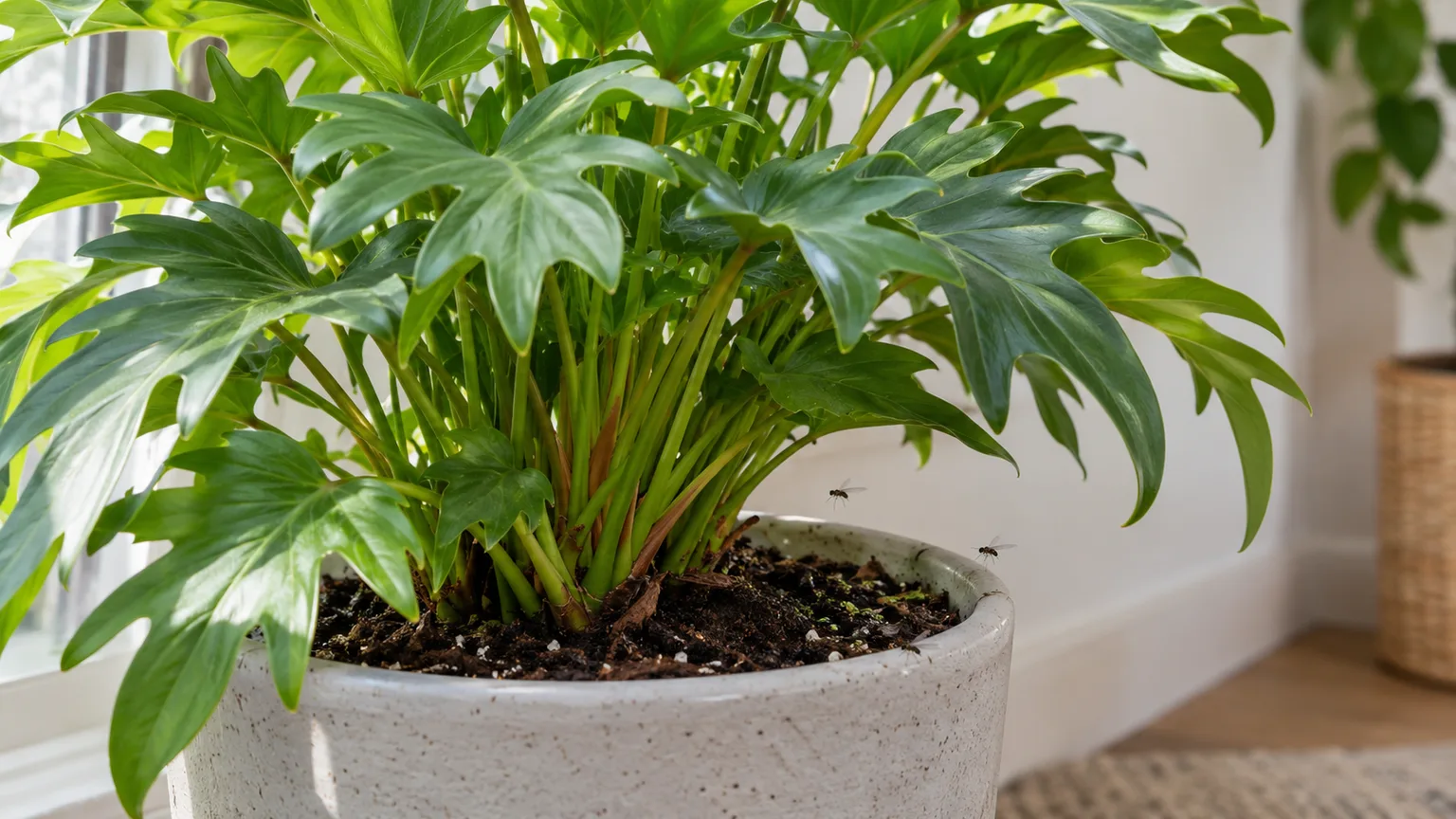
Fungus Gnats on Philodendron Xanadu: Causes, Checks & Fixes
This guide covers fungus gnats on Philodendron Xanadu. See also the general Fungus Gnats guide, watering, and light pages for this plant.
Fungus Gnats on Philodendron Xanadu: Causes, Checks & Fixes
Quick answer
Tiny black flies drifting over your Xanadu’s pot mean the top of the mix is staying wet long enough for gnats to breed. First, stop watering and let the top 3–5 cm of mix dry completely — that single step kills eggs, starves larvae, and makes the pot unattractive to egg-laying females. Then trap the remaining adults and treat the larvae until the breeding cycle breaks, which usually takes three to four weeks.
What fungus gnats look like on Philodendron Xanadu
Adults are 2–3 mm dark flies that hover just above the soil and collect on the pot rim, saucer edge, and nearby window. They are weak fliers usually seen near the infested plant, so a cloud that never travels far from one pot is a classic tell. You will rarely see damage from the adults themselves; they do not bite and mostly annoy.
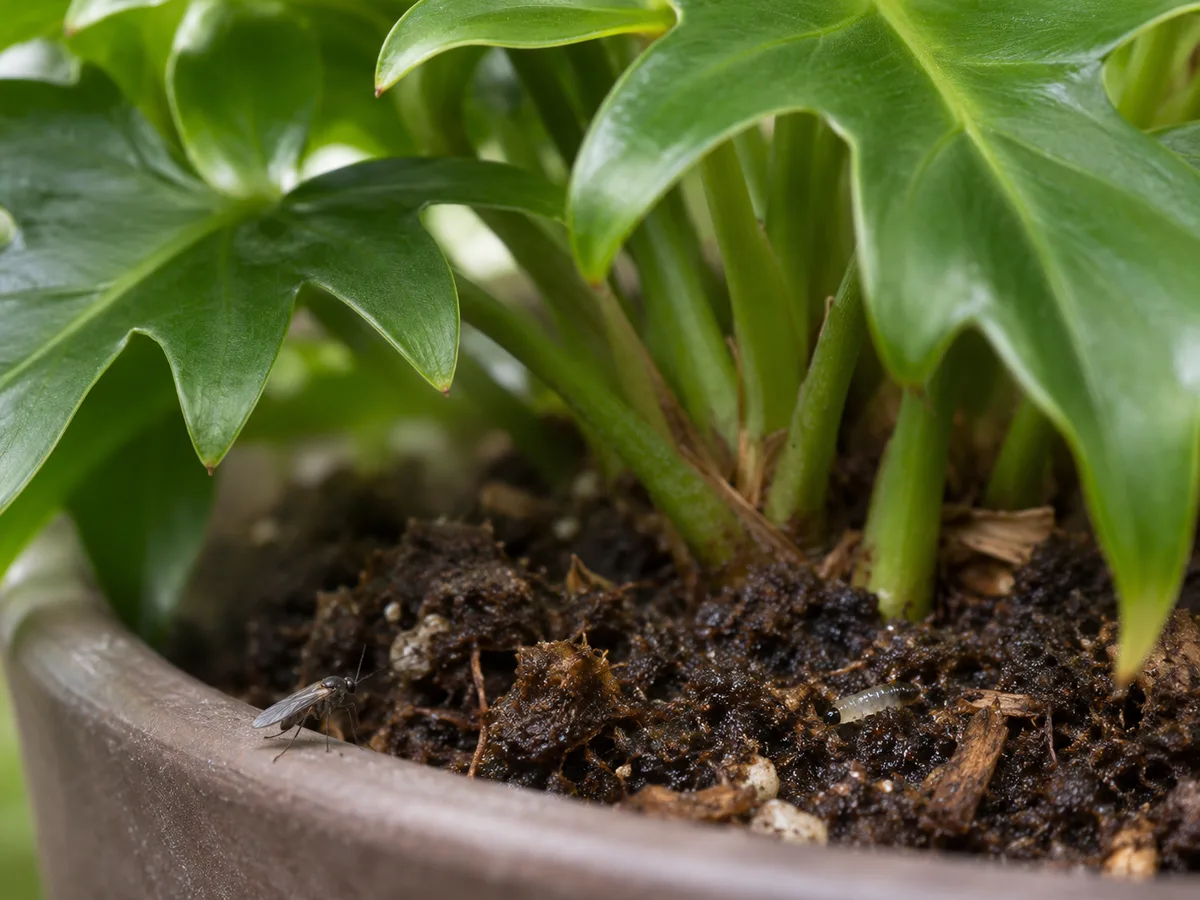
Adults hover at the soil line, while translucent black-headed larvae live in the damp upper mix beneath Xanadu’s dense canopy.
The real activity is invisible. Larvae are translucent thread-like worms with shiny black heads living in the damp upper mix, where they live in the top few inches and feed on fungi, algae, and decaying matter, turning to fine roots when populations run high. On Xanadu, that shows up as stalled new lobes, smaller-than-usual leaves, and lower-leaf yellowing in a pot that never quite dries — easy to mistake for simple overwatering. For how these flies behave on houseplants in general, see our fungus gnat guide. On Xanadu, the pattern almost always traces back to a shaded, slow-drying crown zone.
Why Xanadu pots breed gnats so readily
Xanadu builds a dense mound of deeply lobed leaves on a single central crown. That canopy shades the pot rim, slows surface evaporation, and drops spent petiole bits onto the mix — a damp, food-rich nursery for larvae. A vining philodendron in the same window may dry a day faster; the bush-form Xanadu holds surface moisture longer than its looks suggest.
Three setup habits complete the trap. Standard bagged mix without enough perlite stays soggy in the center for a week after a soak. Oversized floor pots and cachepots without drainage hide a reservoir at the bottom while the surface reads dry. And calendar watering through autumn and winter keeps pouring on a schedule even after growth slows and the pot stops drinking. Each one alone can sustain a colony; together they guarantee it.
Brought-in plants spike the problem every fall. A Xanadu summered on a shaded patio arrives indoors with eggs already in the mix, and the dimmer indoor corner doubles dry-down time just as the flies hatch.
How to confirm the cause
Do this over two to three days before treating:
- Watch the flight pattern. Tap the pot gently and look for small dark flies rising an inch or two, then settling back on the mix or rim. Fruit flies circle kitchens and drains; shoreflies stay near standing water and algae. Gnats hug the pot.
- Set a yellow sticky trap. Cut a yellow card to a small square, mount it on a skewer just above the foliage, and count catches after 48 hours. Extension guides recommend yellow sticky traps placed near the leaves to monitor adults — a dozen or more tiny dark flies confirms an active breeding pot rather than strays from another room.
- Check larvae with a potato slice. Lay a thin slice of raw peeled potato, cut side down, on the soil surface and lift it after three to four days to look for translucent worms. Wisconsin Extension notes that larvae come to the surface to feed on potato tissue, which makes this the cheapest direct confirmation.
- Read the root zone. Push a finger 3–5 cm deep and lift the pot. Damp, heavy mix days after watering plus gnats equals a breeding-friendly root zone. A sour or swampy smell means decay is feeding larvae and rot may already be starting — note it and move to inspection, not just traps.
The first fix to try
Stop watering and let the top 3–5 cm of mix dry completely. Do nothing else until that layer is dry and crumbly at finger depth and the pot feels clearly lighter. Dry medium decreases survival of eggs and hatching larvae and makes the pot less attractive to egg-laying females, so this one pause attacks every life stage at once without chemicals, repotting, or sprays. Xanadu tolerates a missed drink far better than a permanently damp crown, so the dry side is the safe side here.
Step-by-step recovery
Work through these in order, giving each step time before adding the next:
- Dry the top layer on Xanadu’s schedule. Wait until the top 3–5 cm are dry, then water deeply until runoff and empty the saucer within 30 minutes. Cornell Extension describes exactly this tactic: allowing the top 1-2 inches of soil to dry between waterings makes it much harder for gnats to lay eggs. Bottom-watering for a few cycles can help keep the surface hostile while roots still drink.
- Trap adults to break egg-laying. Keep one or two yellow sticky cards in the pot until catches fall to near zero. Traps alone will not end an infestation, but every trapped female is a batch of up to 200 eggs that never hatches.
- Drench larvae with Bti. If trap counts stay high after a week of strict drying, apply Bacillus thuringiensis israelensis (sold as Mosquito Bits or Gnatrol) as a soil drench per label, wetting the full root column so the bacteria reach the larvae. UC IPM lists Bti products as the most convenient biological option for home gardeners, noting repeat applications about five days apart since Bti does not persist indoors. Plan two to three rounds.
- Top-dress and tidy. Scrape off algae crust, pick fallen leaf bits off the surface, and add a 1 cm layer of coarse sand or fine grit to keep the very top dry between waterings.
- Repot only if the mix has failed. If the soil smells sour, stays wet a full week despite careful watering, or roots look brown and slimy on inspection, reset with fresh pasteurized mix amended to 25–30 percent perlite, washing the pot before reuse. As one practical guide puts it, a fresh-soil repot after washing the container kills remaining larvae and eggs. Size the new pot to the remaining root mass, not bigger. Full mix ratios live in the soil guide, and timing detail in the repotting guide.
Recovery timeline
A generation from egg to adult completes in about three to four weeks at room temperature, so judge progress on that clock, not daily. Trap catches should fall noticeably by week two and approach zero by week three to four if drying stays strict. New lobed leaves emerging firm and full-sized are the plant’s vote that fine roots are recovering.
If catches plateau or rise after week three, larvae are still hatching — usually because the pot center never dried or a neighboring plant is the real nursery. Re-check dry-down depth, treat adjacent pots, and run another Bti round rather than reaching for a broad insecticide first.
Lookalike symptoms
| What you see | Likely culprit | How to tell it apart |
|---|---|---|
| Flies over the pot, damp mix, larvae on potato slice | Fungus gnats | Tiny dark flies hug the soil; larvae have black heads. This page applies. |
| White crust or fuzzy film on the surface, few or no flies | Mold on soil | Surface-only growth from still air and constant dampness; traps stay empty. Start with the problems hub to pick the right guide. |
| Flies near drains and fruit bowls, not the pot | Fruit flies | They follow kitchens, not soil; sticky traps at the plant catch little. |
| Stout gray flies on algae in saucers | Shoreflies | Stockier, rest on wet algae rather than hovering over mix; fix standing water. |
| Yellow lower leaves, wet heavy pot, no flies at all | Overwatering without gnats yet | Same dry-down cure as step one above — follow the watering guide before flies move in. |
Mistakes to avoid
Do not mist the foliage to compensate for dry topsoil — it does nothing for roots and keeps the crown damp. Do not spray the air with adult insecticide; extension guidance is blunt that airborne sprays miss the larvae doing the damage and leave the breeding mix untouched. Do not fertilize a gnat-stressed Xanadu to push new growth; salts in already-soggy mix burn compromised roots. And do not repot on day one before trying dry-down plus traps — tearing apart a healthy root ball over a mild fly problem sets the plant back further than the gnats did.
How to prevent it next time
Pair the watering guide rhythm — top 3–5 cm dry plus lighter pot before every soak — with an airy soil mix carrying 20–25 percent perlite. Always empty cachepots and saucers, and lift nursery pots clear of pooled runoff. Clear fallen foliage from the surface weekly so larvae lose their pantry, and quarantine new plants or fresh bags of mix for two weeks with a sticky trap as a sentry. In winter, stretch intervals deliberately; a Xanadu drinking every two-plus weeks in a cool room is normal, not neglected.
When to worry
Treat it as urgent if lower petioles soften at the crown, the mix smells sour, or several leaves yellow within days while the pot stays heavy — that combination suggests larvae plus root rot rather than flies alone, so unpot and inspect roots promptly. Seedlings and fresh divisions in fine, wet starter mix deserve faster escalation too, since larvae can chew their small root systems quickly. A handful of adults over an otherwise firm, growing plant is annoying but not an emergency; steady drying wins those cases.
Related Philodendron Xanadu guides
- Philodendron Xanadu watering — dry-down checks that starve gnat larvae
- Philodendron Xanadu soil — perlite ratios and drainage tests for slow-drying pots
- Philodendron Xanadu light — brighter placement that speeds dry-down
- Philodendron Xanadu repotting — when fresh mix is the right reset
- Philodendron Xanadu problems hub — pick the right guide when symptoms overlap
Related tool
Use the Pest Identifier to confirm fungus gnats before treating, so you do not drench the soil for the wrong pest.