Low Humidity on Philodendron Xanadu: Causes, Checks & Fixes
Quick answer
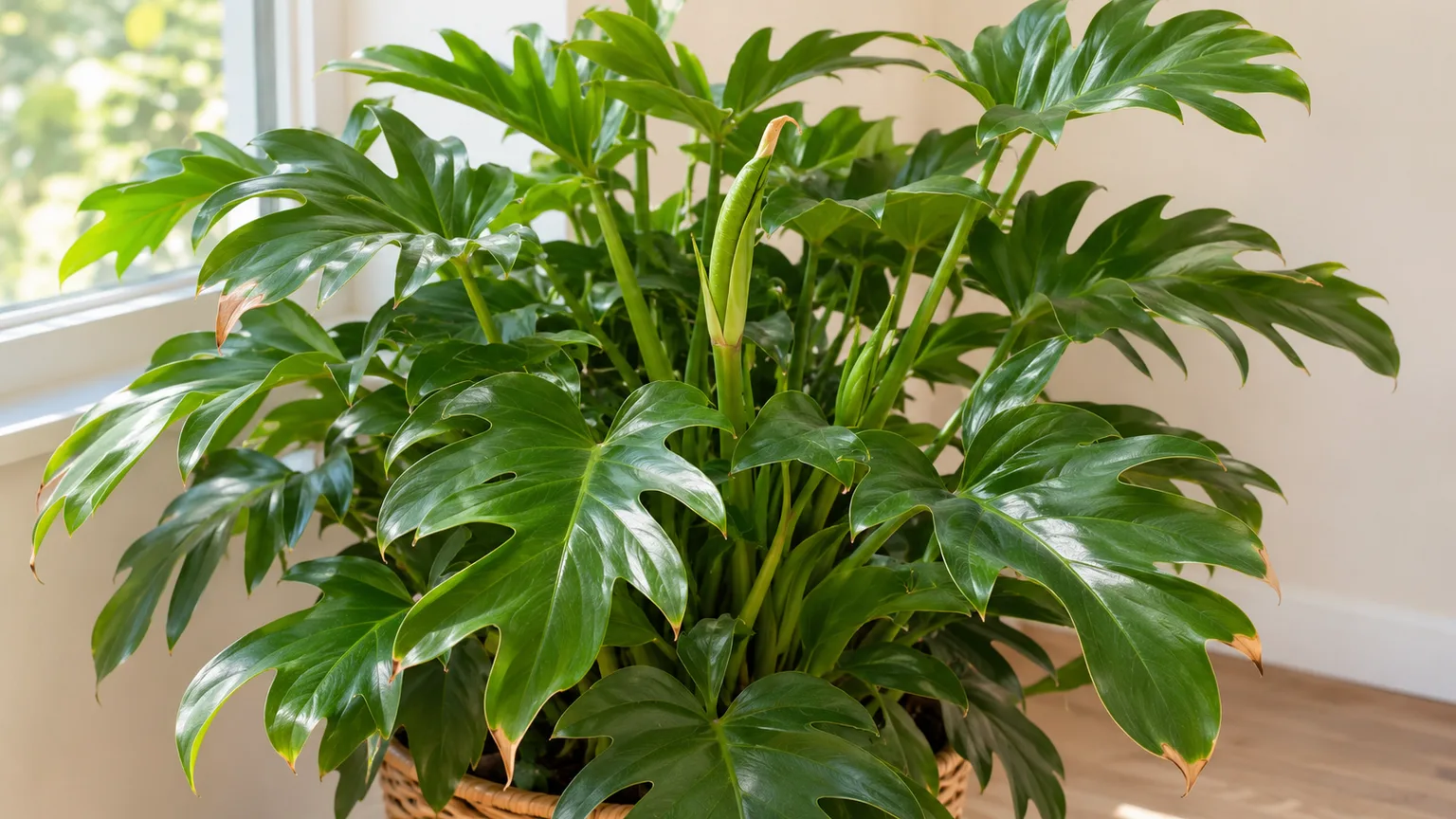
Low humidity on Philodendron Xanadu shows as crispy brown lobe tips, new spears that stall half-unfurled, and dull leaves near heating vents. First fix: move the plant out of the dry-air stream and run a humidifier or set a filled pebble tray beside it, then judge success by the next spear opening clean. Misting alone will not hold humidity long enough to matter.
Low Humidity on Philodendron Xanadu: Causes, Checks & Fixes
This guide covers low humidity on Philodendron Xanadu. See also the general Low Humidity guide, watering, and light pages for this plant.
Low Humidity on Philodendron Xanadu: Causes, Checks & Fixes
Quick answer
Low humidity on Philodendron Xanadu shows as crispy brown tips on the leaf lobes, new spears that stall half-unfurled, and dull foliage on the side facing a vent or radiator. First fix: move the plant out of the dry-air stream and give it a steady local humidity source — a humidifier a meter or two away or a filled pebble tray under the pot. Judge success by the next spear opening fully green, not by old damage healing.
For how dry air stresses houseplants in general, see our low humidity guide. On Xanadu, the pattern centers on its wide lobed leaves and central spears: lobe tips crisp first, unfurling spears stick, and the thick aerial roots shrivel while the soil itself tests fine.
What low humidity looks like on Xanadu
Xanadu builds a dense mound of large, deeply dissected leaves, and each lobe ends in a thin point. Those points lose moisture fastest, so early damage is a pale tan edge a few millimeters wide on the outermost lobes that turns papery and dark brown. The oldest, lowest leaves in the mound show it first, while the upright central spears stay green longer.
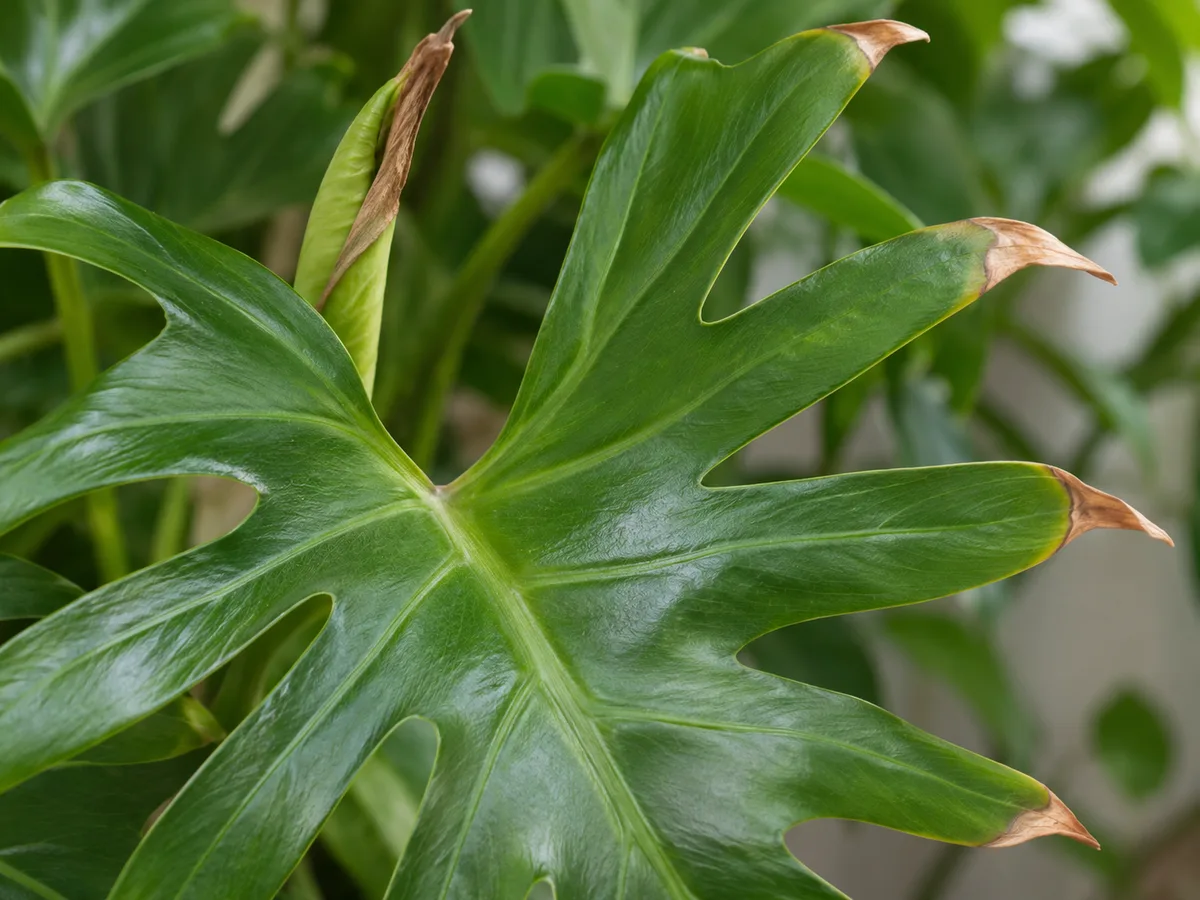
Dry air often crisps the narrow lobe tips first and can stall a new spear before its blade opens.
The signature Xanadu symptom is the stuck spear. New leaves emerge as tight upright spikes from the central crown, and in dry air the sheath dries before the blade finishes expanding — the spear stalls half-open, sometimes with a browned tip, for a week or more. A second signature is the aerial roots: Xanadu throws thick aerial roots from its stout stems, and in parched room air their growing tips brown and stop extending even when the potted roots are healthy.
Dull, slightly curled foliage across the vent-facing side rounds out the picture. Unlike underwatering, the pot feels normal weight and the mix tests moist at depth. Unlike sun scorch, there are no bleached patches — just dry, crisp margins and stalled growth.
Why Xanadu suffers in dry air
Xanadu is a tropical understory aroid grown as a houseplant in colder regions, and indoors it wants bright but indirect light with some humidity and temperatures of 65 to 75 degrees. Its full mound of wide leaves transpires heavily, so it notices dry room air sooner than a small-leafed plant would. Philodendrons are tolerant of average indoor humidity, which is exactly why the damage surprises owners: the plant coasts through summer, then winter heating drags room air far below what its leaves can handle for months.
Forced-air heating is the usual trigger. A plant that spent summer thriving two meters from a vent becomes a crisping plant in December without any change in watering. Air-conditioner outlets do the same in hot climates, and leaves pressed against cold winter glass or hot south-facing panes dry even faster. Small pots compound the problem because their root balls hold less water buffer while the big canopy keeps pumping moisture out.
Dry air also opens the door to pests. Xanadu is susceptible to spider mites, along with aphids, mealybugs, scale, and thrips — and spider mites breed fastest in warm, dry, dusty conditions on stressed foliage. Mite damage plus dry air looks like one big crisping event, which is why the underside check below matters.
How to confirm the cause
Work through these checks in order and stop at the first one that clearly fails.
- Soil moisture at depth. Push a finger or chopstick 3 to 5 cm into the mix. If it tests moist a few days after watering, the roots are fine and the air is the suspect. Dust-dry means underwatering is mimicking humidity damage — fix watering first per the watering guide.
- Dry-air sources within two meters. Map every radiator, heating vent, air-conditioner outlet, fireplace, and drafty or hot window near the plant. Crisping concentrated on the vent-facing side confirms dry air.
- Spear behavior. A healthy spear unfurls steadily over days. A spear stalled half-open with a drying sheath, while light and water test normal, is Xanadu-specific confirmation of low humidity.
- Pest check. Hold white paper under several leaves, tap firmly, and watch for moving specks or fine webbing at the lobe joints and leaf undersides. Mites mean the fix order changes: pests first, humidity second.
- Light position. Xanadu wants bright indirect light, not hot direct sun. Leaves against scorching glass with bleached patches plus crisp edges mean heat and light stress layered on top of dryness — see the light guide.
The first fix to try
Move the plant out of the dry-air stream today — at least two meters from vents, radiators, and blowing outlets — and set a steady humidity source beside it: a humidifier a meter or two away run daily, or a wide saucer of pebbles kept filled with water just below the pot base. When winter furnace air dries the room, a humidifier in the room or misting the plant is the standard remedy, but prefer the humidifier or pebble tray over misting: misting wets the crown for minutes without lifting room humidity, and wet spears in still-dry air invite spotting.
Then change nothing else for two weeks except normal watering. This pause matters because relocation plus steady humidity resolves most cases on its own, and stacking fertilizer, repotting, or sprays on top hides which problem you actually had.
Xanadu’s crown habit changes the rescue
Because Xanadu grows as a self-heading mound rather than a vine, every new leaf comes from the central crown — there are no trailing stems to prune back and restart. Protect that crown above all else: keep water out of tight new spears, never cut into the crown to remove damage, and judge everything by what the next spear does.
Do not mist into the crown daily. The instinct is understandable — the stuck spear looks thirsty — but pooled water in a stalled sheath in dry, still air is how crown spotting starts. Raise the room’s humidity instead and let the spear open on its own; most stuck spears release within a week of steady humid air.
Trimming is cosmetic and optional. If crisp lobe tips bother you, snip the dead edge with clean scissors and leave a 2 mm brown margin so you do not cut living tissue. Never remove a whole leaf just for brown tips — the remaining green tissue still feeds the crown. And skip the moss pole instinct: climbing philodendrons sometimes need support changes when stressed, but Xanadu spreads sideways by design, so give it elbow room and rotate the pot a quarter turn monthly instead.
Step-by-step recovery
After the move and humidity source are in place, follow this order over the next month.
- Hold watering steady on the dry-down test. Water deeply only when the top 3 to 5 cm feels dry, as detailed in the watering guide. Dry air makes owners overwater out of guilt — resist that, since Xanadu yellows when overwatered and wet mix plus humid air invites rot.
- Keep humidity steady, not extreme. Average household air is survivable and higher humidity encourages larger leaves, so aim for a moderate lift: a humidifier, a pebble tray or adding a humidifier near the crown, or grouping with other tropicals. Philodendrons grow well in temperatures between 65 and 80 degrees away from drafts, so keep the plant in that band while humidity rises.
- Check the mix while you are at it. A peat-heavy mix that swings between soggy and brick-dry amplifies every humidity problem. If the pot stays heavy a week after watering or sheds water down the sides, plan a spring move to chunkier fast-draining mix per the soil guide.
- Treat mites if you found them. Rinse leaf undersides thoroughly, isolate the plant, and confirm live mites before reaching for any spray. Do not fog or oil the whole plant for simple dry-air crisping with no pests.
- Pause feeding. Hold all fertilizer until two consecutive new spears open clean, then resume lightly in spring and summer only.
Recovery timeline
Crisp edges will not heal, so watch the crown instead. Within one to two weeks of the move, further browning should stop spreading on existing leaves and the current spear should resume opening. Within three to six weeks in spring or summer, a new spear should unfurl fully with intact lobe tips — that is your proof the fix worked. Winter recovery runs slower; one clean leaf over six to eight weeks still counts as progress.
If new spears keep stalling after two full watering cycles in humidified air, recheck for mites, test whether the mix has collapsed into a dense brick, and consider a spring repot per the repotting guide. Persistent stall despite correct air and water points to root trouble, not humidity.
Lookalike symptoms
| What you see | More likely | How to tell apart |
|---|---|---|
| Whole leaf yellows, then tips brown; mix stays wet | Overwatering or early root trouble | Pot feels heavy, soil smells stale; compare with the full list on the Xanadu problems hub |
| Dry papery patches anywhere on the leaf, not just lobe tips | Sun scorch | Damage faces the window; bleached areas precede browning |
| Fine webbing, stippled fading, moving specks under leaves | Spider mites | Shake a leaf over white paper; mites love dry, dusty foliage |
| Soft brown spots with yellow halos after crown misting | Bacterial or fungal leaf spot | Spots start mid-leaf, not at lobe tips, and spread in wet conditions |
| Even yellowing of one or two oldest leaves while spears stay clean | Natural aging | Slow, isolated, and new growth unaffected |
When several patterns overlap, work the watering and pest checks first — they change the fix order — before assuming dry air alone.
Mistakes to avoid
- Misting the crown daily while room air stays dry, keeping new spears wet without raising humidity.
- Running a humidifier at full blast right against the leaves, which soaks one side while the room stays uneven.
- Overwatering out of guilt, pushing the plant from dry-air stress into root rot.
- Blasting stuck spears open by hand, tearing tissue that would have opened on its own.
- Repotting, pruning hard, and spraying treatments in the same weekend for what is usually a placement and humidity issue.
How to prevent it next time
Build the routine around Xanadu’s mound habit and tropical roots. A chunky peat or coco mix with around 20 to 25 percent perlite in a pot with open drainage holes gives the dense root ball both moisture and air. Missouri Botanical Garden grows it best in evenly moist, rich soils in part shade, hardy only in zones 9b through 11 — indoors everywhere else, winter placement decides everything. Each autumn before the heat comes on, move the plant away from vents, set up the humidifier or pebble tray early, and dust the wide leaves so they transpire efficiently. The full Xanadu care hub ties watering, light, and soil into one seasonal rhythm.
When to worry
Most low-humidity damage is cosmetic and correctable. Escalate when browning races across the plant in days, stems soften at the crown, the root ball smells rotten, webbing spreads faster than you can rinse it, or no new growth appears for two months in the growing season. Those point to mites, crown trouble, or root rot layered over the dry air, where inspection and targeted treatment replace passive humidifying. If the crown itself turns mushy and collapses, the plant is unlikely to recover and replacing it is the honest call.
Related Xanadu guides
- Watering guide — use when the dry-down test, soak volume, or seasonal frequency is the open question.
- Light guide — use when leaves bleach, stretch, or scorch alongside the crisping.
- Soil guide — use when the mix stays soggy or compacts and you suspect the pot environment, not the air.
- Repotting guide — use when roots circle the pot or the mix has collapsed and watering no longer behaves.
- Xanadu problems hub — use when the lookalike table above fits better than dry air and you need a different diagnosis.
Related tool
Use the Humidity Calculator to narrow the cause for low humidity on this plant before changing more than one care variable at a time.