Mold on Soil on Philodendron Xanadu: Causes, Checks & Fixes
Quick answer
White or gray fuzz on Philodendron Xanadu soil is usually harmless surface fungus on damp mix, not a plant disease. First, scrape off the top 1-2 cm of moldy mix and pause watering until the top 3-5 cm are dry and crumbly.
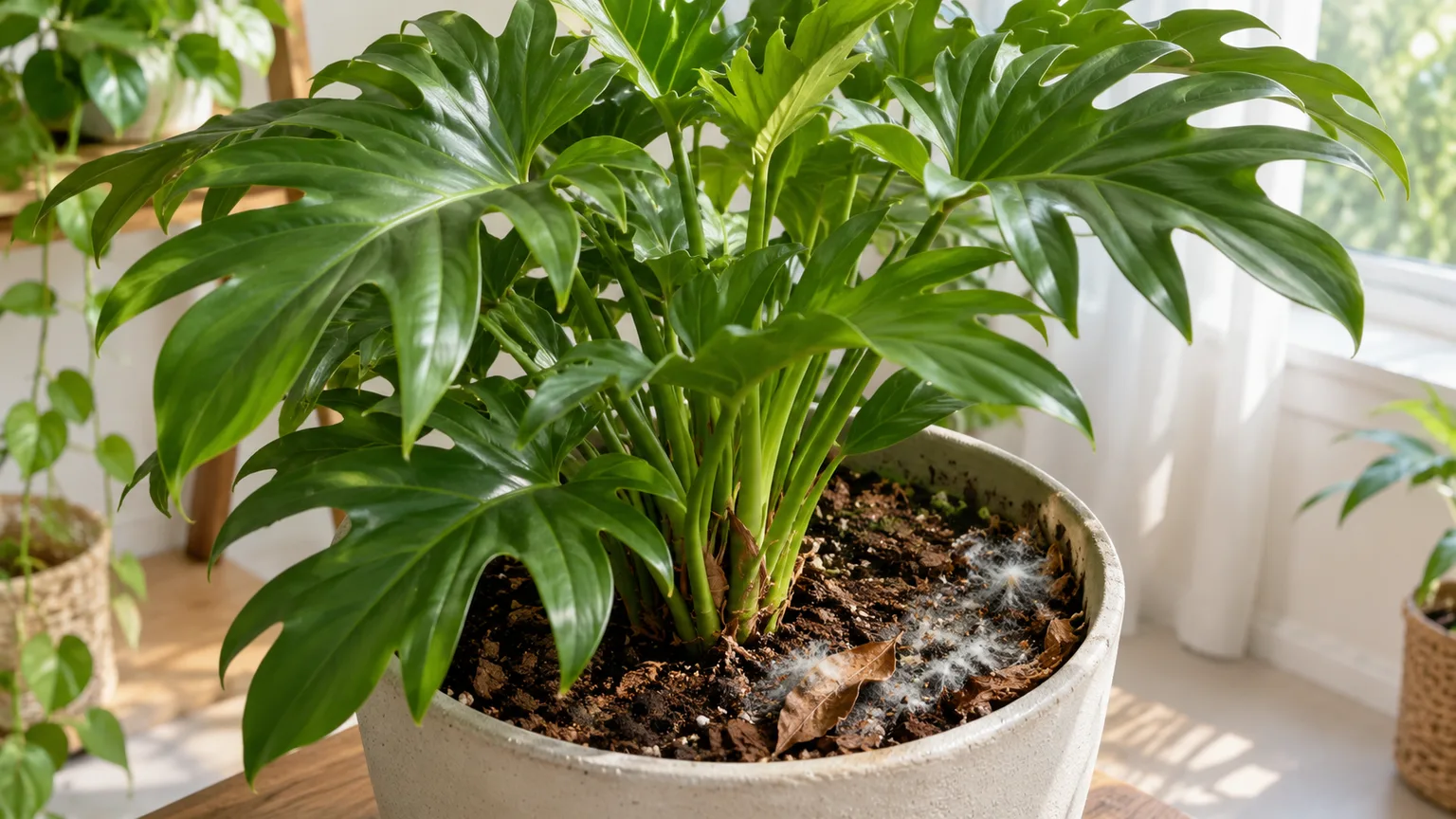
Mold on Soil on Philodendron Xanadu: Causes, Checks & Fixes
This guide covers mold on soil on Philodendron Xanadu. See also the general Mold on Soil guide, watering, and light pages for this plant.
Mold on Soil on Philodendron Xanadu: Causes, Checks & Fixes
Quick answer
White or gray fuzz on your Xanadu’s potting mix is almost always surface mold feeding on damp organic matter — typically harmless to the plant itself, but a reliable signal that the top of the pot is staying wet too long. First, scrape off the top 1–2 cm of moldy mix and pause watering until the top 3–5 cm are dry and crumbly. If the plant stands firm with glossy lobed leaves and the soil smells earthy rather than sour, you are correcting a moisture habit, not rescuing a dying plant.
What mold looks like on Philodendron Xanadu
Expect soft white, gray, or off-white fuzzy patches spread across the soil surface, often clustering around bark chips, fallen leaf bits, or the inner edge of the pot. A thin webby layer that collapses when touched is classic surface mold; it frequently reappears a few days after watering if nothing else changes. Heavily moldy soil is almost always accompanied by overly wet conditions, so treat the fuzz as a moisture gauge rather than the main enemy.
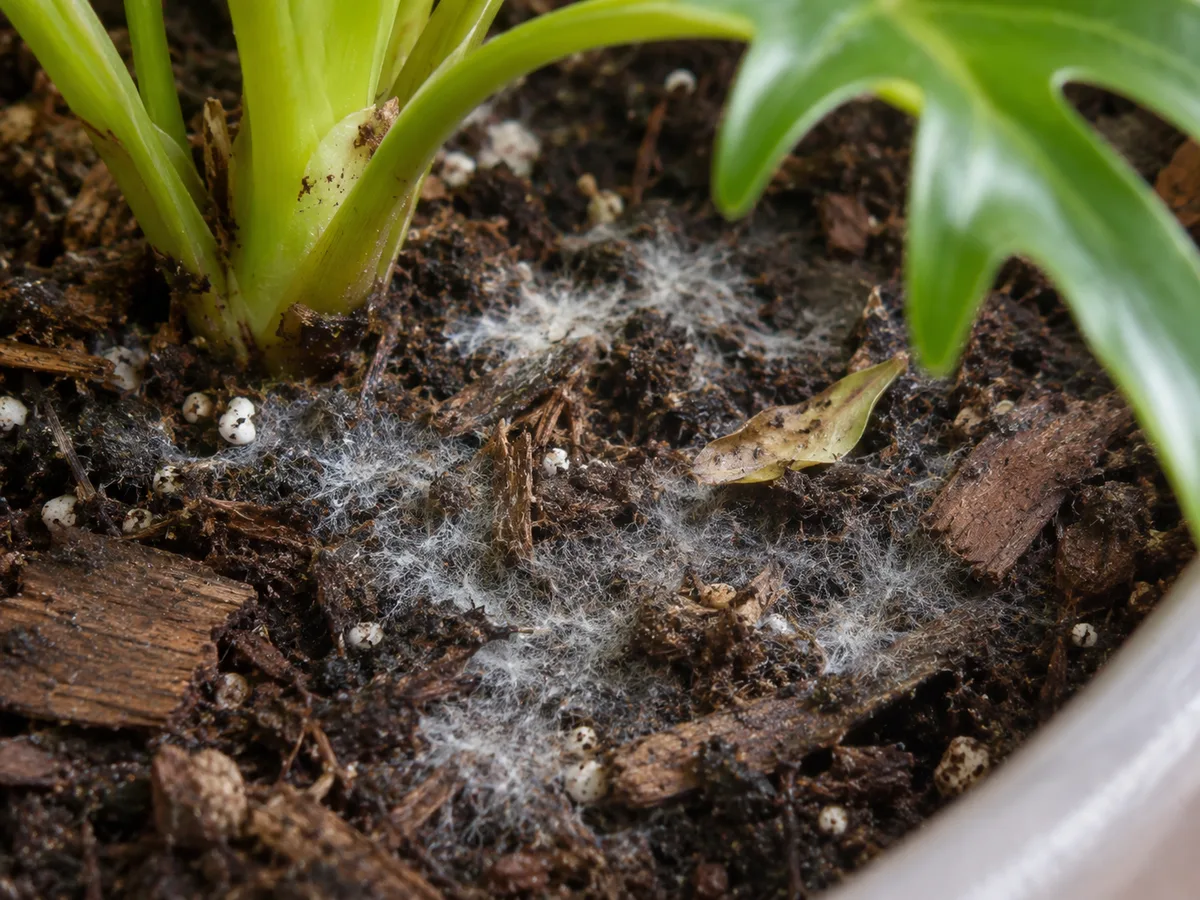
Thin fuzzy patches on damp mix are usually surface mold and a sign to check moisture and airflow.
On Xanadu specifically, mold often starts in a ring hidden under the outer leaves, where the mound of foliage shades the rim and slows evaporation. You may only notice it when you lift a low leaf or rotate the pot — by which time the center of the root ball has usually been damp for a while.
Why Xanadu pots grow mold so readily
Xanadu is a self-heading type that builds a dense mound of deeply lobed leaves on one central crown instead of vining. That architecture creates a damp microclimate at soil level: the canopy blocks light and airflow from the surface, spent petiole bases and leaf fragments rain onto the mix, and the wide bush shape encourages oversized floor pots whose centers dry days slower than their rims. A climbing philodendron in the same window can dry a full day faster than a bush-form Xanadu.
Three routine habits finish the job. Calendar watering through autumn and winter keeps pouring on schedule after growth slows and the pot stops drinking. Standard bagged mix without enough perlite stays soggy in the middle for a week after a soak. And cachepots or saucers left full hide a reservoir at the bottom while the surface reads dry. For how surface mold behaves on houseplants in general, see our mold on soil guide. On Xanadu, the pattern almost always traces back to a shaded, slow-drying crown zone rather than a diseased plant.
Xanadu also punishes chronic wetness underground. NC State Extension notes that yellowing leaves occur if overwatered, so mold plus lower-leaf yellowing in a heavy pot means the wetness has moved past cosmetic and into the roots.
How to confirm it is surface mold, not something worse
Work through these checks before scraping or treating:
- Touch the white patches. Soft, airy fuzz that flattens under a fingertip is mold. A hard white crust that resists scraping is mineral or fertilizer salt buildup — scrape it off and leach the pot at the next proper watering instead.
- Check what the white bits are. Irregular hard white chunks scattered through the mix are perlite, an intentional drainage additive — leave them alone. Sticky white cotton clustered on stems, leaf joints, or leaf undersides rather than the soil is a pest, not mold.
- Smell the soil. An earthy mushroom smell with firm growth above is ordinary surface fungus feeding on decaying organic matter. A sour or swampy smell means decay deeper down — note it and move to root inspection, not just scraping.
- Read the crown. Firm upright petioles and glossy new lobes with surface-only fuzz mean a moisture warning. Petioles that soften or detach at the base, or several leaves yellowing while the pot stays heavy, mean possible root damage underneath the mold.
The first fix to try
Scrape off the top 1–2 cm of moldy mix, including any algae crust and fallen debris, and discard it — then stop watering until the top 3–5 cm are dry and crumbly at finger depth and the pot feels clearly lighter. Removing the visible colony plus its food source resets the surface, and the dry pause makes the pot hostile to regrowth without chemicals, sprays, or repotting. Xanadu tolerates a missed drink far better than a permanently damp crown, so the dry side is the safe side here.
Step-by-step recovery
Work through these in order, giving each step time before adding the next:
- Dry on Xanadu’s schedule. Wait until the top 3–5 cm are dry, then soak deeply until runoff and empty the saucer within 30 minutes. The RHS philodendron guide describes exactly this rhythm: let the compost dry slightly between waterings rather than keeping it constantly moist.
- Open light and air around the crown. Move the plant to brighter indirect light and give it gentle airflow — a nearby vent, an open door, or spacing from neighboring pots. Faster surface evaporation is the whole game; never mist the foliage to compensate, since wet leaves in still air invite the next problem.
- Tidy the surface. Pick spent leaf bits and collapsed petiole sheaths off the mix weekly so surface fungi lose their pantry. A thin top-dressing of coarse sand or fine grit can help keep the very top dry between waterings.
- Repot only if the mix has failed. If the soil smells sour, stays wet a full week despite careful watering, or roots look brown and slimy on inspection, reset with fresh pasteurized mix amended to 25–30 percent perlite in a pot sized to the remaining root mass. Container plants may need repotting every 1 to 2 years in any case, so a failing two-year-old mix is due, not unlucky. Mix ratios live in the soil guide, and timing detail in the repotting guide.
Recovery timeline
Surface fuzz should stop returning after one full wet-to-dry cycle handled correctly — usually one to three weeks depending on pot size and season. Judge progress by absence of regrowth after watering, plus new lobed leaves emerging firm and full-sized. If a fresh white film reappears within days of scraping, the center never dried: stretch the interval, improve light and airflow, and check that the pot actually drains.
Lookalike symptoms
| What you see | Likely culprit | How to tell it apart |
|---|---|---|
| Soft white or gray fuzz on the soil surface only | Surface mold | Collapses when touched; plant stands firm. This page applies. |
| Hard white crust on the surface | Mineral or salt buildup | Crusty, not fuzzy; scrape off and leach at next watering. |
| Sticky white cotton on stems and leaf joints | Mealybugs | Clustered on the plant, not the soil; leaves sticky residue. Start with the problems hub to pick the right guide. |
| Tiny dark flies hovering over damp mix | Fungus gnats | Flies rise when the pot is tapped; larvae live in wet organic matter. Same dry-down cure as above — see the watering guide for the rhythm. |
| Yellow lower leaves, heavy wet pot, no fuzz | Overwatering without mold yet | Roots are sitting wet; follow the dry-down cure before mold or gnats move in. |
Mistakes to avoid
Do not reach for a fungicide drench first — surface mold is a moisture problem wearing a fungus costume, and chemicals without drying just reset the clock. Do not fertilize a stressed Xanadu to push new growth; salts in already-soggy mix burn compromised roots. Do not repot on day one before trying scrape-and-dry; tearing apart a healthy root ball over surface fuzz sets the plant back further than the mold did. And do not keep the plant in its dim corner while treating — without brighter light and airflow, the surface never dries and the mold always returns.
How to prevent it next time
Pair the watering guide rhythm — top 3–5 cm dry plus a lighter pot before every soak — with an airy soil mix carrying 20–25 percent perlite. Always empty cachepots and saucers, and lift nursery pots clear of pooled runoff. Clear fallen foliage from the surface weekly, and in winter stretch intervals deliberately: a Xanadu drinking every two-plus weeks in a cool room is normal, not neglected.
When to worry
Treat it as urgent if the mix smells sour, lower petioles soften at the crown, or several leaves yellow within days while the pot stays heavy — that combination suggests root rot under the mold, so unpot and inspect roots promptly. Clouds of tiny flies mean gnats are breeding in the moist mix alongside the mold; hold the dry line, trap adults, and treat larvae rather than spraying the air. A thin patch of fuzz over an otherwise firm, growing plant is a warning, not an emergency.
Related Philodendron Xanadu guides
- Philodendron Xanadu watering — the dry-down checks that starve surface mold
- Philodendron Xanadu soil — perlite ratios and drainage tests for slow-drying pots
- Philodendron Xanadu light — brighter placement that speeds surface drying
- Philodendron Xanadu repotting — when fresh mix is the right reset
- Philodendron Xanadu problems hub — pick the right guide when symptoms overlap
Related tool
Use the Plant Disease Identifier to confirm surface mold versus a true infection before treating, so you do not drench the soil for the wrong problem.