Aphids on Raat Rani: Causes, Checks & Fixes
Quick answer
Aphids on Raat Rani cluster on tender shoot tips, leaf undersides, and developing bud clusters, causing curling, sticky honeydew, and stunted new growth. First, blast them off with a strong jet of water and recheck in two to three days. Use insecticidal soap only if colonies persist, and hold off fertilizer until clean new growth resumes.
Aphids on Raat Rani: Causes, Checks & Fixes
This guide covers aphids on Raat Rani. See also the general Aphids guide, watering, and light pages for this plant.
Aphids on Raat Rani: Causes, Checks & Fixes
Quick answer
Aphids on Raat Rani show up as clusters of tiny soft insects packed onto the youngest shoot tips, the undersides of new leaves, and the developing tubular bud clusters. Leaves curl, new growth stalls, and glossy foliage turns sticky with honeydew. The first fix is a strong jet of water aimed at the colonies, then a recheck in two to three days. Reserve insecticidal soap for colonies that survive two wash-offs, and pause feeding until fresh growth comes in clean.
What aphids look like on Raat Rani
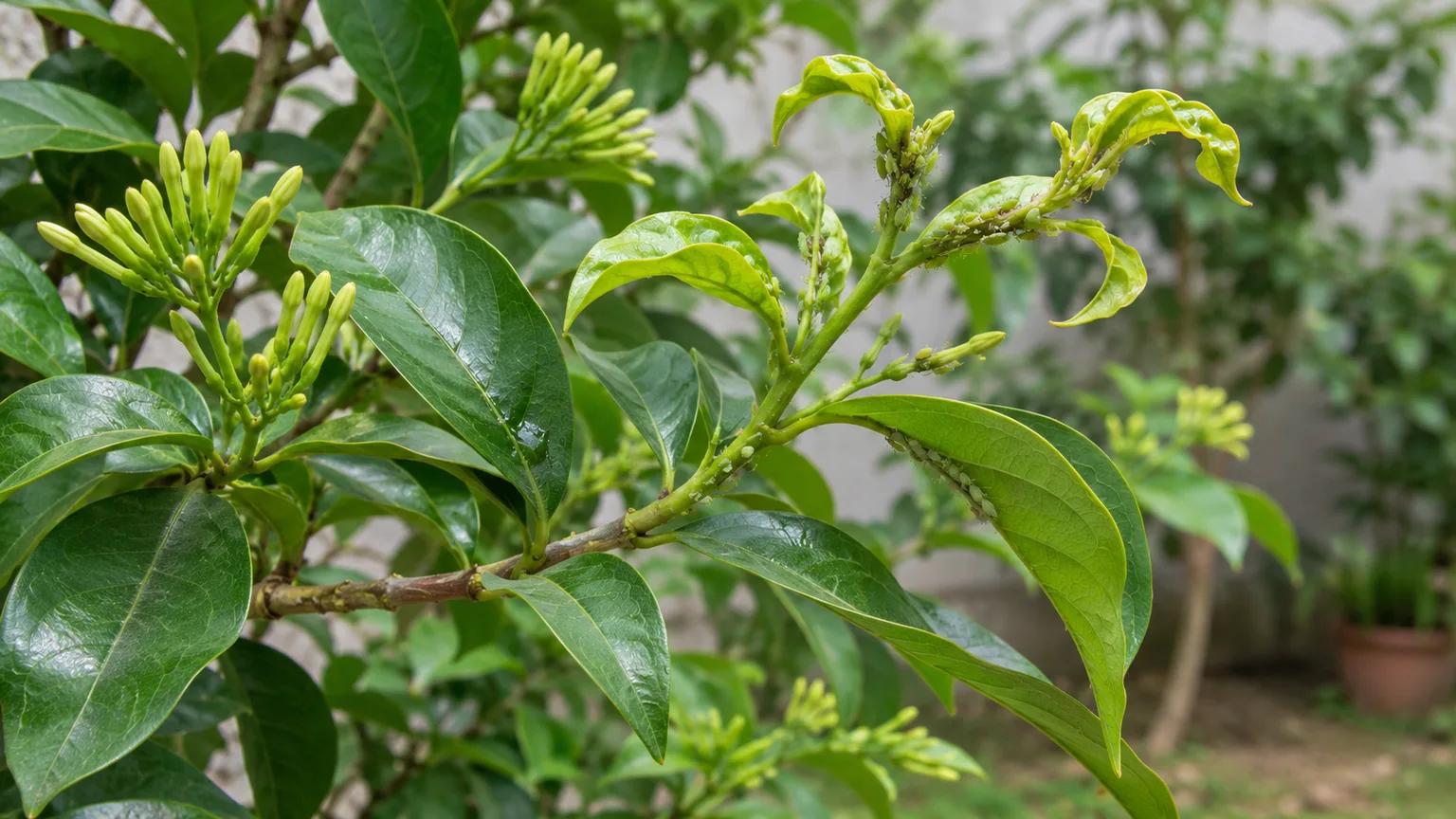
On this shrub, aphids almost always start where growth is softest. Check the top few centimetres of each stem, the underside of unfolding leaves, and the tight green bud clusters that precede the night-opening flowers. Colonies may be green, yellow, brown, or black, and heavy clusters leave the stem tips glistening with sticky honeydew. New leaves emerge twisted or cupped, and shoot extension stalls while older foliage looks normal.
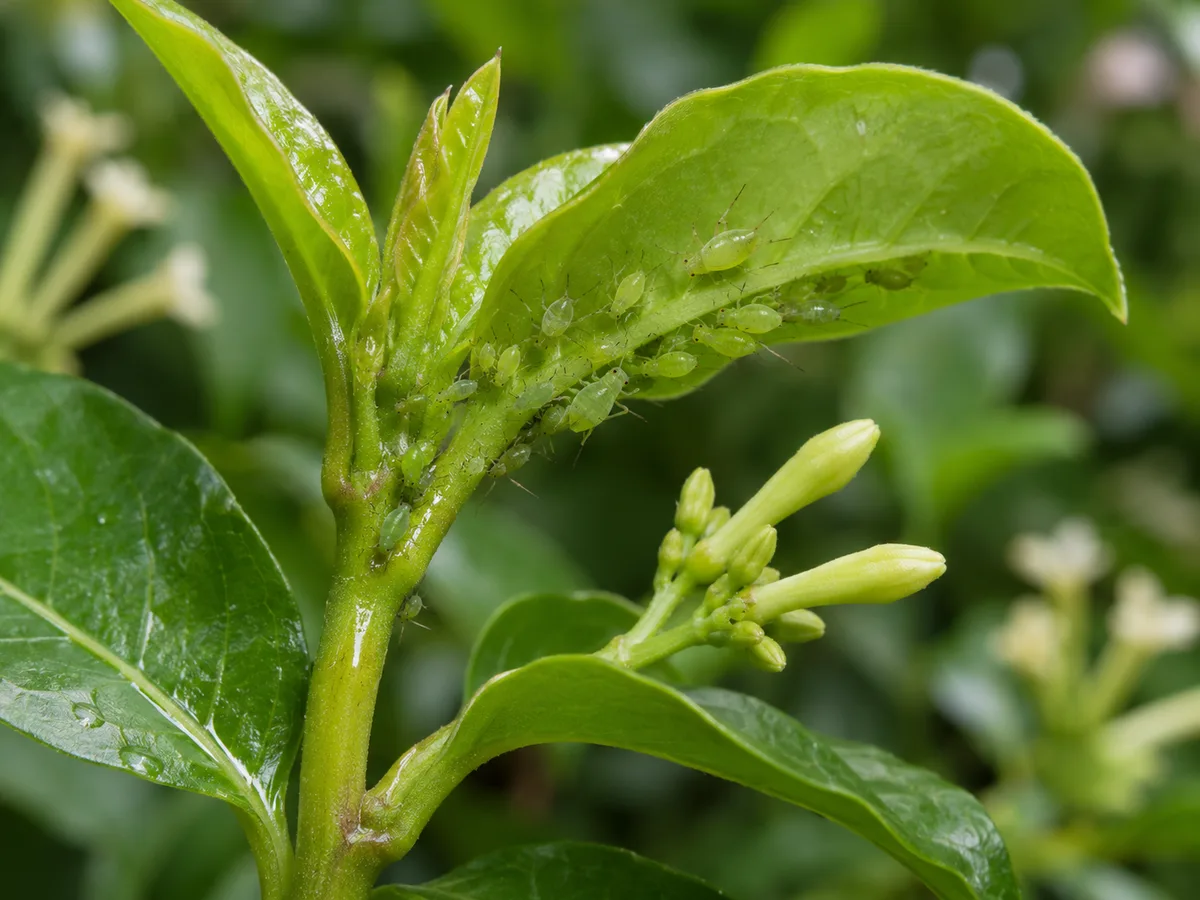
Look at tender shoot tips and leaf undersides for pear-shaped aphids and early leaf curl.
Because Raat Rani pushes flushes of tender growth in warm weather, an infestation can move fast from one shoot tip to several within a week. Honeydew drips onto lower leaves, where black sooty mold follows. Bud clusters are the costliest site: aphid feeding there can abort buds before they ever open, silently cancelling a fragrance flush.
Why Raat Rani attracts aphids
Aphids feed by sucking the juices from leaves and stems, and they prefer the nitrogen-rich sap of young tissue. Raat Rani grows actively in warm weather, so a healthy shrub regularly produces the soft tips aphids prefer. The problem starts when excess nitrogen, constant shearing, or sheltered balcony conditions stack the odds.
Heavy or frequent feeding pushes out sappy, weak-jointed shoots that aphids colonise readily, so review the fertilizer routine before blaming the weather. Dense, never-thinned canopies shelter colonies from predators and from your hose jet. Plants tucked against walls or under eaves also miss the lady beetles, lacewings, and parasitic wasps that otherwise suppress aphids outdoors. For how aphids behave on plants in general, see our aphid guide. On Raat Rani, the pattern to expect is tip-first colonisation during active flushes, not a uniform coating of the whole shrub.
How to confirm it is aphids
Inspect in this order: youngest shoot tips, undersides of the top three or four leaves per stem, then bud clusters. Extension guidance recommends visually inspecting plants for colonies and feeding symptoms rather than guessing from curl alone, so look for the insects themselves with a hand lens. Aphids are pear-shaped with long legs and antennae, sometimes winged, and often mixed sizes in one cluster since young are born live through the season.
Supporting clues strengthen the diagnosis. Sticky honeydew on leaves below the tips, black sooty film, shed white skins clinging to foliage, and ants marching up stems to tend the colony all point to aphids. If you see cottony white tufts in leaf joints instead, suspect mealybugs; fine stippling with webbing on older leaves points toward spider mites. Confirm active insects before mixing any spray.
First fix: wash them off with water
Take the plant to an open spot and blast the colonies with a strong, targeted jet of water, covering stem tips and both leaf surfaces. A strong spray of water dislodges aphids from sturdy plants. Use enough pressure to remove the insects, but support thin new tips so you do not snap the shoot.
Do this in the morning so foliage dries by evening, and keep the spray away from fully open night flowers where possible. Use a firm stream that dislodges aphids without snapping tender shoots. Recheck every two to three days for two weeks, washing off any returnees. If only one or two tips were colonised, snip those tips into a bag first, then wash the rest. This often controls light infestations without any chemicals.
If they persist: prune, then soap or oil
When colonies survive two wash-offs or span many shoot tips, move to step two. First prune the worst-clustered tips back to clean wood, bagging the cuttings rather than dropping them on the soil. Wear gloves and keep cuttings away from children and pets: all parts of Raat Rani are toxic if eaten, especially its fruit, according to the Queensland Poisons Information Centre.
Then apply a commercial insecticidal soap or horticultural oil, wetting colonies and leaf undersides thoroughly. These products work by smothering aphids, so coverage matters more than dose strength, and they should not go onto drought-stressed plants or during peak heat. Practical experience with ornamental aphids suggests spraying once every 7 to 10 days until the problem subsides, early morning or at dusk, which also keeps wet spray off the night-opening blooms. Always read the product label first and test on a small section, since some cultivars and stressed plants react to oils.
Ants, predators, and why soap is not step one
Outdoors, Raat Rani usually has allies. Lady beetle larvae, lacewing larvae, syrphid fly larvae, and tiny parasitic wasps that leave behind swollen tan aphid mummies all feed on aphids. Broad-spectrum sprays kill these helpers alongside the pest, which is why nonchemical control comes first and soap stays in reserve.
Ants reverse the equation by guarding aphids and harvesting their honeydew. If you see ant highways on the stems, check the undersides of leaves nearby for the colony the ants are tending, and block ant access with a sticky trunk band or by moving the pot away from ant routes. Removing ant protection often lets predators finish the job without further spraying. Planting nectar sources nearby sustains adult beneficial insects through the season.
What not to do
Do not feed an aphid-covered Raat Rani to push through the damage. Extra nitrogen grows more of the tender tissue aphids prefer, and university guidance warns gardeners not to over fertilize susceptible plants. Resume the normal fertilizer routine only after clean growth returns.
Do not reach for dish soap or concentrated homemade mixes; they strip leaf waxes and burn foliage, while true insecticidal soap is formulated to avoid that damage. Do not apply soil systemic insecticides to a shrub that is flowering or about to flower, since residues can reach pollen and nectar and harm bees and night visitors; Colorado State Extension advises that systemics should not be applied to plants that are flowering or soon will be flowering. And do not stack hard pruning, repotting, spraying, and feeding in one weekend. Treat, observe, then decide.
Recovery timeline
Washed-off tips usually look calmer within days, but curled young leaves rarely straighten. Expect the next flush of shoots, roughly one to three weeks out in warm weather, to emerge flat, firm, and free of honeydew. Bud clusters formed after treatment should develop without stickiness and open normally after dusk.
Improvement means fresh tips stay clean between checks and ants lose interest. Escalation means colonies reappear within days on the same tips, sooty mold spreads to lower leaves, or buds keep dropping. In that case repeat the soap application on schedule rather than switching products each week. A shrub that keeps pushing distorted, sticky growth after three thorough treatments needs a full review of light, feeding, and airflow rather than a fourth spray.
Lookalikes on Raat Rani
Several problems mimic aphid damage on this plant. Mealybugs form stationary cottony clusters in leaf axils and on stems rather than mobile tip colonies. Whiteflies flutter up in a cloud when disturbed and leave similar honeydew. Spider mites cause fine stippling and bronzing with fine webbing, worst in hot dry spells. Scale insects sit as immobile bumps on older stems.
Curling without any insects usually traces back to care: underwatering crisps edges and drops buds, while overwatering yellows lower leaves in soggy mix, so cross-check the watering guide and the soil and drainage setup before treating. If the diagnosis is unclear after inspection, work through the Raat Rani problems hub to route to the right page.
How to prevent it next time
Prevention follows the shrub’s own rhythm. Site it for at least six hours of direct sun with good airflow, using the light guide to correct lanky shaded growth that aphids love. After each bloom flush, thin lightly per the pruning guide so the interior dries and predators can reach every tip. Feed modestly on the warm-season schedule and skip extra nitrogen once buds are forming.
Make tip checks a habit from spring through early autumn: a weekly glance at shoot tips and bud clusters catches colonies when a water jet still suffices. Rinse dusty foliage occasionally, keep ants off stems and pots, and quarantine new plants for two weeks before placing them beside the shrub. Full background on this plant’s needs sits at the Raat Rani care hub.
When to worry
Treat as urgent when shoot tips blacken, sooty mold coats large leaf areas, buds abort across the shrub, or stems turn soft and stop extending. Aphids can also transmit plant viruses as they feed, so mottled, streaked new leaves appearing alongside the colony deserve attention even after insects are gone. A young container plant fully coated in honeydew with no clean growth left is harder to save than a mature shrub with isolated tip clusters.
Raat Rani is vigorous and usually outgrows aphid episodes once the colony breaks. Give it two full treatment cycles and one clean growth flush before judging. If the whole canopy stalls despite correct light, water, and feeding, consider whether a second stress such as root trouble is compounding the pest pressure.
Related Raat Rani guides
- Raat Rani care hub — overall needs, placement, and toxicity precautions; start here for background.
- Raat Rani problems hub — use this when the diagnosis is uncertain or several symptoms overlap.
- Watering guide — use when curling, bud drop, or yellowing could be moisture-related rather than pest-driven.
- Light guide — use when growth is lanky with sparse blooms, since weak shaded shoots attract aphids.
- Fertilizer guide — use when soft overfed growth keeps drawing repeat colonies.
- Pruning guide — use for thinning dense canopies and timing cuts around bloom flushes.
- Soil guide — use when soggy or compacted mix weakens the shrub alongside pest pressure.
Related tool
Use the Pest Identifier Tool to narrow causes for aphids on this plant before changing multiple variables at once.
Severity note: This issue is marked medium for Raat Rani — a triage clue, not a guarantee.