Slow Growth on Raat Rani: Causes, Checks & Fixes
Quick answer
Slow growth on Raat Rani almost always means weak light, a pot-bound root ball, missed pruning timing, or cool-season pause — not a mystery illness. First step: move the plant to a spot with at least six hours of direct sun and change nothing else for two weeks, then read the newest shoot tips for response.
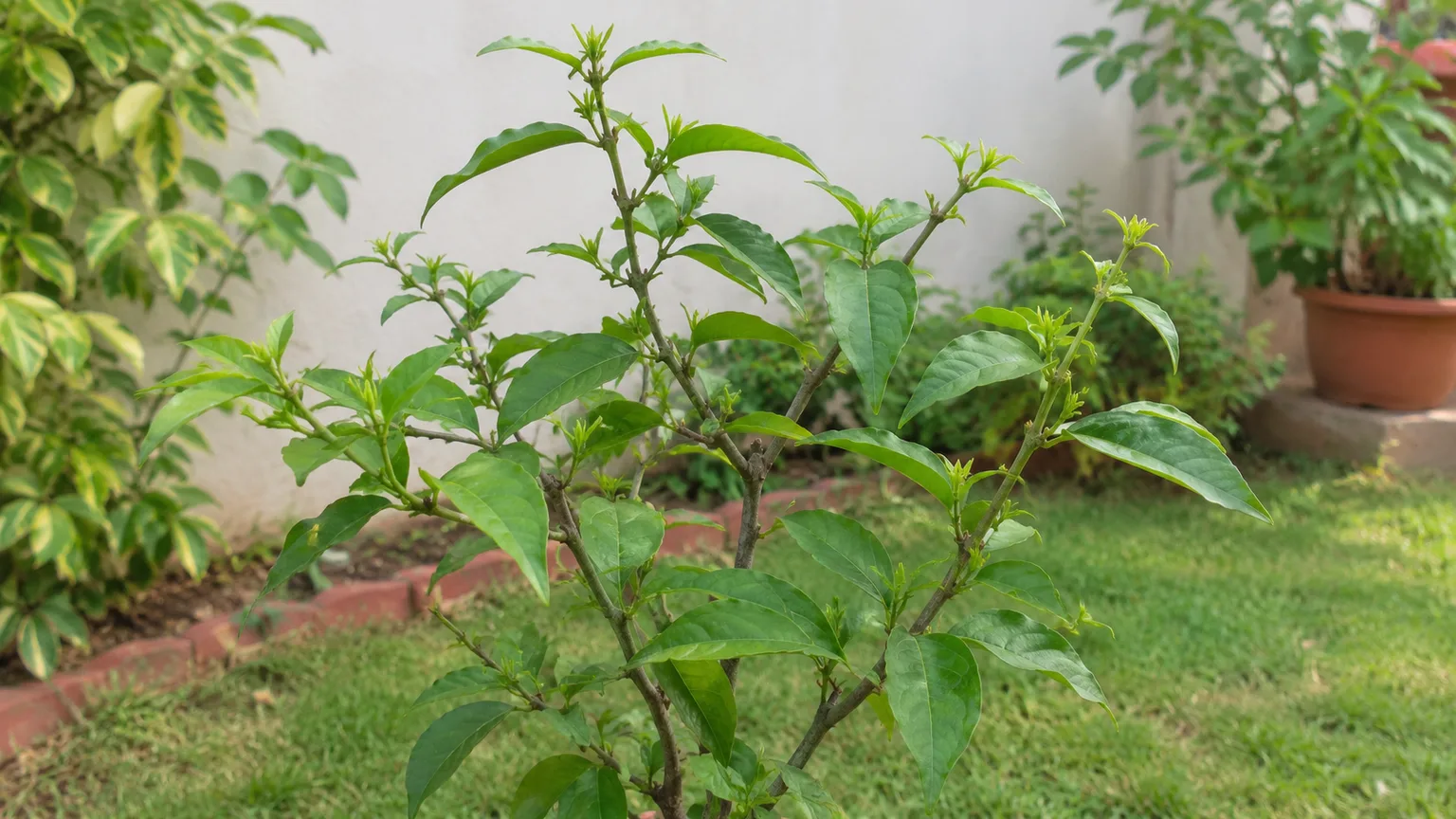
Slow Growth on Raat Rani: Causes, Checks & Fixes
This guide covers slow growth on Raat Rani. See also the general Slow Growth guide, watering, and light pages for this plant.
Slow Growth on Raat Rani: Causes, Checks & Fixes
Quick answer
Raat Rani (Cestrum nocturnum) is naturally a vigorous shrub — NC State Extension lists a rapid growth rate for the genus — so a plant that sits frozen for weeks in warm weather is telling you something specific. The usual culprits are too little direct sun, a root ball that has filled its pot, pruning done at the wrong moment, or simply cool winter weather slowing a tropical shrub down.
For how stalled growth works across plants in general, see our slow growth hub. On Raat Rani, read the stall through shoot-tip extension, sun hours, pot space, and pruning timing — not through generic houseplant checklists.
First step: move the plant to the sunniest position available, with at least six hours of direct sun, and change nothing else for two weeks. Then read the newest shoot tips. Fresh extension means light was the bottleneck. No response means the roots or the pruning calendar need attention next.
What slow growth looks like on Raat Rani
A healthy Raat Rani in warm months pushes visibly lengthening green shoots every week or two, branching freely and setting the buds that open into night-fragrant flower clusters. A true stall breaks that rhythm:
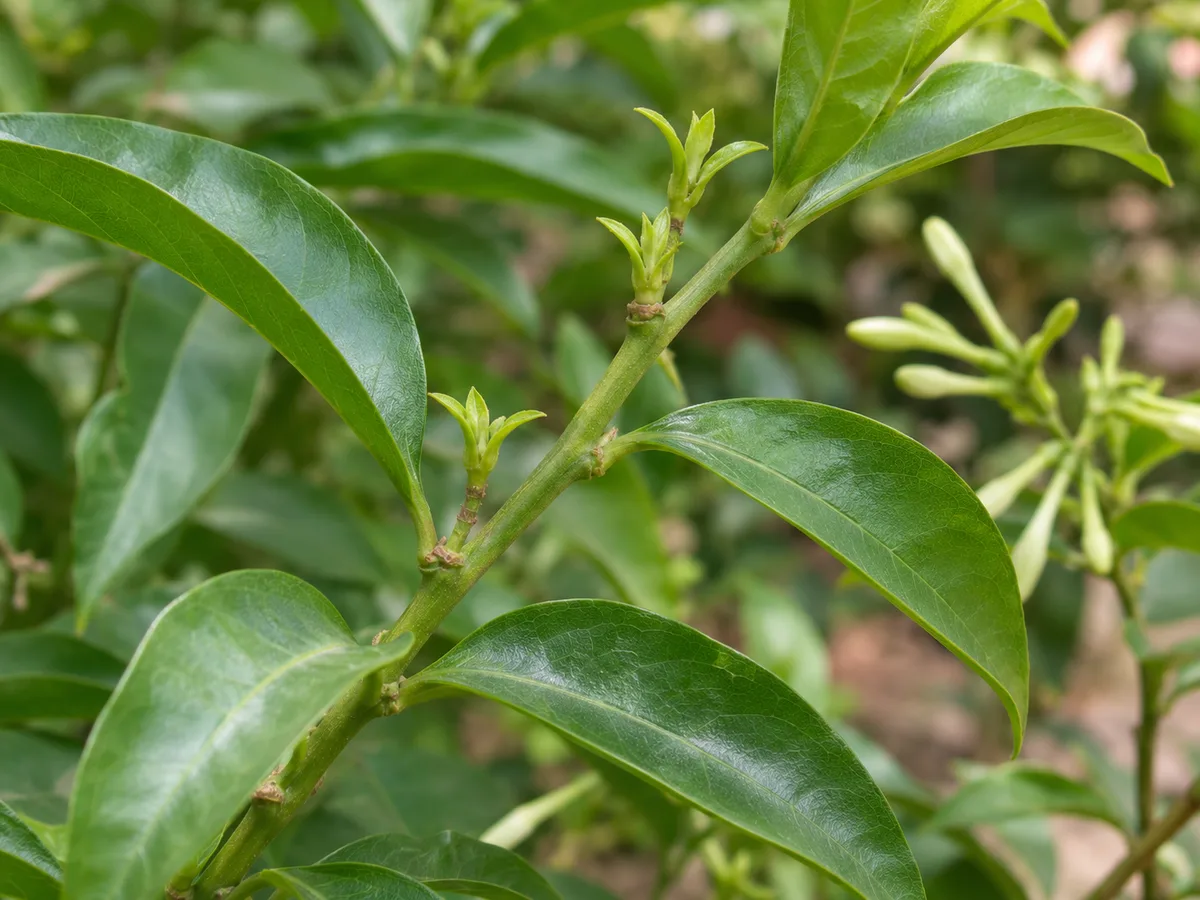
Short internodes and barely extending shoot tips are visible signs of stalled growth.
- Shoot tips sit unchanged for a month or more in spring or summer, with no fresh extension at the branch ends
- New leaves emerge much smaller than older foliage, or internodes stack tight with no outward push
- No new flowering flushes across a whole warm season on a plant old enough to bloom
- Roots circle the pot wall or push through drainage holes, and water runs straight through or the pot dries within a day
- Stems stay firm and green but do nothing, which separates a stall from decline — declining plants yellow, spot, or die back instead
Because this shrub is such a fast grower, even a short stall is conspicuous. A plant that added a foot of growth last monsoon and now adds nothing for six warm weeks is not resting. It is blocked.
When to use this page vs other Raat Rani guides
This page is the pace-and-stall entry — the plant looks otherwise okay but refuses to grow. If a louder symptom dominates, start with the guide matched to it:
| Pattern | Read next |
|---|---|
| Leaves yellowing while growth stalls | Check drainage and watering rhythm in the watering guide |
| Stems stretching long and bare toward light | Correct placement via the light guide |
| Pale new leaves with a hungry look in warm months | Review feeding in the fertilizer guide |
| Dense, tangled stems after a missed prune | Reset structure with the pruning guide |
| Soggy mix, sour smell, soft stem bases | Treat as a root-zone emergency per the watering guide and repotting guide |
| Anything outside these patterns | Browse all Raat Rani problems |
Why a fast-growing shrub stalls
Because Raat Rani wants to grow fast, stalls come from bottlenecks that throttle a willing plant rather than from a weak constitution:
- Weak light is the leading cause. This shrub does best with at least six hours of direct sunlight a day, and heavy shade cuts both shoot extension and bloom volume. A balcony that was sunny in May can fall into building shadow by July — the plant stalls while nothing else visibly changes.
- A pot-bound root ball. Raat Rani fills containers aggressively. Once roots displace most of the mix, each watering flushes straight through and the plant cannot take up enough water or nutrients to extend. Containers typically need repotting every couple of years for this reason.
- Pruning at the wrong moment. The shrub blooms on new growth, so shearing it just as fresh shoots carry developing buds removes the very wood that would extend and flower. Repeated hard cuts through the flowering season keep restarting the plant from zero.
- Hunger in poor mix. A plant fed nothing for a year in leached-out container mix runs short of nitrogen, and nitrogen shortage shows as pale foliage with reduced growth. These shrubs appreciate a monthly feed while establishing and an annual early-spring feed once mature.
- Chronic soggy or concrete-dry soil. The genus wants moist, well-drained loamy soil — roots that sit wet suffocate and stop extending, while a hydrophobic dry ball cannot deliver anything to the shoots.
- Cool-season pause. Below roughly 10°C the shrub idles or sheds leaves. A December stall on a cold terrace is seasonal, not failure.
- Sap-feeding pests. Aphids cluster on the soft shoot tips of this species and drain exactly the tissue responsible for extension. A tip that should be pushing but instead curls and sticks deserves a close look before any other diagnosis.
Winter slowdown vs a true stall
The hardest call on Raat Rani is seasonal: this is a tropical shrub hardy only in zones 9 to 11, so cool months legitimately pause it. Use this split:
| Signal | Winter rest (often normal) | True stall (needs a fix) |
|---|---|---|
| Season | Late autumn through winter, cold nights | Warm spring through early autumn |
| Shoot tips | Quiet but firm and green | Frozen for 4+ weeks despite warmth |
| Leaves | May yellow or shed some in cold | Mostly held, just no new ones |
| Soil | Dries slowly; needs little water | Normal watering, still no extension |
| Recovery | Resumes with spring warmth | Resumes only after you fix the bottleneck |
Do not fertilize a cold-idling shrub into growing — feed waits for spring. Do not treat a July freeze as patience when sun and pot space are clearly off.
Pot-bound container check
Containers stall Raat Rani more often than any disease does, because the shrub’s root system outgrows its pot faster than owners expect. This check is Raat Rani-specific in emphasis: a plant labeled fast-growing in the ground becomes a starving plant in a two-year-old pot.
Slide the root ball out and look. A healthy ball shows mix between the roots. A blocking ball shows a solid mat of circling white roots with almost no mix left, roots girdling the drainage holes, and water that either sheets off the surface or pours straight through the gap between ball and pot wall. The fix is one pot size up with fresh fertile mix per the repotting guide — not a giant tub, which stays wet around a recovering root system. Expect the crown to sit quiet for two to three weeks after repotting while roots colonize the new mix, then push.
Flowers on new wood: the pruning-timing stall
Raat Rani blooms on the shoots it is currently growing, which makes pruning timing a growth lever, not just a shaping choice. The correct rhythm is to prune after the flowering season — cutting back spent stems so the plant answers with the bushy new growth that carries the next flush — and to keep cuts light during active bloom.
The stall pattern looks like this: an owner shears the shrub hard in midsummer for size, the plant spends weeks replacing removed wood instead of extending, buds get cut off with the stems, and the season ends with a tidy small plant that never flowered. If your Raat Rani is compact, healthy, and flowerless after a mid-season haircut, the calendar caused it. Let the next flush of shoots mature untouched, deadhead spent clusters before berries set, and save structural cuts for after flowering finishes.
How to confirm the cause
Work in this order, changing nothing until the checks are done:
- Trace the sun. Count hours of direct sun hitting the leaves, not bright shade. Fewer than six hours daily in warm months makes light the prime suspect — confirm with the light guide.
- Inspect the pot. Unpot and check for circling mats, escaping roots, and degraded mix. If the ball is solid roots, you have your answer regardless of sun hours.
- Review the pruning calendar. Did a hard cut precede the stall by a few weeks? Are developing buds being removed with every trim?
- Read the soil rhythm. Finger-test the top 2–3 cm per the watering guide. Permanently soggy or bone-dry-to-the-bottom both stall extension.
- Check the feed history. No fertilizer for a year or more in old container mix points to hunger; heavy recent feeding with no response points away from it. See the fertilizer guide.
- Scan the shoot tips. Aphids and their sticky residue on the softest new growth can freeze extension on otherwise healthy stems — look closely before assuming culture alone.
- Note the season. Firm stems, some leaf shed, cold nights: rest, not rescue.
The first fix to try
Move the plant to at least six hours of direct daily sun and hold every other variable steady for two weeks.
This single correction resolves the most common Raat Rani stall without stacking confounders. A sun-starved shrub usually shows fresh tip extension within that window. If the tips move, keep the position and resume normal care. If nothing moves after two honest weeks of sun, proceed to unpotting and the pruning-calendar review — the bottleneck is below the soil line or in the shears, not in the sky.
Step-by-step recovery
After the first fix, follow the branch your checks identified:
Light-limited stall
- Hold the sunny position; terrace and garden-edge sun beats a bright indoor sill for this species.
- Water deeply when the top few centimetres dry, draining fully — these are moisture lovers that still demand drainage, per the watering guide.
- Once new shoots extend normally, resume light warm-season feeding via the fertilizer guide.
Pot-bound stall
- Move one pot size up into fresh fertile, free-draining mix; check the soil guide for the working recipe.
- Tease only the most matted circling roots; do not bare-root or hard-prune the crown the same day.
- Water in, return to sun, and expect two to three weeks of quiet before the push.
Pruning-timing stall
- Stop cutting and let current shoots mature through their bloom flush.
- Deadhead spent clusters so energy goes to branching, not berries.
- Make structural cuts only after flowering, following the pruning guide.
Hunger stall
- Apply a balanced feed at label strength while the plant is actively growing — never on a cold-idling winter shrub.
- Reassess in three weeks: greener new leaves and longer internodes confirm the diagnosis.
Wear gloves for all handling and pruning: all parts of this plant are toxic, especially the fruit, so keep cuttings and berries away from children and pets.
Recovery timeline
Judge progress by new shoot extension, not by old leaves changing — new growth is the measure of recovery.
| Situation | Typical timeline | Sign recovery is working |
|---|---|---|
| Light-limited stall given full sun | 2–4 weeks | Shoot tips extend; newest leaves reach normal size |
| Pot-bound, freshly repotted | 3–5 weeks | New roots into fresh mix, then a flush of shoots |
| Pruning-timing stall left to mature | 4–6 weeks | Untouched shoots lengthen and set buds |
| Hunger corrected in warm months | 3–4 weeks | Greener new foliage with longer internodes |
| Winter rest | Until spring warmth | First extension when nights stay warm |
Escalate if shoot tips blacken from the ends, yellowing spreads across the crown, or the mix stays sour and soggy — those are decline patterns, not stalls.
What not to do
- Drowning a stalled plant with daily water. Extra water on an already wet root zone suffocates the roots that drive extension.
- Feeding a cold or stressed shrub. Fertilizer cannot substitute for sun or pot space, and it burns idle roots.
- Repotting, hard-pruning, and relocating in one weekend. You will never learn which bottleneck mattered.
- Shearing mid-season for size. You remove the new wood that carries both growth and flowers.
- Chasing growth indoors in a dim room. This is an outdoor sun shrub; a dark corner stalls it by design.
- Ignoring shoot-tip pests. Spraying the whole plant while aphids sit untouched on the tips wastes the treatment.
How to prevent it next time
Keep Raat Rani where six-plus hours of direct sun is realistic in every season, and re-check the light map when neighboring buildings leaf out or shadows shift. Repot on schedule before the ball turns solid — repot container plants every two years to prevent root-bound conditions — refresh the top mix annually, and feed lightly through the warm months rather than in one heavy dose.
Prune after each flowering flush to force the bushy regrowth this species is known for, deadhead before berries set, and let the shrub rest unfed through cold weather. Judge the year by steady shoot extension and repeat bloom flushes: a Raat Rani that lengthens, branches, and perfumes the night air on schedule is a plant with no bottlenecks left.
Related Raat Rani guides
- Watering — dry-down rhythm and drainage checks behind stalled extension
- Light — placing a sun-hungry shrub for six-plus hours daily
- Soil — fertile, free-draining mix that feeds fast growth
- Fertilizer — warm-season feeding without excess nitrogen
- Pruning — post-flush cuts that trigger bushy new wood
- Repotting — moving up before the ball turns solid
- Raat Rani problems — all Raat Rani symptom guides in one place
Related tool
Use the Plant Growth Rate Calculator to benchmark slow growth on this plant against its expected fast pace before changing multiple variables at once.