Star Jasmine Not Getting Enough Light? Signs and Fixes
Quick answer
On Star Jasmine, low light is more likely when new stems become sparse and stretched toward the brightest opening, growth slows, and a mature vine flowers poorly. First, move or train it into a brighter sheltered position, increasing direct sun gradually if it has been indoors or deeply shaded.
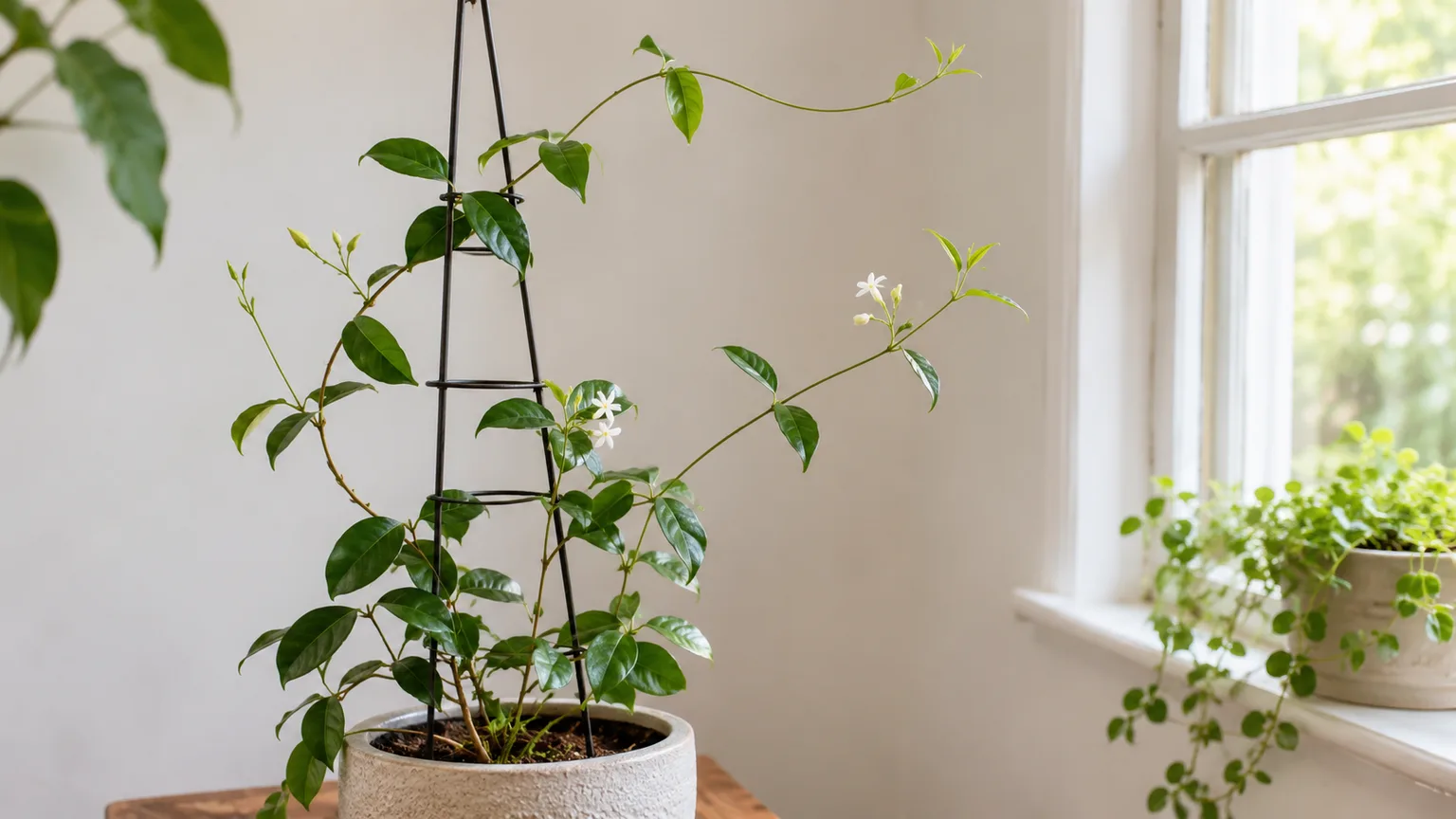
Not Enough Light on Star Jasmine: How to Diagnose and Fix Sparse Growth
This guide covers not enough light on Star Jasmine. See also the general Not Enough Light guide, watering, and light pages for this plant.
Not Enough Light on Star Jasmine: How to Diagnose and Fix Sparse Growth
Search intent
The reader sees a thin, reaching Star Jasmine or a mature vine with few flowers and wants to know whether shade is the cause and how to increase light without scorching the foliage.
SEO title planning
- Star Jasmine Not Getting Enough Light? Signs and Fixes
- How to Fix Leggy, Sparse Star Jasmine
- Low Light on Star Jasmine: What to Check First
Best title: Star Jasmine Not Getting Enough Light? Signs and Fixes — it names the plant and frames the page around diagnosis and a safe first action.
Meta description planning
- Learn how to recognize low light on Star Jasmine, choose a brighter position safely, and distinguish stretched growth from watering or root problems.
- Spot low-light signs on Star Jasmine and move it toward brighter conditions without exposing shaded foliage to sudden hot sun.
- Diagnose sparse Star Jasmine growth, compare shade with water stress, and improve light before pruning or feeding.
Best description: Learn how to recognize low light on Star Jasmine, choose a brighter position safely, and distinguish stretched growth from watering or root problems.
Primary and supporting keywords
- Primary: not enough light on Star Jasmine
- Supporting: leggy Star Jasmine; Star Jasmine shade; Star Jasmine not flowering; Trachelospermum jasminoides light; sparse Star Jasmine growth
E-E-A-T signals
The guide separates a likely light pattern from yellowing or wilt caused by wet or dry roots, and applies the species’ sun-to-light-shade range rather than a generic houseplant light rule.
- Star Jasmine Not Getting Enough Light? Signs and Fixes
- How to Fix Leggy, Sparse Star Jasmine
- Low Light on Star Jasmine: What to Check First
Star Jasmine Not Getting Enough Light? Signs and Fixes
- Learn how to recognize low light on Star Jasmine, choose a brighter position safely, and distinguish stretched growth from watering or root problems.
- Spot low-light signs on Star Jasmine and move it toward brighter conditions without exposing shaded foliage to sudden hot sun.
- Diagnose sparse Star Jasmine growth, compare shade with water stress, and improve light before pruning or feeding.
Learn how to recognize low light on Star Jasmine, choose a brighter position safely, and distinguish stretched growth from watering or root problems.
- H1: Not Enough Light on Star Jasmine: How to Diagnose and Fix Sparse Growth
- H2: Quick answer
- H2: What low light looks like on Star Jasmine
- H2: How to confirm a light shortage
- H2: First fix: give the vine a brighter position
- H2: Indoor and outdoor light adjustments
- H2: What recovery looks like
- H2: When sparse growth is not a light problem
- H2: Avoid common mistakes
- H2: When to use this page vs other Star Jasmine guides
- H2: Related Star Jasmine guides
Quick answer
Low light is likely when new Star Jasmine stems are thin, widely spaced, and growing toward the brightest opening, especially if a mature vine has also stopped flowering. First, move or train it into a brighter sheltered position. Increase direct sun gradually if it has been indoors or in deep shade; a sudden move into hot sun can scorch leaves.
Star Jasmine (Trachelospermum jasminoides) is an evergreen woody climber with twining stems and glossy leaves, as described in the RHS plant profile. It tolerates sun or light shade, but a sunny sheltered position gives the best chance of abundant flowers, as noted by North Carolina State Extension. Use the Star Jasmine overview for whole-plant placement and seasonal context; this page focuses on diagnosing and correcting a dim growing position.
What low light looks like on Star Jasmine
Look at the newest growth, not just the older woody framework. A vine short of light may produce longer gaps between leaf pairs or stems that lean and extend toward a window or open sky. Penn State Extension’s diagnostic guide lists long internodes and elongated petioles among clues associated with low-light conditions; on a twining Star Jasmine, compare several new stems because its normal climbing habit can also make shoots reach for support.
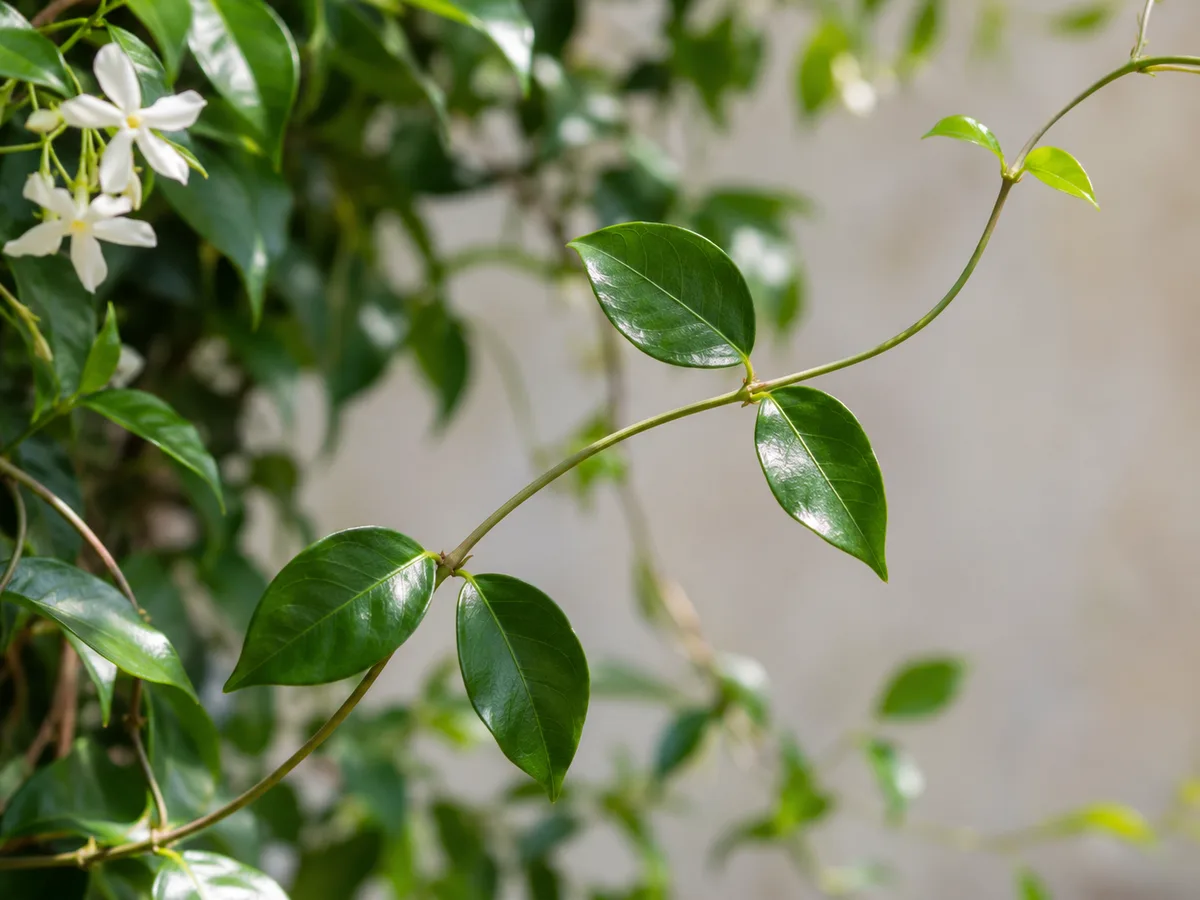
Long gaps between leaf pairs on new growth can support a low-light diagnosis when the vine is also reaching toward a brighter opening.
A mature plant that gets too little sun may also flower sparsely. North Carolina State Extension recommends a sunny, sheltered site for the best flowers, and the RHS profile lists full sun or partial shade for the species. No flowers alone do not prove a light problem: use it as one clue alongside the position and shape of new stems.
How to confirm a light shortage
- Track the sun at the plant. Note whether buildings, curtains, a porch roof, or a neighboring tree block the brightest part of the day. Indoors, check whether the window is unobstructed and whether the plant sits in the brightest part of the room.
- Compare old and new stems. Low light is more plausible when the newest growth is sparse or stretched toward one direction. A single long vine trained along a support is not enough to diagnose it.
- Check the root zone before moving it. If leaves are yellowing across the plant or the mix stays wet, review the Star Jasmine watering guide and soil guide. Poor light and excess water can occur together because the pot may dry more slowly in a dim, cool position.
- Separate shade from other causes. Look under leaves and along tender tips for pests, and inspect the pot for persistent wetness or sour-smelling mix. Use the yellow-leaves guide if yellowing is the main symptom, or the leggy-growth guide when the stem shape is the main concern.
First fix: give the vine a brighter position
Once the light pattern fits, shift the container to the brightest sheltered position available, or train an outdoor vine toward a sunnier section of its support. The RHS growing guide recommends sun or light shade outdoors and good light for conservatory plants. A position with some direct morning sun and bright light for the rest of the day is a practical starting point where it suits the local climate; avoid a dark interior corner.
If the plant has spent weeks indoors or in deep shade, do not place it immediately in hot midday sun. For conservatory-grown plants, the RHS advises shading from hot summer sun. Increase direct exposure in stages and pause if new leaves bleach or develop crisp patches. The Star Jasmine light guide covers choosing a suitable exposure across seasons.
Indoor and outdoor light adjustments
Star Jasmine is usually grown outdoors on a trellis, wall, or other support, though it can be grown in a bright conservatory. Indoors, use the brightest suitable window and turn the container occasionally so one side does not keep reaching toward the glass. If it remains thin after being moved, reassess how much unobstructed daylight actually reaches the leaves rather than assuming the problem is fertilizer.
Outdoors, partial shade is not automatically wrong. The RHS describes Star Jasmine as suited to a warm sheltered spot in sun or light shade. Epic Gardening also recommends sunny to partially shaded planting positions. If the vine is leafy and growing steadily in light shade, but flowers are the only concern, improve sun exposure where practical rather than making a drastic change to soil or watering.
What recovery looks like
Judge the change by growth formed after the move. Existing long gaps between leaves will remain; improvement means new stems develop with a more compact spacing, stronger side growth, and—in a flowering-season check—a better display of buds. Give the plant a normal growing period to respond rather than repeatedly moving it from spot to spot.
Do not prune every stretched stem immediately. First give the vine better light and let it establish new growth. If it needs shaping, use the Star Jasmine pruning guide to time cuts and retain the framework you want to train.
When sparse growth is not a light problem
- Wet soil and yellow leaves: a pot that stays heavy and damp points toward drainage or watering trouble. Check the overwatering guide before watering again.
- Dry mix and limp leaves: confirm the root ball has not dried through; compare with the underwatering guide.
- Normal climbing growth: a vigorous vine may send long stems along a support even when light is adequate. Check whether the leaves are healthy and spaced normally along other recent shoots.
- Pests on new growth: inspect for aphids or mealybugs before changing the light position. The plant problems hub helps route you to the symptom that best matches what you see.
Avoid common mistakes
Do not use a fertilizer dose to compensate for shade. Extra feeding cannot replace the light needed to support growth, and it can add another variable before the cause is clear. If the plant still grows poorly after the light is corrected and the roots are healthy, consult the Star Jasmine fertilizer guide and feed only according to the plant’s season and product label.
Avoid abrupt changes from deep shade to hot direct sun, repeated repositioning every few days, or hard pruning before the vine shows how it responds. Change the light first, then review new growth and watering needs.
When to use this page vs other Star Jasmine guides
Use this guide when the main evidence is stretched new stems, directional reaching, slow growth in a dim position, or poor flowering that coincides with shade. Use the leggy-growth guide if the unusual stem form remains the central question, and the yellow-leaves guide if leaf color is the leading sign. The watering guide is the better starting point when the mix is staying wet or drying too far between checks.
Related Star Jasmine guides
- Star Jasmine overview — whole-plant growing conditions and seasonal care.
- Light guide — choose sun, light shade, and a sheltered location.
- Watering and soil guides and soil — check moisture and drainage when leaves yellow or growth stalls.
- Leggy growth — compare a stretched framework with broader low-light symptoms.
- Pruning — shape the vine after its new growth and flowering response are clear.
Use the Plant Problem Diagnosis Tool if several symptoms overlap and you need to compare likely causes before changing care.
How much light does Star Jasmine need?
Star Jasmine grows in sun or light shade, and a sunny sheltered position is recommended for the best flower display. Indoors, give it a very bright position; a dim corner may keep it alive while producing sparse growth and few flowers.
Can Star Jasmine grow in shade?
It can tolerate light shade, but deep shade is a poor choice when you want dense growth or flowers. If stems lengthen toward a window or the vine has stopped flowering, compare the current position with a brighter sheltered one.
Why is my Star Jasmine leggy but still green?
Healthy-looking leaves do not rule out low light. Long spaces between leaves and one-sided growth toward a window are clues; check whether the newest stems show the same pattern before changing care.
Should I fertilize Star Jasmine that is not flowering?
Do not use fertilizer to compensate for a dim position. Correct the light first, then consider feeding only if growth and soil conditions support a nutrient need.
Can I move an indoor Star Jasmine straight into full sun?
Avoid an abrupt move from indoor or deep shade into hot direct sun. Start in a brighter sheltered spot and increase direct exposure in stages, watching new leaves for bleaching or crisp patches.