Best Essential Oil Diffusers: 7 Options Ranked
Compare seven essential oil diffusers by room size, pet safety, and maintenance. Learn when a diffuser helps—and when your plants need a humidifier instead.
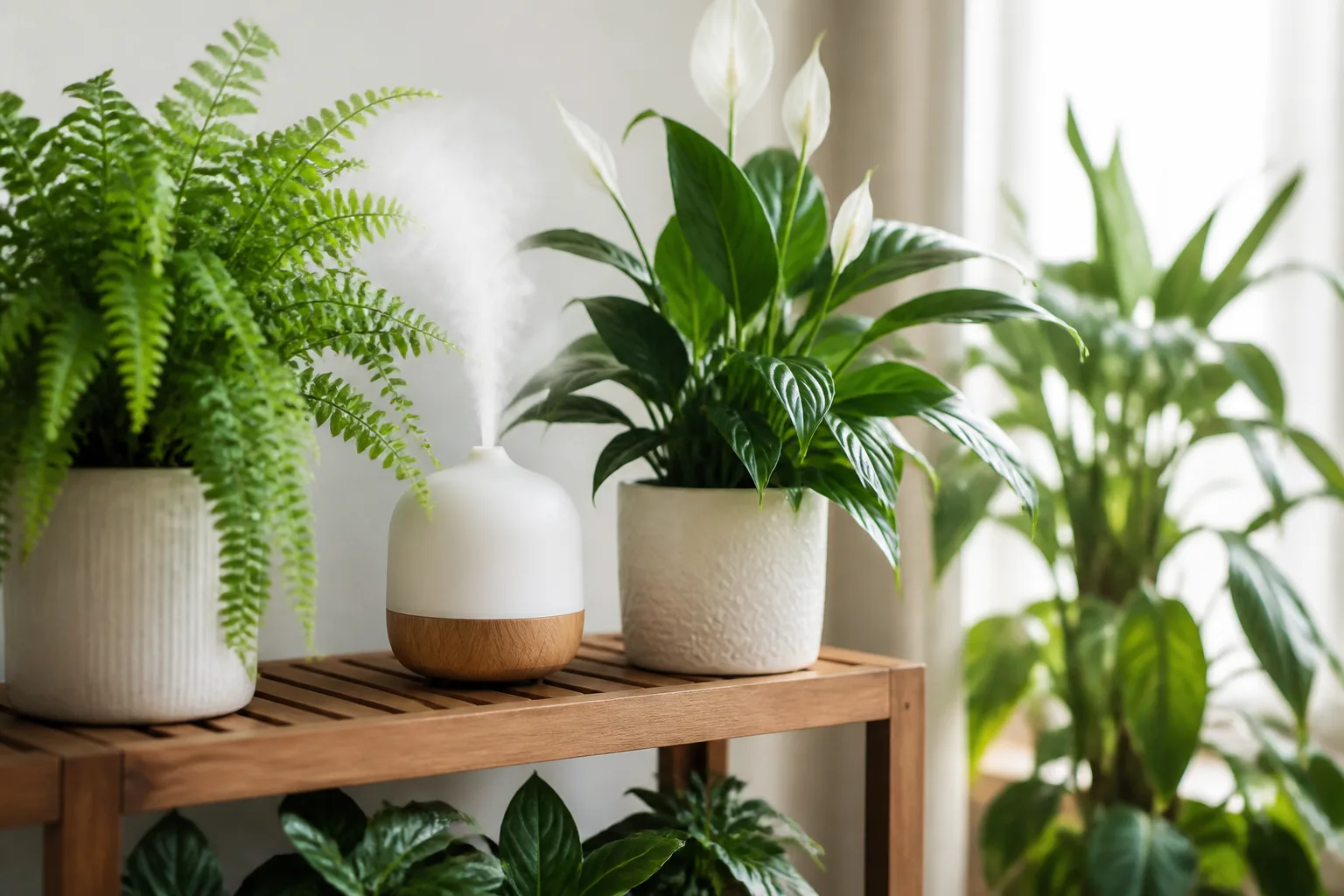
The best essential oil diffuser for your home is the one that scents the living space you actually use—without convincing you it will also fix dry tropical leaves, and without putting concentrated oils where curious pets or delicate foliage can reach them. A $15 ultrasonic on a bookshelf can make a bedroom smell wonderful. It will not replace a plant humidifier when a hygrometer at leaf height reads 28% RH in January.
This guide ranks seven diffusers for common real-world jobs: a small plant bedroom, an open kitchen–living layout, a pet-forward apartment, and a “I want it to look like decor” shelf. Picks are sorted by room volume, pet access, maintenance tolerance, and control features—not by which brand ran the loudest ad last week.
Before you buy, read diffuser vs humidifier for plants and houseplant humidity targets. If your goal is healthier calathea or fern foliage, start with best humidifiers for plants and a hygrometer. If you are weighing oils for pest hacks, read does peppermint oil repel bugs before misting anything near leaves.
Quick Comparison: Seven Diffusers by Room and Household Job
| Pick | Model | Best for | Type | Tank / cartridge | Auto shutoff |
|---|---|---|---|---|---|
| Overall | InnoGear Essential Oil Diffuser | Small rooms, first purchase | Ultrasonic | 100 mL water | Yes |
| Compact | doTERRA Pebble Diffuser | Nightstand / entryway | Ultrasonic | 100 mL water | Yes |
| Large room | Aera Diffuser | Open layouts up to ~1,000 sq ft | Microdroplet cartridge | Oil cartridge | No (schedule via app) |
| Pet homes | Drift Home Scent Diffuser | Plug-in, low spill risk | Evaporative plug-in | 30-day capsule | No |
| Design | Umbra Casita Diffuser | Decor-forward shelf | Ultrasonic | 150 mL water | Yes |
| Fragrance variety | Pura 4 Smart Fragrance Diffuser | Scent library + app | Evaporative plug-in | Dual cartridges | Yes |
| Giftable | Vitruvi Stone Diffuser | Premium ultrasonic | Ultrasonic | 70 mL water | Yes |
Prices move with sales; use the table as a job map. A sealed cartridge plug-in wins when you hate wiping tanks. A 100 mL ultrasonic wins when you want to change oils freely and keep the unit off the floor where paws roam.
Essential Oil Diffuser vs Plant Humidifier: Different Jobs
A diffuser disperses volatile fragrance—essential oils or proprietary scent blends—into room air. A humidifier adds water vapor to raise relative humidity (RH). The machines sometimes look alike because many diffusers are ultrasonic cool-mist devices, but the outcome is not interchangeable.
Ultrasonic diffusers use high-frequency vibration to break a water–oil mix into a fine mist. That mist carries scent—and a small amount of moisture. In a typical 100 mL tank running a few hours, the humidity bump is localized and short-lived. It is not enough to move a plant shelf from desert-dry winter air toward the 40–60% RH band most tropical houseplants prefer. Penn State Extension is clear that many winter plant problems trace to light and watering, not humidity alone—but when RH at leaf height sits in the low 30s for weeks, leaves on monstera, peace lily, and fiddle-leaf fig show stress that scent cannot fix.
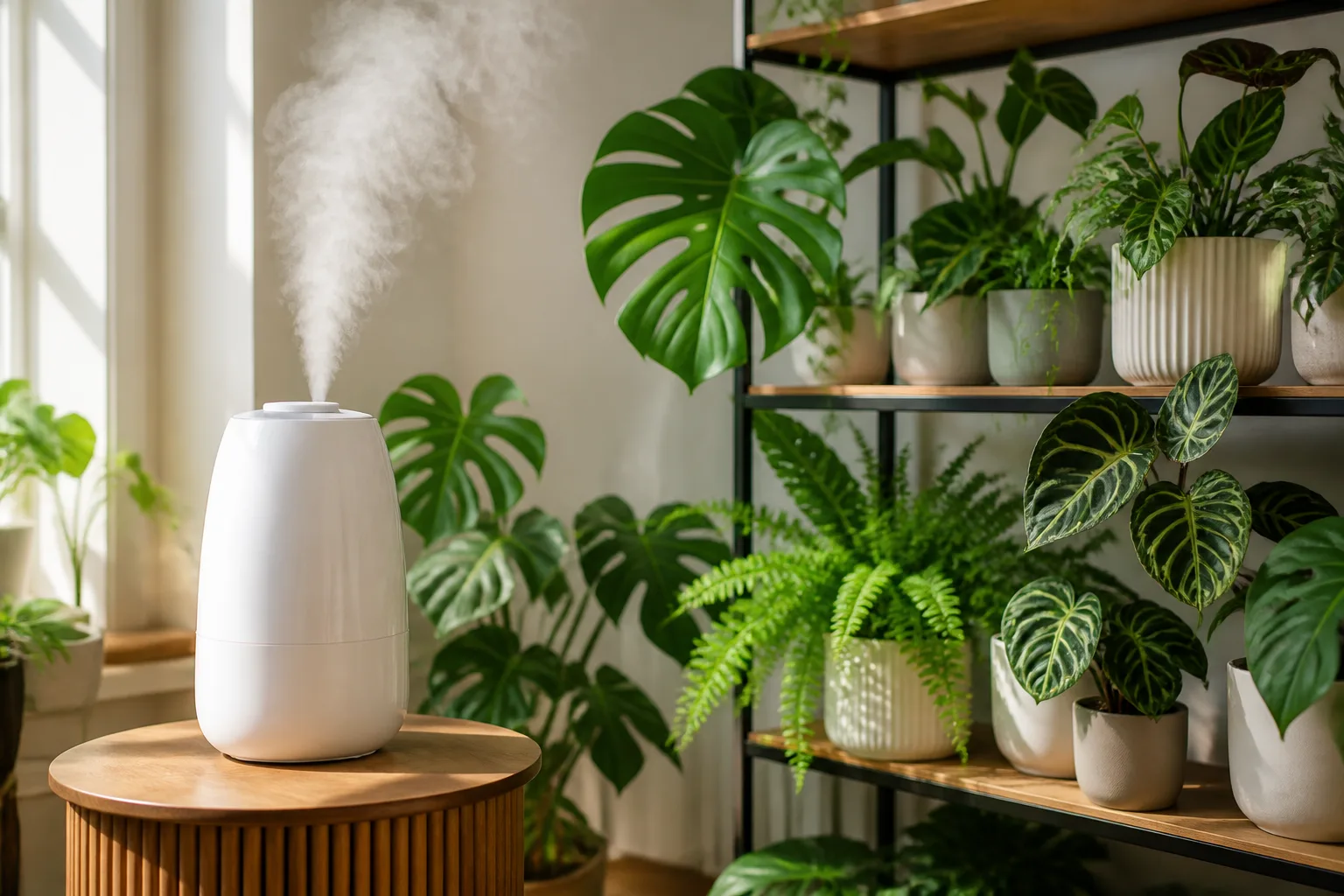
Do not pour essential oils into a plant humidifier unless the manufacturer explicitly allows it. EPA humidifier guidance warns that oils can damage tanks, encourage bacterial growth, and aerosolize compounds humidifiers were not designed to handle. Some humidifiers include a separate scent tray isolated from the main tank—that is different from dripping oil into the water reservoir your plants indirectly breathe through.
Buy a diffuser when you want controlled home fragrance in a room you occupy. Buy a humidifier—or a proper pebble tray plus grouping—when a hygrometer at leaf height says the air is too dry for your collection. See pebble tray vs humidifier for the full split.
Essential Oils, Pets, and Houseplants in the Same Room
Plant people and pet people overlap heavily—and both groups underestimate how strong concentrated essential oils are compared to a faint smell humans enjoy.
The ASPCA notes that 100% essential oils can harm pets that walk through spills, get oil on fur, or ingest residues. Symptoms can include unsteadiness, depression, vomiting, and low body temperature in severe cases. Tea tree (melaleuca) oil is a repeat offender: small volumes of concentrated oil can cause serious issues for dogs and cats.
Using a diffuser for a short period in a secured area pets cannot access is not automatically a crisis—but pets smell far more acutely than we do. What feels subtle to you can be overwhelming to a cat on the same shelf line. Pet Poison Helpline stresses that risk depends on oil type, concentration, dose, and route of exposure; cats and birds are especially vulnerable.
Birds: The ASPCA recommends avoiding essential oil diffusers in homes with birds because avian respiratory tracts are extremely sensitive. If you keep parrots or finches near your plant room, treat fragrance hardware as a non-starter.
Houseplants: Leaves are not “noses,” but they exchange gas through stomata and can accumulate oily films when mist loaded with lipids settles on foliage. That film can reduce photosynthesis, magnify sun scorch, and create sticky surfaces that attract dust and pests. Keep diffusers several feet from fragile foliage, aim mist away from canopies, and skip running strong oils directly beside moisture-loving species you are already struggling to keep crisp.
Check pet-safe houseplants before assuming your green collection and your scent routine are automatically compatible.
Signs Oil Vapor or Residue Is Stressing Your Plants
Watch for stress that appears after diffuser sessions, not gradual winter dryness:
- Dull, greasy-looking leaf surfaces or visible film after mist runs toward plants
- Tip and edge burn on thin leaves that were fine before oils entered the routine
- Sudden droop on species that were well watered—distinct from dry-air crisping
- New pest activity on sticky leaf surfaces (aphids and scale favor stressed, coated foliage)
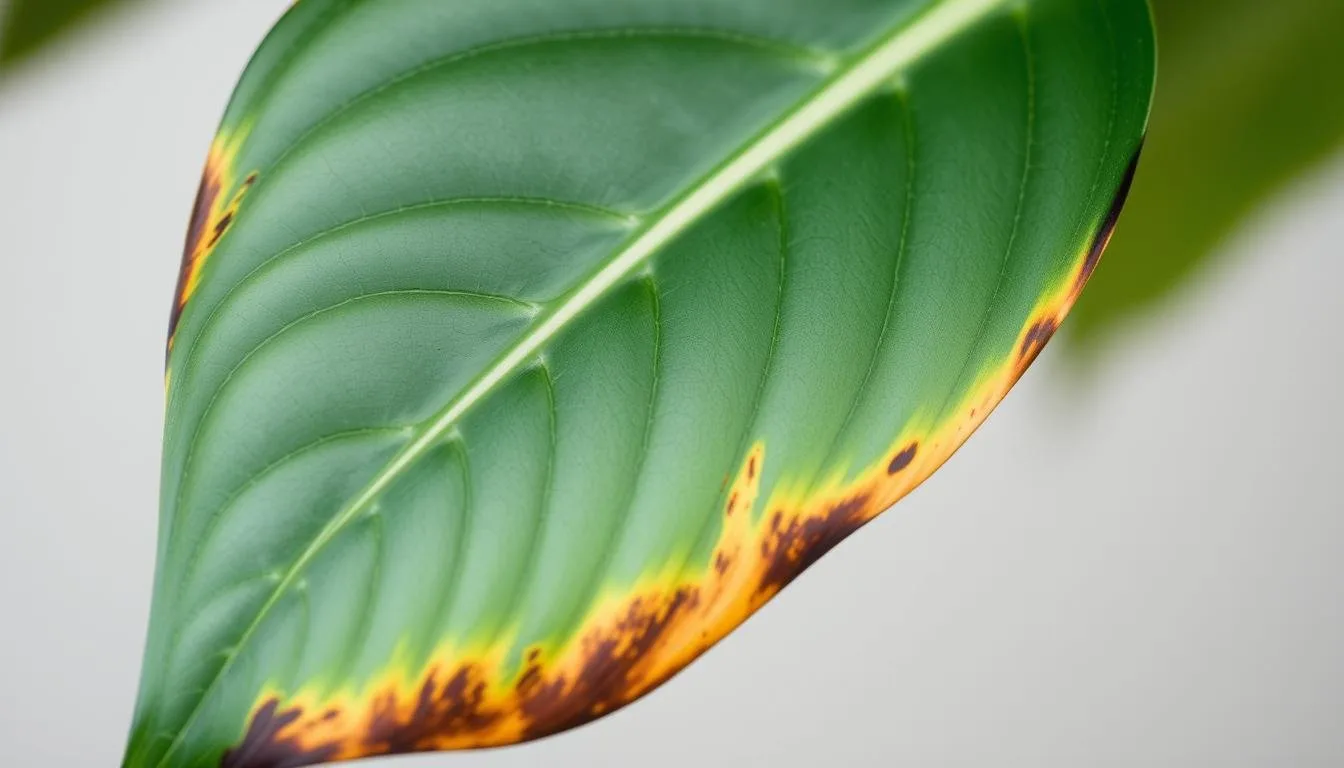
Dry-air crisping from low RH usually shows even marginal browning on multiple leaves without a greasy film. If only the side facing the diffuser flags while soil moisture is normal, relocate the unit or reduce oil load before troubleshooting watering again.
Ultrasonic vs Evaporative Diffusers: What Each Actually Does
Most “essential oil diffuser” searches land on two families—plus a few premium outliers.
Ultrasonic diffusers mix water and a few oil drops in a tank, then vibrate liquid into a cool mist. Pros: inexpensive, visible mist, easy oil changes, pleasant water sounds. Cons: tanks need regular cleaning; stagnant water grows biofilm; oil residue sticks in crevices; mist adds only minor, temporary humidity.
Evaporative and heat-assisted plug-ins (wall diffusers with sealed cartridges) warm or fan-force scent from a closed oil supply. Pros: no open water tank on the shelf; less spill risk for pets and kids; often silent. Cons: less scent customization; ongoing cartridge cost; some models run continuously when plugged in unless you use app schedules.
Microdroplet / nebulizing-style cartridge systems (like the Aera) push fragrance without a user-filled water tank. Pros: strong, even coverage for large open rooms; no water–oil mixing mess. Cons: premium price; cartridge spend; not a humidity tool.
For plant rooms: ultrasonic units are fine if mist is not aimed at leaves and tanks are emptied between uses. Cartridge plug-ins win when curious cats turn open bowls into a spill hazard.
What to Look for Before You Buy
Tank Size, Room Coverage, and Scent Strength
Small 70–100 mL ultrasonic tanks are enough for bedrooms and offices up to about 200 sq ft if you accept refills every few hours on continuous mode. 150 mL tanks stretch intermittent runs toward 8–10 hours—useful overnight if auto shutoff works.
Scent strength scales with oil drops, not tank size alone. Most small ultrasonics need only 2–5 drops per 100 mL of water for a subtle room fragrance. More than that in a closed bedroom can overwhelm humans, pets, and any plant sitting in the mist path.
Large open kitchen–living zones need either higher output (cartridge systems rated for hundreds of square feet) or acceptance that a desk diffuser will scent only the corner it sits in.
Timers, Intensity, and Automatic Shutoff
Intermittent mist stretches runtime and prevents scent fatigue. Look for 2-hour / 4-hour / 8-hour or continuous vs intermittent cycles on ultrasonics.
Automatic shutoff when the tank empties is non-negotiable for ultrasonics—you do not want a dry unit humming for hours. Plug-in cartridge models may lack water-based shutoff because they do not use open tanks; instead evaluate intensity steps and whether the device runs 24/7 when plugged in.
Smart apps help when you want scheduled scent (morning kitchen only, off during pet nap time) without walking past a plant shelf to press buttons.
Best Overall: InnoGear Essential Oil Diffuser
Job: Best first ultrasonic for a small bedroom or home office that also holds a modest plant shelf—when you want reliable scent without a decor premium.
The InnoGear is the workhorse pick: 100 mL tank, continuous or intermittent modes, seven LED light options (dimmable or off), and auto shutoff when water runs low. It throws scent fast in small rooms; start with two to three drops so a 10×10 space does not smell like a spa lobby.
Why it works in plant homes: Compact footprint fits a high shelf above pet reach. Wide tank mouth simplifies wiping after each session—important when you are already maintaining humidifiers elsewhere.
Limits: Plain plastic aesthetic. Cord weight can tip lightweight units if the cable pulls. Not enough coverage for open floor plans. Still an open water bowl—keep away from cats who treat shelves as parkour.
Skip if: You need whole-home scent or hate any visible plastic in plant shelf photos.
Specs snapshot: Ultrasonic | ~3.9 × 3.9 × 5.5 in | 100 mL | corded | auto shutoff yes
Most Compact: doTERRA Pebble Diffuser
Job: Neutral, small-footprint ultrasonic for entry tables and nightstands where a bulky unit would crowd pots.
The Pebble matches InnoGear function in a rounded stone-like shell with clearer timer labels (2 / 5 / 10 hours) and intermittent mode on the longest setting. Tank access is wide despite the small body—easy refill under a faucet.
Plant-room note: Effective scent throw means it can overpower a tiny hallway; better in medium rooms where mist disperses before hitting foliage. Place on a stable tray if the cord tugs the unit toward the shelf edge.
Limits: Cord length and weight can tilt the unit. Light options are fewer than InnoGear’s rainbow cycle.
Skip if: You need maximum runtime without refill in a large plant room.
Specs snapshot: Ultrasonic | ~6 × 4 × 6 in | 100 mL | corded | auto shutoff yes
Best for Large Rooms: Aera Diffuser
Job: Open-concept homes and large plant-adjacent living areas where a desktop ultrasonic cannot fill the volume.
The Aera uses scent cartridges and microdroplet technology—no user-filled water tank, no oil bottles tipping on a shelf. Coverage claims run toward ~1,000 sq ft when output and schedule are tuned. App control handles intensity and timing; manual buttons work if Wi-Fi fails.
Why plant people consider it: Cartridge system eliminates open oil + water spills on the same shelf as propagation stations and pet bowls. Scent stays consistent without mist aimed at leaves.
Limits: High upfront and cartridge cost. No auto shutoff in the water-tank sense—scheduling discipline matters. Not customizable with random essential oil bottles from your apothecary drawer.
Skip if: Budget is tight or you enjoy blending your own oils.
Specs snapshot: Microdroplet cartridge | corded | app + manual | no water tank
Best for Pet Homes: Drift Home Scent Diffuser
Job: Plug-in scent with a closed capsule and minimal maintenance for households with pets that knock things off shelves.
Drift is an evaporative wall plug-in: oil in a sealed capsule is gently heated to release fragrance—no visible mist, no open bowl, no tank to scrub. Capsules last up to ~30 days depending on intensity. Three intensity levels cover small bathrooms up through adjacent living space on low.
Pet-forward advantages: Cannot be knocked off a shelf because it is not on the shelf. Closed oil supply reduces direct exposure to concentrated bottles. Still keep intensity low if pets sleep near the outlet—ASPCA’s “secured area” advice still applies.
Limits: Highest intensity can be very strong—start low. No timer without unplugging. Ongoing capsule cost. Not for bird homes.
Skip if: You want a countertop ritual with visible mist or custom oil blends.
Specs snapshot: Evaporative plug-in | ~5.75 × 4.75 × 5.5 in | capsule | no water tank
Best Design: Umbra Casita Diffuser
Job: Decor-first plant corners where the diffuser should read as sculpture—not lab equipment between pots.
The Casita hides a 150 mL removable water cup under a ceramic house-shaped cover that stores 8–10 essential oil bottles in the base. Mist exits through the “chimney.” Warm light adds evening ambiance without harsh LEDs.
Plant-shelf fit: Largest tank on this list means longer intermittent runs overnight. Removable cup refills without dragging the whole unit past trailing vines.
Limits: No USB wall adapter included—budget a quality brick. Separate power and timer buttons are less intuitive than one-button cycling. Ceramic cover is pretty but heavier—confirm shelf weight limits with wet soil pots.
Skip if: You need app scheduling or maximum mist output for huge rooms.
Specs snapshot: Ultrasonic | ~6.75 × 6.75 × 6.25 in | 150 mL | corded | auto shutoff yes
Best Fragrance Variety: Pura 4 Smart Fragrance Diffuser
Job: Scent library + app control when you want brand-name fragrances and schedules without open oil bottles on a plant shelf.
Pura 4 holds two cartridges simultaneously—switch or blend via app. Partner brands cover a wide catalog, so you are not locked to one essential oil vendor. The plug-in body rotates to share a duplex outlet. App tracks cartridge levels, intensity, light color, and schedules.
Plant-room workflow: Run short morning schedules so scent does not saturate the same air mass your humidity meter reads all day. Keep intensity low in small homes; this unit can overpower fast.
Limits: Cartridge subscription economics. Slightly larger than Drift on the outlet. Still not a humidifier.
Skip if: You dislike proprietary cartridges or do not want another app.
Specs snapshot: Evaporative plug-in | ~4.6 × 4.6 × 3.7 in | dual cartridges | app + manual | auto shutoff yes
Most Giftable: Vitruvi Stone Essential Oil Diffuser
Job: Premium ultrasonic for design lovers who want a long-lived countertop piece near—but not aimed at—plants.
Vitruvi’s Stone diffuser is a 70 mL ultrasonic with a matte ceramic shell, four- or eight-hour modes (eight hours intermittent), soft light settings, and auto shutoff. It looks excellent in photos beside curated plant shelves—which matters if your “plant room” is also your living room.
Maintenance reality: The small tank has many crevices. If you skip drying between uses, oil residue congeals in corners. Wipe dry after sessions; vinegar cycles every few weeks; alcohol wipes on stubborn film.
Limits: Smallest tank here—best for small offices and bedrooms, not whole plant rooms. Tiny buttons can frustrate users with limited dexterity. Premium price for moderate tank size.
Skip if: You want low-maintenance cleaning or large-room output.
Specs snapshot: Ultrasonic | ~3.4 × 3.4 × 7.1 in | 70 mL | corded | auto shutoff yes
Placement, Cleaning, and Safe Use Near Plant Shelves
Placement rules that protect plants and pets:
- Sit ultrasonics at least 3–6 feet from leaf canopies, elevated on a stable shelf pets cannot reach—not on the same tray as pots.
- Aim mist into open air, not across fern fronds or fuzzy calathea leaves.
- Run shorter sessions in closed plant rooms; open a door between cycles so VOC load disperses.
- Store concentrated oil bottles in a closed cabinet—not on the pebble tray beside pots where spills contact soil.
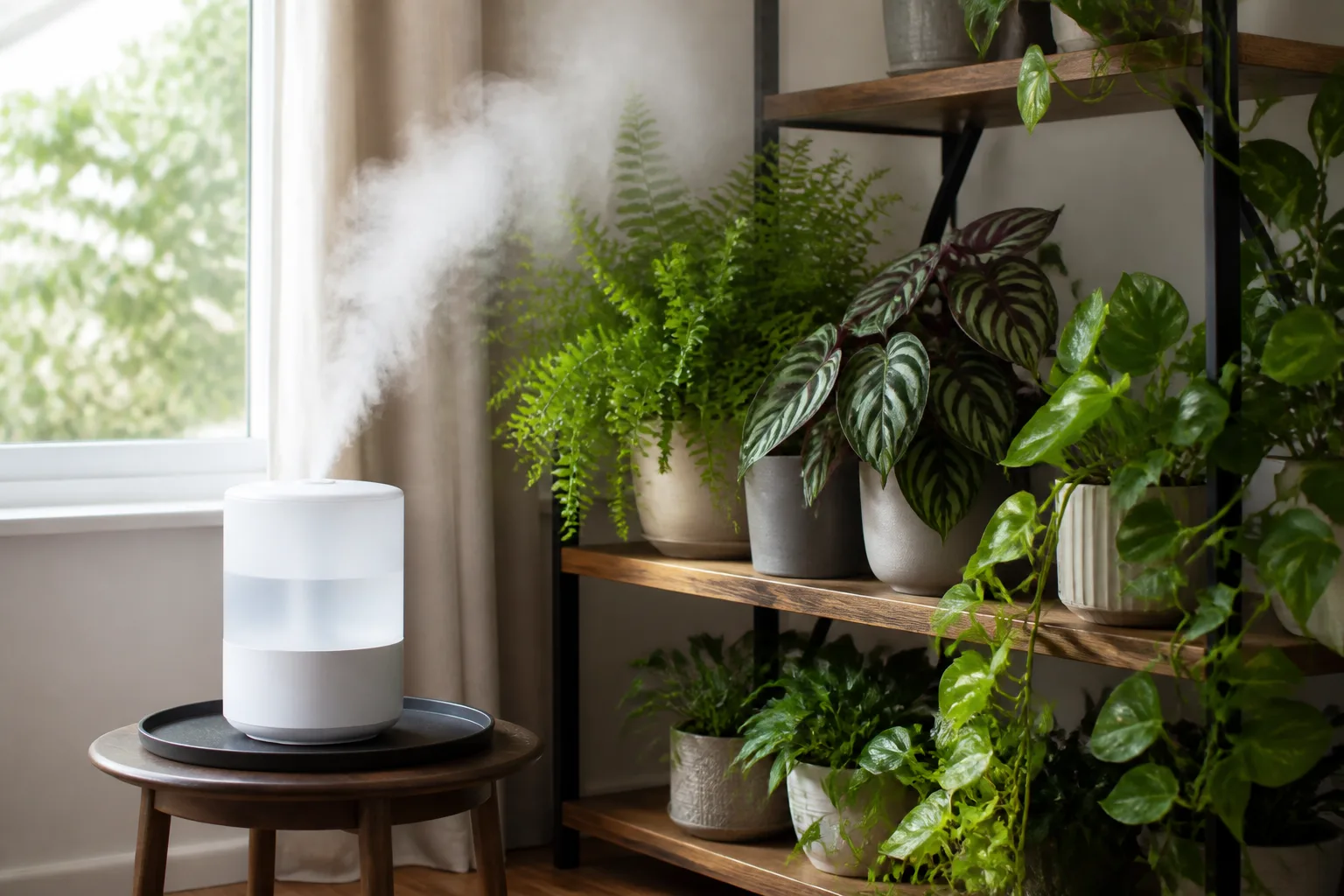
Cleaning cadence for ultrasonic tanks:
- Empty after use if you will not run again within a day—stagnant water grows mold and concentrates leftover oil.
- Wipe dry with a lint-free cloth; microfiber works for exterior dust on vents.
- Vinegar cycle monthly: fill to line, add a few drops of white vinegar, run five minutes, empty, wipe.
- Alcohol on residue: if oil film remains, unplug and use isopropyl wipes plus a cotton swab in corners—especially on Vitruvi-style cups.
Plug-in cartridge models need dust-free vents and occasional gentle wipe around the emission port—unplug first, never soak.
When to Skip the Diffuser and Buy a Plant Humidifier
Buy or upgrade plant humidity hardware instead of—or in addition to—a diffuser when:
- A hygrometer at leaf height reads below ~40% RH for weeks while tropical leaves crisp (signs your plants need more humidity).
- You run forced-air heat and winter air sits in the 20–30% band (why houseplants struggle in winter).
- Grouping pots and a pebble tray did not move the meter—only the air directly above wet stones changed.
- You want cool mist at scale for a plant room or sunroom, not fragrance.
Keep the diffuser if you love home scent and your humidity is already adequate—but treat it as fragrance only. Pair with humidifier placement for houseplants when you add real RH hardware.
Conclusion
The best essential oil diffuser depends on whether you need subtle scent in a small room, cartridge simplicity in a pet home, or whole-open-plan coverage—not on mist that looks like it should hydrate ferns. For most growers, the InnoGear Essential Oil Diffuser balances price, timers, and easy cleaning. Drift and Pura 4 win when open water and oil bottles are the risk you refuse to take. Aera is the large-room outlier when cartridges beat dozens of tiny oil bottles on a shelf.
Keep concentrated oils away from pets, birds, and leaves. Measure humidity separately from scent. When the meter says dry, shop best humidifiers for plants—not another ceramic mushroom that smells nice while your peace lily still droops in desert air.