17 Flowering Evergreen Shrubs for Long-Lasting Color
Compare 17 flowering evergreen shrubs by zone, sun, soil pH, and bloom season—plus which picks stay evergreen in cold climates and which need acid soil.
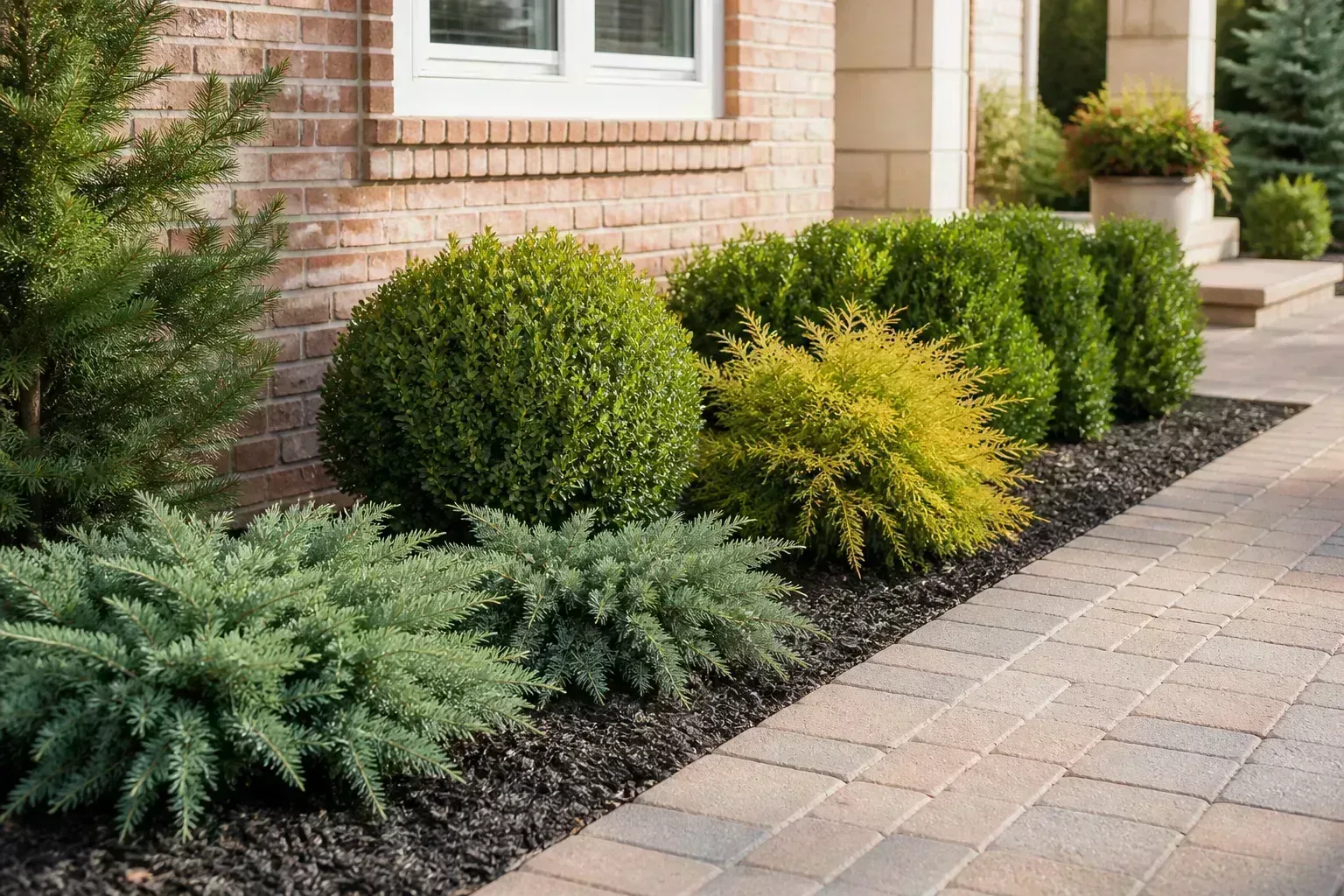
A flowering evergreen shrub solves two jobs at once: structure when perennials disappear, and color when bloom season arrives. The mistake is treating all seventeen names on a list as interchangeable. Some need acidic, organic-rich soil. Others tolerate alkaline clay. Some stay fully evergreen only in mild winters. A camellia that thrives in Atlanta may defoliate in a Chicago wind tunnel even if the tag says zone 7.
Start with your site, not the prettiest photo at the garden center. Test soil pH, count sun hours on a clear summer day, confirm mature width against walkways and siding, and only then match a species from the list below. The shrubs are grouped by what usually breaks them—soil chemistry, light, size, and winter hardiness—not alphabetically. If you are also comparing purely structural picks without bloom priority, see our small evergreen shrubs guide for compact foundation options and honest dwarf sizing caveats.
How to Choose a Flowering Evergreen Shrub
Match Soil pH Before You Buy
Ericaceous shrubs—camellia, rhododendron, azalea, mountain laurel, pieris, skimmia, and gardenia—want pH 5.0 to 6.5, loose texture, and steady moisture without waterlogging. NC State Extension notes yellowing leaves on camellia often trace to insufficient acidity. If a soil test shows pH above 6.5, either amend a broad bed with sulfur and pine-bark compost over seasons or choose neutral-soil options like cherry laurel, holly, abelia, or pittosporum instead of fighting chemistry every year.
Neutral to slightly alkaline soils suit cherry laurel, many hollies, mahonia in the right exposure, rosemary in dry sites, and pittosporum where drainage is sharp. Never plant acid-lovers in freshly limed lawn strips or next to new concrete that leaches alkalinity.
Read Sun Exposure for a Full Day
Walk the planting spot at 8 a.m., noon, and 4 p.m. and note direct sun on the soil—not just bright sky. Morning sun with afternoon shade suits camellia, pieris, and mountain laurel in hot climates. Full sun drives encore azaleas, loropetalum, rosemary, and cotoneaster bloom. Deep shade limits choices to skimmia, mahonia, and some pieris cultivars; expect fewer flowers as shade deepens.
Size matters as much as light. A cherry laurel tagged “fast screen” becomes a 20-foot wall if you never prune. Measure the bed width and add 2 feet beyond the listed mature spread so air can move around foliage—crowded evergreens invite leaf spot and scale. For narrow strips, favor dwarf azalea, compact PJM rhododendron, rockspray cotoneaster, or daphne rather than full-size laurel or pittosporum.
When “Evergreen” Depends on Your Zone
Broadleaf evergreens hold leaves through winter where temperatures stay moderate and winds stay buffered. Abelia, rockspray cotoneaster, and Burkwood viburnum may drop some or all foliage after hard freezes in zones 4–6 yet behave as evergreens in zones 7–8. RHS guidance on rhododendrons emphasizes site shelter and soil moisture for winter leaf retention. Label “evergreen” as a function of your microclimate—south foundation walls, windbreaks, and mulch depth matter as much as the USDA zone number.
Rockspray cotoneaster is a clear example: nurseries list it for zones 5–7, but it holds leaves through winter reliably only in zone 7 and milder coastal sites. Farther inland in zone 5 or 6, expect a deciduous look after cold snaps even if the plant survives. Abelia follows a similar pattern—semi-evergreen where winters are harsh, fully evergreen where summers are long. Plan for the reality in your yard, not the warmest zone on the tag.
Acid-Loving Shrubs That Flower in Spring
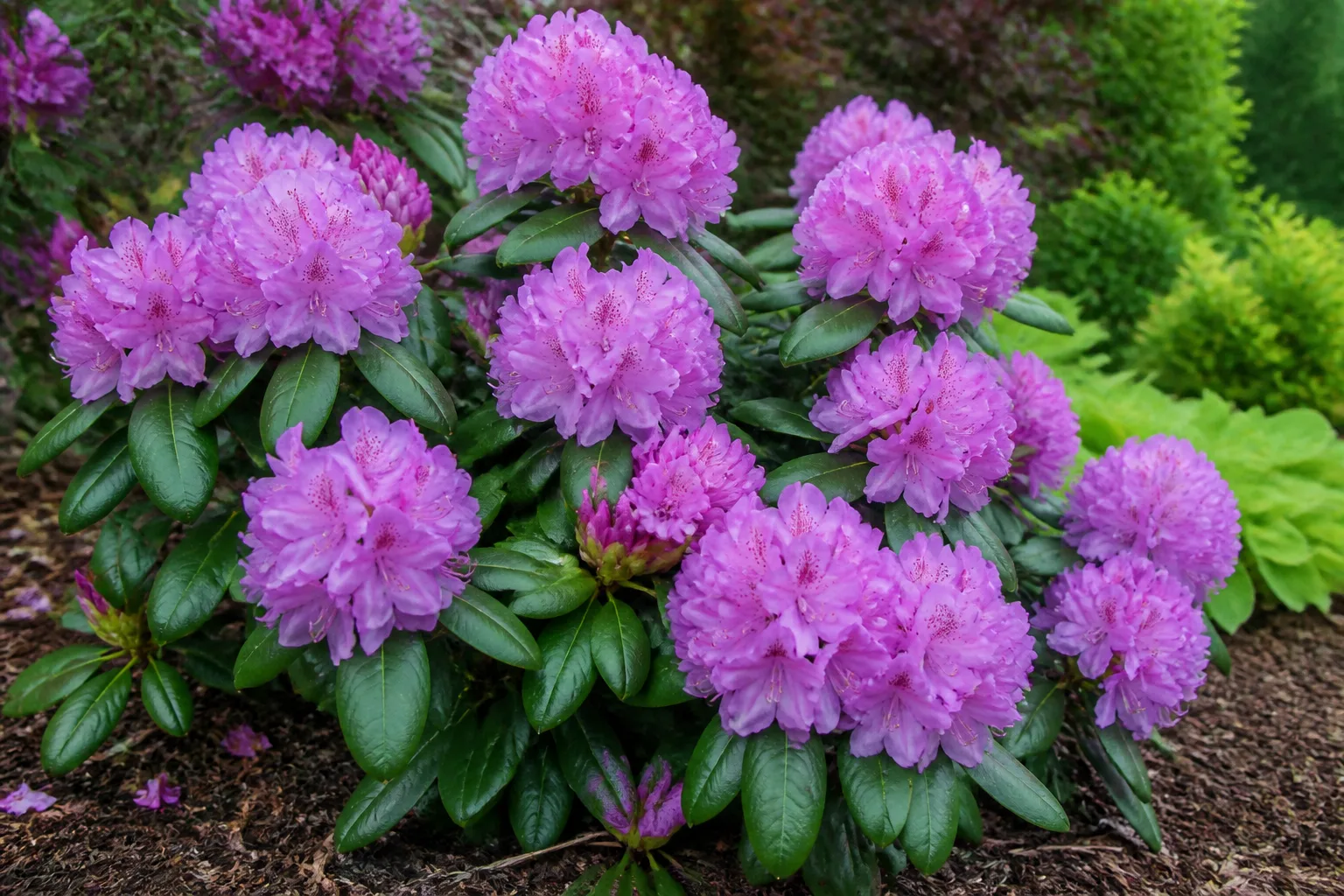
Camellia, Rhododendron, and Azalea
Camellia (Camellia japonica and sasanqua types) delivers glossy leaves plus flowers from fall through early spring depending on cultivar. Blooms last three to four weeks per flush; buds form on old wood, so prune right after flowering. NC State Extension recommends wide planting holes three to four times the root ball width but not deeper than the root ball, acidic organic soil, and protection from drying winter wind. Drought the previous August can reduce spring bloom—plan summer irrigation in sandy sites.
Japonica types peak in late winter to spring; sasanqua types often start in fall. Flower colors span white through pink and red, with doubles and bicolors widely available. Skip if: your soil stays above pH 6.5 without amendment, or the site bakes in all-day western sun with no root-zone mulch. For deeper camellia culture, RHS camellia guidance covers container growing and wind protection.
PJM rhododendron and other Rhododendron hybrids bring lavender-pink spring trusses on compact plants 3 to 6 feet tall—excellent for woodland edges in zones 4a–8b. Cultivars such as ‘PJM Compact’, ‘Elite’, and ‘Regal’ vary in flower intensity and winter foliage color. They want filtered shade, acidic soil, and mulch to keep roots cool. Overhead sun plus wet roots invites root rot; deep shade reduces bloom. Plant high with the top of the root ball slightly above grade and never bury stems.
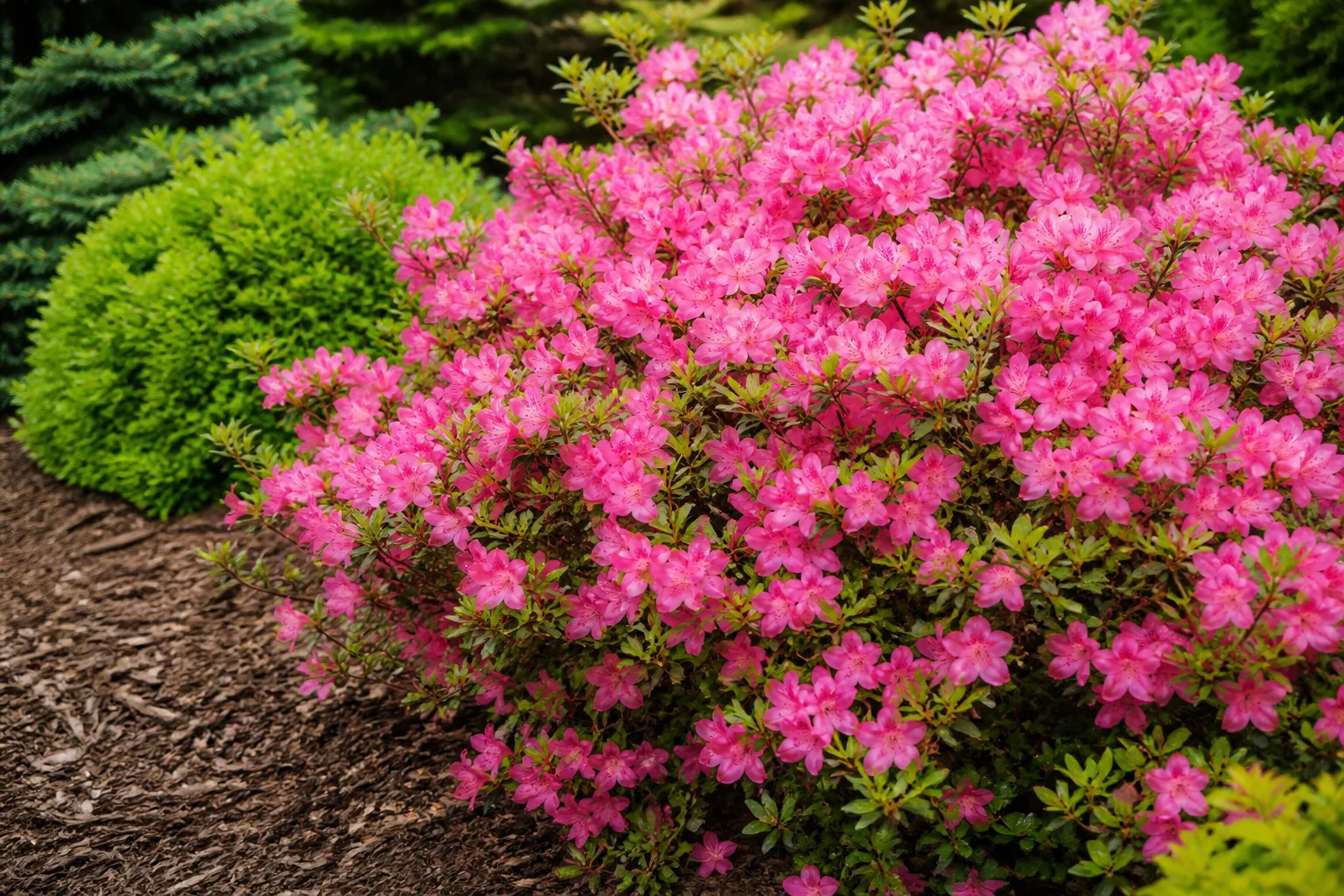
Encore® azaleas (Rhododendron Encore series) rebloom in late summer and fall after a spring show—among the longest flowering windows in this list. They tolerate more sun than traditional azaleas if soil stays acidic and moist. Mature sizes run 2 to 5 feet; dwarf cultivars fit foundation beds. Deer resistance is moderate; heavy browse still happens in drought years. If you are timing a new planting, our when to plant azaleas guide covers fall versus spring establishment for root growth before heat or frost stress.
Mountain Laurel, Pieris, and Skimmia
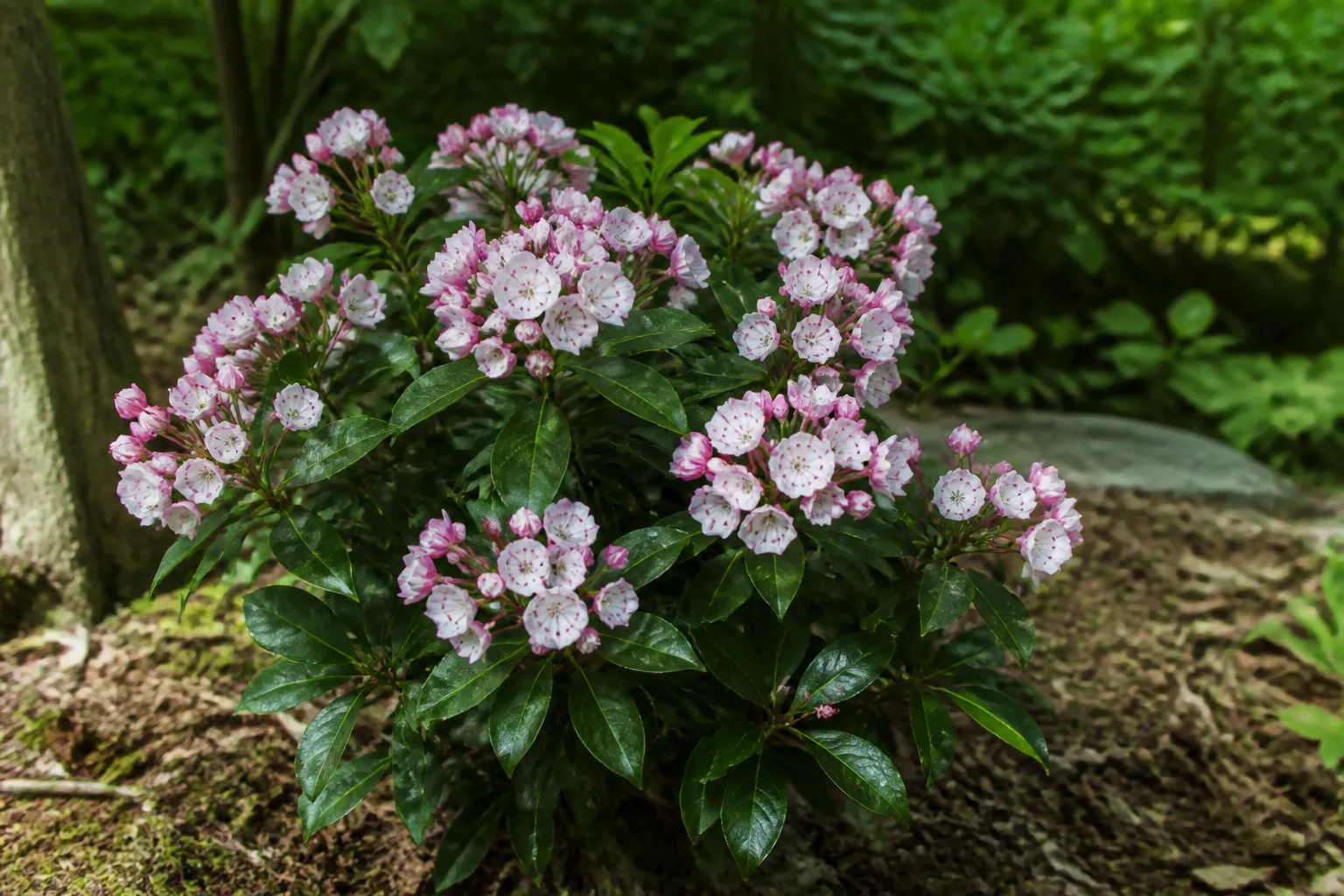
Mountain laurel (Kalmia latifolia) is native to eastern North America with cup-shaped white, pink, or rose flowers in late spring. It tolerates sun to shade but performs best with morning light and afternoon shade, cool roots, and acidic, well-drained soil. NC State Extension warns that all plant parts are toxic if ingested; honey from heavy laurel nectar can be toxic to humans. Choose compact cultivars like ‘Minuet’ for small beds. Skip if: the site is a low wet pocket or heavy clay that stays saturated—laurel needs raised beds or a different shrub. Our mountain laurel care guide walks through bud formation on old wood and why late pruning removes next year’s flowers.
Japanese pieris (Pieris japonica) adds copper-red new growth and fragrant white spring bells on an 8- to 10-foot upright shrub—dwarf forms such as ‘Cavatine’ and ‘Mountain Snow’ stay near 4 feet. Leaves and nectar are toxic to pets and livestock (NC State Extension). Site with afternoon shade in the South and protect from desiccating winter winds. Pieris pairs well with rhododendron and azalea in woodland borders where soil is already acidic.
Japanese skimmia (Skimmia japonica) is a slow, shade-tolerant 2- to 7-foot shrub with creamy spring flowers and red berries on female plants when a male pollinator is nearby. It is genuinely low-maintenance in acidic soil with consistent moisture—one of the best dappled-shade evergreens where deer pressure is light. Fragrant foliage adds year-round interest even when flowers finish. Skip if: you cannot provide a male pollinator for berry display, or the bed dries out completely in summer—skimmia wilts before rhododendron does.
Shade-Tolerant Bloomers With Year-Round Foliage
Mahonia and Chinese Fringe Flower
Mahonia species (including Oregon grape) offer bold, holly-like evergreen leaves and yellow or red winter-to-spring flowers on upright stems, followed by blue berries. They thrive in partial shade with moist, well-drained soil and become drought-tolerant once established. Mature heights range 3 to 10 feet depending on species; ‘Charity’ and ‘Arthur Menzies’ are popular large forms for privacy. Mahonia fills the gap when you want winter color under deciduous trees—flowers appear before many spring shrubs wake up. Skip if: you need a formal low hedge; mahonia’s bold texture reads wild unless sheared hard.
Chinese fringe flower (Loropetalum chinense) brings pink, white, or red strap-like flowers in late winter to spring on arching 6- to 8-foot shrubs—dwarf purple-leaf cultivars such as ‘Purple Diamond’ stay near 4 feet. It wants acidic soil, good drainage, and regular moisture. Full sun deepens foliage color; partial shade works in hot climates. Deer usually pass it by, making it a strong sunny-border pick in zones 7b–9b. Renew mulch annually; loropetalum roots stay shallow and compete with lawn grass at the dripline.
Fragrant Foundation Shrubs
Gardenia and Daphne
Gardenia (Gardenia jasminoides) is the fragrance benchmark: creamy white summer blooms against dark evergreen leaves on 4- to 8-foot plants. It needs acidic soil, steady moisture, and winter wind protection in zone 7 margins. Shallow roots suit foundation planting 18 inches or more from the house so gutters do not drown them. Bud drop often follows inconsistent watering or night temperatures below 60°F during bud set. ‘Kleim’s Hardy’ and other cold-tolerant selections extend range slightly, but gardenia is still a poor bet for alkaline Midwest clay without a raised acid bed.
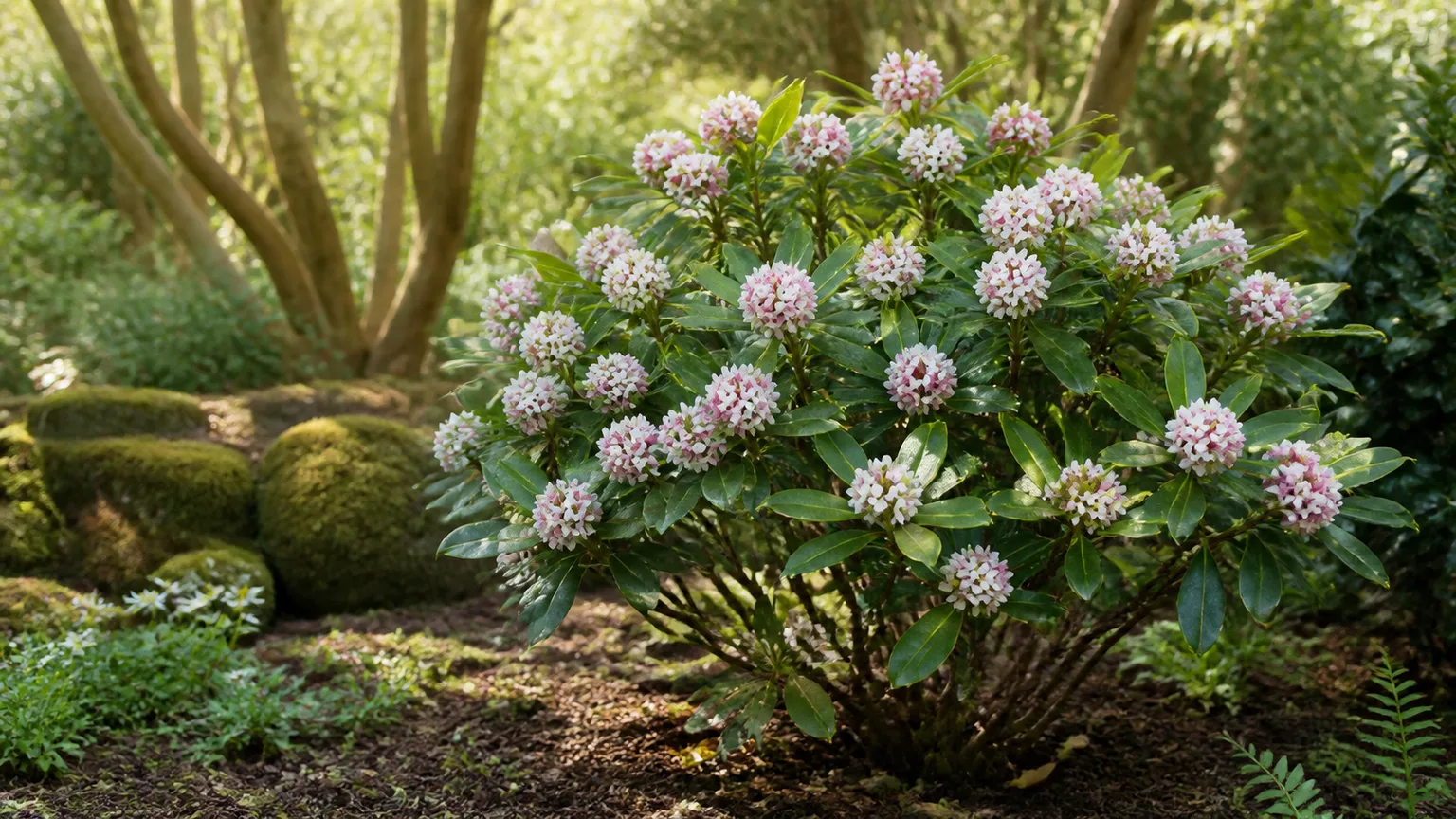
Daphne (Daphne spp. and hybrids) packs intense February-to-April perfume on 1- to 5-foot mounds. Daphne odora is the classic winter daphne; hybrid eternal fragrance types bloom longer in some climates. It is beautiful and temperamental: sharp drainage, careful watering, never soggy roots, and a reputation for sudden dieback even when care seems correct. Treat daphne as a short-term jewel near an entry—not the backbone of a hedge. All parts are toxic if eaten. For planting technique and container options, see our how to grow daphne shrubs guide.
Hedges, Screens, and Large Structures
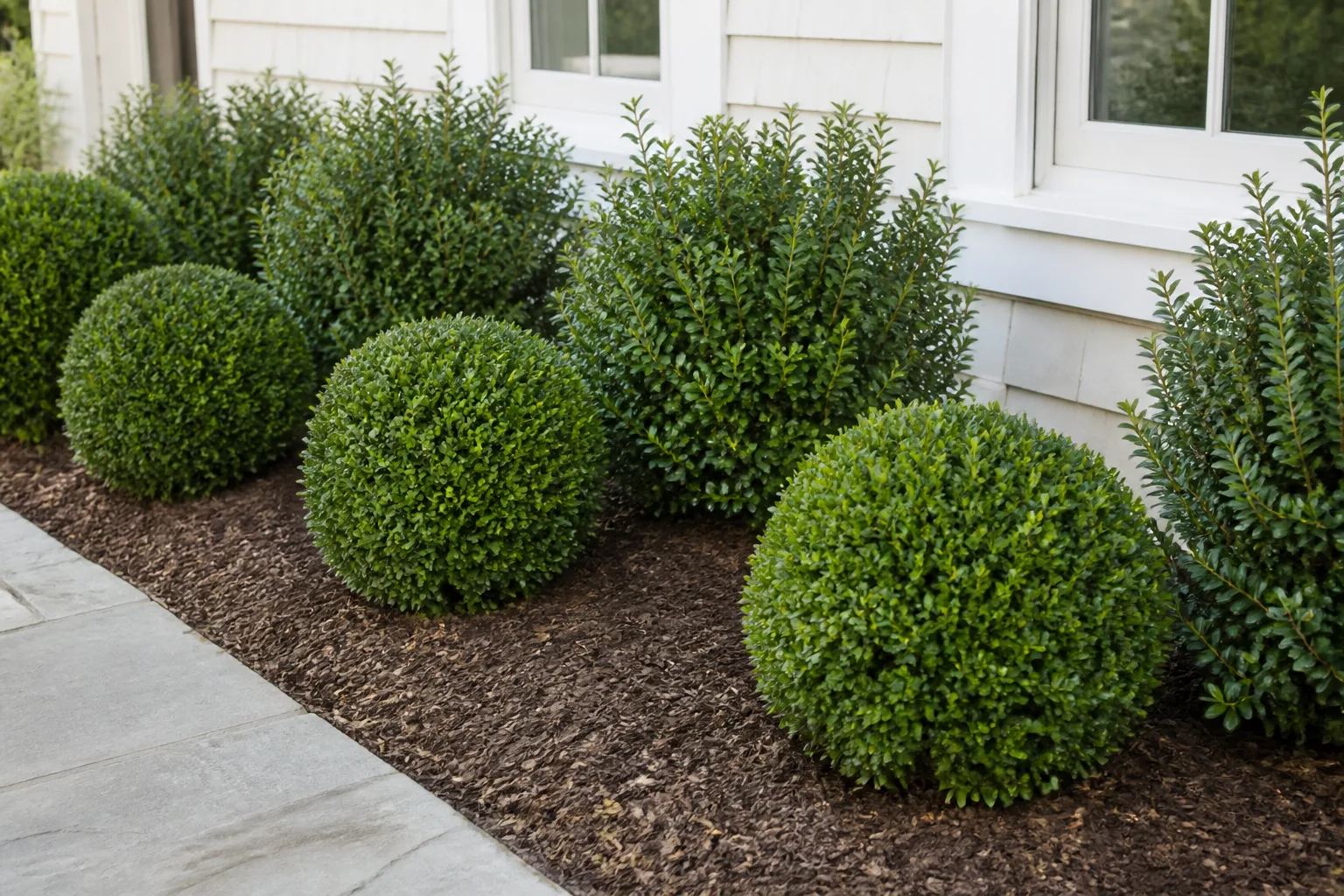
Cherry Laurel, Holly, and Pittosporum
Cherry laurel (Prunus laurocerasus) forms a fast 10- to 20-foot evergreen screen with white spring racemes up to 4 inches long. It accepts sun or deep shade and neutral soil but needs moisture during establishment. NC State Extension lists toxicity if consumed; keep away from livestock and curious toddlers. It can be invasive in mild, moist regions—check local guidance before planting near woods. Schip laurel (P. laurocerasus ‘Schipkaensis’) is a narrower cultivar for tight screens.
‘Blue Princess’ holly (Ilex × meserveae) pairs glossy evergreen leaves with red berries when ‘Blue Prince’ or another male pollinator is nearby. Spring flowers are small but set the berry show that lasts into winter. Expect 10 to 15 feet unless you prune annually. Well-drained soil and weekly water the first two summers build a tough hedge in zones 4–7. Blue holly tolerates urban pollution better than many broadleaf evergreens—useful along street-facing beds.
Japanese pittosporum (Pittosporum tobira) tolerates sun, salt spray, and many soil types on 10- to 15-foot rounded plants with honey-scented cream flowers in spring. It is evergreen in zones 8–10; north of that, treat it as a container or seasonal specimen. Reduce watering after establishment except in prolonged drought. ‘Wheeler’s Dwarf’ stays near 4 feet for low hedges in mild climates.
Sun-Loving and Heat-Tolerant Options
Rosemary, Abelia, and Rockspray Cotoneaster
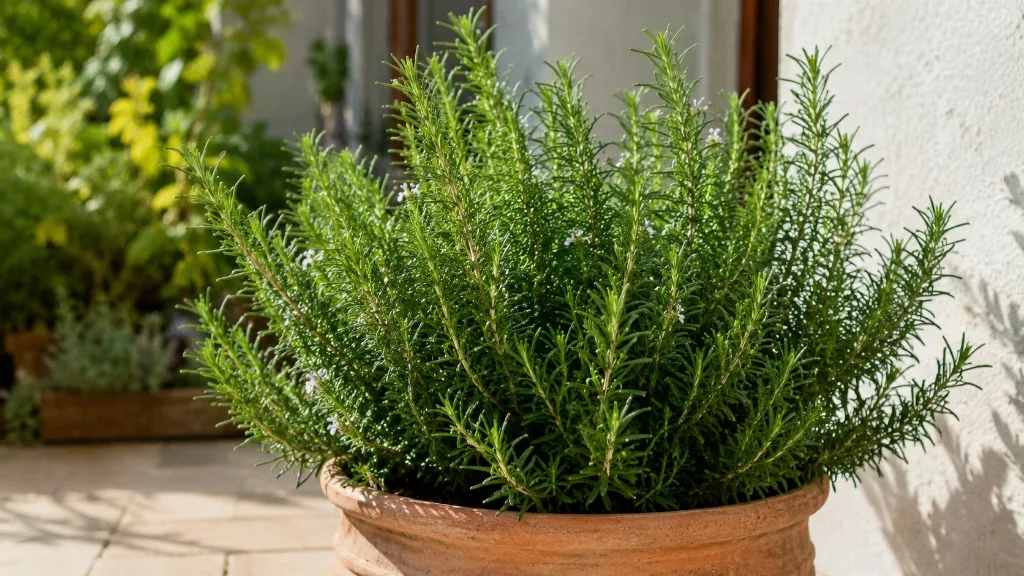
Rosemary (Salvia rosmarinus) is a Mediterranean evergreen with blue or white flowers and needle-like aromatic leaves on 2- to 6-foot plants. It demands full sun, sharp drainage, and lean soil—overwatering and heavy clay kill more plants than cold. Hardy in zones 8–10; in zone 7, sit against a south wall and accept occasional dieback. Upright and prostrate forms work in herb knots, rock gardens, and patio pots. Harvest lightly during bloom; bees rely on rosemary flowers in early seasons.
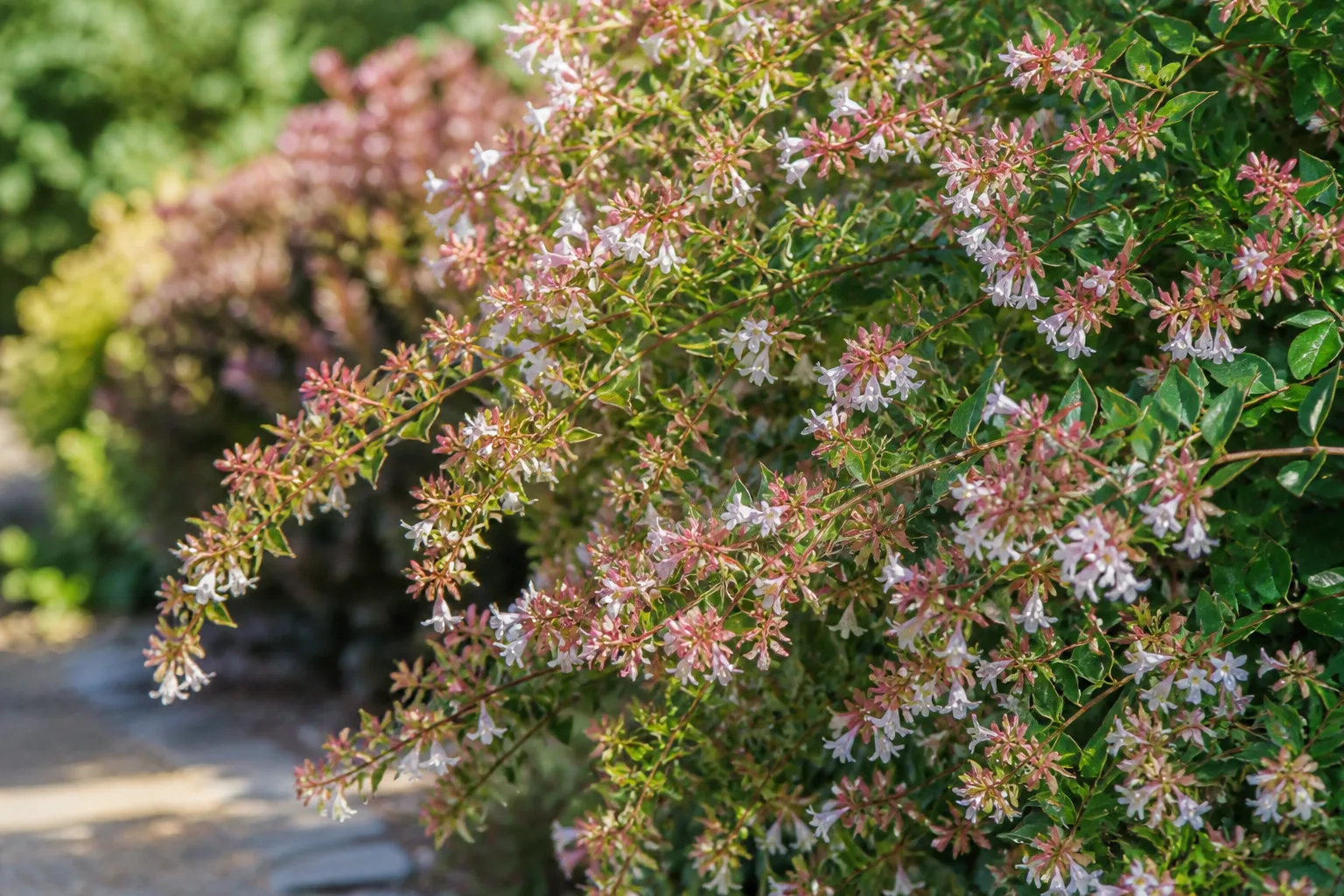
Abelia (Abelia × grandiflora and hybrids such as ‘Kaleidoscope’ and ‘Rose Creek’) blooms from late spring into fall with pink or white flowers on arching stems 2 to 10 feet tall. It is semi-evergreen in cold winters and fully evergreen in warm climates. Loamy, moist, well-drained soil and full sun to partial shade suit it; prune in late winter to shape. Abelia handles heat and humidity better than gardenia—strong swap for the Deep South where gardenia struggles.
Rockspray cotoneaster (Cotoneaster horizontalis) spreads 2 to 3 feet tall and 6 to 8 feet wide with pink spring flowers and red fall fruit—excellent on slopes and walls where horizontal branching creates a fishbone pattern. It is reliably evergreen only in zone 7 and milder; colder zones may see deciduous behavior. Full sun and sharp drainage are non-negotiable. Fire blight can strike in wet springs; avoid overhead irrigation that keeps foliage wet overnight.
Burkwood Viburnum and Long-Bloom Picks
Burkwood viburnum (Viburnum × burkwoodii) combines intensely fragrant white May flowers with maroon fall foliage color on 8- to 12-foot plants. It stays evergreen in zones 7–8 and may be semi-evergreen farther north. Full sun to partial shade and average, well-drained soil are enough—easier than daphne, more fragrance than cherry laurel. ‘Mohawk’ is a popular cultivar with spicy-scented blooms. Pair with lower evergreen groundcover at the base so bare lower stems do not show in winter.
If your top priority is months of color on one plant, start with Encore azalea or a long-flowering abelia in the right zone. For winter flowers, camellia sasanqua and mahonia lead the list. For lowest maintenance in shade, skimmia and loropetalum (with acidic soil) outperform finicky gardenia or daphne. For deer-heavy yards, combine resistant picks—loropetalum, pieris, rhododendron, andromeda, and rosemary in sun—with broader deer-resistant shrub strategies rather than assuming any single plant is browse-proof.
Watering, Mulch, and First-Year Care
New flowering evergreens fail most often from wrong soil chemistry and inconsistent moisture, not from missing fertilizer. Water deeply once or twice weekly the first growing season when rain is absent—enough to moisten the root zone 6 to 8 inches down, not daily sprinkles that keep surface wet. Mulch 2 to 3 inches of pine bark or shredded leaves for acid-lovers, hardwood mulch for neutral-soil plants, keeping mulch off trunks.
Hold nitrogen-heavy fertilizer until plants are established unless a soil test shows deficiency. Ericaceous shrubs benefit from formulas labeled for azalea and rhododendron in early spring; overfeeding gardenia produces leaves at the expense of buds. If chlorosis (yellow leaves with green veins) appears on acid-lovers in alkaline soil, fix pH rather than repeating foliar sprays every month.
Pruning Without Losing Next Year’s Blooms
Spring-flowering evergreens set buds on old wood during summer and fall. Prune camellia, rhododendron, azalea, mountain laurel, pieris, and Burkwood viburnum immediately after petals drop. Remove dead wood anytime. Shearing cherry laurel or holly hedges in late spring after the first flush of growth keeps screens dense; flowering on sheared plants becomes less showy but structure improves. For timing on non-flowering evergreens, see when to prune evergreen shrubs—winter cuts on spring bloomers still cost you flowers even if the plant survives.
Conclusion
The best flowering evergreen shrub is the one that matches your soil pH, sun pattern, and realistic mature size—not the one that looked best in a catalog photo. Test soil, measure light, and group your shortlist by acid-lovers versus neutral-soil plants before you shop. Lead with camellia, rhododendron, azalea, pieris, or skimmia in acidic beds; choose cherry laurel, holly, abelia, or pittosporum where pH runs higher. Flag toxicity for pieris, laurels, cherry laurel, and daphne if pets or children use the yard. Prune spring bloomers on old wood immediately after flowering so next year’s buds stay intact. Get those decisions right and any of these seventeen shrubs can deliver leaves through winter and flowers you actually notice—not just green filler between annuals.



