How to Grow and Care for Abutilon
Grow flowering maple (Abutilon) with the right light, watering rhythm, and winter plan—plus cultivar picks, propagation, pests, and safety notes for indoor and outdoor growers.
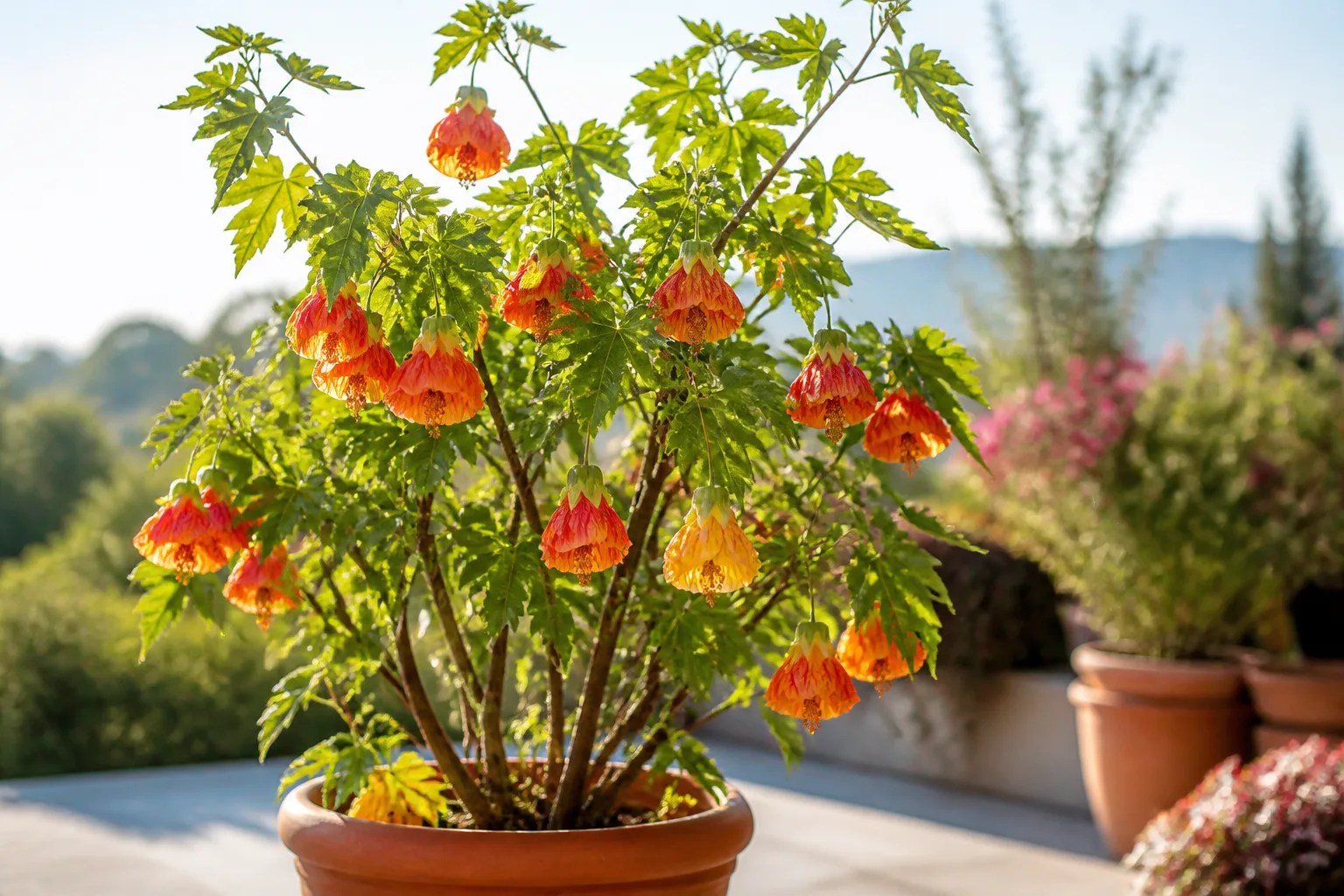
Abutilon — the shrub everyone calls flowering maple — looks like a miniature maple tree that forgot it was supposed to be a tree and decided to bloom instead. Pendulous bell- or cup-shaped flowers hang from soft woody stems above lobed, maple-like leaves. In the warmest U.S. gardens it can behave like a broadleaf evergreen shrub; everywhere else it is a container star, a seasonal patio plant, or a cool-room houseplant you wheel indoors before the first frost.
The care loop is straightforward once you respect two facts: abutilon is a tropical frost-tender bloomer in the mallow family (Malvaceae), and it is a heavy feeder that punishes both drought and soggy roots. Get light, moisture, and winter timing right and you can have color from spring through fall—or year-round in frost-free zones. Miss any pillar and you get leggy stems, dropped buds, and a plant that looks embarrassed to be on your patio.
Abutilon Quick Reference
Use this table before you change anything. Match symptoms to the troubleshooting section instead of adding fertilizer by reflex.
| Factor | Target | First warning sign |
|---|---|---|
| Light | Full sun to partial shade; 6+ hours direct sun for best bloom | Fewer flowers; stretched stems toward glass |
| Water | Evenly moist, well-drained; top inch dry before rewatering | Crispy leaf edges = too dry; yellow drop = too wet |
| Soil | Rich, organic, well-drained; neutral to slightly acidic | Sour smell, gnats, wilt on wet soil = root stress |
| Temperature | 65–75°F (18–24°C) active growth; frost intolerant | Blackened leaves after frost; bud drop after cold draft |
| Humidity | Average room to moderate outdoor humidity | Spider mites when air is hot and dry indoors |
| Fertilizer | Monthly water-soluble spring–fall; pause in winter | Pale new leaves in bright light; smaller flowers |
| Pruning | Pinch young tips; hard prune in early spring if needed | Leggy, weak stems; sparse flowers deep in canopy |
| Hardiness | USDA 9a–10b year-round outdoors | Frost kills top growth below freezing |
| Size | 8–10 ft in tropics; 2–4 ft in cooler sites | NC State Extension typical dimensions |
| Pests | Scout for whitefly, aphids, mites, thrips | Sticky leaves, flying adults when brushed |
| Safety | Poisonous to humans; contact dermatitis possible | NC State Extension toxicity flags |
What Flowering Maple Actually Is
Flowering maple is not a maple at all. It is a group of Abutilon hybrids and species—often labeled Abutilon x hybridum, though NC State Extension notes that name is of uncertain application. The genus sits in Malvaceae, the same family as hibiscus and okra, which explains the showy five-petaled flowers and rapid growth when conditions suit.
Native range points to Central and South America, and the plants read as tropical shrubs: alternate, simple leaves with maple-like lobes; weak stems that benefit from pinching; and solitary, drooping flowers roughly 1–3 inches across in white, yellow, orange, pink, red, or bicolors. NC State lists bloom seasons as spring through fall, with some plants flowering nearly continuously where winters stay mild.
Outdoors in zones 9a–10b, abutilon can reach 8–10 feet tall and 2–5 feet wide. In colder climates the same genetics usually top out around 2–4 feet unless you train a older specimen in a frost-free conservatory. Growth is rapid when warm, bright, and fed—slow and sparse when light or roots are stressed.
Botanical Names and Nursery Tag Confusion
Tags swap names freely: Chinese bellflower, Chinese lantern, parlor maple, and Indian mallow all refer to abutilon species or hybrids, not true maples (Acer) or true mallows in every case. Abutilon megapotamicum and related trailing types are sometimes reclassified under Callianthe—if your plant vines hard and shows red calyx tubes with yellow petals, you may have the lantern type rather than the upright hybrid group.
When buying, prioritize flower color, mature habit, and hardiness notes on the label over the exact Latin string. A “flowering maple” in a 4-inch pot and a 5-foot patio specimen can share a genus but not the same cultivar or winter plan.
Outdoor Shrub vs Container vs Houseplant
Pick one primary job before you pot or plant:
- In-ground shrub (zones 9–10): Full sun morning, light afternoon shade in desert heat; rich amended soil; mulch to hold moisture.
- Seasonal container (zones 4–8): Grow outdoors spring through fall; move indoors at frost; expect slower winter growth.
- Year-round houseplant: Bright cool room in winter; reduce water; accept fewer blooms until days lengthen.
If you already overwinter other tender patio plants, the same frost-watch workflow in our potted plant winter guide applies—abutilon is just less forgiving of dark, overheated rooms than a succulent.
Light Requirements for Constant Bloom
Abutilon needs strong light to bloom generously. NC State Extension lists full sun (6+ hours direct sun) to partial shade (2–6 hours). In practice that means:
- Cool-summer regions: Full sun is ideal for maximum flowers.
- Hot-summer zones 9–10: Morning sun plus afternoon shade prevents scorch and bud drop.
- Indoors: A south- or west-facing window with sheer curtain, or a bright sunroom; dim “room light” produces leggy stems and few bells.
Partial sun keeps the plant alive; six or more hours of direct sun pushes the heaviest bloom, especially on variegated cultivars that already sacrifice some photosynthetic leaf area. If flowers shrink or stop while leaves look dark green and stretched, light is the first suspect—not fertilizer.
Rotate containers weekly so stems do not lean hard toward one pane. Outdoors, avoid planting tight against north walls unless you chose a shade-tolerant spot deliberately and accept fewer flowers.
Soil, Water, and Drainage
Grow abutilon in rich, constantly moist, well-drained soil—the phrase sounds contradictory until you think like a mallow: steady moisture at the root zone, zero standing water. NC State specifies good drainage with high organic matter; clay is acceptable only if structure and slope move water away.
Amend planting beds with compost before you set the root ball. In pots use quality peat- or coco-based potting mix with perlite for pore space. Every container needs a drainage hole; saucers left full recreate the wet feet abutilon hates.
Soil pH can be neutral to slightly acidic. pH matters less than texture: if water pools on the surface or the pot stays heavy days after watering, fix drainage before you chase nutrients.
How to Read Your Watering Rhythm
Water when the top inch of soil feels dry—then soak until a little drains from the bottom and empty the saucer within thirty minutes. Abutilon has average to moderate water needs: it wilts if you let it go bone dry for weeks, yet Pythium root rot follows pots that stay saturated, especially indoors in winter.
| Signal | Soil check | Action |
|---|---|---|
| Crispy leaf margins, limp stems | Dry well below top inch | Water thoroughly; shade from hot afternoon until recovery |
| Yellow leaves dropping, wet mix | Moist deep down | Pause watering; check drainage hole; improve mix |
| Bud drop after a dry weekend | Alternating wet/dry swings | Keep even moisture through bloom flushes |
| Winter indoors, cool room | Dry slow | Water less often; verify dry with finger, not calendar |
Increase frequency during heat waves when plants sit in full sun. Decrease sharply when you move pots indoors for winter—soil in a dim, cool room can take two weeks or longer to dry. A moisture meter helps, but finger depth and pot weight still beat autopilot schedules.
Temperature, Humidity, and Frost Protection
Abutilon prefers warm temperatures around 65–75°F (18–24°C) during active growth and does not tolerate frost. NC State hardiness stops at zones 9a–10b for year-round outdoor culture. Epic Gardening notes some selected cultivars may survive into zone 8 with protection from wind and waterlogged winter soil—treat that as cultivar-specific, not genus-wide.
Below freezing, expect blackened leaves and dieback on exposed stems. Container plants are more vulnerable than in-ground shrubs because roots freeze faster. At first frost advisory, move pots to a frost-free porch, greenhouse, or bright indoor room—the same cue we use for other tender patio specimens in the winter container guide.
Humidity is flexible: average household humidity usually suffices. Dry, overheated winter air invites spider mites; a humidifier or grouping plants helps more than misting leaves, which can encourage fungal spots if foliage stays wet overnight.
Fertilizing Heavy Bloomers
Abutilon is a heavy feeder, especially in bloom and especially in containers where nutrients leach with every watering. NC State lists low to medium maintenance culturally, but flowering cultivars behave like hungry annuals when days are long.
Feed monthly from early spring through fall with a balanced water-soluble fertilizer (for example 20-20-20) at half the label strength, or use a bloom formula slightly higher in phosphorus if flowers are pale despite good light. Epic Gardening recommends pausing fertilizer in winter when growth slows indoors.
| Season | Fertilizer | Notes |
|---|---|---|
| Spring flush | Half-strength liquid every 2–4 weeks | Resume after overwintered plants show new growth |
| Summer bloom | Monthly balanced or bloom formula | Container plants may need more frequent weak feeds |
| Fall | Reduce as nights cool | Stop before indoor transition if growth stalls |
| Winter indoors | No fertilizer | Cool, bright rest; resume at first spring growth |
Salt crust on soil surface means you are feeding too strong or too often on a plant that is not actively growing. Flush the pot once with plain water if crust appears, then switch to weaker doses.
Pruning and Shaping Abutilon
Pinch stem tips on young plants to force branching and stronger stems. NC State notes abutilon stems are naturally weak and arching; without pinching you get a sparse, top-heavy silhouette.
Once the framework is established:
- Light tip pruning any time during the growing season removes leggy ends and can restart bloom on side shoots.
- Hard prune in early spring—cut back up to one-third to one-half on overwintered plants—to control size before the spring flush. Fresh growth flowers on new wood.
Deadhead spent bells if you want a tidier look; it is not strictly required for rebloom but keeps energy from going to seed. If you overwinter indoors and the plant drops leaves, wait until new buds swell in spring before aggressive cutting so you do not remove latent flower wood.
Best Abutilon Cultivars to Grow
Cultivar names change at nurseries, but these widely sold types illustrate the range. Match habit to your space before you chase flower color.
| Cultivar | Flower / foliage | Habit notes |
|---|---|---|
| ’Kentish Belle’ | Apricot-yellow bells with dark stamens | Classic patio upright; long bloom season |
| ’Souvenir de Bonn’ | Orange with red veins; variegated leaves | Showy foliage; needs strong light |
| ’Savitzii’ / ‘Variegatum’ | Apricot flowers; gold-green leaves | Mosaic-like variegation; slower in deep shade |
| ’Canary Bird’ | Clear yellow trumpets | Compact rounded form |
| ’Tiger Eye’ / ‘Red Tiger’ | Red and yellow bicolor | Narrow upright; fast in warm pots |
| ’Bartley Schwarz’ | Salmon-pink | Soft color for mixed containers |
| ’Ashford Red’ / ‘Nabob’ / ‘Voodoo’ | Deep red | High visual impact in full sun |
| ’Twister’ | Red twisted petals in bud | Conversation piece; same care as hybrids |
| ’Boule de Neige’ / ‘White King’ | White bells | Brightens shade edges; watch for mites indoors |
| A. pictum ‘Thompsonii’ | Salmon flowers; mottled yellow leaves | Foliage-forward; not the same as virus mosaic |
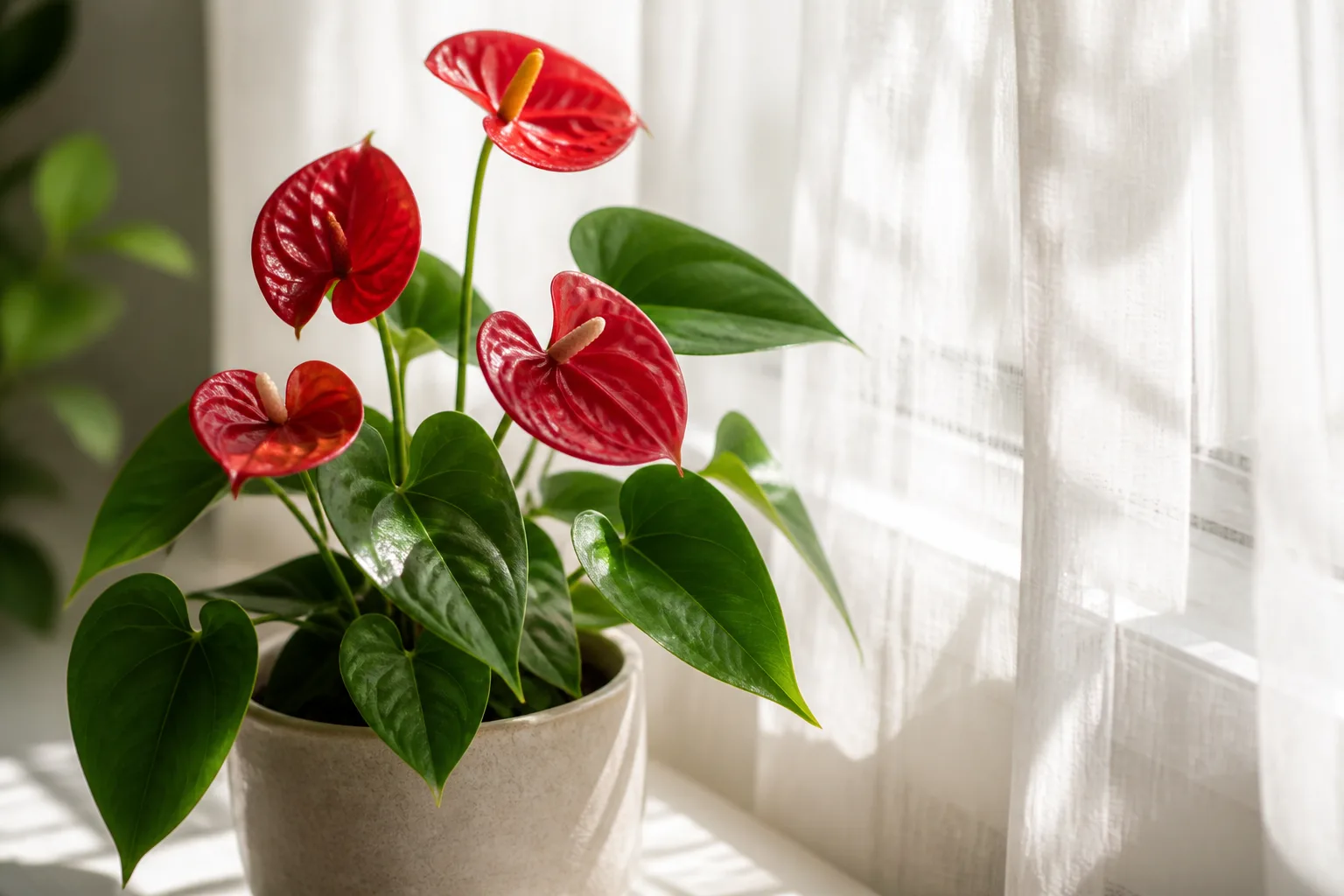
Trailing lantern types (often Abutilon megapotamicum / Callianthe megapotamica) suit hanging baskets and trellises; upright hybrids suit specimen pots. If you need a flowering houseplant with similar glossy texture, compare habits in our anthurium growing guide—another Malvaceae cousin with very different watering tolerance.
Propagating Abutilon From Cuttings
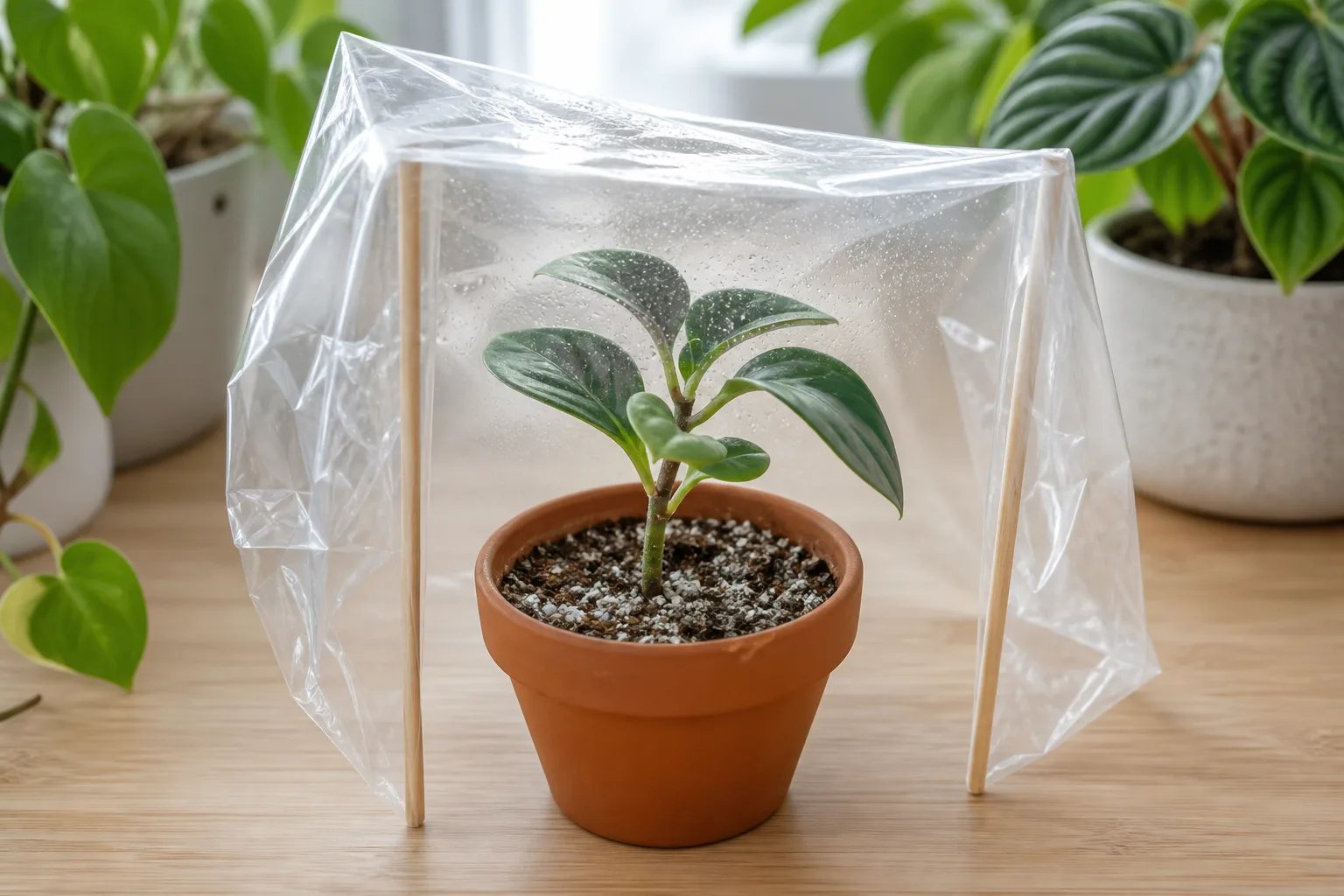
Softwood stem cuttings in spring or summer are the fastest way to multiply abutilon. Seed works but costs a year of patience before meaningful bloom.
- Choose a healthy green stem with several nodes—avoid woody brown wood or flowering tips if you can take a side shoot instead.
- Cut a 4–6 inch section with clean scissors or pruners.
- Strip leaves from the lower half, leaving two or three leaves at the tip. Remove flowers and buds so energy routes to roots.
- Optional: dip the cut end in rooting hormone, then insert 1–2 inches into moist seed-starting mix or perlite-heavy potting soil.
- Cover with a clear bag or dome for humidity; keep warm (70°F+) and bright indirect light. Roots often form in 3–4 weeks; tug gently to test.
Water rooting works—place the stripped cutting in a jar with the node submerged—but transition to soil carefully when roots are 1–2 inches long to avoid rot. Direct-to-soil rooting skips the shock of water-to-media transfer and is what most growers prefer.
Late-summer cuttings let you overwinter small rooted plants on a windowsill instead of hauling a large parent pot indoors—a space-saving trick Epic Gardening highlights for cold-climate gardeners.
Growing Abutilon From Seed
Seed propagation is slower but useful for species and mixed hybrids.
- Soak seeds in room-temperature water for several hours to soften the coat.
- Fill trays with moist seed-starting mix.
- Press seeds onto the surface and barely cover with a dusting of mix—they need light for germination.
- Maintain warm soil (70°F+) with a heat mat; mist or dome to keep humidity high without flooding.
- Expect germination in roughly 14–21 days; grow lights prevent leggy seedlings.
First flowers may take a year or more from seed, which is why cuttings win for impatient gardeners. Start seeds in late winter if you want transplant-sized plants by late spring.
Container Growing and Repotting
Containers are the default for anyone outside zone 9. Choose a pot only slightly larger than the root ball—oversized pots hold excess wet soil and encourage root rot indoors.
Repot in spring when roots circle the bottom or water runs straight through dry mix. Step up one pot size, refresh soil, and water once thoroughly. Terracotta wicks moisture faster than glazed ceramic—helpful in dim winter rooms, less ideal if you already underwater in summer sun.
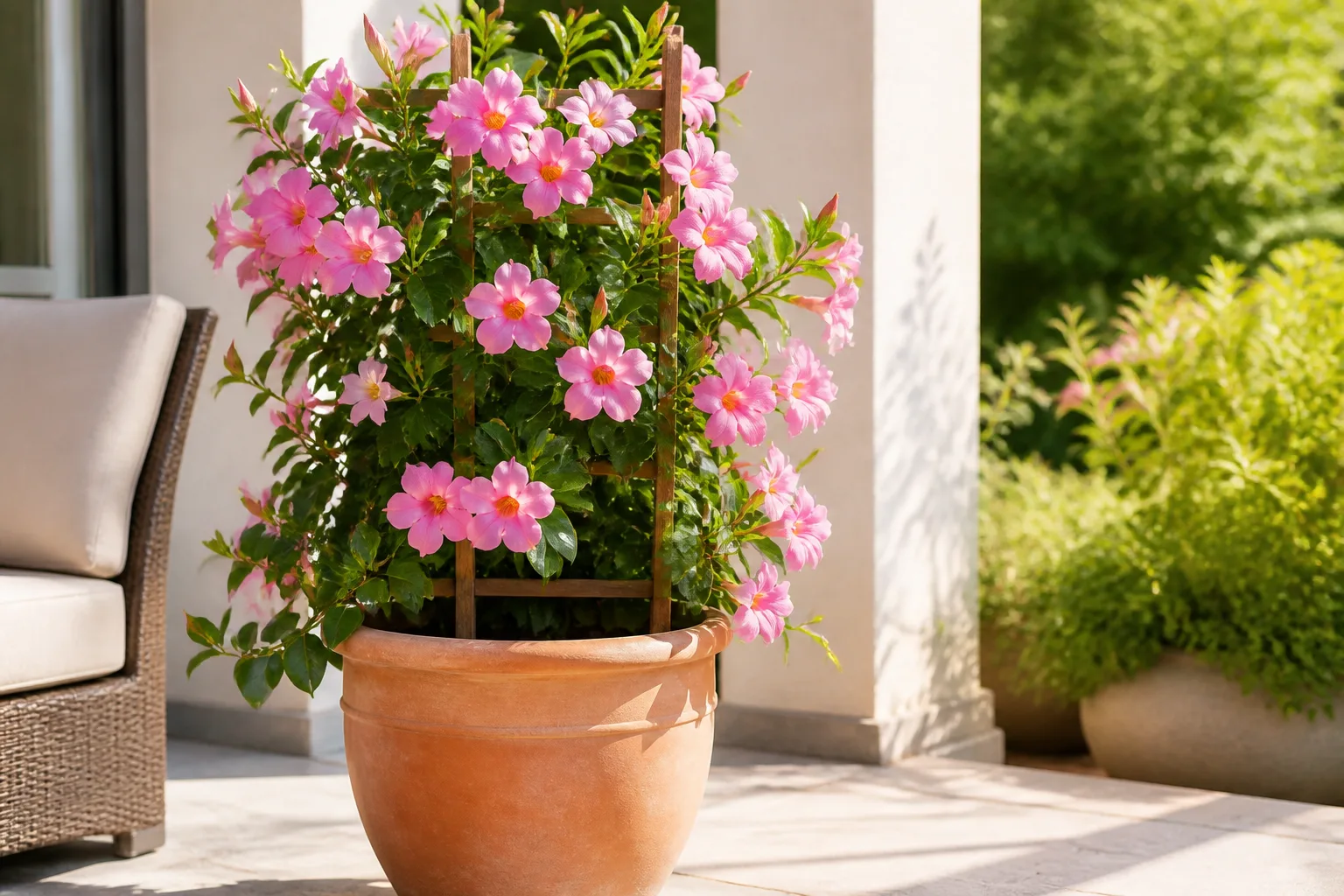
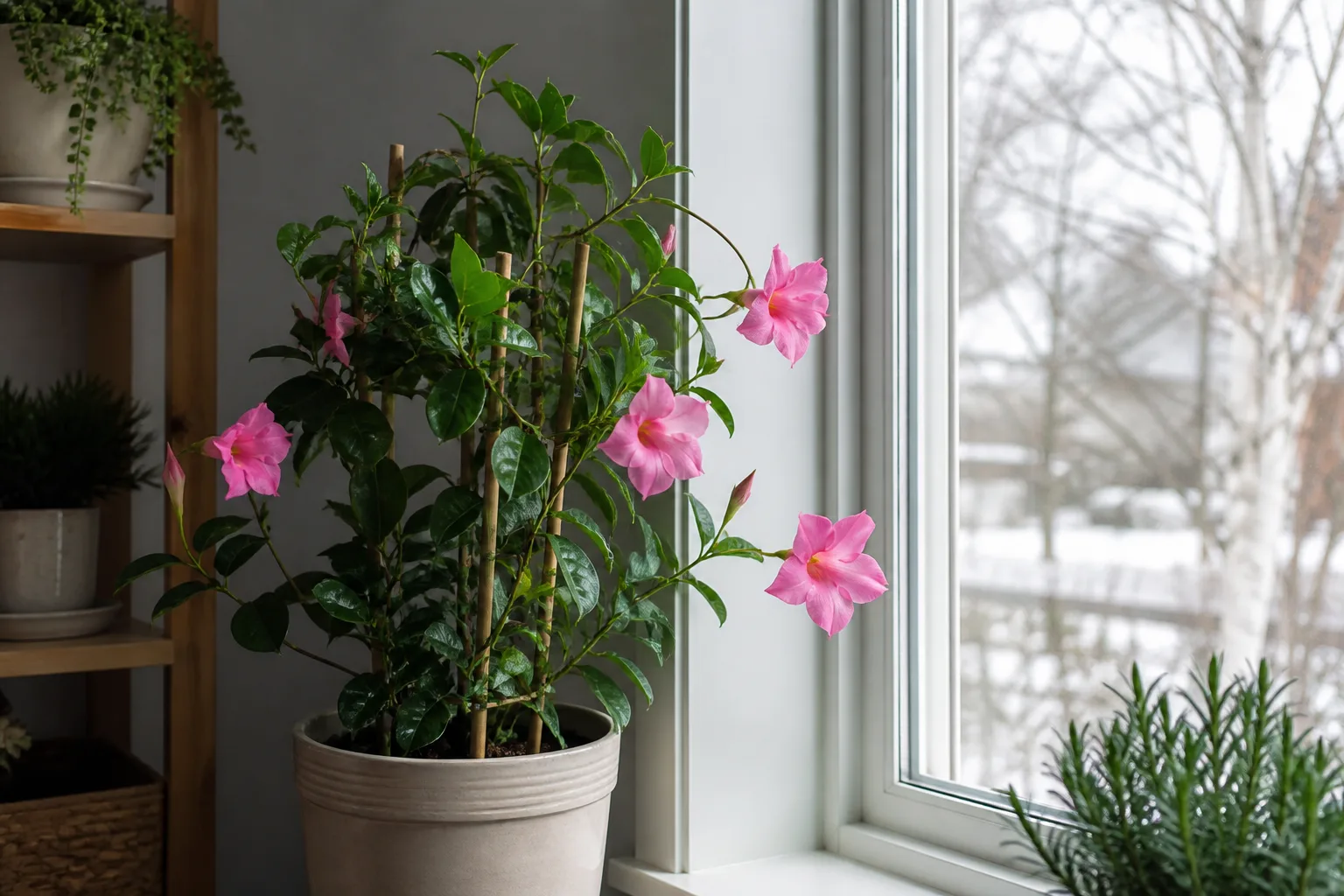
Use a well-draining houseplant mix with perlite. Elevate pots on feet so drainage holes never seal against saucers. If you grow abutilon beside other tender vines, the trellis habits in our mandevilla container guide illustrate similar support and pot-scale logic—abutilon is bushier, but the drainage rules are identical.
Overwintering Flowering Maple Indoors
Cold-climate success hinges on timing and expectations, not pampering.
Two weeks before your average first frost, move containers to a bright, cool room—think 60–70°F (16–21°C) with several hours of direct window sun. Garage or basement fails unless you add grow lights; dark rooms cause leaf drop and spring recovery delays.
- Cut back watering; let the top 2 inches dry between drinks.
- Stop fertilizer until new growth in late winter.
- Scout for pests before plants touch your indoor collection; whiteflies hitchhike easily.
- Accept some leaf drop; do not overwater to “compensate.”
In zones 9–10, in-ground plants need no special overwinter care beyond mulch and occasional frost cloth on rare cold snaps. Do not prune heavily in fall; wait for spring so you do not stimulate tender growth before chill.
Pests, Diseases, and Abutilon Mosaic Virus
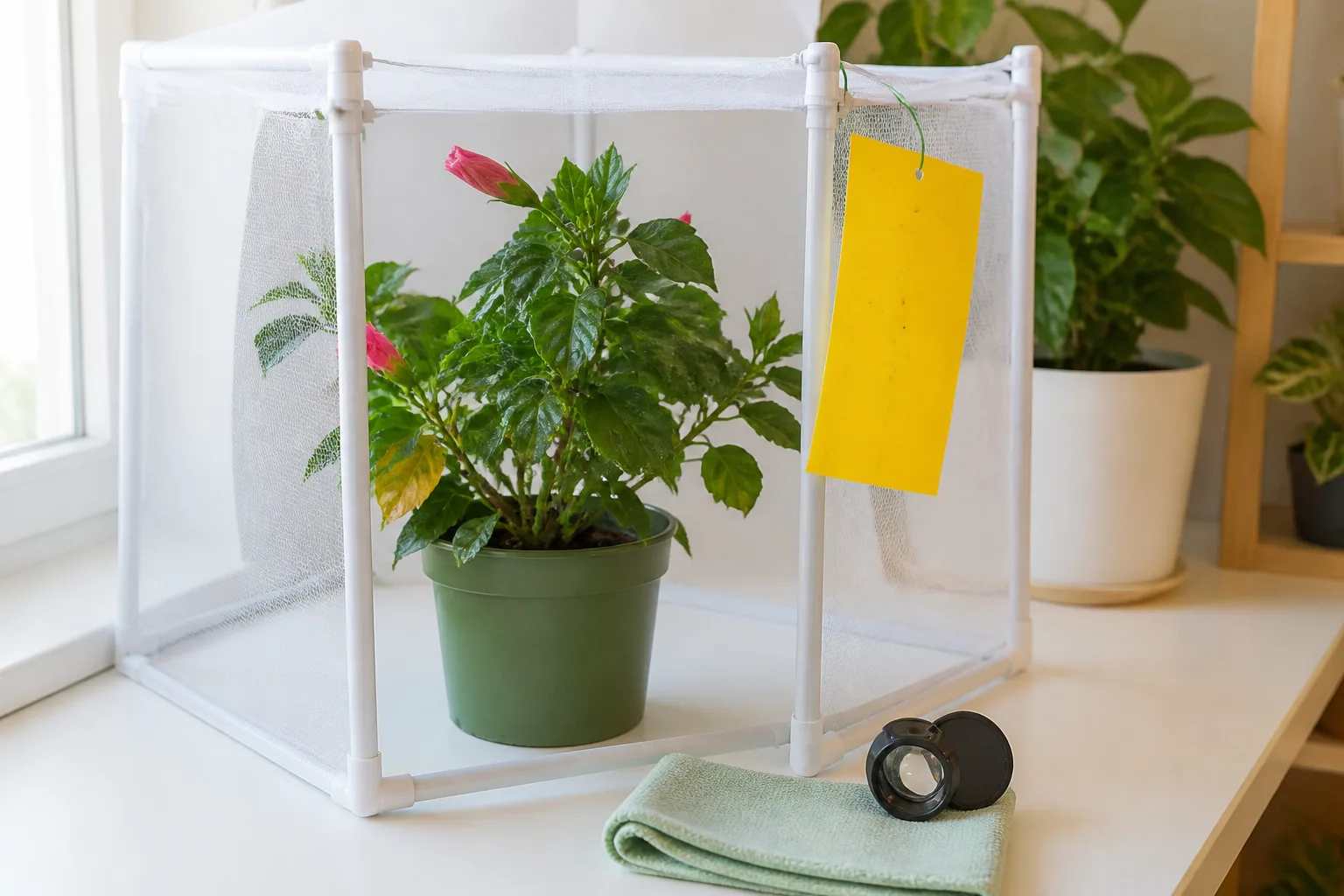
NC State lists aphids, thrips, mites, whitefly, and Pythium root rot as primary problems. Indoor abutilon also attracts scale and mealybugs on stressed plants.
Scout weekly while watering—especially leaf undersides. Sticky honeydew or a white cloud when you brush stems points to whiteflies, a common abutilon pest also covered in our whiteflies on houseplants guide. Blast outdoor plants with a strong hose spray for aphids and thrips; follow with insecticidal soap or horticultural oil on undersides, repeating until nymph cycles break.
Rust and leaf spot favor wet foliage and poor air circulation. Water at the soil line, thin crowded stems, and remove fallen leaves. Fungicides are a last resort on edible-flower-adjacent plants—fix culture first.
Abutilon Mosaic Virus: Feature or Problem?
Abutilon mosaic virus produces sharp yellow to whitish blotches bounded by leaf veins—often sold intentionally on variegated cultivars. UC IPM notes the virus does little harm to growth or flowering and is spread by silverleaf whitefly, mechanical sap, and grafting. Propagators select infected stock because buyers want the pattern.
That is different from random mottling on a formerly solid-green plant, which may signal another virus or cultural stress—see our mosaic virus on houseplants guide for keep-or-discard logic. Do not assume every yellow patch is the “good” abutilon mosaic.
Root rot from overwatering shows as wilting on wet soil, yellow leaves, and brown mushy roots. Prune affected roots, repot into fresh mix, and reduce water; severe cases are discard-or-cuttings-only.
Troubleshooting Legginess, Leaf Drop, and Bloom Failure
| Symptom | Likely cause | First fix |
|---|---|---|
| Long bare stems, few flowers | Low light | Move to brighter spot; pinch tips after recovery |
| Bud drop overnight | Cold draft or dry soil spike | Stable temperature; even moisture |
| Yellow leaves, wet soil | Overwatering / root rot | Dry-down cycle; check drainage |
| Crispy edges | Underwatering or salt burn | Soak pot; flush salts; adjust schedule |
| Small pale blooms | Underfeeding in bright light | Weak liquid feed monthly |
| Leaf drop after move indoors | Low light + overwater combo | Brighter cool room; drier soil |
| Sticky leaves + flying insects | Whiteflies | Underside treatment; sticky traps for monitoring |
Abutilon forgives many mistakes if you catch them early. The newest leaves and buds tell the truth faster than older foliage.
Safety, Edibility, and Handling Notes
NC State Extension flags abutilon as poisonous to humans with potential contact dermatitis from sap or foliage handling. Wear gloves if you are sensitive, wash hands after pruning, and keep plants away from toddlers who treat leaves as snacks.
The same NC State profile notes flowers are edible raw or cooked with a sweet flavor—a paradox that means cultivar identity and clean growing conditions matter if you ever harvest blooms for garnish. Never eat flowers from plants treated with pesticides, and do not treat “edible flowers” as a cancel for the toxicity warning on sap and unknown cultivars.
Pet toxicity data is thinner than for common houseplants. Until you verify a specific species with a veterinary poison reference, assume keep out of reach of dogs and cats that chew woody stems.
Conclusion
Abutilon rewards gardeners who treat it like the tropical bloomer it is: bright light, even moisture in well-drained soil, regular weak feeding during the growing season, and a cool bright winter if you garden where frost arrives. Pinch young stems for bushiness, take softwood cuttings when you want more plants than floor space allows, and scout whiteflies before they spread mosaic virus or honeydew soot.
Pick cultivars for habit and hardiness, not just flower photo appeal—upright hybrids for pots, lantern types for baskets, variegated virus-pattern leaves only when you want that look on purpose. Nail those decisions and flowering maple stops being a one-season impulse buy and becomes a repeatable part of your patio or sunroom rotation.



