Houseplant Leaves Brown in Winter: 5 Causes and Fixes
Brown, crispy houseplant leaves in winter? Learn the five most common causes—dry heat, watering mistakes, sunburn, fertilizer salts, and pests—and how to fix each.
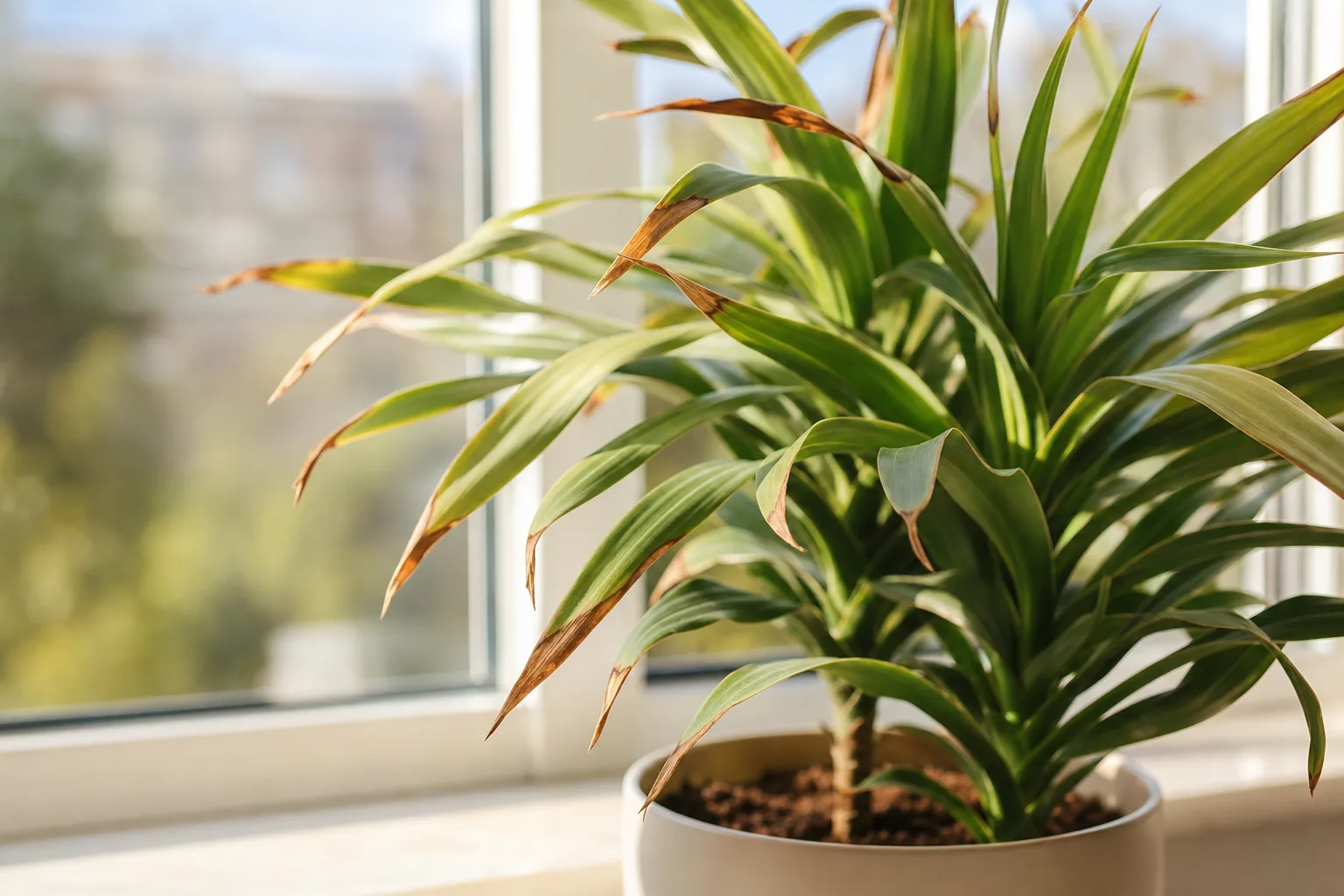
Your peace lily looked fine in October. By January the leaf margins are brown, papery, and loud—and you have not changed a single thing about how you care for it. That is the frustrating part of houseplant leaves turning brown in winter: the damage often shows up while your routine stays frozen in summer mode, even though the indoor climate has shifted underneath you.
Winter browning is rarely random. Heated air drops humidity, growth slows, watering needs change, low-angle sun hits leaves that sat safely in shade all summer, and dry conditions wake up spider mites. The brown tissue itself is dead—it will not turn green again—but new leaves can emerge clean once you match care to February reality, not July habits. Below are the five causes we see most in winter plant clinics, how to tell which one matches your plant, and what to do in the first week so you stop the spread without making things worse.
For year-round brown-tip troubleshooting beyond winter, see our brown tips on houseplants guide. For the full seasonal shift—light, rest, and humidity—read why houseplants struggle in winter.
Why Winter Turns Healthy Leaves Brown and Crispy
Tropical houseplants evolved in forests where relative humidity often sits 50–60% and temperatures stay steady. A heated home in January commonly runs 20–30% RH at plant height, according to Penn State Extension—well below what ferns, calatheas, and many aroids prefer. Cold outdoor air holds less moisture to begin with, and the heating process strips more out. ASHRAE recommends indoor humidity between 30% and 60% for human comfort, but the low end of that range still stresses moisture-loving foliage. (Penn State Extension)
At the same time, shorter days slow photosynthesis and root uptake. University of Wisconsin–Madison Division of Extension notes that houseplants in slow-growth periods need less water than during active summer growth—yet dry furnace air pulls moisture from leaves faster than roots replace it. That stacked stress is why winter damage looks sudden even when the underlying shift took weeks.
What brown, crispy tissue actually means
Crispy usually means the leaf lost water faster than the vascular system could supply it, or salts/minerals accumulated at the tissue edge and killed cells. Brown can mean underwatering (often whole lower leaves), salt burn (tips with yellow halos), sun scorch (bleached patches turning tan), pest feeding (stippling plus webbing), or cold/draft damage (sudden patches on exposed leaves).
The RHS groups brown leaf symptoms by pattern: tips and margins often point to dry air or inconsistent watering; entire lower leaves browning and dropping suggest underwatering and heat; pale scorched patches suggest too much direct light. (RHS leaf damage on houseplants) Matching where the brown appears beats guessing which product to buy.
The 60-second pattern check before you change anything
Before you water, fertilize, move, or mist, run this quick check:
Feel the pot weight and soil. Light pot plus soil pulling from the rim = underwatered. Heavy pot, wet soil two inches down, sour smell = overwatered—more common in winter than owners expect.
Check a hygrometer near the plant. Below 35% RH at leaf height strongly implicates dry air, especially on ferns, calatheas, and peace lilies.
Look at light exposure. Did you move plants closer to a south window for winter light? Low-angle winter sun can scorch leaves that were fine in summer shade.
Scan leaf undersides with your phone flashlight. Fine webbing, stippling, or moving dots = pests, not humidity alone.
Review your last fertilizer date. Salt crust on soil surface plus brown tips after a winter feed = hold fertilizer and flush.
Change one variable at a time. Stacking fixes makes it impossible to know what worked and can stress an already struggling plant further.
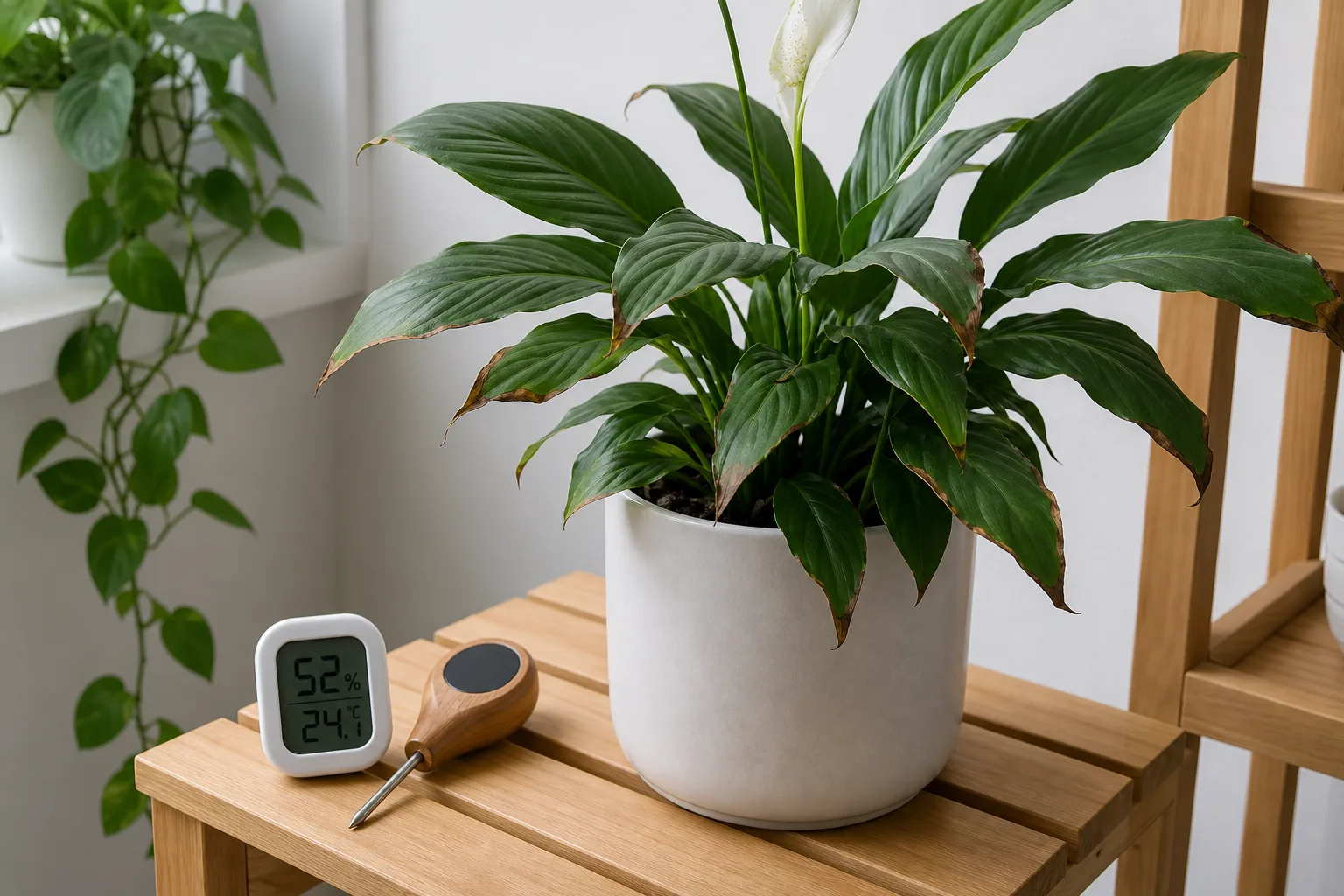
Reason 1: Dry Heating Air Pulls Moisture From Leaf Edges
Low humidity is the number-one winter cause of brown, crispy leaf tips on tropical houseplants. Furnaces, radiators, and forced-air vents create a desert at exactly the height your plant canopy lives. The leaf tip is the last point in the vascular pipeline—when transpiration outpaces root supply, tips desiccate first.
This is not a watering failure in the strict sense. You can water on schedule and still get crispy edges because the air is pulling moisture from leaves faster than roots deliver it. Symptoms worsen in January and February when heat runs hardest and outdoor air is driest.
How to tell low humidity is the culprit
Brown tips or margins on otherwise firm green leaves, often on several plants at once, point to air moisture—not a single sick pot. Ferns, calatheas, prayer plants, and peace lilies show damage earliest. A hygrometer reading below 40% at the shelf confirms it. If only one plant browns while neighbors look fine, humidity may be secondary; check that plant’s roots and pests before assuming dry air.
Penn State Extension is clear that misting raises humidity only until the water evaporates—minutes, not hours—and that pebble trays diffuse evaporated water into the whole room with minimal measurable impact. (Penn State Extension) They still help some growers as localized microclimate tools, but they are not a substitute for a humidifier on sensitive collections.
Humidity fixes that work in a heated home
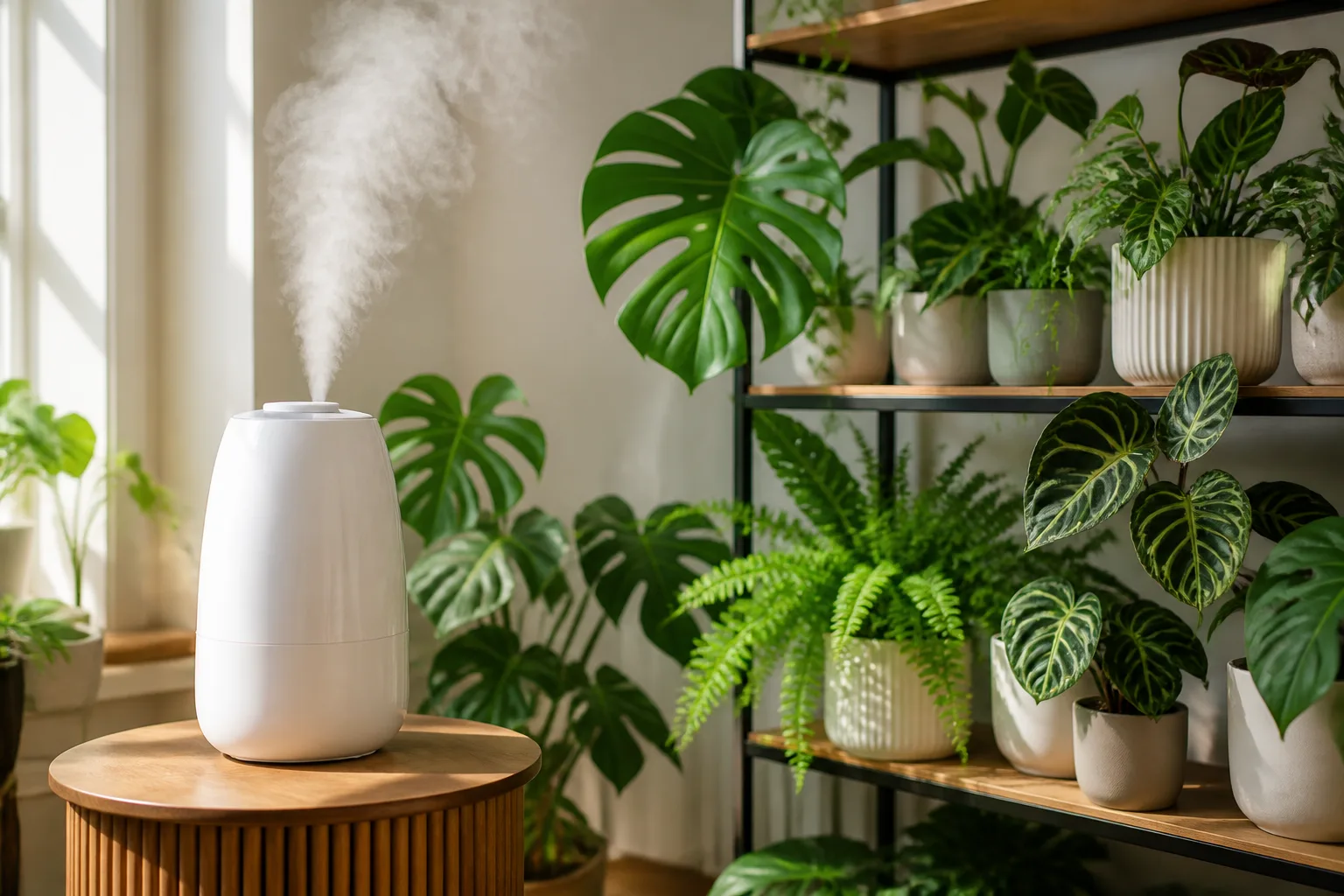
Run a cool-mist humidifier near the plant group—not across the room. Aim for 40–60% RH at canopy height. Our best humidifiers for plants roundup compares sizes and run times if you are shopping.
Group plants on a single bench or shelf so shared transpiration bumps local humidity slightly. This works best in a smaller room with the door closed, not in a drafty open floor plan.
Use a pebble tray or cache pot with water below stone level and the pot base above the waterline. It will not humidify the whole house, but it can ease the immediate air pocket around one high-need plant.
Move plants away from heat vents and radiators. Dry, hot airflow desiccates leaves in hours. Even a few feet of distance helps.
Consider a clear cabinet or cloche for humidity divas like fittonia or certain ferns. Penn State Extension notes that growing under glass recycles moisture in the plant’s immediate zone—useful when whole-room humidity is hard to maintain.
Do not respond to crispy tips by watering more unless the soil is actually dry. Extra water on already-moist winter soil invites root rot while doing nothing for the air.
Reason 2: Winter Watering Went Off Schedule
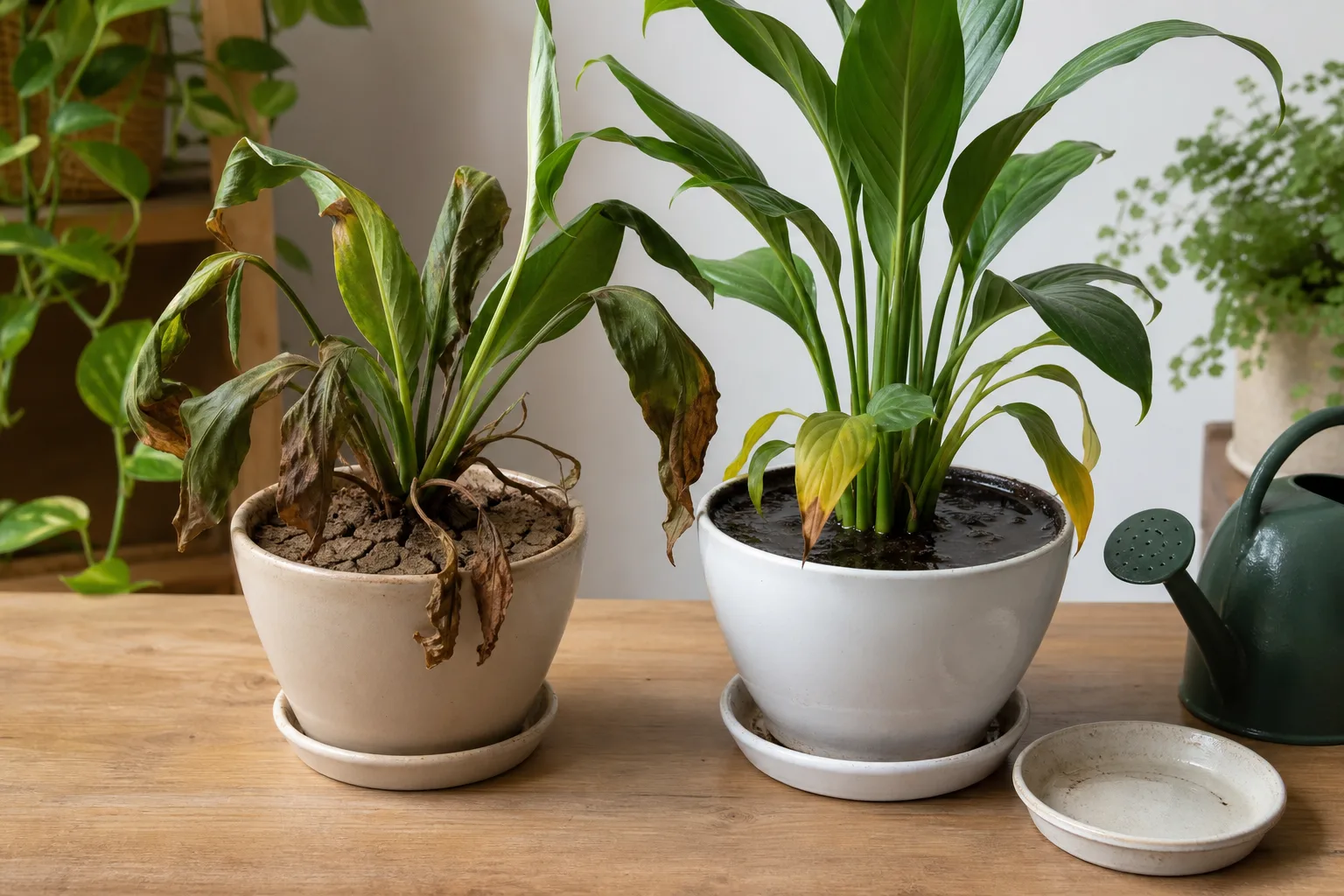
Watering mistakes are the second major winter browning trigger—and they cut both directions. Underwatering dries whole leaves from the edges inward. Overwatering suffocates roots so leaves cannot hydrate, producing brown tips, yellowing, and sometimes mushy stems. Generic advice to “water more” in winter often backfires because growth has slowed and soil stays wet longer.
University of Wisconsin–Madison Extension recommends checking soil before every watering and reducing volume during slow-growth months. Insert a finger about one inch deep; water only when dry at that depth for drought-tolerant species. Even moisture-lovers need less total water when light is low and evaporation from the pot surface is slow. (University of Wisconsin–Madison Division of Extension)
Underwatering vs overwatering—both brown leaves in winter
Underwatering signs: Pot feels light. Soil is hard, cracked, or pulling from the pot wall. Lower leaves turn fully brown and crisp, sometimes with wilting at the top. After travel or a missed week, this is common.
Fix: Bottom-water in a sink or tub. Set the pot in a few inches of room-temperature water for 30–60 minutes until the top soil darkens. Let drain fully. Resume checking soil weekly—not on a calendar autopilot.
Overwatering signs: Pot stays heavy for days. Soil smells sour or grows fungus gnats. Lower yellow leaves plus brown tips. Soft stems. Roots brown and mushy when you tip the plant out.
Fix: Stop watering until the root zone dries. Move to brighter indirect light and warmer air to speed drying. If roots are mostly mush, repot into fresh mix, trimming rot. See is your plant dead or just dormant if you are unsure whether stems are still alive.
The winter trap: owners see crispy leaves, assume thirst, and water a pot that is already saturated. Always check soil moisture and root smell before the watering can comes out.
Reason 3: Low Winter Sun Angles and Window Glass Scorch Foliage
Counterintuitive but real: winter sunburn browns leaves on plants parked in south- or west-facing windows. Summer sun sits higher; winter sun sits lower and streams horizontally through glass for more hours. Leaves that received gentle indirect light in July can scorch in January—especially after you moved them closer to the glass for extra light.
Sunburn shows as pale, bleached, or tan patches on the leaf surface facing the window, sometimes with crispy brown centers. It is not the same as uniform tip burn from dry air. Sheer curtains, moving plants back a few feet, or shifting to an east window usually fixes it once new growth appears.
Cold glass compounds the problem. Foliage pressed against a freezing windowpane at night can brown overnight from cold injury even without direct sun. Leave an air gap between leaves and glass, or pull plants back on the coldest nights.
If lack of light is the issue—stretching, pale new growth, no scorch patches—add a grow light instead of pushing the plant into harsh direct sun. University of Maryland Extension documents how sharply light drops even a few feet from a window in winter. (University of Maryland Extension)
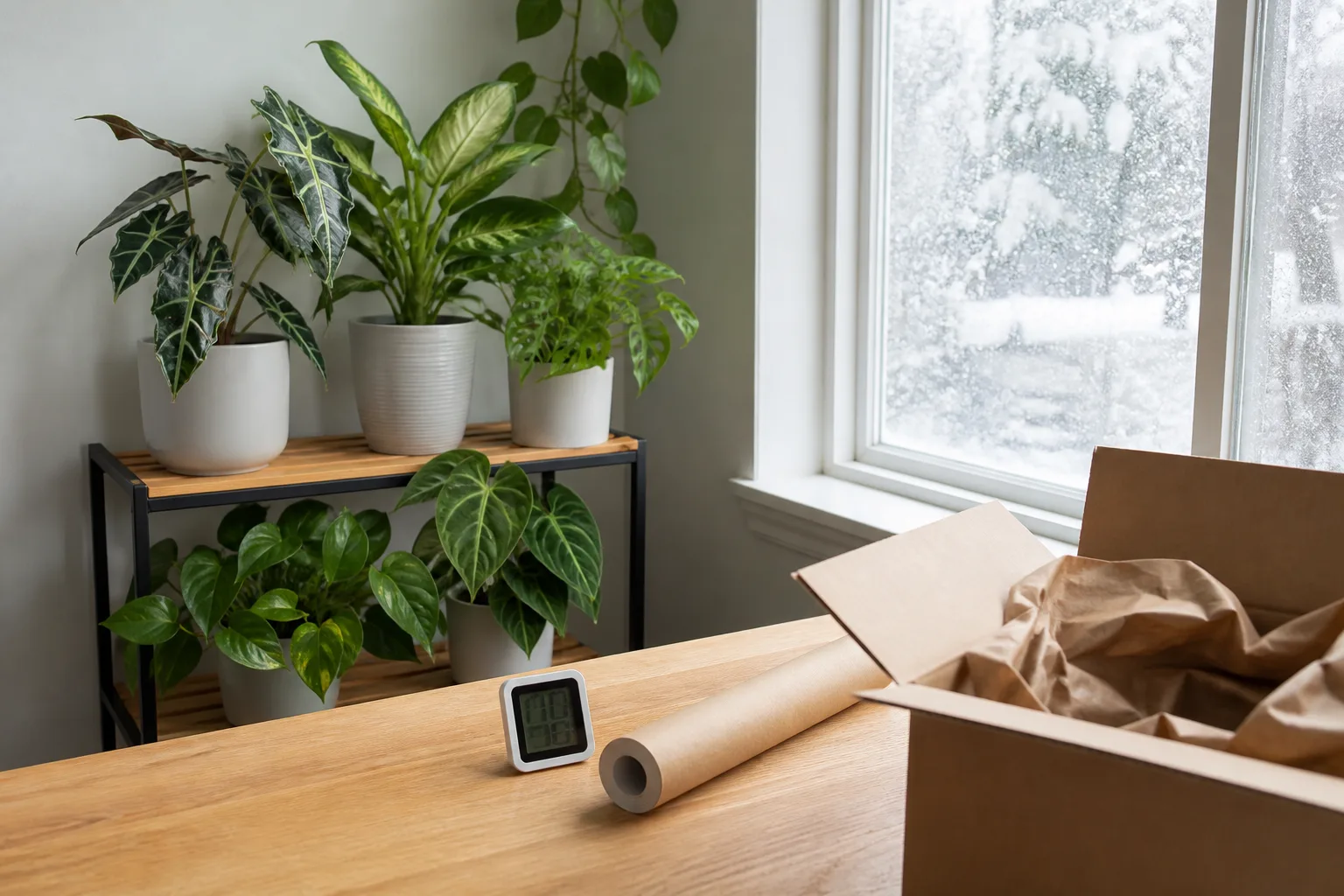
Reason 4: Fertilizer and Salt Buildup on Slow Winter Roots
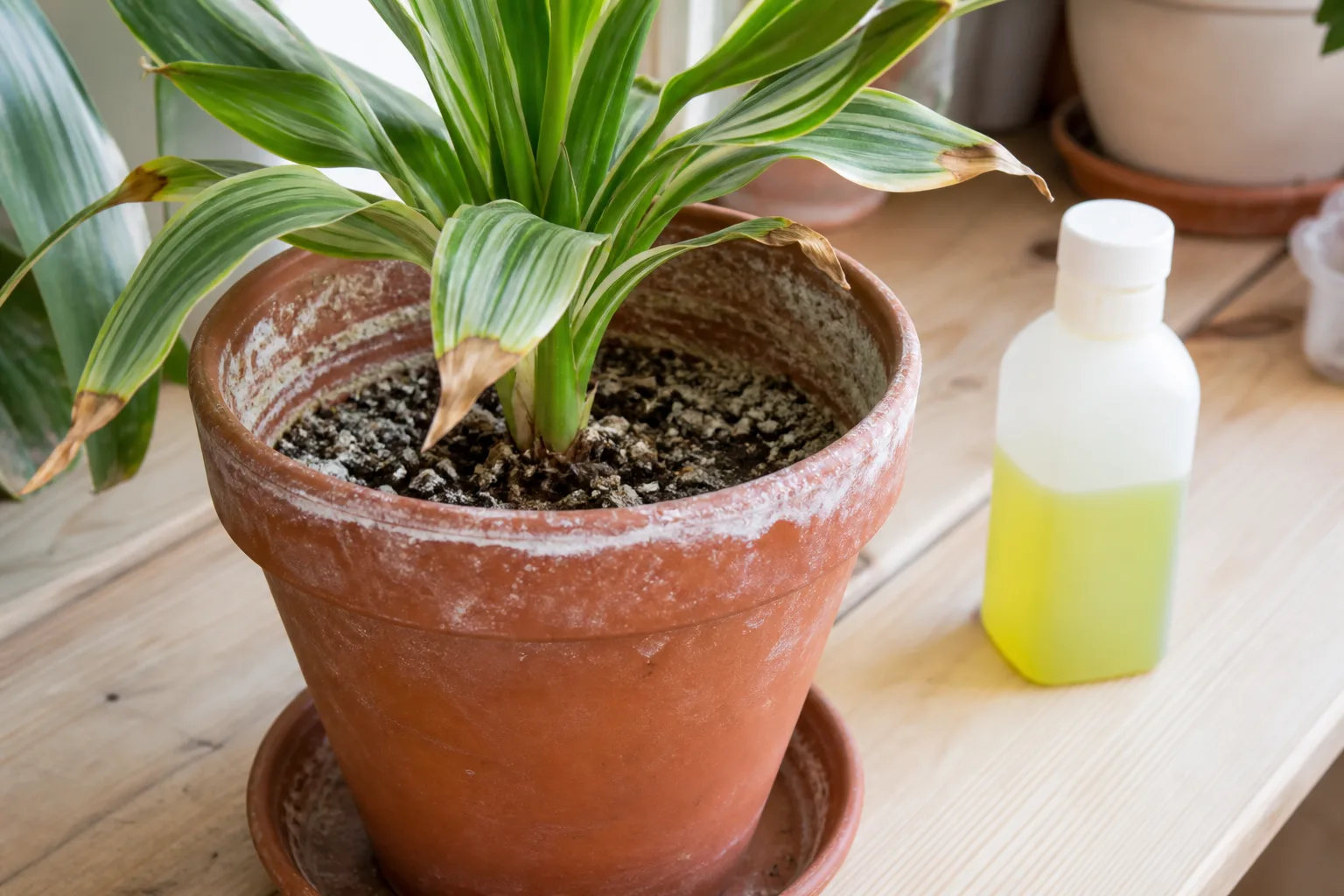
Houseplants need little to no fertilizer when growth stalls in low light. Feeding on a summer schedule—or at full strength on dry soil—builds soluble salts that burn roots and leaf margins. University of Maryland Extension warns that fertilizer toxicity and high soluble salts produce brown leaf tips, leaf margin burn, and stunted growth, especially when roots are cold and uptake is slow. (University of Maryland Extension)
Winter is when salt damage surfaces because plants are not flushing minerals into new tissue fast enough. White crust on the pot rim, brown tips with yellow halos, and damage appearing a week after your last feed are classic signs.
Fix: Pause all fertilizer until consistent new growth returns in late winter or spring. Flush the soil by running lukewarm water through the pot slowly until it drains freely from the bottom—repeat three times, letting excess drain fully each round. For severe crust or repeated burning, repot into fresh mix and rinse roots gently.
Hard tap water and softened water add minerals too. Sensitive species—dracaena, spider plant, calathea, peace lily—often show tip burn from fluoride and salts even without fertilizer. Switch to rainwater or filtered water for a month and compare new leaf quality. Our brown tips on houseplants guide covers water-quality fixes in depth.
Reason 5: Spider Mites and Pests Thrive When Air Is Dry
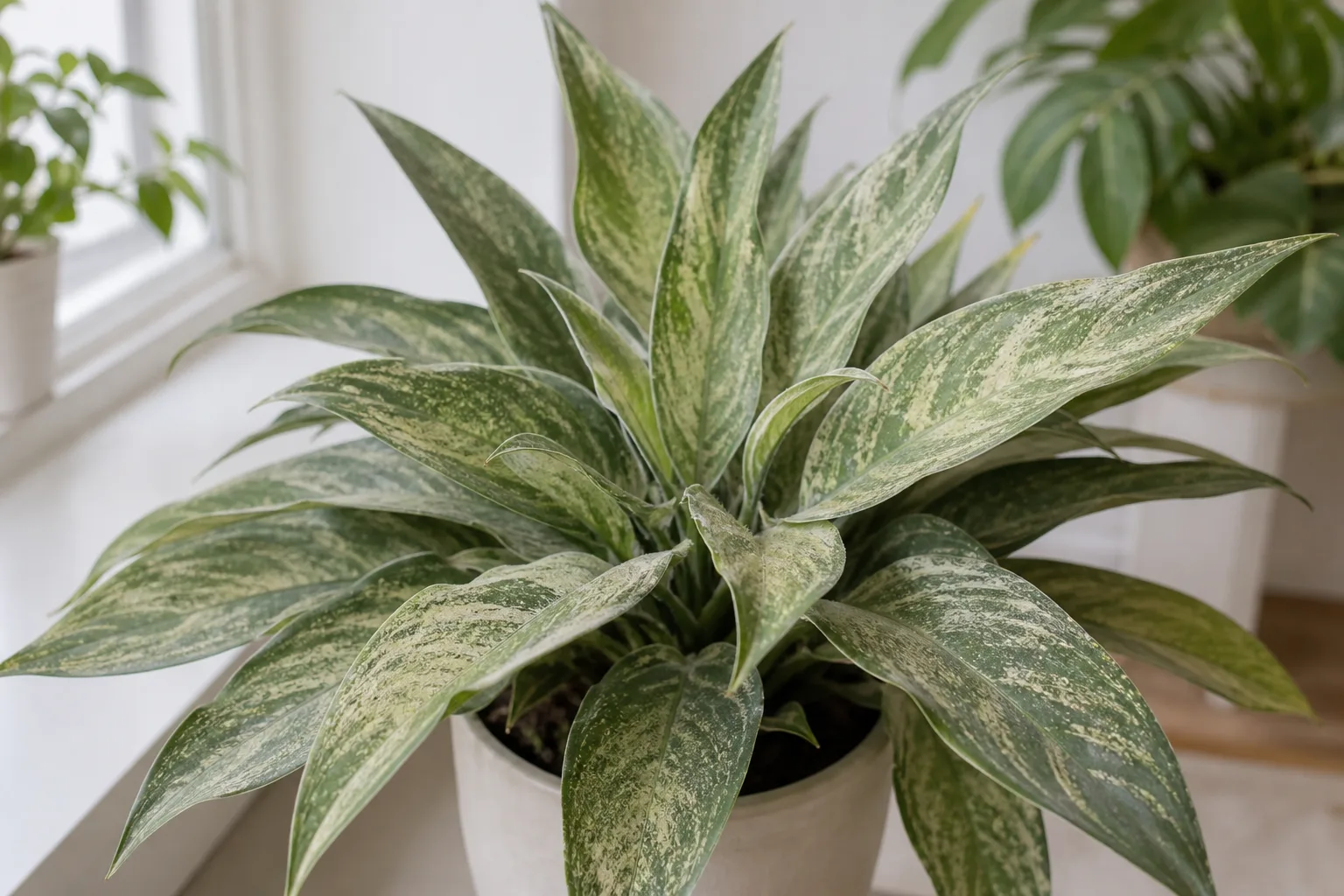
Spider mites love the same dry, warm conditions your furnace creates. These sap-sucking pests stipple leaves, cause bronze or brown patches, and leave fine webbing on undersides and stem joints. Damage accelerates in winter when humidity crashes and natural predators are absent indoors.
The RHS lists glasshouse red spider mite among common houseplant pests linked to leaf discoloration. (RHS leaf damage on houseplants) Mite damage can look like drought stress, so always inspect before you assume humidity alone.
Fix: Isolate affected plants. Rinse foliage in the shower to knock down populations. Apply insecticidal soap or horticultural oil per label directions—usually repeated applications two weeks apart. Raise humidity and keep plants away from heat vents; mites reproduce slower above 50% RH. Severe infestations may require pruning badly damaged leaves after treatment starts.
Other winter pests—scale, mealybug, thrips—also stress leaves, but spider mites are the classic dry-winter flare-up. Sticky honeydew on leaves or furniture below the plant points to scale or aphids instead.
Should You Trim Brown, Crispy Leaves in Winter?
Yes, for aesthetics and to stop the plant from sending resources to dead tissue—but trim after you address the cause, not instead of fixing it. Use clean scissors and follow the natural leaf shape when removing brown tips. Remove entire leaves only when more than half the blade is dead or pest-damaged.
Dead brown tissue will not re-green. Judge recovery by new unfurling leaves, not old damage. In low-light winter, regrowth may be slow until days lengthen; that is normal, not failure.
Avoid heavy pruning on a plant still in active root rot or severe mite infestation. Stabilize the environment and treat pests first, then trim so you can see whether new growth stays clean.
Your First-Week Winter Recovery Plan
Day 1–2: Diagnose. Run the pattern check. Note humidity, soil moisture, light exposure, last fertilizer date, and pest signs. Take photos to compare in two weeks.
Day 3: Fix the primary cause. If RH is under 35%, start a humidifier. If soil is bone dry, bottom-water once. If soil is soggy, dry it out. If sunburned, add sheer curtain or move back. If fed recently, flush and pause fertilizer. If mites present, isolate and treat.
Day 4–7: Hold steady. Do not change watering, light, and humidity on the same day. Check soil moisture once midweek. Empty drainage saucers after every water.
Week 2: Trim cosmetic brown edges on stable plants. Look for clean new growth at the center or stem tips. If browning spreads despite fixes, tip the plant out and inspect roots—or compare symptoms to our calathea yellowing guide and species-specific pages for overlapping stress signals.
When Brown Leaves Signal a Bigger Problem
Most winter browning is cultural and reversible. Escalate when:
Stems are mushy or black at the base—likely rot, not dry air.
Browning spreads fast with wet soil and gnats—root failure, not humidity.
Whole plant collapses after a sudden temperature swing or repotting—shock or root damage.
Webbing and stippling persist after two treatment rounds—mites may need stronger intervention or disposal of unsalvageable specimens.
If roots are mostly healthy and firm white/cream, patience plus corrected culture usually wins by spring. If more than half the root mass is brown and soft, propagate healthy top growth if possible and replace the mother plant.
Conclusion
Houseplant leaves turning brown in winter almost always trace back to dry heated air, watering that no longer matches slower growth, harsh low-angle sun, leftover fertilizer salts, or pests that love desert conditions—not because you failed as a plant parent. Read the pattern on the leaf, check humidity and soil before you react, fix one cause at a time, and trim dead tissue only after the environment stabilizes.
Brown tips you see today were weeks in the making; clean new leaves are the scoreboard. Run the humidifier, ease off winter fertilizer, respect the shorter-day water budget, and give the plant a few weeks of consistency. When you want the full seasonal playbook beyond leaf damage, start with winter houseplant care and keep this page bookmarked for the next January dry spell.



