How to Grow an Irish Moss Lawn This Spring
Learn whether an Irish moss lawn fits your yard, how to plant plugs in spring, spacing math, watering rules, and fixes for brown patches.
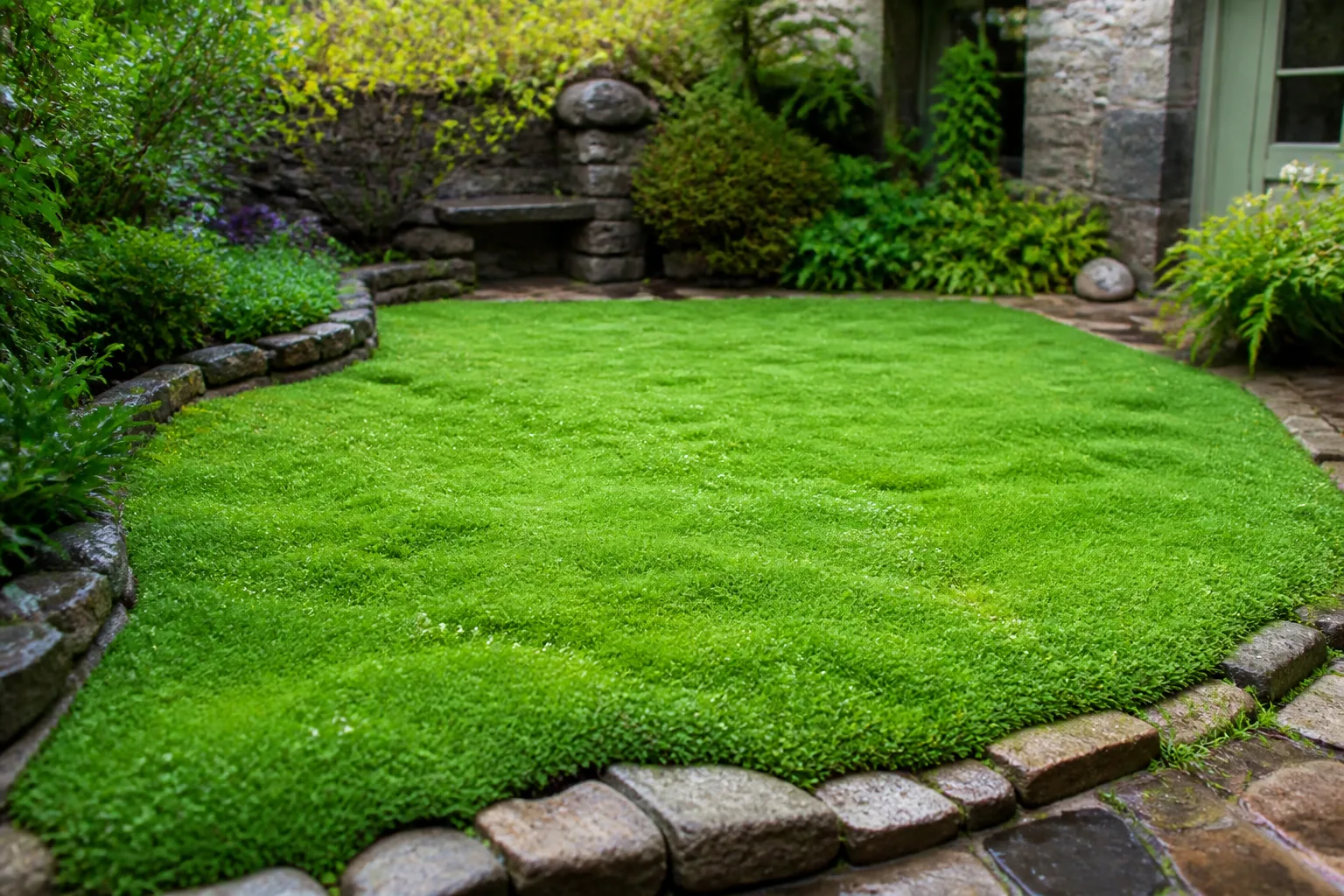
Irish moss (Sagina subulata) shows up every spring in lawn-alternative roundups for good reason: it forms a dense, emerald carpet without a mower, tolerates light footsteps once established, and blooms with tiny white stars from late spring through summer. It is also not moss, not drought-proof, and not a realistic replacement for a quarter-acre backyard in Atlanta. The gardeners who succeed with an Irish moss lawn treat it like a specialty ground cover for small, cool, well-drained pockets — front entry mats, courtyard lawns, flagstone gaps, and rock-garden carpets — not like interchangeable turf.
This guide starts with a five-minute site check so you know whether spring planting is a smart move, walks through plug spacing math most articles skip, and ends with a troubleshooting flowchart for the brown patches that show up when water or nitrogen drifts out of range.
Is an Irish Moss Lawn Right for Your Yard?
Before you order flats of plugs, run a quick audit. Irish moss rewards precise site matching and punishes wishful thinking about scale and climate.
Where Irish Moss Excels
Choose Irish moss when you have a small area (typically under 200–400 square feet), full sun to partial shade with afternoon relief in hot zones, well-drained soil that never puddles, moderate foot traffic at most, and a willingness to irrigate through dry spells. NC State Extension tags it for stepping stones, rock gardens, walkways, and lawn alternative plantings along paths — uses where its 1- to 2-inch height and mat-forming habit shine.
It fits USDA zones 4a through 8b (University of Wisconsin–Madison Extension), thrives in cool spring weather when most vegetative spread happens, and pairs well with spring bulbs whose foliage dies back as the moss fills in. If you are exploring broader grass alternatives, compare traffic and water needs in a dedicated lawn alternatives roundup before committing to moss.
Where It Will Disappoint You
Skip Irish moss or shrink the project when the site bakes in all-day sun without shade in zones 7–8, soil stays wet after rain, you need a play lawn or daily dog traffic, the area exceeds a few hundred square feet on a budget timeline, or you expect set-and-forget drought tolerance. NC State Extension is explicit: Irish moss does not handle intense heat or drought well, and overwatering causes problems too.
Hot, dry climates push you toward sedum mats, buffalo grass, or xeriscape beds instead — see drought-tolerant groundcovers that thrive from seed for options that match arid summers. Heavy shade produces leggy, thin mats rather than the tight carpet you see in photos.
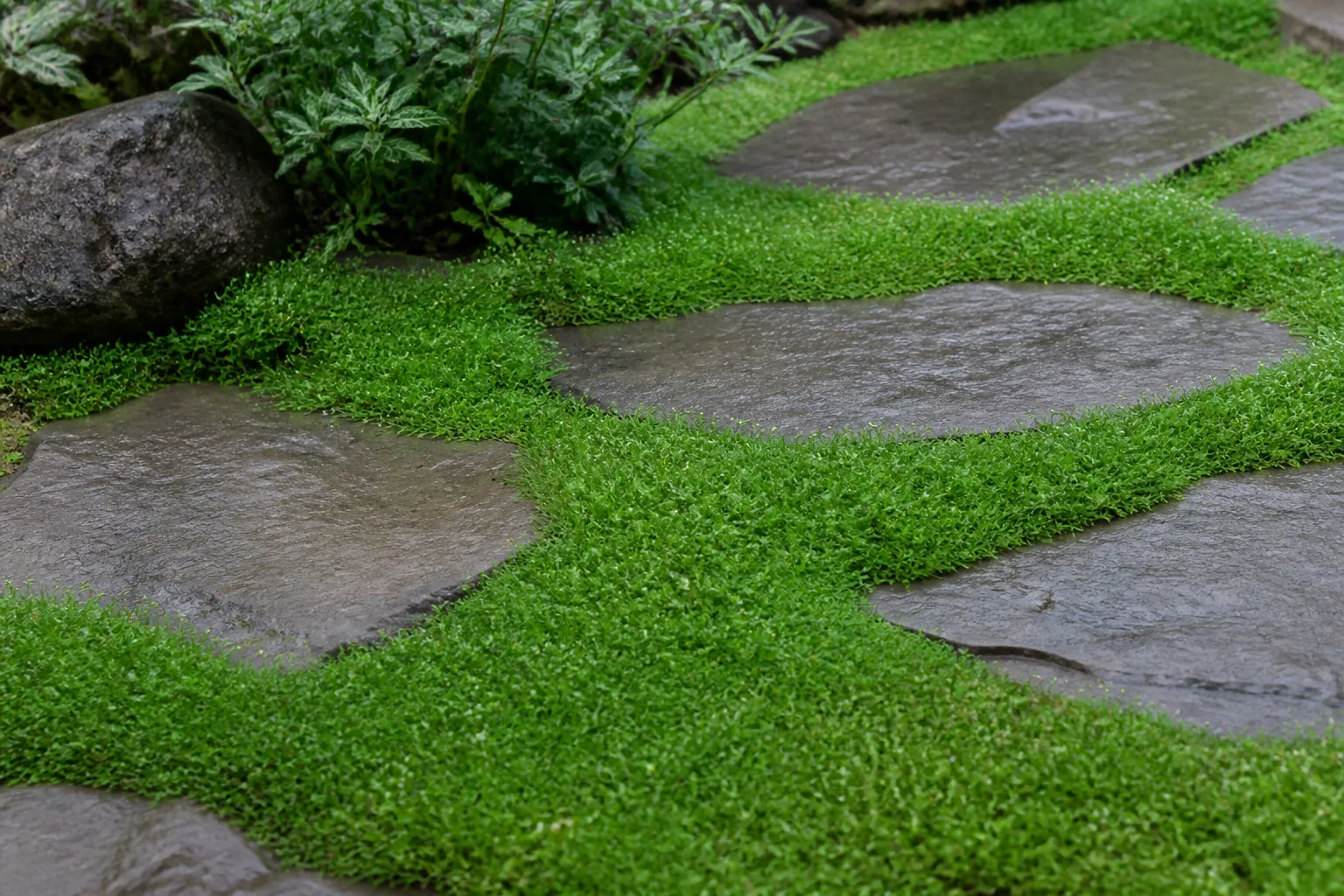
Irish Moss at a Glance
| Feature | Details |
|---|---|
| Common names | Irish moss, heath pearlwort, lawn pearlwort |
| Botanical name | Sagina subulata (Caryophyllaceae) |
| Plant type | Evergreen herbaceous perennial ground cover |
| Mature size | 1–2 in. tall, 12+ in. wide per plant |
| Sun | Full sun to partial shade; afternoon shade in hot zones |
| Soil | Moderately fertile, acidic to neutral, excellent drainage |
| Hardiness | USDA zones 4a–8b |
| Bloom | Tiny white flowers late spring through summer |
| Traffic | Light foot traffic once established |
| Spread | Moderate; several years to fill large areas |
| Best uses | Small lawns, pavers, rock gardens, path edges |
Irish Moss Is Not Real Moss — and That Changes Everything
Despite the name, Irish moss is a flowering perennial in the carnation family, not a bryophyte. True moss lawns need shade, consistent moisture, and acidic conditions — a completely different site profile. Irish moss wants sun or bright partial shade, cool roots, and nutrient-aware feeding. Treating it like a shade moss lawn is the fastest route to a thin, browned-out patch.
The fine, awl-shaped leaves on creeping stems create a mossy illusion, but those stems root at nodes and the plant produces seeds in tiny capsules. UW–Madison Extension notes it self-sows readily under good conditions — useful for filling gaps, but something to manage if it escapes into gravel or adjacent beds.
Why Homeowners Switch to Irish Moss Lawns
Grass-alternative interest keeps climbing as homeowners cut mower time, irrigation bills, and synthetic fertilizer use. Irish moss enters the conversation when people want a verdant welcome mat without weekly mowing — especially for small front yards, courtyard gardens, and no-grass backyard ideas where turf never thrived anyway.
Pros That Hold Up in Real Gardens
No mowing required. Once established, Irish moss stays under 2 inches. You can shear it for neatness, but mowing is optional — a major draw for entry gardens and side yards.
Pest and disease resistance. Serious problems are uncommon. Slugs can nibble mats in damp weather, but the plant is otherwise low-drama compared to fungus-prone turf.
Spring and summer flowers. Solitary white blooms sit on thin stalks above the foliage, giving a lawn-like green base with seasonal sparkle — unlike sterile turf.
Perennial permanence. With proper water and drainage, plants return yearly without replanting. Winter may bronze the foliage in cold zones; spring rain usually greens it back up.
Adaptable soil types. Sandy, loamy, and even chalky soils work if nutrients and drainage are right. Compost at planting time goes a long way on lean sites.
Cons You Should Budget For
Not truly low-water. Irish moss needs even moisture — not wet, not bone dry. Brown patches appear quickly at both extremes. Plan on irrigation through dry weeks, especially the first year.
Slow fill on large areas. UW–Madison Extension warns it can take several years to fully carpet a large space. Budget for more plugs up front or accept a longer timeline.
Heat and sun sensitivity. In southern zone 7–8 sites, full afternoon sun without shade stresses plants. Afternoon shade or a smaller shaded pocket works better than forcing a sun-baked front lawn.
Nitrogen sensitivity. Too much nitrogen pushes mounded, undulating growth instead of a flat carpet — the “clumpy” look that frustrates new growers. Fertilize sparingly with balanced or lower-nitrogen products.
Light traffic only. Paths and play areas need creeping thyme or stepping stones — not a living moss lawn alone.
Irish Moss vs. Scotch Moss: Buy the Right Plant
Nurseries often mislabel these look-alikes. Both form low mats, but they are different species with different foliage colors.
Irish moss generally means emerald-green Sagina subulata. Scotch moss usually refers to gold or chartreuse cultivars — often Sagina subulata ‘Aurea’ or related selections — though the trade also mixes in Sabulina verna (formerly Arenaria verna).
The reliable ID trick is at bloom time: S. subulata flowers are solitary on thin stalks; S. verna flowers appear in small clusters (UW–Madison Extension). When not blooming, they are nearly indistinguishable — so buy from a reputable source and keep your receipt if color or habit does not match the tag.
For a uniform green lawn, stick to green S. subulata. Mixing green and gold types in a checkerboard pattern sounds charming but mats merge and dilute the contrast within a season.
Irish Moss vs. Grass and Other Lawn Alternatives
| Factor | Irish moss | Traditional turf | Creeping thyme | Microclover |
|---|---|---|---|---|
| Mowing | None needed | Weekly in season | Optional | Optional |
| Water | Steady moisture; not drought-tough | High in summer | Low once rooted | Moderate |
| Foot traffic | Light | High | Moderate–high | Moderate |
| Sun | Full to partial; afternoon shade in heat | Full sun for most mixes | Full sun | Full sun |
| Fill speed | Slow | Fast from sod | Moderate | Fast from seed |
| Best scale | Small accent lawns | Large yards | Paths, pockets | Whole lawns possible |
| Fertilizer | Sparingly; avoid excess N | Regular | Minimal | Low |
Irish moss wins on visual softness and zero mowing in cool, small spaces. It loses on scale, drought, and heavy use. For path edges and between pavers, it competes well with creeping juniper mats on slopes where moss would dry out — different jobs, not interchangeable.
If you need a walkable aromatic carpet in full sun, how to grow thyme covers a tougher traffic-tolerant alternative. For shade lawns, compare best low-maintenance ground covers before defaulting to moss.
How to Plant an Irish Moss Lawn in Spring
Spring after your last average frost — or early summer while nights stay cool — is the ideal planting window. Warm soil speeds rooting, but extreme heat right after transplant causes stress. Aim for a week of mild weather and consistent moisture ahead.
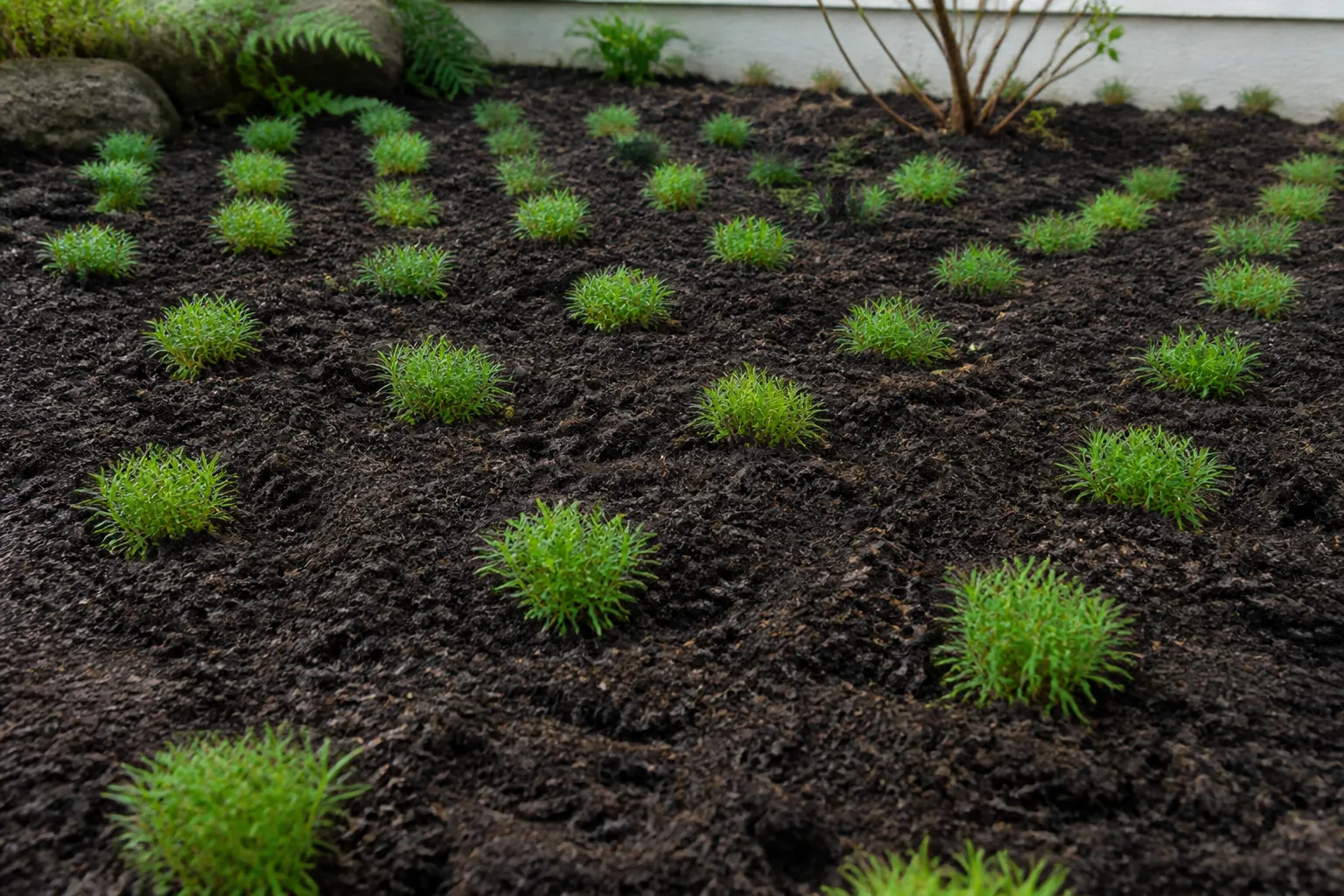
Honest coverage math prevents spring disappointment. A single Irish moss plant spreads roughly 12 inches wide over time — sometimes more in ideal conditions, less in heat or shade. At 8–10 inches on center, plan about 1.4–2.3 plants per square foot (140–230 plugs for a 10×10-foot pocket). At 6–8 inches, budget 2.25–4 plants per square foot for faster knit-in. Areas above 300–400 square feet need serious plug investment; most successful projects stay 50–150 square feet.
Soil Prep, Drainage, and Spacing Math
Remove existing vegetation. Strip turf or weeds. For conversions from grass, smother or solarize the previous lawn weeks ahead so you are not planting into a living root mat.
Improve drainage and fertility. Work 1–2 inches of compost into the top 6 inches of soil. Irish moss tolerates lean mixes but establishes faster with organic matter. If water pools after rain, add coarse sand or raise the grade before planting — crown rot follows soggy soil.
Level and firm lightly. Rake smooth, then water the entire area evenly the day before planting so you start from moist — not muddy — soil.
Dig plug holes 2–4 inches deep, sized to match root balls. Set plants so the crown sits at soil level — not buried, not perched above grade.
Spacing: 6–8 inches for faster cover; 8–10 inches for budget planting on a longer timeline. Stagger rows in a brick pattern so gaps close evenly.
Tamp soil around each plug and water thoroughly immediately after planting.
Seeds, Plugs, or Transplants — What Actually Works
Plugs and transplants are the reliable choice for lawns. They ship with roots attached, establish in two to four weeks with steady moisture, and let you control spacing from day one.
Seed is cheaper per square foot but harder in practice. Irish moss seed needs light to germinate — press into moist soil, do not bury. Germination takes two to three weeks at 55–60°F (UW–Madison Extension). Birds love the seed; direct sowing often feeds sparrows more than it grows moss. Start indoors in flats four to six weeks before last frost, cover with bird netting outdoors, or use plug trays you can protect until seedlings size up.
Division from an existing patch is free and effective in early spring. Lift clumps, tease apart sections with roots attached, and replant at the same depth. Water daily until new growth appears.
Keep soil evenly moist for the first two weeks after any planting method — no drying cycles while roots reach down.
Watering and Fertilizer Rules That Prevent Brown Patches
Watering is where Irish moss lawns succeed or fail. The target is consistently moist soil that never waterlogs.
First-year schedule: Water deeply when the top inch dries. In mild spring weather, that may mean two to three thorough soakings per week. In hot, dry spells, check daily — especially on slopes where water runs off.
Delivery method: A soaker hose or gentle sprinkler mimicking light rain beats a hard jet that dislodges tiny plants. Morning watering reduces evaporation loss.
Overwatering signals: Yellowing centers, mushy crowns, and sudden collapse in low spots point to crown rot. Back off irrigation, improve drainage, and remove dead patches before they spread.
Fertilizer: Apply a balanced slow-release formula (such as 5-5-5) once in early spring — lightly. Skip high-nitrogen lawn feeds entirely. Excess nitrogen produces the mounded, clumpy habit UW–Madison Extension describes. If a soil test shows high nitrogen, do not fertilize at all the first season.
Foot Traffic, Mowing, and Seasonal Care
Foot traffic: Stay off new plantings until mats knit — usually one full growing season. After that, occasional walking is fine. Route daily traffic over stepping stones or gravel; reserve the moss for visual carpet, not a path.
Mowing: Optional. A string trimmer on a high setting can level post-bloom stalks or tidy edges along pavers. Never scalp below 1 inch.
Spring: Plant, divide, or patch bare spots. Light fertilizer only if soil tests low. Pull weeds before they shade slow-spreading moss.
Summer: Monitor moisture daily in heat waves. Provide afternoon shade cloth or relocate container trials if foliage bronzes. Shear spent flower stalks if you prefer a tighter look.
Fall: Reduce watering as growth slows. Clear fallen leaves that smother mats — a light blower on low works better than raking, which can lift plants.
Winter: Foliage may brown in zone 4–5 winters and green up with spring rain. Avoid walking on frozen mats; brittle stems snap.
Troubleshooting Brown, Yellow, or Clumpy Patches
Use this sequence instead of guessing:
Step 1 — Check moisture. Stick a finger 2 inches down. Dry and crispy? Increase watering frequency with deep soakings, not light sprinkles. Wet and sour-smelling? Stop watering, improve drainage, and cut out rotted sections.
Step 2 — Check sun and heat. Bronze or scorched patches on south-facing slopes in July mean too much heat. Add afternoon shade, reduce reflected heat from walls, or accept that the site suits thyme or sedum better.
Step 3 — Check nitrogen. Clumpy, undulating mounds after fertilizing mean excess nitrogen. Flush with plain water once if recently fed, then withhold fertilizer for 12 months.
Step 4 — Check pests. Slugs chew irregular holes in damp weather. Hand-pick at dusk, use iron phosphate bait sparingly, or encourage predators — see plants that deter slugs for companion options nearby.
Step 5 — Patch or divide. Remove dead material, loosen soil, and press in fresh divisions from healthy edges. Keep patched areas moist until new growth bridges the gap.
Pests, Weeds, and Good Companion Plantings
Irish moss is largely pest-free beyond slugs and occasional aphids (NC State Extension). Weeds are the bigger first-year threat while mats are open. Hand-pull invaders before they set seed; avoid broadleaf herbicides that damage the moss itself.
Good neighbors: Low spring bulbs (crocus, snowdrops, small fritillaries) whose foliage fades as moss fills in; alpine plants in rock garden schemes; and low sedums on hotter margins where moss thins.

Poor neighbors: Aggressive spreaders (mint, creeping Charlie, vigorous turf grasses) that outcompete slow moss. Keep a maintained edging strip between moss lawns and turf so grass does not invade.
What to Buy and How to Calculate Plug Counts
Read tags carefully. Confirm Sagina subulata, green type, unless you intentionally want gold Scotch moss cultivars.
Plug flats vs. pots: Flats cost less per plant but dry out fast on delivery day. Have soil prepped and water ready before boxes arrive.
Sample calculation: A 6×8-foot entry garden is 48 square feet. At 8-inch spacing (~2.25 plants/sq ft), order about 108 plugs. Round up 10% for losses.
Where to shop: Local nurseries with perennial ground-cover sections, native plant sales in cool climates, and reputable online ground-cover specialists. Avoid dried-out big-box packs with no roots visible through drainage holes.
If plug cost exceeds your budget for the full area, phase the project — plant the high-visibility zone this spring, expand next year via division from established edges.
Conclusion
An Irish moss lawn delivers a soft, mowing-free green carpet in small, cool, well-drained spaces where grass was always a struggle — not a magic swap for every turf yard in America. Run the site check first: partial shade in heat, even moisture without sogginess, light traffic, and realistic square footage. Plant plugs in spring with tight spacing if you want faster cover, keep nitrogen low, and troubleshoot brown patches by tracing water before reaching for fertilizer.
Get those conditions right and Irish moss becomes one of the most charming lawn alternatives you can grow — a living emerald mat that looks like moss but behaves like the tough little carnation cousin it actually is. Get them wrong and you will learn quickly why extension guides keep recommending creeping thyme for paths and sedum for sun-baked slopes instead.



