Onion Companion Planting: 18 Plants That Fit the Bed
Grow onions beside 18 compatible vegetables, herbs, and flowers. Learn spacing, timing, crop-family cautions, and which neighbors to avoid.
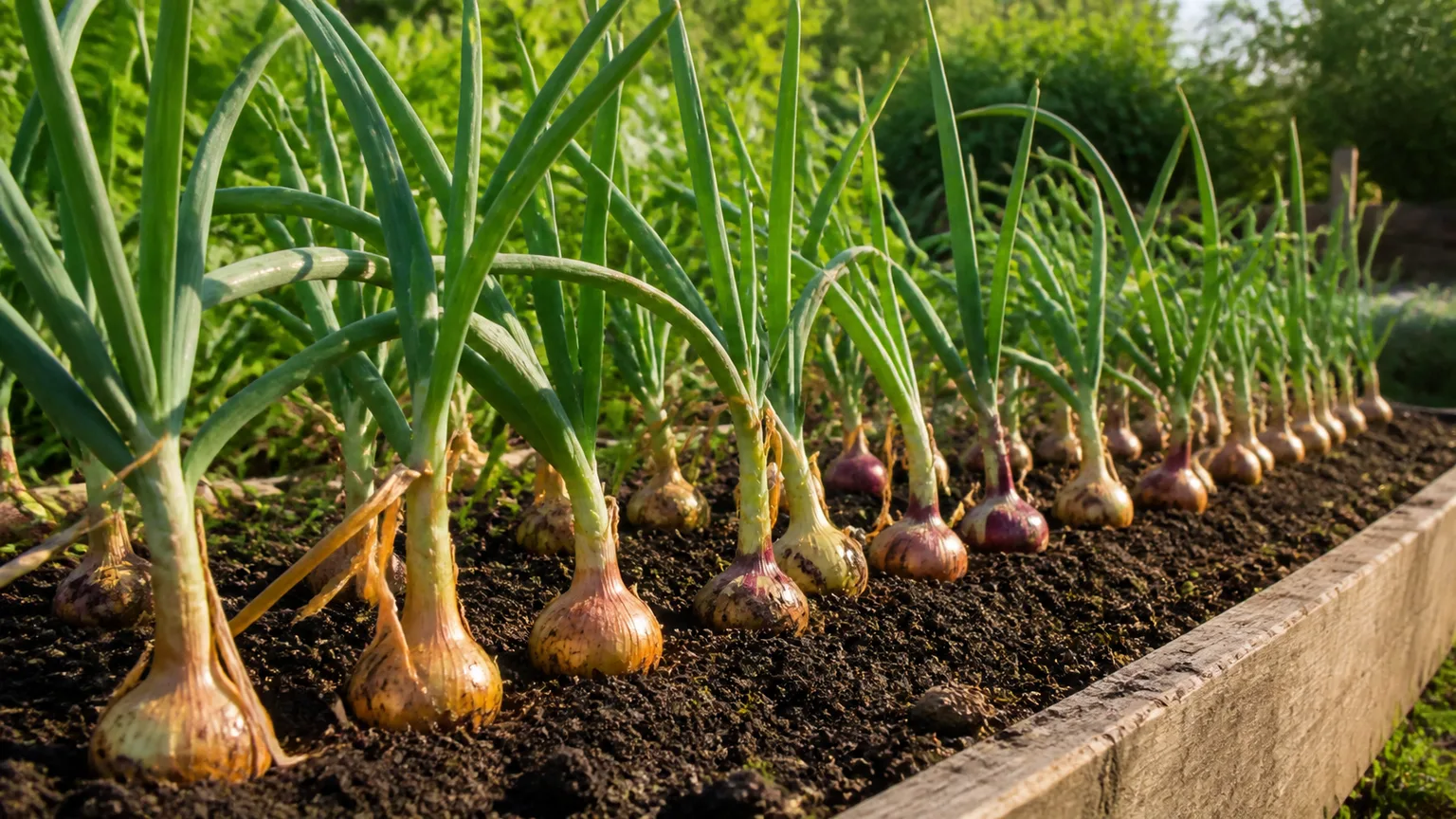
Onions are compact, useful bedmates. Their narrow leaves leave room for a second crop, they tolerate the same full-sun conditions as many cool-season vegetables, and they can be harvested at different stages. But an onion is not a magic pest-repelling fence. The best companion planting decisions come from matching sunlight, root space, season, and crop rotation first; any pest benefit is a bonus. The Royal Horticultural Society’s practical onion growing guidance likewise starts with site, soil, sowing time, and aftercare rather than companion claims.
The 18 plants below are good neighbors for onions because they share workable growing conditions, use space differently, or help you build a more diverse bed. For the most reliable results, combine this layout logic with scouting, barriers, clean-up, and rotation. West Virginia University Extension describes companion planting as a way to diversify a garden and support beneficial interactions, not a guaranteed replacement for pest management (WVU Extension).
Why companion planting with onions works best as bed design
Onions (Allium cepa) form a small bulb beneath a vertical fan of leaves. They want full sun, loose soil that drains well, steady moisture while bulbing, and little competition from weeds. A companion should not shade the onion tops, disturb the developing bulb, or demand a different watering regime.
The strongest reason to pair onions with another crop is often efficient use of space. A row of onions can border lettuce, sit between slower carrots, or occupy the sunny edge of a tomato bed before the tomatoes fill out. The result is more harvest from the same soil without pretending that one plant can control an entire pest population.
What onions need from a neighbor
Choose plants that leave the onion row visible and accessible. Short roots or a loose canopy are easier to manage than a sprawling squash vine. Keep mulch off the bulb neck, water the soil rather than the foliage when practical, and make sure the companion will not shade the bed during the part of the season when onions are bulbing.
What companion planting can and cannot do
The scent of alliums may make a mixed planting less obvious to some insects, but that effect varies with pest pressure, weather, and the surrounding landscape. Montana State University Extension’s review of companion planting emphasizes that many popular claims have limited direct evidence (Montana State University Extension). Treat onion companions as one layer of a system: healthy soil, crop rotation, row covers, hand removal, and accurate pest identification still matter more.
The 18 best onion companion plants
These are practical candidates, not a promise that every pairing will improve yield. Use the categories to choose companions that fit your season and bed shape.
1. Carrots
Carrots and onions make an efficient row partnership. Both prefer loose, well-drained soil, and their harvestable roots occupy different depths. Put onion sets or transplants beside a carrot row rather than directly over it, leaving enough space to thin carrots without pulling onion roots. Their contrasting foliage also breaks up a uniform block, which may make scouting easier.
2. Beets
Beets tolerate the same sunny, cool-season conditions as onions and are compact enough for a raised bed. Give each crop its own row so beet roots can size up without forcing the onion bulbs to compete for the same pocket of soil. Baby beets are especially useful beside onions because they can be harvested early, opening room as the onion bulbs expand.
3. Parsnips
Parsnips are slow to germinate and remain in the ground for a long season. A nearby onion row can mark the bed while parsnip seedlings are emerging, but do not let the onions shade the developing roots. Plant them in parallel rows with a clear path for thinning and weeding.
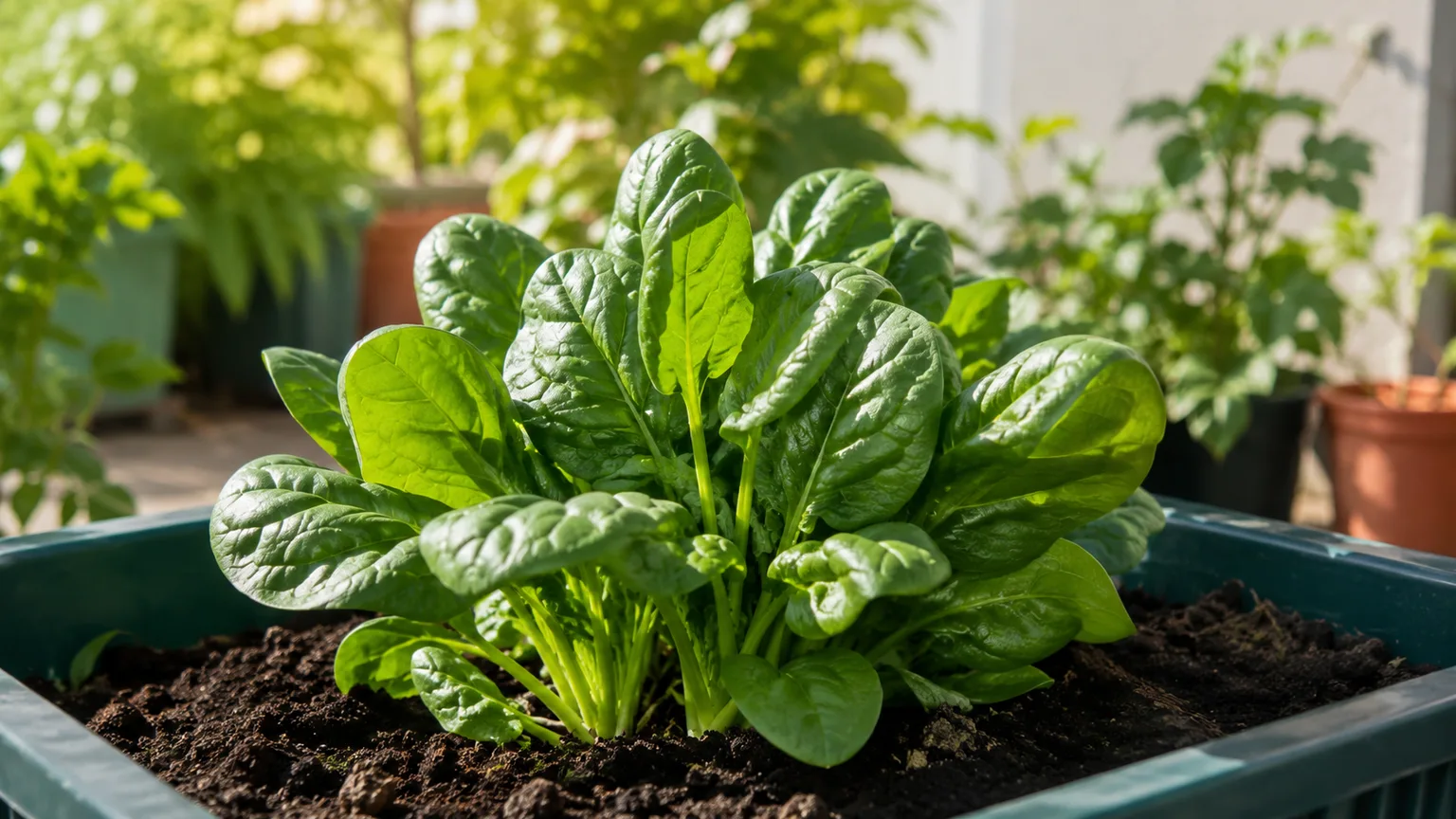
4. Spinach
Spinach is a low, fast crop for the cool part of the onion season. Interplant it on the sunny side of young onions, then harvest it before the onion canopy needs more room. Spinach bolts in heat, so this is a timing partnership rather than a permanent pairing.
5. Lettuce
Lettuce stays low and has shallow roots, making it one of the easiest onion companions. Use leaf lettuce between or beside onion rows when temperatures are mild. Harvest outer leaves regularly so the lettuce does not become a dense, damp canopy around the onion necks.
6. Kale
Kale and onions can share a sunny bed, especially in spring or fall. Set kale far enough away that mature leaves do not flop over the onion row. The onion does not guarantee protection from cabbage worms or aphids, so inspect the kale undersides and use row cover when the local pest season calls for it.
7. Broccoli
Broccoli is a reasonable companion when the bed has adequate fertility and airflow. Its broad leaves eventually occupy much more space than onions, so plant broccoli at the back or north side of the bed and keep onions at the sunny edge. Remove yellowing leaves and clear crop debris after harvest.
8. Cabbage
Cabbage and onions have compatible sun and moisture needs, but cabbage becomes a large, heavy feeder. Give it generous spacing and do not rely on onion scent to prevent cabbage moths or flea beetles. A floating row cover is a more dependable early-season defense.
9. Cauliflower
Cauliflower works for the same reason broccoli does: a clear, sunny bed and separate root zones can make the combination productive. Because cauliflower is less forgiving of stress, keep irrigation even and avoid squeezing it into a narrow onion container.
10. Brussels sprouts
Brussels sprouts are long-season brassicas with a tall, wide habit. Put them on the north side of onions in a bed that has enough room for airflow. This pairing is useful for rotation planning, but it is not a reason to grow brassicas in the same exact spot every year.
11. Tomatoes
Tomatoes and onions can share a bed if the onion crop is harvested before tomato foliage closes over it. Plant onions around the sunny outer edge, not in the tomato’s root crown. Keep the tomato trellised, prune only as appropriate for its type, and leave space to water at soil level.
12. Peppers
Peppers are slower and more compact than many tomatoes, so they can be easier to combine with onions. Use onions as an early crop along the pepper row, then pull mature bulbs before the pepper plants reach full size. This makes better use of the transition from cool to warm season.
13. Eggplant
Eggplant needs heat, sun, and fertile soil. It can follow spring onions in the same bed after the onion harvest, or the two can grow side by side with ample spacing. Do not let the onion pairing distract you from checking eggplant for flea beetles, aphids, and spider mites.
14. Strawberries
Strawberries can border an onion bed when the planting is young and weed-free. Keep annual onions outside the strawberry crown area, where shallow roots and runners need room. For perennial strawberry beds, rotation is less convenient, so prioritize mulch management and sanitation over a claimed pest-repellent effect.
15. Parsley
Parsley is compact, harvestable over a long period, and comfortable in the same light as onions. Place it where it will not be confused with onion weeds during early growth. Let some parsley flower if you want to provide nectar for beneficial insects, but keep the bed open enough to inspect the onion necks.
16. Dill
Dill is a useful herb near onions when it is kept from shading them. Its flowers can attract small beneficial insects, but dill also self-sows and can become a competitor. Cut seed heads before they scatter if you want a tidy, predictable bed.
17. Chamomile
Chamomile is a low, flowering option for the edge of a sunny bed. It is best used as a border or nearby patch rather than packed between bulbs. Water and harvest in a way that keeps the onion foliage dry and the soil surface accessible.
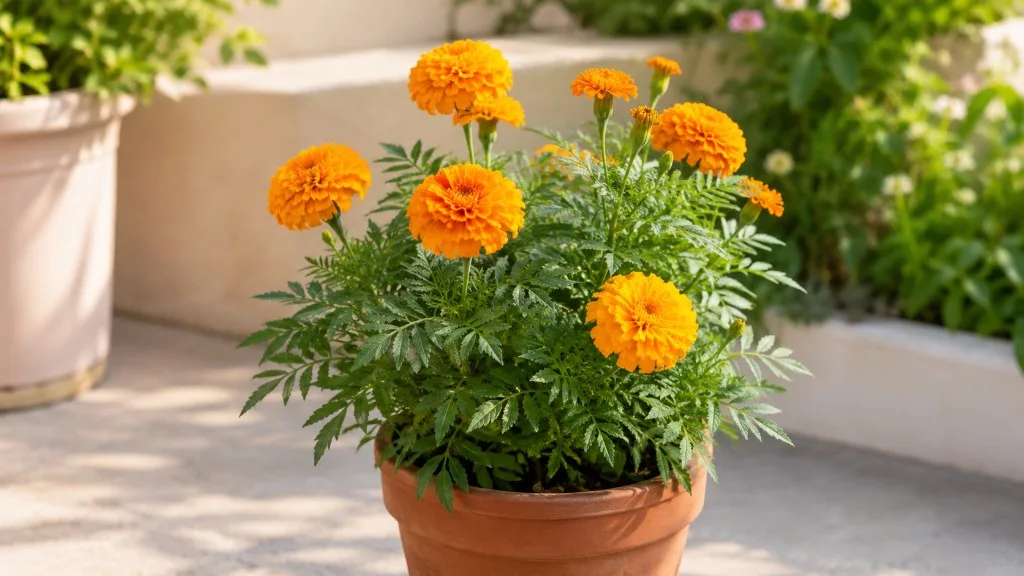
18. Marigolds
Marigolds add color and can support beneficial-insect habitat, but their reputation as a universal nematode cure is overstated. Use them as a flower border with enough room for air movement. Choose a compact variety so the flowers do not shade onions or spill across a carrot row.
How to arrange onions in a productive bed
Start with the light. Put tall crops such as Brussels sprouts or trellised tomatoes on the north side, medium crops in the middle, and onions, lettuce, spinach, carrots, and herbs on the sunny edge. In a 4-by-8-foot bed, reserve one long strip for onions, one for carrots or beets, one for lettuce or spinach, and the remaining space for a single large crop such as broccoli or peppers. This is easier to maintain than scattering every plant randomly.
Spacing and light
Use the spacing on your seed packet or transplant label because varieties differ. As a starting principle, small green onions can be closer than storage onions; storage types need enough room for a full bulb and airflow. Leave a hand-width access gap between unrelated rows when you will need to thin, weed, or harvest without stepping in the bed.
A simple three-zone layout
Zone one is the onion row, placed where it gets unobstructed sun. Zone two is a short-season crop such as lettuce or spinach that you will harvest early. Zone three is a later, taller crop such as pepper, tomato, or brassica, positioned so it does not shade the onions during bulbing. This layout creates a succession: the first crop leaves space as the later crop reaches full size.
Plants to keep away from onions
Beans and peas are commonly listed as poor onion neighbors. The practical concern is that legumes and onions have different fertility priorities, and dense bean growth can shade or overwhelm a small onion row. If you want to grow both, use separate beds or separate sides of a large bed rather than treating them as a guaranteed incompatible chemical pairing.
Sage is another frequently named “avoid” plant, but the stronger reason to separate it is cultural: sage prefers a drier, leaner site than onions need. Asparagus is perennial and needs a permanent bed, while onions are annual and are best rotated. Turnips and other root crops are not automatically disastrous, but crowding several root crops into one narrow row creates avoidable competition.
Other alliums—garlic, shallots, leeks, and chives—are compatible in light and soil, but they are not a pest-safety shortcut. Related crops can share diseases and pests. Planting every allium together also makes rotation harder. If you grow them in the same season, keep records and move the allium block next season.
Crop rotation and shared allium problems
Rotate onion-family crops away from the same soil for several seasons when space allows. Do not leave diseased bulbs or foliage on the bed, and avoid saving planting material from a crop with unexplained rot or dieback. Penn State Extension’s onion production guidance highlights the importance of drainage, fertility, weed control, and disease management rather than relying on companion plants alone (Penn State Extension).
Water consistently while bulbs are developing, but do not keep the bed saturated. If leaves yellow suddenly, bulbs soften, or plants collapse at the base, inspect the roots and bulb before adding fertilizer. A companion plant will not correct poor drainage or a pathogen carried in infected debris.
Container and small-space combinations
Onions are well suited to containers because their upright leaves use little surface area. Use a container with drainage holes, a quality potting mix, and enough depth for the chosen variety. Pair green onions with leaf lettuce, parsley, or compact marigolds. For storage onions, avoid filling the same pot with a vigorous tomato; the tomato will soon dominate water, light, and root space.
In a window box, place onions at the back only if the other plants stay shorter; otherwise keep them on the sunny edge. Containers dry faster than beds, so check moisture by the soil condition rather than by a fixed calendar. Empty saucers after heavy rain and rotate the pot if one side stretches toward the light.
Common companion-planting mistakes
The first mistake is planting for a scent claim while ignoring shade. The second is mixing plants with incompatible water needs. The third is crowding: even a “good companion” becomes a competitor when foliage touches and roots occupy the same small volume.
Another mistake is expecting a companion to replace scouting. Look at onion leaves, the soil line, and nearby crops at least weekly. Use a barrier when a known pest is active, remove badly affected foliage, and identify the pest before choosing a treatment. Finally, keep notes. A pairing that works in a cool spring may fail in a humid summer or a small container.
Conclusion
The best onion companions are not the plants with the most dramatic promises; they are the ones that share sun and moisture, fit the available space, and leave you enough access to care for the bed. Start with carrots, beets, lettuce, spinach, parsley, or a compact flower border. Add brassicas, peppers, or tomatoes only when the bed can handle their mature size. Keep beans, peas, sage, and perennial crops separate when their cultural needs conflict, and rotate alliums to reduce shared pest and disease pressure. Thoughtful layout makes onion companion planting useful even when no single plant provides perfect protection.