Houseplant Transparent Leaves: Causes, Diagnosis and Fixes
Diagnose thin, translucent, water-soaked houseplant leaves. Separate edema, cold damage, overwatering, low light, and genetics — then fix in order.
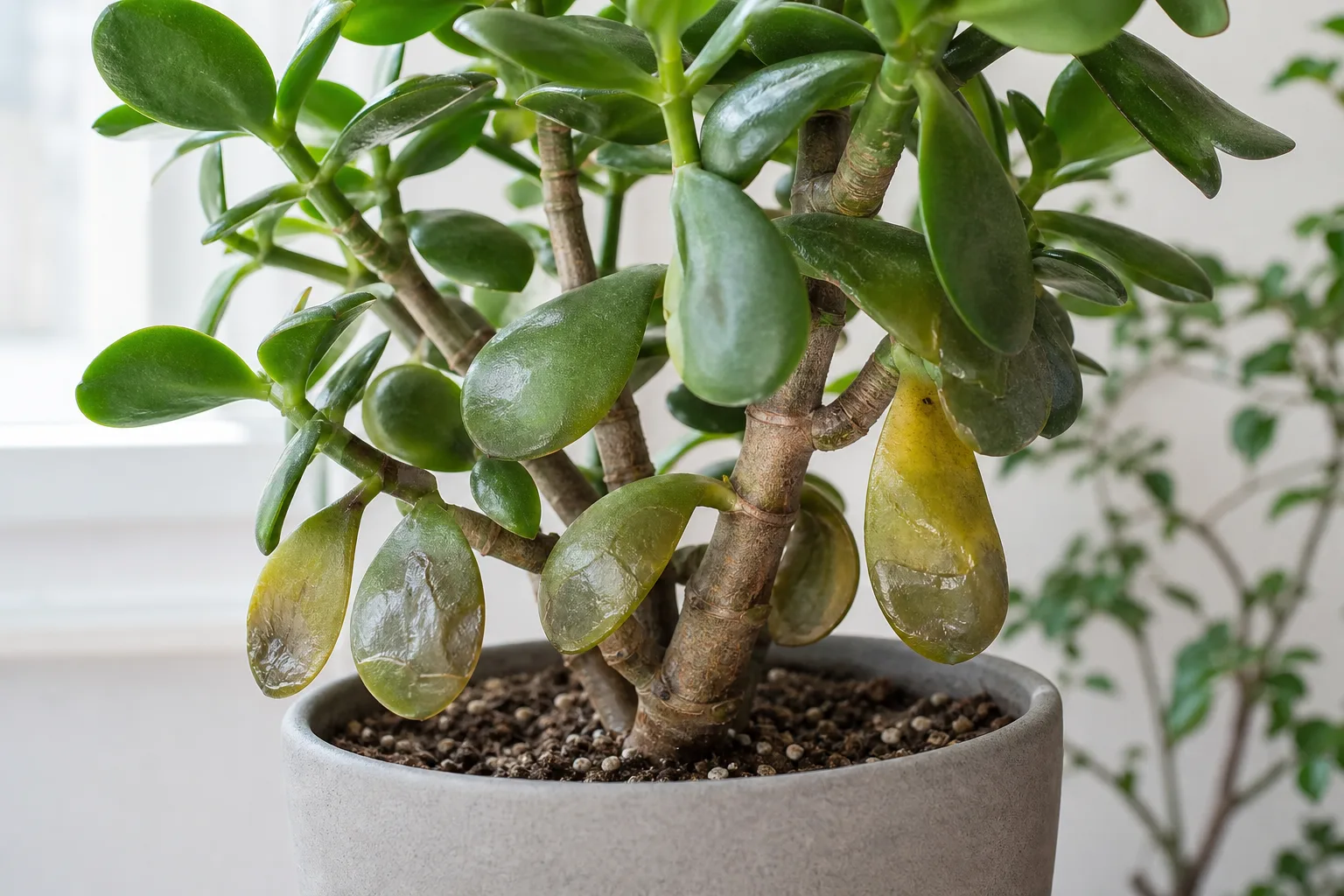
You flip a leaf and the underside looks glassy. Or a shipping box arrives and outer leaves go limp and see-through overnight. Transparent, translucent, or water-soaked tissue is not a pigment mystery — cells are flooded, ruptured, chilled, or built too thin to look opaque. The same look can come from edema, cold injury, chronic wet roots, or thin low-light / genetic tissue (four drivers; genetics sits with low-light thinness because both are “built thin,” not cell collapse). The fix order changes with the driver.
This is a diagnosis-first workflow for houseplants: what the symptom means, how to separate the drivers, how to run a five-check triage, and how to stabilize water, light, and temperature before you prune. For a symptom-hub overview across species, start at transparent leaves. Pair color-only fading with pale leaves, stretch and thin new growth with not enough light, and limp water-soaked patches after a chill with cold damage.
Written by Sai Ananth (B.Pharmacy; LeafyPixels lead writer; indoor winter-sill edema and shipping-chill triage); horticulture review by Dr. Priya Menon (botanist and indoor plant specialist).
What Transparent Leaves Actually Mean
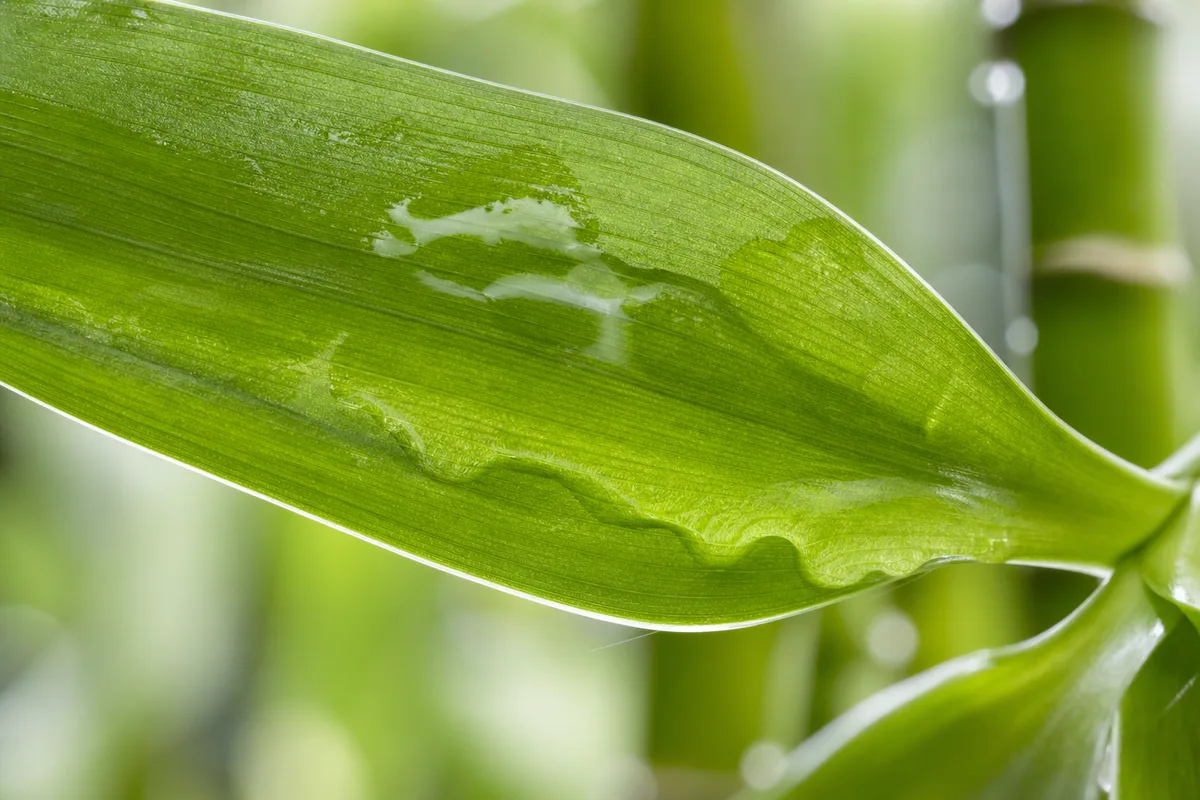
Transparent leaves are foliage where part or all of the blade looks glassy, watery, see-through, or thinner than healthy tissue on the same plant. Gardeners describe the same pattern as translucent patches, water-soaked spots, clear bruises, or “melted” tissue. The shared biology is mechanical: leaf cells have taken on more water than they can hold or move, walls have ruptured, or the leaf was never built thick enough to look opaque.
That is why one treatment rarely fits. Edema is a moisture-imbalance disorder. Cold injury is environmental cell damage. Overwatering collapse is often a root-oxygen problem showing up in soft leaves. Low light produces thin, weak blades. Variegation and some juvenile leaves are genetically thin. Treating all of them as “too much water” or “a fungus” wastes time and can make the plant worse.
Healthy recovery never means the ruined patch turns green again. Dead or ruptured cells stay scarred. Your scoreboard is whether remaining tissue stays firm and whether new leaves emerge with normal thickness and color after you correct the driver.
The Four Drivers of Thin Translucent Tissue
Most indoor cases fall into one primary driver, sometimes with a second stacked on top — for example, a dim winter sill plus wet soil, or a cold window after a heavy watering. Name the primary driver before you change three care habits at once. The four drivers below cover the five everyday “why is it see-through?” answers searchers bring; genetics is grouped with low-light thin tissue because both are structural thinness rather than water-soak collapse.
Excess Water and Soft Collapse
When roots sit wet for days, leaves can go soft, dull, and translucent before they yellow or brown. The plant is not “thirsty for more water”; the root zone is oxygen-starved and tissue is losing structure. Penn State Extension lists overwatering among common causes of poor plant health and pairs dark, limp roots with excess moisture and root rots. Soft collapse usually hits older leaves first, feels mushy rather than crisp, and pairs with a heavy pot, soil that never dries at root depth, or a sour smell.
If stems soften at the crown, escalate to the overwatered plant and root rot workflows instead of only trimming leaves. University of Minnesota Extension frames soft, dark roots in chronically wet mix as the root-dysfunction context that turns soft translucent foliage into a keep-or-repot decision.
Edema Blisters That Turn Corky
Edema (also spelled oedema) is a physiological disorder, not an infection. Roots take up water faster than leaves can release it through transpiration. Water pressure builds inside leaf cells until they burst, leaving dead cells that show first as blisters. Missouri Botanical Garden describes that uptake-versus-transpiration imbalance and notes blistering that often shows on leaf undersides.
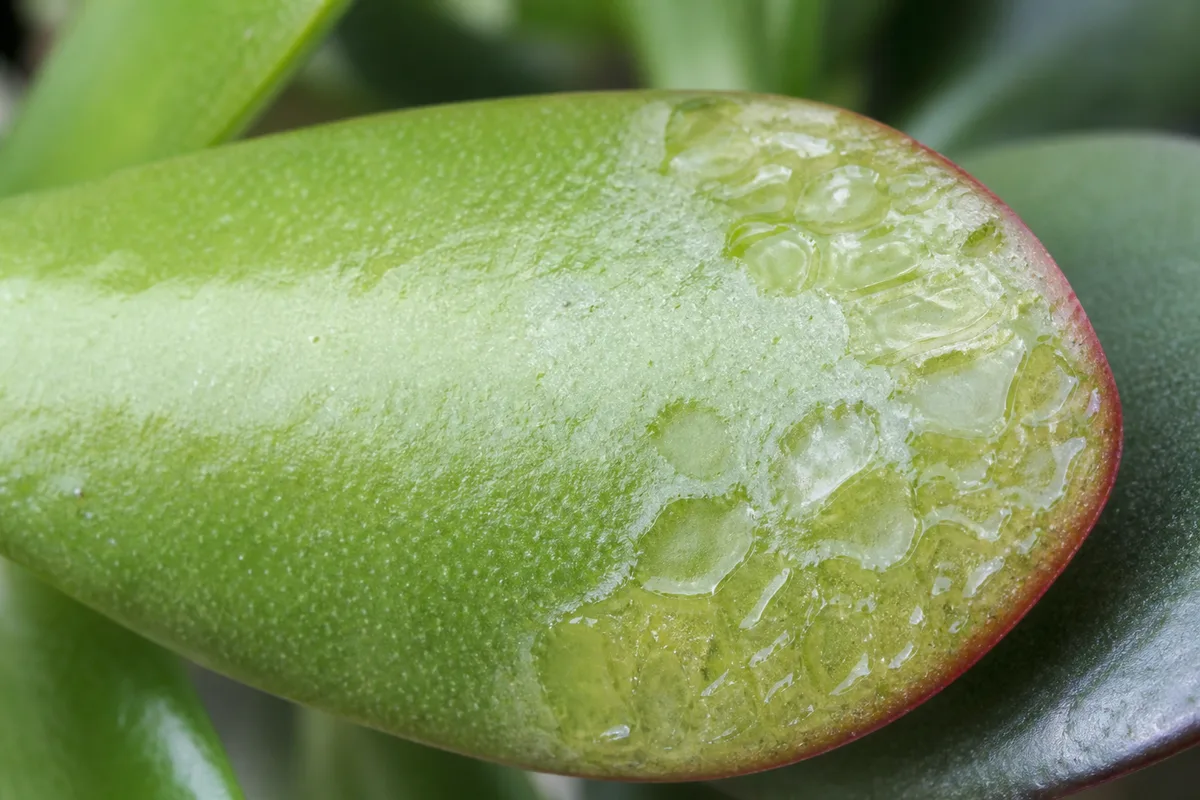
Wisconsin Horticulture describes the classic look: small translucent, fluid-filled blisters on the undersides of mostly older leaves, often starting at margins, then scarring tan and corky as they dry. UW Plant Disease Diagnostics Clinic frames the same progression as a physiological disorder rather than a contagious disease. RHS calls the early stage water-soaked patches that become raised, warty swellings and later corky spots, and its houseplant leaf-damage advice flags raised corky underside patches as late-stage oedema.
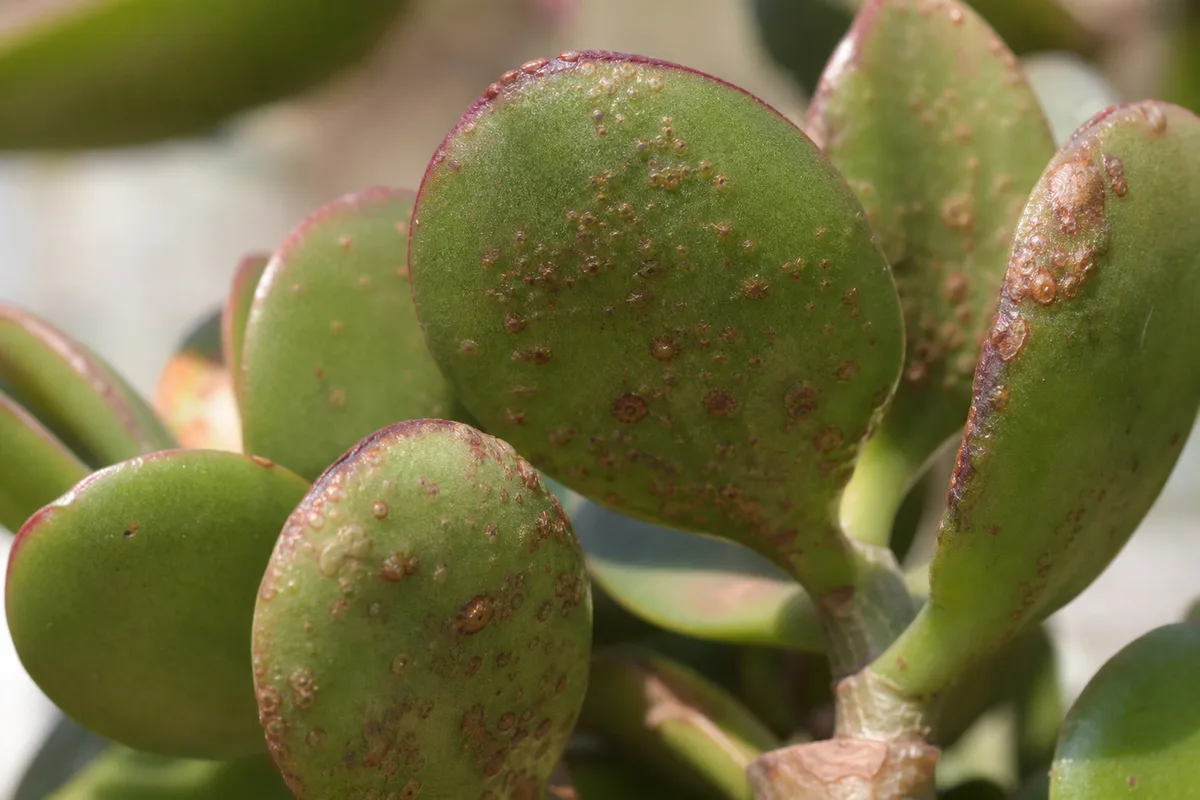
Warm, moist soil paired with cool, humid, low-light, poorly ventilated air is the classic setup. University of Maine Extension notes edema as a symptom of excessive watering and most common on houseplants and plants grown under plastic or crowded together. Fleshy-leaved houseplants such as jade, peperomia, and schefflera are frequent indoor candidates (UConn Extension).
Edema is usually cosmetic. Corky scars stay, but new blistering slows when you water less under low light, water in the morning so mix drains before night humidity rises, empty saucers, and improve airflow (Wisconsin Horticulture). Wisconsin also notes edema associated with oil sprays that interfere with normal leaf water loss — skip oil-based sprays on edema-prone plants until new growth is clean. RHS advises against picking off oedema-affected leaves as a default, because stripping foliage can worsen plant stress; fix air and soil moisture and wait for clean new growth (RHS).
Cold Injury and Water-Soaked Patches
Cold can make leaves look limp, dull, translucent, or water-soaked before they darken. Penn State Extension flags “very dark green with a water-soaked, limp appearance” as a cold-injury cue (Penn State Extension). Clemson HGIC describes leaves and tender shoots after freezing or chilling as water-soaked and wilted, often turning black within hours or days.
Chilling injury happens above freezing. UC IPM defines it as damage from cold temperatures above 32°F and notes that tropical and subtropical plants are most susceptible — African violet leaf necrosis after refrigeration-level cold is a textbook indoor example. Indoors, the trigger is often cold glass contact, a drafty sill, an open door in winter, an AC blast, or a chilled delivery — not the thermostat reading in the middle of the room.
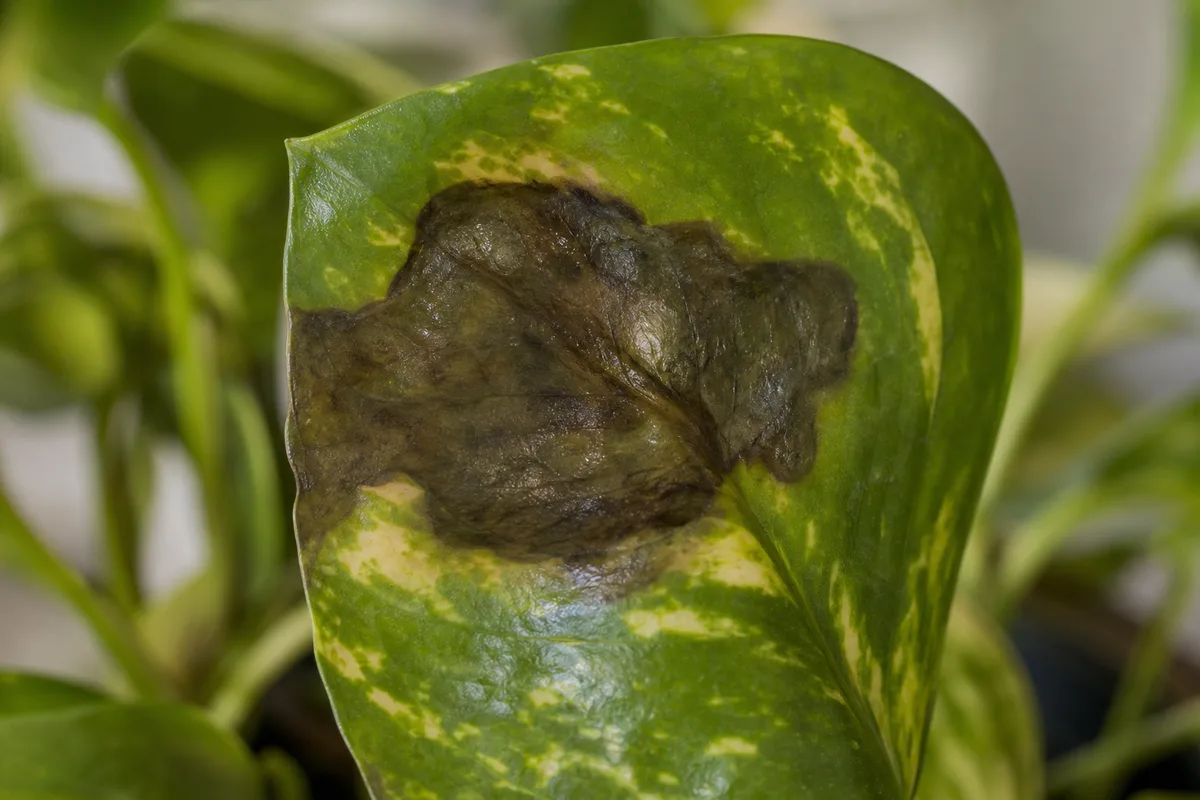
Cold-damaged tissue does not heal. Move the plant off the cold source, avoid watering into already wet chilled media, and wait for the live/dead boundary before hard pruning. Full triage — thermometer checks, prune timing, and discard criteria — lives in the cold damage guide.
Thin Tissue From Low Light or Genetics
Not every translucent leaf is injury. New growth in dim rooms can emerge thinner and paler than older sun-built leaves. University of Maine Extension separates etiolation — elongated, spindly stems and pale leaves from low light — from edema, and notes genetics and overwatering do not drive that stretch pattern (University of Maine Extension).
Variegated white or cream tissue naturally has little chlorophyll and can look translucent even when the plant is healthy. Juvenile leaves on some aroids and vines are thinner than mature blades. Treat genetics as a diagnosis of exclusion: if tissue is firm, pattern matches the cultivar, soil moisture is appropriate, and there was no chill event, you may be looking at normal thin tissue rather than a crisis.
When thin new leaves arrive with longer internodes, lean toward the window, and slower drying soil, raise usable light before you fertilize. Existing stretched stems will not shorten; compact new growth is the scoreboard. Use the not enough light guide when stretch is the main story.
Diagnose Transparent Leaves in Five Checks
Work these checks in order. Stop guessing after the first clear cluster matches — then confirm with the second and third checks so you do not miss a stacked cause.
Texture, Pattern, and Which Leaves Are Hit
Press the affected area gently between clean fingers. Soft, mushy, collapsing tissue points to wet-root collapse or advanced cold injury. Raised watery blisters that later feel hard and corky point to edema. Firm but optically thin white or cream areas on a variegated leaf often point to genetics. Greasy, oily, expanding spots with yellow halos lean toward bacterial leaf spot rather than edema — use the leaf spot disease differential if lesions multiply after wet leaves.
Note which leaves are affected. Edema favors undersides of older leaves. Cold often maps to the window-facing side, outer leaves in a shipping box, or foliage nearest a draft. Overwatering collapse usually starts lower and older. Low-light thinness shows on newest growth. One-sided damage after a cold night is rarely a fertilizer problem.
Soil Moisture, Roots, and Pot Weight
Check moisture at root depth, not only the surface. Lift the pot. A heavy pot days after watering plus soft translucent leaves is a water problem until proven otherwise. If the plant wilts while soil stays wet, unpot and inspect roots: firm pale roots can recover with a dry-down; dark, limp, foul roots need the root-rot protocol.
Empty saucers about 30 minutes after watering when edema is on the table. Wisconsin’s edema guidance pairs morning watering with drainage before night humidity rises (Wisconsin Horticulture). Do not fertilize a soft, translucent plant hoping color returns — salts accumulate when growth is stalled.
Temperature, Drafts, and Recent Moves
Ask what changed in the last 48 hours to two weeks: a cold snap against the glass, porch delivery, heater or AC vent moved, door propped open, plant relocated to a colder room, or watering with very cold water on sensitive foliage. Map translucent patches to that event. If the room feels fine but leaf-height air near the pane is cold, treat it as cold injury: move the plant inward, hold fertilizer, and water only if the root ball is dry.
If nothing cold happened, soil is appropriately moist, and new leaves are merely thinner and paler with stretch, switch to light diagnosis. If color faded without water-soak texture, compare against the pale-leaves differential below.
Transparent Leaves vs Pale Leaves vs Yellow Leaves
These three get mixed up in photos. Separating them saves wrong treatments.
| Look | Typical texture | Best first hypothesis |
|---|---|---|
| Transparent / translucent | Glassy, watery, thin, blistered, or water-soaked | Edema, cold, wet-root collapse, genetics, thin low-light tissue |
| Pale | Soft color loss, still mostly opaque | Low light, nutrient issues, root stress — not the same as water-soaked translucence |
| Yellow | Chlorosis, often starting lower | Watering imbalance, age, light, nutrients — context decides |
Transparent is about optical thinness or water-soak. Pale is about pigment without collapse. Yellow is a color shift that may still feel firm. A leaf can progress through more than one stage — cold water-soak that later yellows and crisps, or edema blisters that scar tan while the rest of the blade stays green. When the leaf is faded but still opaque, open pale leaves instead of this triage.
Edema vs Cold Damage vs Bacterial Leaf Spot
Use this differential when texture alone still feels ambiguous.
| Cue | Edema | Cold injury | Bacterial leaf spot |
|---|---|---|---|
| Early look | Small translucent fluid-filled blisters, often undersides | Limp, dull, water-soaked patches; may darken later | Greasy/oily spots, often with yellow halos |
| Pattern | Older leaves; scattered blister fields | Window-facing, draft side, shipping outer leaves | Expanding lesions; more after wet foliage |
| Feel | Raised watery → later hard corky scars | Soft collapse, then dry or black | Soft greasy tissue; foul smell if petioles rot |
| Contagious? | No — physiological | No — environmental | Can spread under wet conditions |
| First move | Dry-down, morning water, airflow, empty saucers | Move off cold; wait for live/dead line | Dry leaves; isolate; follow leaf-spot protocol |
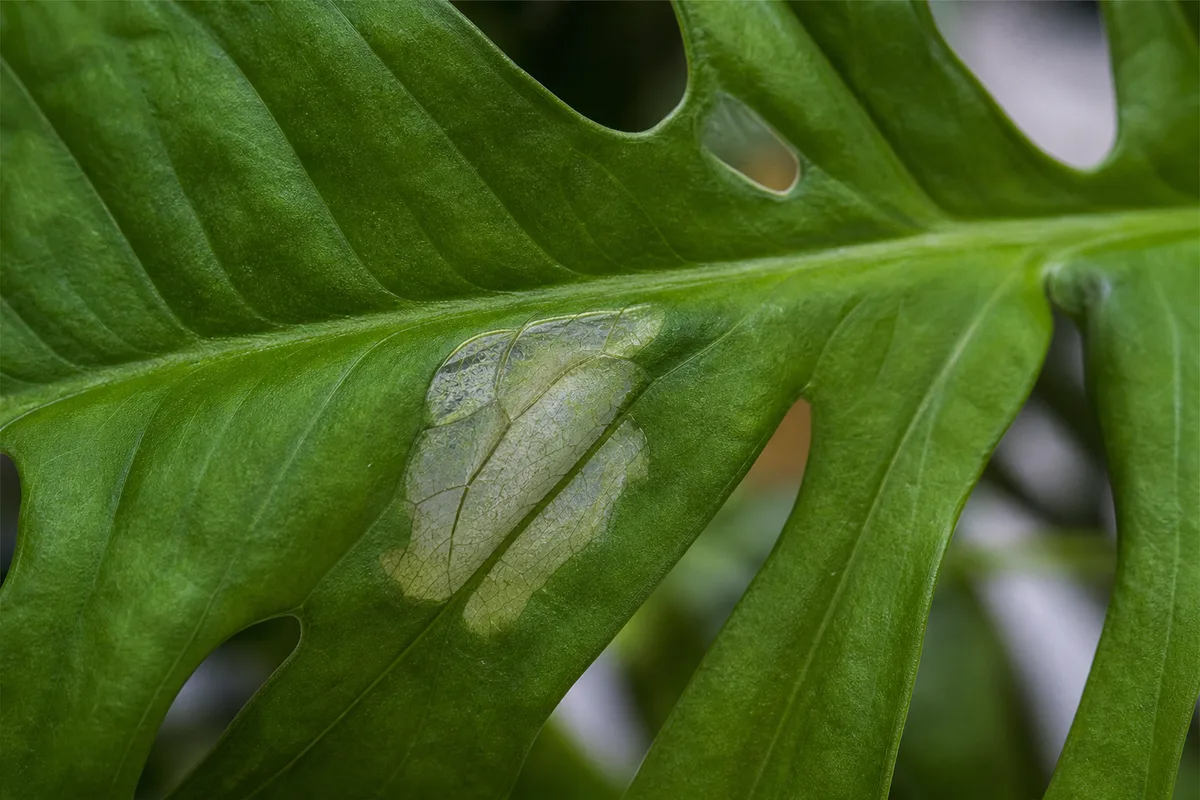
Edema scars are ugly and permanent but usually not an emergency. Cold needs placement first. Bacterial disease needs moisture control and caution — do not treat a corky edema scar as an infection that must be stripped.
Species Patterns Worth Knowing
Succulents and semi-succulents (jade, many peperomias) show edema and overwatering translucence quickly because leaves store water. Correct wet soil and low winter light before you assume sunburn. UConn Extension specifically flags jade, peperomia, and schefflera when conditions favor edema (UConn Extension).
Tropical foliage vines and aroids (pothos, monstera, philodendrons) often show translucent patches after shipping chill or cold glass. Soft lower leaves with wet soil more often mean watering. Thin, smaller new leaves with long internodes more often mean light.
African violets are chilling-sensitive; UC IPM cites leaf necrosis from chilling or refrigeration cold (UC IPM). Cold-water splash can also mark leaves without true edema — another reason to separate event history from soil moisture.
Aquatic and semi-aquatic plants (anacharis, some ferns in tanks) can “melt” translucent tissue during emersed-to-submersed transitions. That acclimation melt is a different workflow than a jade on a windowsill — use the species problem page (for example anacharis transparent leaves) when the plant lives in water.
Real Cases From Indoor Benches
These are single-setup LeafyPixels bench notes, not universal thresholds. Use them as pattern recognition, then still run the five checks on your plant.
Bench note (jade winter edema, January 2026): A Crassula ovata on a cool north sill was watered in the evening after a cloudy week. Pot stayed heavy overnight. By morning, older leaf undersides showed small translucent fluid-filled blisters at the margins. We emptied the saucer, switched to morning watering, stretched the dry-down to about 10–12 days in that light, and stopped crowding the shelf. Existing blisters scarred tan/corky within about a week; no new blister fields appeared after the second dry-down cycle. The cork scars never greened — new growth did.
Bench note (pothos glass chill, January 2026): On a single-pane east sill, a Golden pothos leaf pressed to the glass went limp and translucent on the contact side while room-center air still felt comfortable. A leaf-height min/max thermometer against the pane logged a much colder overnight low than a sensor a few feet into the room (same pattern documented in our cold-damage sill notes). Pulling the vine off the glass stopped new water-soak; we waited until day 10 for a clear live/dead line, then pruned the ruined leaf. Remaining foliage stayed firm.
Bench note (variegation false alarm, February 2026): A Manjula pothos owner flagged “transparent patches” that were firm, dry, and matched the cultivar’s cream sectors. Soil moisture was appropriate and there was no chill timeline. No care change beyond brighter filtered light. Two weeks later the white sectors still looked translucent in backlight — because they always do — while green tissue remained opaque and firm. Genetics won; panic watering would have invited edema.
Fix Order: Stabilize Before You Prune
Change the environment first. Pruning first only removes evidence while the driver keeps producing new transparent tissue.
Water, Light, and Temperature Corrections
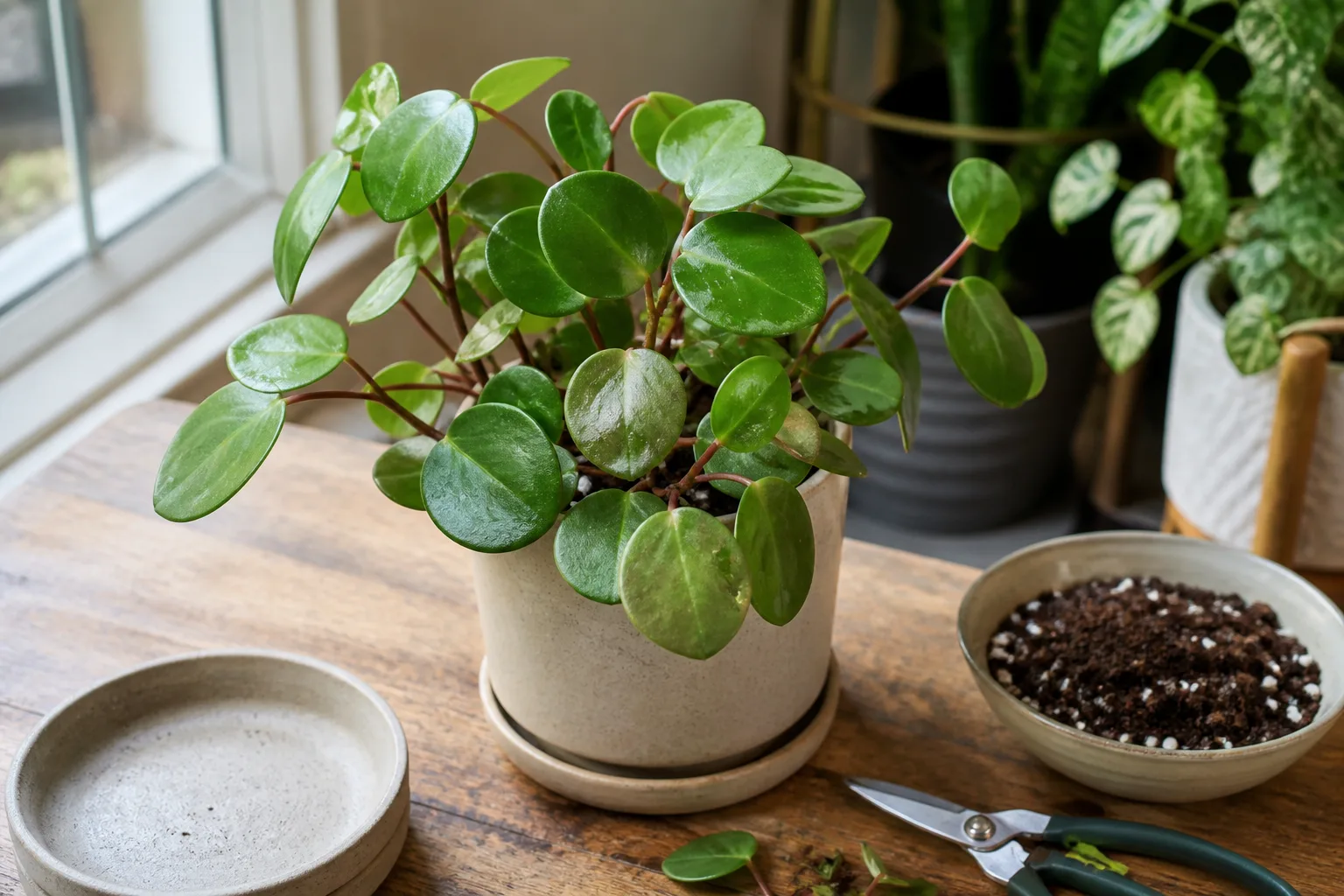
If soil is wet and leaves are soft or blistered, pause watering until the top several centimeters dry for that species. Confirm drainage holes are open. Empty saucers. Move out of a closed, stagnant corner so air can move across foliage. For edema-prone plants in winter, water in the morning and water less during cloudy, low-light stretches (Wisconsin Horticulture). If roots are rotten, trim to firm tissue and repot in fresh, airy mix — do not leave a collapsing plant in swampy media hoping leaves firm up.
Pull foliage off cold glass. Move pots inward from drafty doors and vents. After a chill, keep the plant at a stable room temperature and resist the urge to “warm it up” with a heater blast that cooks nearby leaves. If new growth is thin from low light, increase intensity gradually — sudden harsh sun on soft winter tissue can add burn on top of translucence. Better light also helps edema-prone plants transpire more effectively when soil moisture is otherwise reasonable.
When to Prune, Propagate, or Discard
Remove fully collapsed, slimy, or foul leaves once you have stopped the driver. Leave mild corky edema scars on firm leaves; RHS notes that stripping oedema leaves can make the condition harder on the plant (RHS). After cold injury, wait days to about two weeks for the live/dead line before hard cuts — patience matches extension frost and chill guidance rather than day-one strip pruning.
Propagate clean cuttings when the crown is failing but stem tips are still firm. Discard when the crown is soft, most roots are mush, and no viable nodes remain. Transparent tissue alone is not a reason to throw a plant away.
Prevention Habits and Recovery Timeline
Match watering to light and season. Dim winter plants use water slowly; summer watering habits on a north sill create edema and soft collapse. Prefer pots with drainage, mixes that do not stay anaerobic, and saucers that do not hold permanent puddles. Keep tropical foliage off cold glass and out of delivery chill when possible. Give variegated and thin-leaved cultivars brighter conditions than their all-green siblings so they can support less-chlorophyll tissue without stretching into ultra-thin growth. Improve airflow around crowded shelves — Missouri Botanical Garden frames oedema as roots outpacing leaf water loss, so anything that slows transpiration while roots stay wet raises risk (Missouri Botanical Garden).
Recovery timeline (LeafyPixels editorial synthesis — not universal thresholds): Days 1–3, stop the driver (dry-down, move off cold glass, or raise light as indicated) and do not fertilize. Days 3–14, soft cold or wet tissue may darken or dry; edema blisters scar corky; new blistering or new water-soak after you corrected care means a factor is still active. Weeks 2–6, look for firm new growth with normal thickness — that is recovery. Old transparent patches will not re-green. If only pale color remains without water-soak, treat it as a color problem. If stretch continues, raise light until new internodes tighten.
Related guides
Use this guide when leaves look glassy, watery, blistered, or see-through and you need cause separation before pruning. Use overwatered plant and root rot when soft leaves ride on wet, heavy soil. Use leaf spot disease when greasy expanding spots multiply after wet foliage. Use the transparent leaves symptom hub for species links after you know the pattern. Sibling triage for pale color without water-soak, thin stretch from dim light, and chill water-soak is covered earlier in this article and in those dedicated hubs.
Species exits after triage (examples): jade plant transparent leaves, pothos cold damage, watermelon peperomia edema when those pages match the plant on your bench.
Conclusion
Transparent houseplant leaves are a tissue story, not a single disease label. Decide whether you are seeing edema blisters, cold water-soak, soft wet-root collapse, or thin low-light / genetic tissue. Stabilize water, drainage, light, and temperature first. Prune only collapsed tissue after the boundary is clear. Judge success by firm remaining leaves and healthy new growth — never by waiting for scarred translucent patches to turn green again.