Houseplant Pale Leaves: Chlorosis Diagnosis by Leaf Age
Diagnose pale houseplant leaves by leaf age, veins, light, roots, and salts. Separate iron lockout from nitrogen shortage before you fertilize.
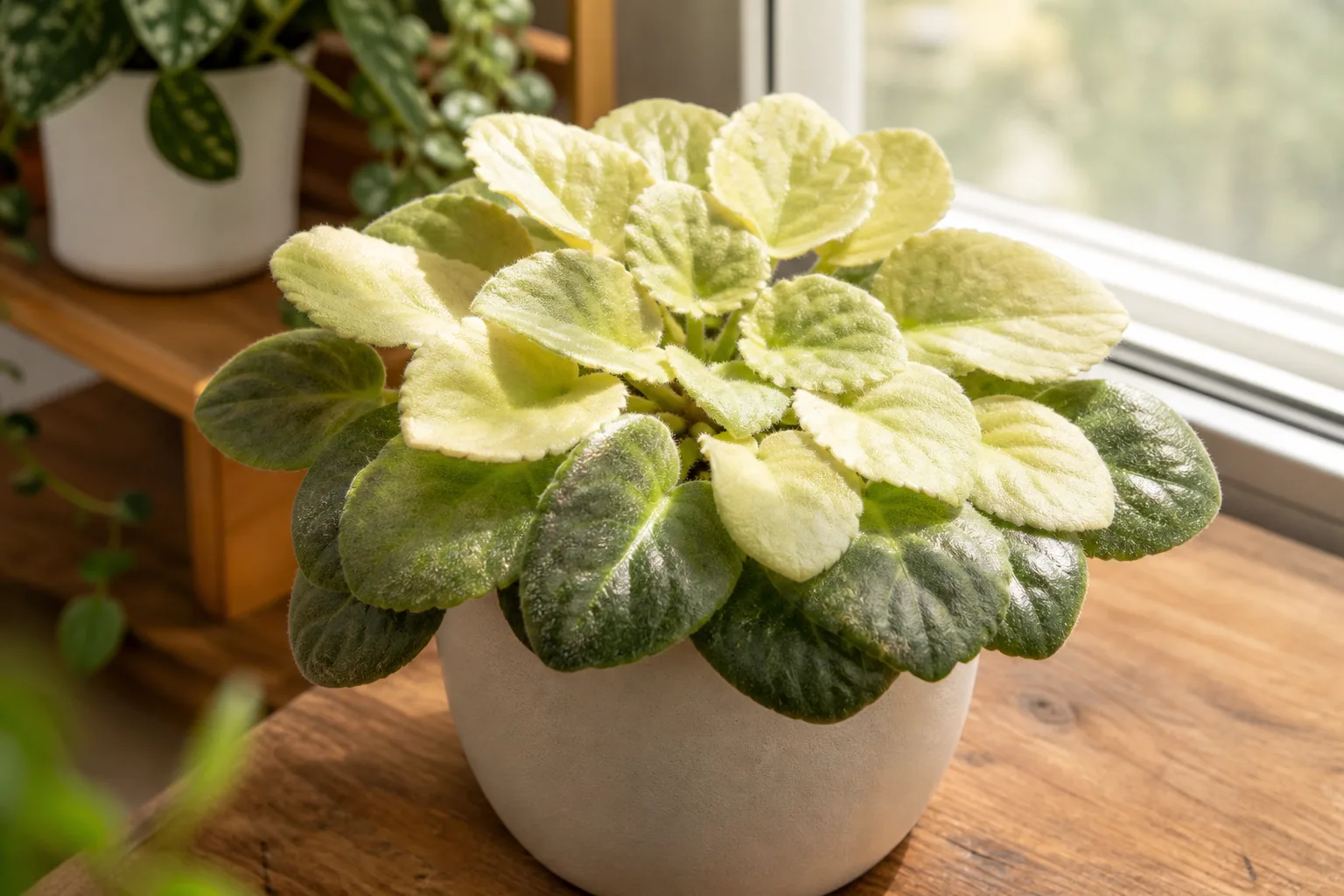
Your plant is still alive, but the green looks washed out. New leaves arrive thin and lime-colored. Older leaves fade from the edges. The reflex is fertilizer — and that guess sometimes makes the pot worse.
Pale leaves on houseplants are usually chlorosis: tissue that has lost chlorophyll or never built enough of it. Chlorosis is a symptom group, not a single disease. Missouri Botanical Garden notes that chlorosis can come from nutrient deficiency, root damage, temperature extremes, too much light, too little or too much water, insect feeding, or disease. The useful work is matching the pale pattern to light, nitrogen, iron availability, watering, and salts before you change three things at once.
This page owns leaf-age and vein-pattern diagnosis for washed-out or light-green foliage. If leaves look bleached, mite-stippled, or variegation-washed, start with faded leaves on houseplants. If tissue is already deep yellow rather than faded green, use why indoor plant leaves turn yellow.
Do this first (next 10 minutes):
- Note whether pale tissue is on oldest leaves, newest leaves, or both.
- Check whether veins stay green while tissue between them yellows (interveinal) or the whole leaf fades uniformly.
- Finger-check soil 5 cm / 2 in deep and lift the pot — do not fertilize yet.
- Glance at placement: distance from the brightest window, lean, and stretch.
What Pale Leaves Actually Mean (Chlorosis ≠ One Disease)
Chlorosis means yellowing or paling of normally green tissue. The Royal Horticultural Society treats chlorosis as a descriptive term that can point to nutrient problems, cultural stress, pests, disease, or even normal aging of old evergreen leaves. On houseplants, the same washed-out look often comes from energy shortage (not enough light), uptake failure (damaged or waterlogged roots), true nutrient shortage (especially nitrogen), or availability failure (iron present but locked by high pH or competing salts).
Pale is not always the same as fully yellow. Mild chlorosis often starts as lighter green or lime tissue between veins; deeper yellow usually means the stress has lasted longer or is more severe. Illinois Extension describes mild chlorosis as paling of interveinal tissue and yellow as a more serious stage, with severe cases progressing to vein yellowing, leaf death, and dieback.
The practical rule: already-pale tissue rarely returns to deep green. Your scoreboard is healthier new growth after you fix the cause — not a miracle recolor of the oldest faded leaf.
Pale vs Faded vs Yellow (Which Guide First)
Use this router before you open three tabs:
| Look | First check | Best next page |
|---|---|---|
| Light green / lime / washed chlorosis; pattern by leaf age or green veins | Light, moisture/roots, then N vs Fe vs salts | This guide (+ pale leaves symptom hub) |
| Dull washout, sun bleach, lost variegation, fine stippling | Light quality/intensity, mites, bleach vs shade fade | Faded leaves guide |
| Deep yellow, often progressive collapse of whole leaves | Over/underwatering triage, then broader yellow causes | Yellow leaves guide |
If you are stuck between pale and yellow, photograph one old leaf and one new leaf in the same light. Pale chlorosis still shows some green architecture (veins or a lime cast). Deep yellow usually looks cooked through.
A 10-Minute Diagnosis Order
Work in this order so you do not fertilize a plant that cannot absorb nutrients:
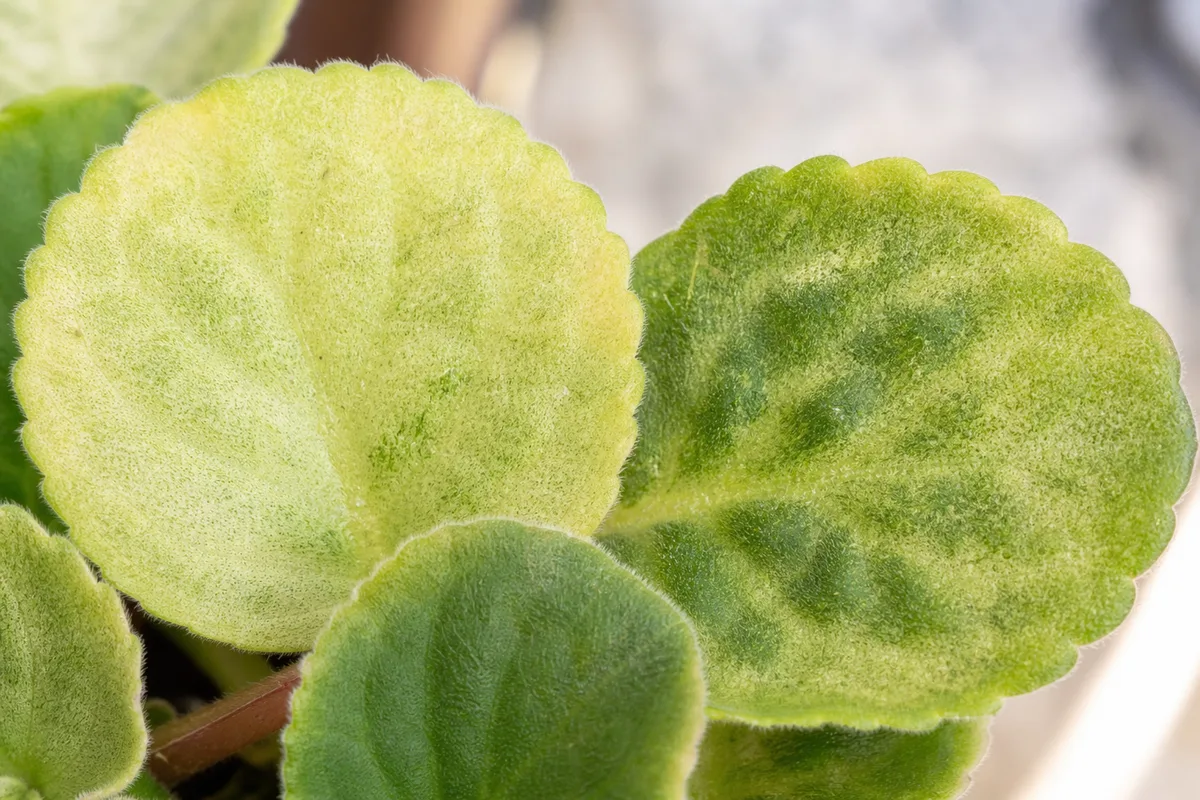
- Pattern — old leaves, new leaves, or whole canopy; uniform fade vs green veins.
- Moisture and roots — wet for days, bone dry, sour smell, soft brown roots.
- Light — stretch, lean, small new leaves, soil that stays wet longer than before.
- Salts and feeding history — crust on soil, white rim on pot, recent strong fertilizer.
- Nutrient hypothesis — nitrogen vs iron/magnesium only after steps 1–4.
Penn State Extension’s diagnostic key puts general yellowing under low fertility, temperature, light extremes, or a pot-bound plant; young-leaf yellowing under low light, iron or manganese deficiency, or overfertilization; and old-leaf yellowing under nitrogen, magnesium, or potassium deficiency or overwatering. Use that as a filter, not a single-cause label.
| Pattern | Check first | Common nutrient guess (only after roots/light) |
|---|---|---|
| Oldest leaves fade first; plant looks thin | Watering extremes, then nitrogen | Nitrogen (mobile) |
| Newest leaves pale; veins stay green | pH / iron availability, root health | Iron (immobile) |
| Whole plant dull light green + stretch | Light intensity at leaf height | Not a fertilizer problem yet |
| Pale plus crispy tips / salt crust | Flush salts; review fertilizer strength | Burn / lockout risk |
Decision path in one line: pattern → moisture → light → salts → nutrient. Changing light, water, and fertilizer on the same day hides which change worked.
Pattern Keys: Leaf Age and Vein Color
Old leaves vs new leaves. Nutrients move differently inside the plant. Mobile nutrients such as nitrogen and magnesium can be pulled from older leaves to feed new growth, so shortage often shows on older leaves first. Immobile nutrients such as iron stay put, so shortage shows on newest leaves first while older leaves keep more of their color.
RHS nutrient guidance lines up with that split: nitrogen deficiency causes general yellowing that usually starts on older leaves; iron deficiency hits the youngest leaves first; magnesium and manganese tend to show on older leaves with interveinal yellowing. If your newest leaves are the pale ones and veins remain green, do not assume “needs more NPK.”
Uniform fade vs interveinal chlorosis. Uniform fade — the whole leaf turns lighter green — often tracks low light, nitrogen shortage, or general root stress. Interveinal chlorosis — tissue between veins yellows while veins stay green — is the classic iron (and sometimes manganese or magnesium) pattern. Missouri Botanical Garden describes iron chlorosis as yellow tissue between green veins, most common on new growth, and notes iron may be present in soil but unavailable for root uptake.
Photograph one older leaf and one newest leaf in the same light. That pair photo is more useful than a fertilizer label screenshot.
Cause 1 — Not Enough Light
Low light is the most common indoor reason foliage looks pale and weak at the same time. RHS troubleshooting flags weak, spindly growth, pale leaves, poor flowering, and lower leaves yellowing when light is inadequate. Missouri Botanical Garden’s indoor-plant problems guide adds that plants receiving too little light often show light green foliage and stretch or lean toward the window, sometimes dropping older leaves.
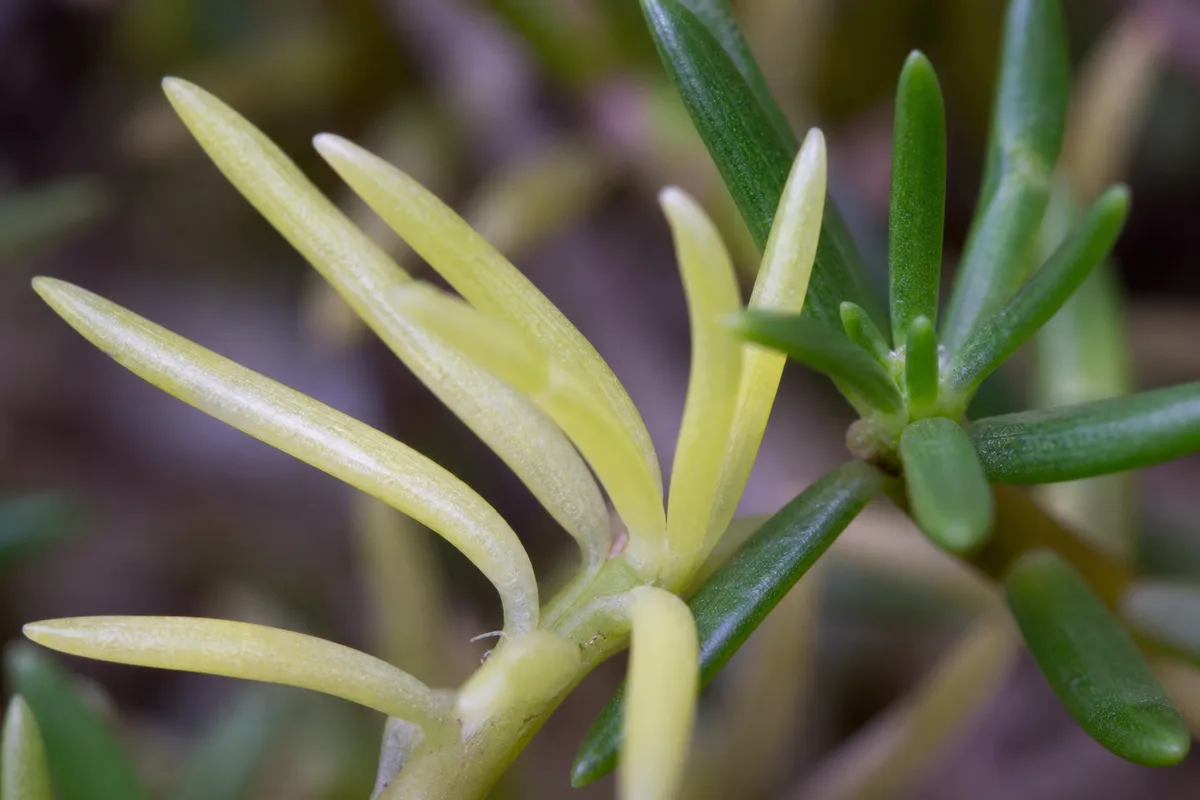
Pale from low light usually travels with a cluster: longer internodes, smaller new leaves, lean toward glass, variegation fading toward green, and soil that stays wet for days because the plant is using water slowly. That is an energy problem. Extra fertilizer will not invent photons, and unused salts can accumulate while growth is slow.
Confirm intensity at leaf height midday — phone light-meter apps are rough starting points, not lab instruments. Then move closer to a brighter window, extend photoperiod with a full-spectrum grow light, or choose a lower-light species for that spot. Full diagnosis and fix order live in signs your houseplants need more light and the not enough light symptom hub.
Cause 2 — Watering Stress and Root Damage
Roots make chlorophyll possible. When they are oxygen-starved, dried out, or rotting, leaves pale even if the fertilizer bottle is full. Clemson HGIC lists overwatering as a major houseplant decline driver because excess water reduces root oxygen and favors root disease, and notes that foliage yellowing is most often linked to overwatering once drainage and roots are checked.
Overwatering and Oxygen-Starved Roots
Overwatered plants may look dull, light green, or yellow while the pot stays heavy. Missouri Botanical Garden warns that wilted leaves can mean soil that is too dry or too wet because rotting roots cannot take up water, and that plants may show dull, light green or yellowing leaves with brown, soft roots. RHS adds that overwatering can yellow old and new leaves at the same time, with dark mushy roots and possible stem rot.
If the mix stays wet for more than a few days, the saucer holds water, or roots smell sour, pause fertilizer. Improve drainage, empty saucers, and treat confirmed rot through the root rot houseplants guide before chasing iron or nitrogen products. Species pages such as Syngonium and golden pothos often show this “pale + heavy pot” combination when people water on a calendar instead of by weight.
Underwatering and Drought Pale
Chronic dryness also pales foliage. Missouri Botanical Garden notes that plants kept too dry can wilt, droop, or take on an off color. RHS describes older leaves at the base of a dry plant yellowing and falling first, with crispy edges. Underwatering pale leaves often feel thinner and crisp at the margins, and the pot is light.
Rehydrate thoroughly so water exits the drain holes, then reset a moisture-based schedule rather than a calendar. For drought-pattern detail, see underwatered plant and how to water indoor plants.
Cause 3 — Nitrogen Deficiency
Nitrogen drives leafy green growth. When it runs short, plants look spindly and pale, and older leaves yellow first as the plant reallocates nitrogen to new tips. RHS describes nitrogen deficiency as spindly, stunted plants with pale yellow leaves (occasionally pink tints), older leaves first, then spread to younger foliage. Missouri Botanical Garden’s nitrogen note matches: oldest leaves yellow from the margins inward, and severe cases leave only new growth green.
Indoors, true nitrogen shortage is less common than low light or wet roots — but it does show up in long-unfed plants, exhausted peat mixes, and pots that have been flushed repeatedly without replenishing nutrients. Clemson HGIC links yellowing, browning, and death of lower leaves to nitrogen or iron deficiency and notes pot-bound plants are especially susceptible.
Only treat as nitrogen deficiency when older leaves fade first, roots are healthy, light is adequate, and the plant has not been fed for a long stretch of active growth. Then use a balanced houseplant fertilizer at label dilution during the growing season — not a double dose “to catch up.” Feeding basics are covered in fertilizing indoor plants. For a species-level nitrogen pattern on a flowering plant, see African violet pale leaves after you finish the hub checks here.
Cause 4 — Iron Deficiency and High pH Lockout
Iron chlorosis is the textbook new-leaf, green-vein problem. Illinois Extension explains that iron chlorosis starts on younger or terminal leaves and works inward, while manganese and zinc deficiencies more often begin on older inner leaves. Iron becomes less available as soil pH rises above roughly 6.5–6.7, and other elements in excess can also tie iron up. Missouri Botanical Garden adds that iron may be present but unavailable, and that alkaline soil often limits iron solubility; a pH near 6.0–6.5 suits most plants, while acid-lovers may need lower.
On houseplants, iron issues show up when acid-loving or hard-water-sensitive species sit in alkaline tap water and generic peat mixes for months, when roots are damaged, or when salts and high phosphorus compete with micronutrient uptake. Plants that often flash Fe-style pale new growth indoors include Calathea relatives, many aroid juveniles, and flowering acid-leaning plants such as African violet when water and media drift alkaline. Foliar chelated iron can green existing susceptible leaves temporarily; Illinois Extension notes foliar sprays do not protect leaves that emerge later, so several treatments may be needed, and soil pH correction is the longer fix.
Rough home check (not a lab test): if your tap leaves white scale on kettles or pot rims, and newest leaves keep arriving interveinal-pale while older leaves look greener, treat hardness and media chemistry as suspects. A cheap soil pH probe on moist mix is a starting point only — rinse probes, sample mid-root zone, and treat readings as directional. If hard-water crusts and pale new growth keep pairing, read hard water and houseplants alongside the iron checks below. Do not stack chelated iron on top of a high-nitrogen feed in the same week.
Cause 5 — Fertilizer Burn and Salt Buildup
More fertilizer is not a pale-leaf cure when salts are already high. As plants are watered and fertilized, salts build in the mix. Missouri Botanical Garden describes tip or edge yellowing or browning that slowly dies at high salt levels, and recommends running water through the pot several times to wash salts out, plus regular repotting. Clemson HGIC lists salt accumulation among causes of brown tips and edges and advises periodic leaching, emptying saucers, avoiding over-fertilizing, and refreshing soil.
Fertilizer burn often looks like marginal scorch more than soft whole-leaf fade, but pale, dull foliage can appear when roots are salt-stressed and cannot take up water or nutrients normally. Penn State lists overfertilization among causes of young-leaf yellowing — another reason not to feed first when new growth is pale.
If you see a white crust on the soil or pot rim, recent hot fertilizer, or tip burn with pale tissue, treat it as fertilizer burn: flush thoroughly, pause feeding, and only resume diluted fertilizer after new growth looks clean.
Nutrient Lockout vs True Shortage
True shortage means the nutrient is not in the pot in usable amounts. Nutrient lockout means the nutrient is present but roots cannot access it — often from high or low pH, excess competing salts, waterlogged roots, or cold, inactive media. Illinois Extension states nutrient deficiencies may occur because amounts are insufficient or because nutrients are unavailable due to high pH, injured roots, or poor root growth. RHS similarly notes extreme soil pH can lock up certain nutrients and that drought, waterlogging, or light deprivation can resemble deficiencies.
That distinction matters for pale leaves. Adding more fertilizer into a locked pot increases salt stress. Fix drainage and moisture, leach excess salts, correct mix pH for the species, and restore root health first. Then decide whether a targeted feed or chelated micronutrient is still needed. For the symptom pattern and next checks, use the nutrient lockout guide.
Look-Alikes: Pests, Scorch, and Natural Aging
Not every pale leaf is chlorosis from light or nutrients.
- Spider mites and sap feeders can stipple and dull leaves until the canopy looks faded; check undersides for webbing or sticky residue (Missouri Botanical Garden indoor pest notes). Fine sand-like stippling is a pest map, not an NPK map — that job belongs with the faded leaves and spider mites guides.
- Too much direct sun can bleach or scorch tissue — pale patches that feel dry and papery, often on the side facing the glass.
- Cold drafts and radiator heat can yellow and fade leaves near windows and vents (RHS poorly-houseplant checks).
- Natural aging on evergreens can yellow older leaves before they shed; RHS notes this is normal when young leaves stay healthy.
If pale tissue is mottled in mosaics, rings, or streaks rather than a clean old-vs-new nutrient map, consider virus or disease patterns and isolate before heavy feeding.
How to Fix Pale Leaves (Cause-Matched Plan)
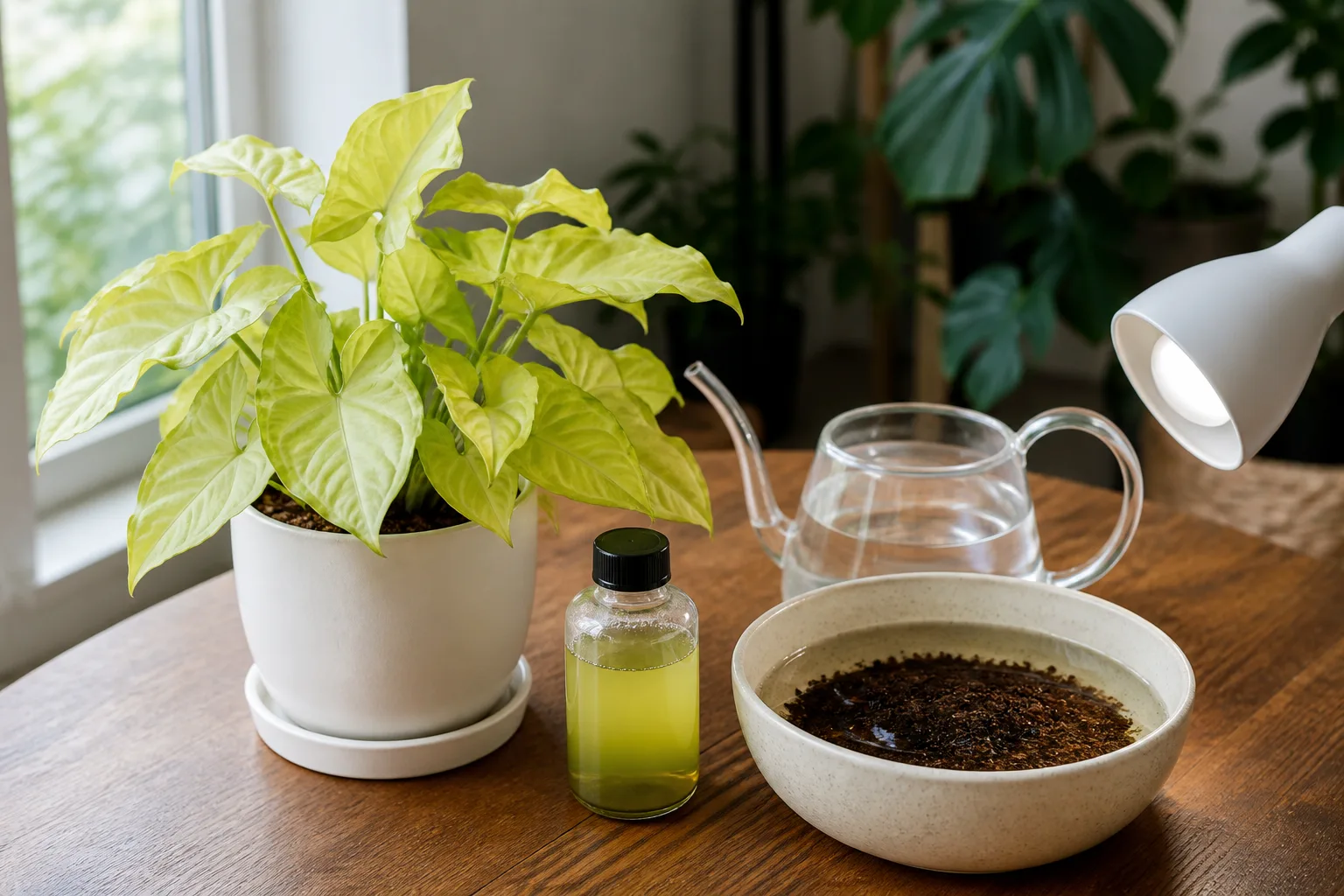
Match the fix to the diagnosis. Changing light, water, and fertilizer on the same day hides which change worked.
| Likely cause | Fix this week | Hold off on |
|---|---|---|
| Low light cluster | Move or add grow light; wipe dust | Fertilizer |
| Wet roots / rot risk | Dry-down, drainage, root check | Fertilizer, iron sprays |
| Drought pale | Full soak, then moisture-based watering | Extra feed |
| Nitrogen (old leaves first, roots OK) | Diluted balanced feed in growth season | Double-strength doses |
| Iron (new leaves, green veins) | Check pH/water; chelated iron if needed | Random high-N fertilizer |
| Salts / burn | Flush 3–4 pot volumes; pause feed | More fertilizer |
| Lockout | Fix moisture, pH, salts; then reassess | Stacking products |
When to Raise Light Before You Feed
If the plant is stretching, leaning, making smaller pale leaves, or sitting wet for too long in a dim corner, raise light first. Clemson notes indoor plants in low light have reduced fertilizer requirements, and winter rest periods often need little or no fertilizer. Feed only after compact, normally colored new growth appears. Winter fertilizing into low light is a common way pale leaves become salt-stressed leaves.
When to Flush, Chelate, or Repot
Flush when salt crust, tip burn, or recent overfeeding is in the history: water until drainage runs clear several times, then empty the saucer. Use chelated iron as a short-term bridge for confirmed new-leaf interveinal chlorosis on acid-leaning plants while you correct water and media. Repot when the plant is pot-bound, the mix is collapsed and sour, or salts keep returning after flushes — Clemson flags pot-bound plants as especially prone to lower-leaf yellowing from nitrogen or iron stress.
Recovery Timeline and Seasonal Scoreboard
Expect a two-speed recovery. Moisture and salt stress can stabilize within one to two weeks once roots breathe again. Color on new leaves is the real test.
Seasonal fairness: in active spring–summer growth, judge after one to three new leaves expand (often a few weeks under decent light). In a winter pause with short days, wait for the next real growth flush rather than forcing feed; pale winter leaves often reflect light and watering more than a missing bottle of fertilizer. Foliar iron may tint existing leaves sooner, but Missouri Botanical Garden and Illinois Extension both treat sprays as temporary unless soil conditions change.
Fully chlorotic leaves usually stay pale. Trim leaves that are entirely yellow or brown. Keep partly green leaves until the plant produces a fresh flush — RHS notes those leaves still help recovery.
Weekly scoreboard: count new pale leaves, measure pot dry-down time, and photograph the newest node. Improvement means fewer new pale leaves and greener newest growth — not a recolor of last month’s faded canopy.
First-Hand Notes From Diagnosing Pale Leaves
These are LeafyPixels desk notes from plants we tracked while drafting this hub — not lab trials. Use them as pattern examples, then run the 10-minute order on your own pot.
- Syngonium, new-leaf interveinal pale after months of hard tap water. Newest leaves arrived lime between veins while older leaves stayed darker. Pot was not soggy. We switched to filtered water, flushed once (about four pot volumes), and paused fertilizer for three weeks. Week 2: no new tip burn. Week 5: the next two leaves opened with clearer green between veins. Existing pale leaves did not re-green — which matched the “new growth is the scoreboard” rule.
- Golden pothos, oldest leaves uniformly pale after a long unfed stretch. Roots were firm and white; the plant sat in a bright east window with no stretch. After one half-strength balanced feed and normal watering, the next vine nodes held color better within about four weeks. We did not add iron; the leaf-age pattern pointed to nitrogen, not Fe lockout.
- African violet, washed pale + heavy pot in a north room. Uniform pale across the canopy with slow dry-down. Moving 60 cm closer to the window and extending dry-down time stopped new pale leaves within two weeks; fertilizer stayed off until compact new growth returned. The lesson we keep repeating: light and roots before bottles.
Phone lux readings and week counts above are editorial checkpoints. Your home’s water hardness, mix, and season will shift the timeline.
Conclusion
Run this checklist, then stop changing variables:
- Photograph one old leaf and one new leaf; note uniform vs interveinal pale.
- Check moisture at 5 cm / 2 in and lift the pot — fix wet or bone-dry roots before nutrients.
- Confirm light at leaf height; move or add a grow light if stretch and wet-soil linger.
- Flush if salt crust or tip burn is present; pause feed.
- Only then treat old-leaf pale as possible nitrogen, or new-leaf green-vein pale as possible iron/pH — during active growth.
- Score recovery on the next one to three new leaves (or the next spring flush in winter).
Prevention that sticks: match species to real light, water by weight, fertilize lightly in growth and cut back in low light/winter, leach mineral-fed pots every few months, and refresh exhausted mixes before chasing micronutrient sprays.
Next guides (unique destinations): pale leaves symptom hub · not enough light · fertilizer burn · nutrient lockout · hard water · root rot · fertilizing indoor plants · how to water indoor plants · yellow leaves · faded leaves