Houseplant Faded Leaves: Tell Washout from Bleach, Reversion, and Mites
Tell low-light washout from sun bleach, variegation reversion, and spider mites. Fix the matching cause; score recovery on new growth.
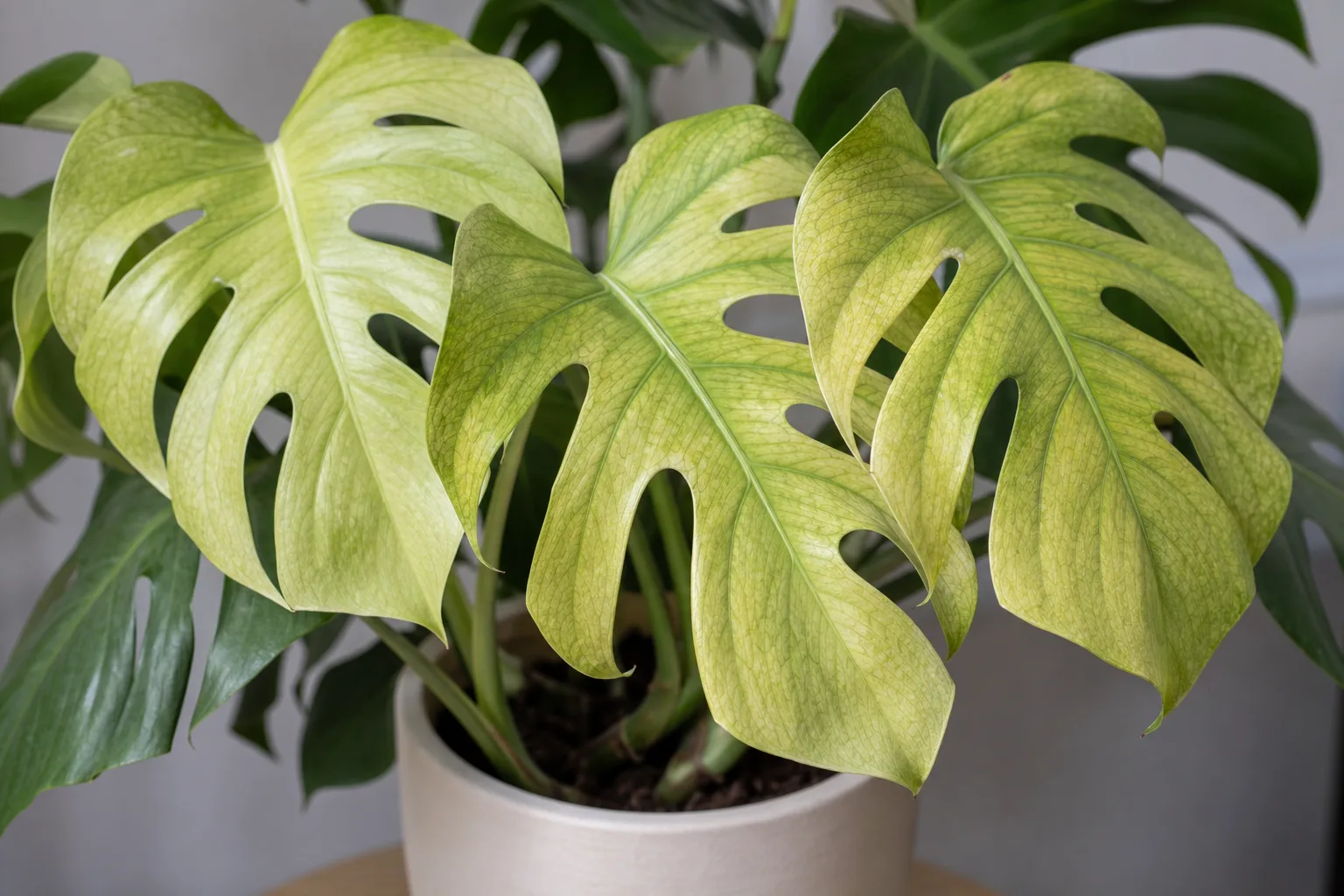
Look at the leaf, not the product aisle. Is the color smoothly diluted across the whole plant, with longer gaps between new leaves? Are chalky or tan patches sitting only on the glass-facing face after a sunny weekend? Did a patterned cultivar start putting out greener, less-marked leaves — or outright all-green shoots? Or does the canopy look dusty and bronze with fine flecks on the undersides? Those four faces — smooth washout, window-face bleach, pattern fade/reversion, and mite stippling — are what “faded leaves” usually means indoors. The fix is different for each, and fertilizing first almost never helps.
Faded foliage is a color-and-energy symptom, not a single disease. Chlorophyll and other pigments thin when light is wrong, when spider mites pierce leaf cells, or when older leaves are retiring. Missouri Botanical Garden notes that indoors the usual problem is too little light, with plants turning pale and stretching toward whatever light they find, while too much sun can produce yellowish color plus tan or white patches on the exposed face. (Missouri Botanical Garden) This guide is the color-intensity hub: how to name the pattern in five minutes, what we have seen in real rooms, which cause to fix first, and why recovery is scored on new growth — not on hoping yesterday’s washed tissue suddenly re-saturates.
Reviewed for horticultural accuracy by Dr. Priya Menon (Botanist and Indoor Plant Specialist, LeafyPixels Editorial Review Board). Room vignettes below are LeafyPixels desk and sill observations with handheld meter notes where listed; recovery week bands are editorial heuristics unless a primary source is cited.
What Faded Leaves Means (Color Intensity, Not Collapse)
Faded leaves means foliage has lost saturation. The blade looks washed out, dull, chalky, or bronzed instead of its normal rich color. On a solid green plant that often reads olive, gray-green, or flat. On a variegated plant it may mean cream areas look muddy, green areas have swallowed the pattern, or pale sectors have been scorched. On a mite-hit plant it often looks speckled and dirty before it looks simply “pale.”
Fade is about color intensity and pattern, not primarily soft collapse, wet brown patches, or crisp brown tips alone. Those can overlap with fade, but they have their own tracks. A leaf can be faded and still firm. A leaf can be yellowing from root stress without looking sun-washed. Keep those tracks separate so your first move matches the cause.
Homes create fade easily. Distance from windows cuts usable light faster than your eyes admit. Seasonal daylight drops while the pot stays in the same decorative corner. Sudden moves from a dim shop shelf to hot glass bleach tissue in hours. Dry heated rooms favor spider mites that stipple leaves into a faded look. Dust and film can also make healthy chlorophyll look dull until you wipe the leaf — which is why a clean-leaf check belongs early in diagnosis.
Faded vs Pale vs Yellow vs Bleached
Use the words carefully; they point to different first checks.
| Word people use | What you are usually seeing | First hub / check |
|---|---|---|
| Faded / washed out | Diluted depth and gloss across the blade or on the sunny face; mite flecking that reads “dirty fade” | This guide |
| Pale | Light green or yellowish new growth (chlorosis story), often with stretch when light is low | Pale leaves |
| Yellow | Chlorophyll loss toward yellow from watering, roots, or aging lower leaves | Indoor plant yellow leaves |
| Bleached / scorched | Papery chalky or tan-white patches where light hit hardest, often crisping brown | Sunburn / scorched leaves |
If leaves are light green or yellowish without a clear washout, bleach, reversion, or stippling story, compare the pale leaves symptom hub before you treat. For a species-first overview of color loss, use the faded leaves symptom hub. If several leaf symptoms compete at once, the houseplant symptom checker helps you route before you change five care variables in one afternoon.
Four-Pattern Diagnosis Table
Most houseplant fade collapses into four diagnoses. Confirm the pattern before you move the pot, feed, or spray.
| Pattern | Where it shows | Speed | Extra clues | First move |
|---|---|---|---|---|
| Low-light washout | Whole plant or far-from-window leaves | Weeks | Stretch, small new leaves, wet soil longer | Raise light gradually |
| Sun bleach / scorch | Window-facing face | Hours–days | Papery chalky patches, brown crisp edges | Pull back / sheer |
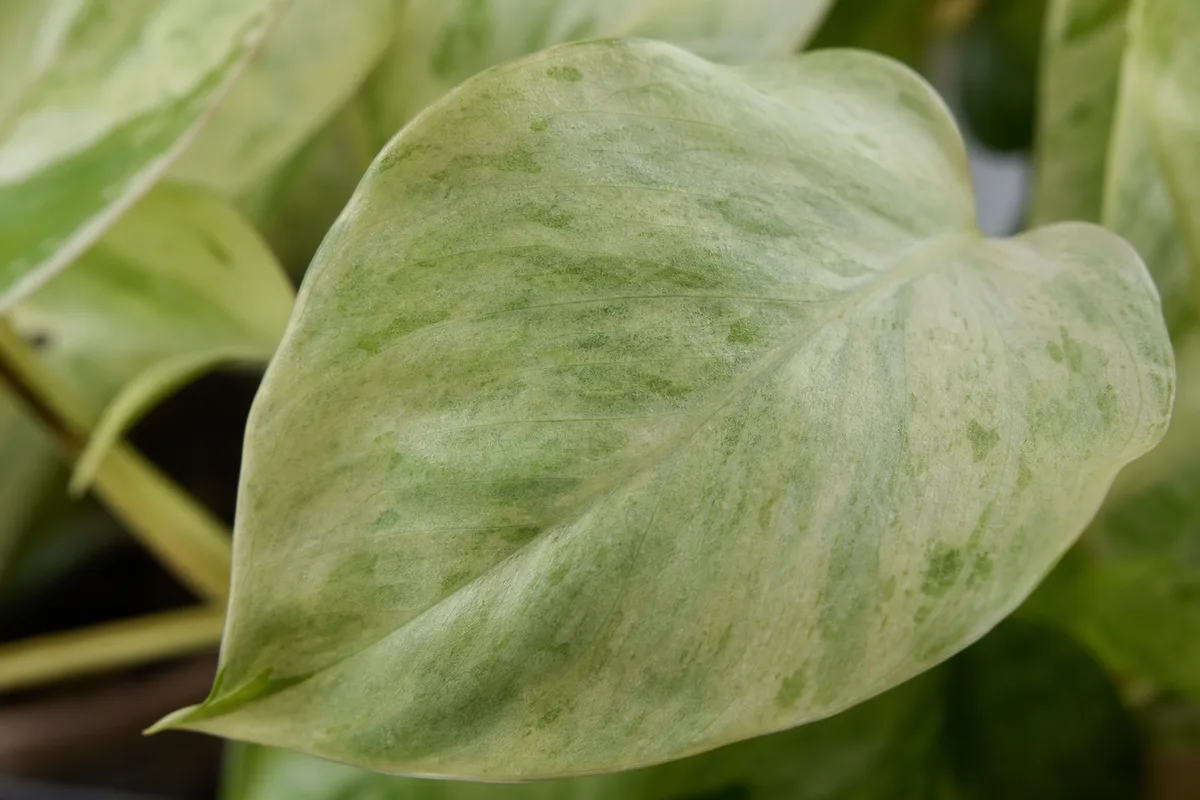
| Variegation fade / reversion | Patterned cultivars | Weeks–months | Greener new leaves or all-green shoots | Brighter light; prune green shoots |
| Spider mites | Undersides + stippling | Days–weeks | Fine webbing, dusty bronze look | Isolate, rinse, treat mites |
Extension fact → home checklist: Missouri Botanical Garden’s “too little light = pale + stretch” and “too much sun = yellowish color + tan/white patches on the exposed face” map directly to rows 1–2 of this table. (Missouri Botanical Garden) Your job at home is to match the distribution (whole plant vs one face vs speckled undersides) before you pick a product.
Five-Minute Checklist (Change One Variable)
Work in this order. After you pick a direction, change one major variable — not light, fertilizer, and a repot in the same hour.
- Wipe one leaf — If color pops after dust comes off, clean the canopy and reassess. Film is not fade.
- Map the pattern — Whole plant vs window face vs oldest leaves only vs speckled undersides.
- Check stretch — Compare the last three internodes to older ones. Longer, thinner new growth supports low light. University of Georgia Extension lists longer new internodes and smaller new leaves among classic inadequate-light signs. (University of Georgia Extension)
- Check the sunny face — Papery chalky patches after a brighter placement support bleach.
- Check variegation — Greener new leaves or all-green shoots on a patterned plant support light shortage or reversion.
- Check mites — Undersides, stippling, webbing, dry room. Tap foliage over white paper and look for moving dots.
- Check moisture last — Finger-probe at root depth. Chronic wet plus fade often means light was the opener; wet mix with soft roots and yellowing needs the root/watering track, not only a brighter sill. Dry crispy fade with wilt can be drought stress overlapping color loss.
Photograph the worst leaf and the newest leaf today. Recovery is judged on new growth, not on whether yesterday’s washed tissue suddenly darkens.
What We Saw in Three Rooms
These are LeafyPixels indoor observations used to pressure-test the four-fork model — not controlled trials.
North-corner Monstera, winter washout. A Monstera deliciosa sat about eight feet from a north window in a bedroom. Midday handheld meter readings at leaf height sat in the low tens of foot-candles — far below what the plant had when it lived closer to glass. New leaves opened smaller and olive-flat; the newest internodes lengthened; the mix stayed wet nearly a week on the old watering calendar. We moved the pot to within three feet of the same window over two weeks (not overnight onto hot glass), wiped dust, and cut watering volume to match faster dry-down. Existing leaves did not re-green. By week five, a new leaf expanded darker and closer to the plant’s prior size. That is the low-light washout lane.
Manjula on a dim shelf, then reversion. A Manjula pothos on a shaded bookshelf put out successive leaves with muddy cream and, later, a vigorous all-green runner. After relocating to a brighter east sill (sheer in place) and cutting the green runner back to patterned nodes, new leaves over the next month regained contrast. Already-muddy blades stayed muddy — pattern recovery rode the next flush, matching RHS guidance that inadequate light drives variegation loss and that reverted green shoots should be pruned. (RHS)
Golden pothos “needs more sun” that was mites. A trailing golden pothos looked dull and gray-green after heating season started. The owner planned a south-window move. A white-paper tap from undersides showed moving dots; fine webbing sat in axils. Isolation, sink rinses of undersides, and a soap schedule stopped new stippling within two weeks. Raising light alone would have stressed a plant still being drained by mites — the misread this hub exists to prevent.
Not Enough Light: Even, Gradual Washout
When light stays below what the plant needs, chlorophyll production and vigor drop. Leaves look pale or washed out, growth becomes weak and spindly, and flowering stalls. The Royal Horticultural Society lists weak, spindly growth, pale leaves, and poor flowering as classic signs a plant is not getting enough light, and notes variegated plants may produce greener new leaves or lose variegation when light is low. (RHS) Missouri Botanical Garden describes the same cluster: light green foliage plus stretch or lean toward the light. (Missouri Botanical Garden)
Low-light fade is usually even and gradual. New leaves open smaller and lighter. Internodes lengthen. The plant leans toward the brightest window. Soil stays wet longer because metabolism slowed — which is why people often overwater a light-starved plant and then chase “root rot mystery” when the real opener was dim placement. For the full low-light symptom cluster and meter checks, use not enough light for houseplants. When stretch is the main complaint rather than washed color, also see leggy plants.
Measure Intensity Before You Guess
UF/IFAS Gardening Solutions emphasizes that human eyes are poor judges of intensity and that “bright indirect light” is vague without a measurement at the plant. (UF/IFAS Gardening Solutions) Clemson HGIC notes a well-lit home interior is often under 100 foot-candles while outdoor sun can exceed 10,000. (Clemson HGIC) A cheap handheld lux or foot-candle meter beats guessing from how the room feels after your eyes adapt. Phone apps are useful for ranking sill versus sofa versus hallway at the same time of day; treat them as comparison tools, not lab absolute numbers.
Sun Bleach and Scorch: Fast, One-Sided
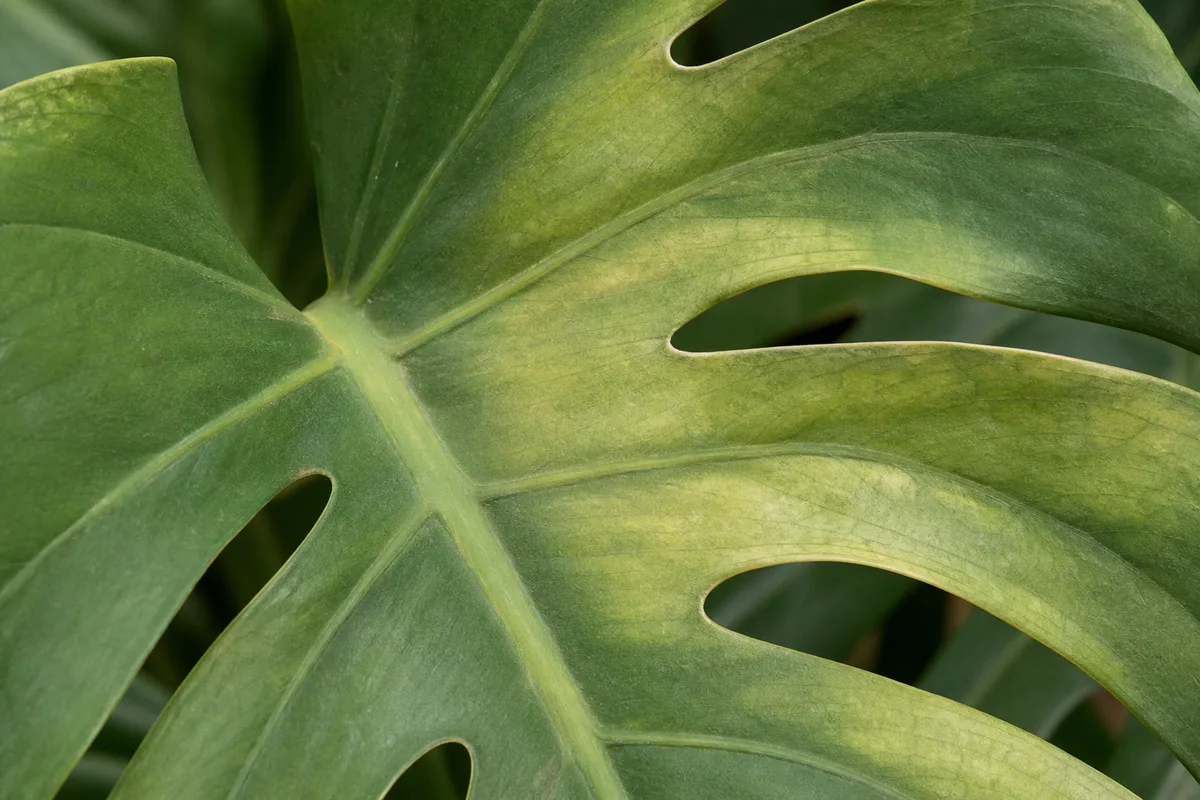
Too much direct light does the opposite damage. Clemson HGIC warns that when a plant receives too much direct light, leaves bleach or scald and may die, especially after a sudden move outdoors or into harsh sun, and that light changes should be gradual. (Clemson HGIC) RHS notes strong direct sun can cause brown scorched patches and a washed-out appearance, and that on variegated leaves scorch hits the paler sections first. (RHS) Missouri Botanical Garden maps sunburn as brown or tan tissue on the side aligned with the sun — a directional pattern that is a strong diagnostic clue. (Missouri Botanical Garden)
Sun bleach is fast and one-sided. Pale chalky patches face the glass. Tissue may feel papery, then crisp brown. Green tissue on the shaded side can still look fine. That asymmetry is your friend: if only the sunny face washed out after a move or a heat wave at the window, do not fertilize — shade and acclimate. Hand off deep scorch recovery to the sunburn / scorched leaves hub once patches brown and die. Species pages such as Monstera faded leaves walk the same fork for large aroids.
Grow Lights Can Bleach After a Dim Move
Fixing low light with a strong LED parked a few inches from soft foliage can trade washout for bleach. Start farther than you think, watch the newest leaves for chalky patches on the lamp-facing face over several days, then lower the fixture only if stretch continues. Acclimate over one to two weeks the same way you would for a brighter window. Clemson’s gradual-change rule applies in both directions. (Clemson HGIC)
Variegation Fade and Reversion
Variegated leaves trade chlorophyll for pattern. White or cream zones contain little or no chlorophyll, so those plants need brighter light to feed themselves on the remaining green tissue. RHS explains that white areas of variegated leaves lack chlorophyll, that variegated plants tend to need a brighter spot, and that reversion to all-green is often a sign light is too low. (RHS) On leaf-damage guidance, RHS adds that permanent loss of variegation (when true reversion can be ruled out) often traces to inadequate light, and that waterlogging can also dull pattern; control is better light, drainage, and pruning out reverted green shoots. (RHS)
Two related but different events:
- Pattern fade — new leaves open with less contrast; cream areas look muddy; the plant still shows some variegation.
- Reversion — vigorous all-green shoots outgrow the patterned growth because green tissue photosynthesizes harder.
Do not confuse either with sun bleach on white sectors, which looks papery and scorched rather than simply “greener.” Brighten gradually for fade; prune green shoots for reversion; pull back from glass for bleach on pale patches. On Manjula pothos faded leaves, expect contrast to return on new leaves after weeks of steadier light, not on already muddy blades.
Spider Mites: Speckled, Dirty Fade
Spider mites create a faded look by puncturing cells and drinking sap. Early damage is fine light flecking (stippling). Heavy populations leave leaves discolored, gray, bronze, or dirty-looking, then leaves may dry and drop. Colorado State University Extension describes flecking, bronzing, and scorching from mite feeding, notes the twospotted spider mite as a key houseplant species, and flags dry conditions as a major driver. (Colorado State University Extension) Missouri Botanical Garden lists stippled, yellowing, dirty leaves plus webbing as early mite clues. (Missouri Botanical Garden)
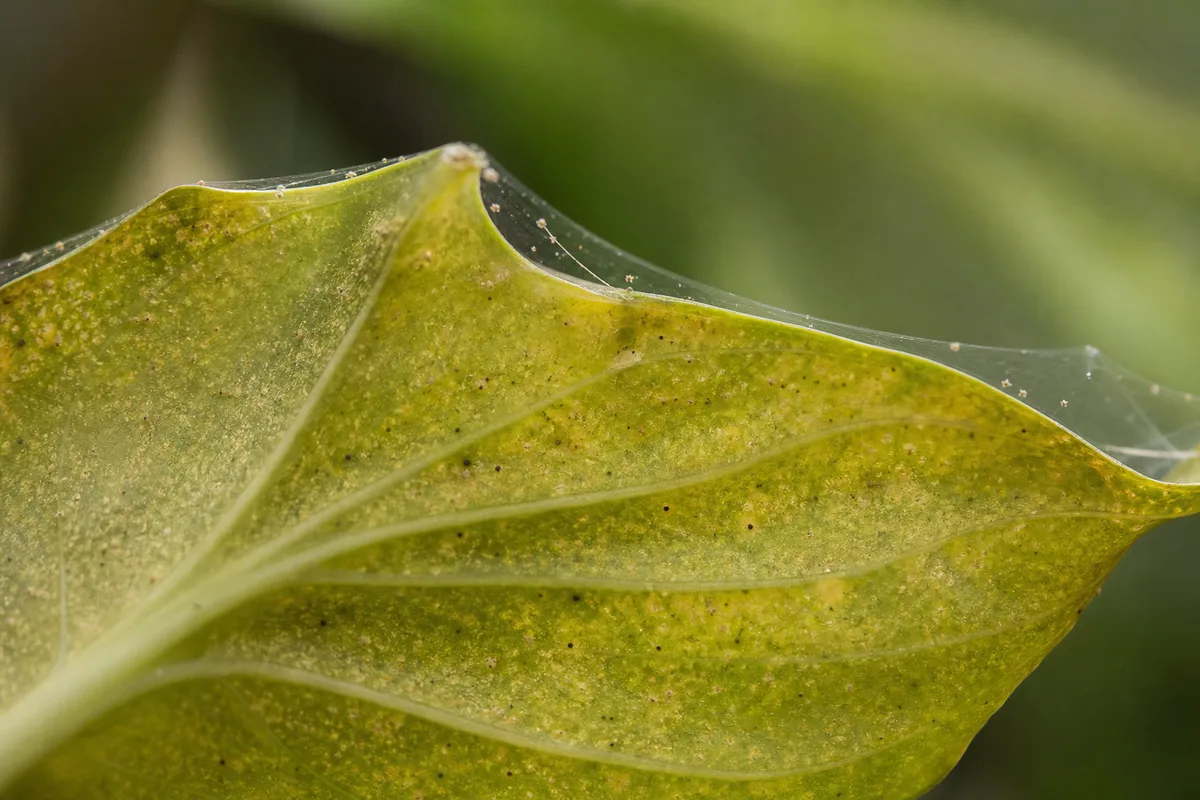
Mite fade is speckled, not smoothly washed. Check undersides with a phone zoom or white-paper tap test. Fine webbing in leaf axils seals the diagnosis. If you only raise light on a mite infestation, you stress the plant without stopping the bleed. Full treatment paths live in spider mites on houseplants and the spider mites symptom hub.
Why Broad Insecticides Can Make Mites Worse
CSU notes that insecticides that kill natural mite predators can contribute to outbreaks, and that few insecticides are effective against spider mites — many even aggravate problems. Houseplant control is often soaps, horticultural oils, hose-offs, and leaf wiping on a repeat schedule because eggs hatch on a delay. (Colorado State University Extension) University of Arkansas Extension similarly warns that most insecticides are ineffective against mites and can make populations worse. (University of Arkansas Extension) Start with isolation and mechanical removal; escalate carefully with label-appropriate products.
Normal Leaf Aging
Not every dull leaf is a crisis. RHS notes older leaves are less efficient and that shaded older foliage eventually breaks down chlorophyll as the plant reallocates resources to new growth. (RHS) One or two oldest lower leaves slowly paling while new growth stays rich and compact is often normal turnover.
Treat aging as the default only when the rest of the plant looks vigorous, internodes are normal, undersides are clean, and the fade is confined to the oldest leaves. Multi-leaf washout on new growth, directional bleach, pattern loss on a variegated cultivar, or stippling means you still have a cause to fix.
Fertilizer, Dust, Water, and Hard-Water Lookalikes
Dust and residue make chlorophyll look faded when it is not. Wipe leaves with a damp cloth before diagnosing.
Hard-water spots leave chalky marks that look like bleach but wipe or sit as mineral film rather than papery dead tissue.
Underwatering can leave foliage dull and off-color before crisp edges dominate — Missouri Botanical Garden lists off color among drought signals. (Missouri Botanical Garden)
Overwatering / root stress produces dull light green or yellowing with wet mix and soft roots — a different moisture story than light washout, even when both look “pale” from across the room. If wet mix plus dull color dominates and roots smell sour or feel mushy, leave this fade hub and follow a watering/root path such as indoor plant yellow leaves or species root-rot guidance.
Fertilizer is a late tool. Pale new growth with adequate light and healthy roots may eventually need a diluted feed during active growth. Fertilizer on a dark-corner plant with wet soil adds salts without fixing the energy shortage. UGA Extension reminds growers that without new growth, a plant has limited need for more fertilizer, and winter low light reduces demand further. (University of Georgia Extension) If you already overfed, flush and correct light first; see overfertilization when crust and tip burn dominate.
Fix Order by Cause
Pick the matching lane. Do not fertilize, repot, and relocate in the same hour.
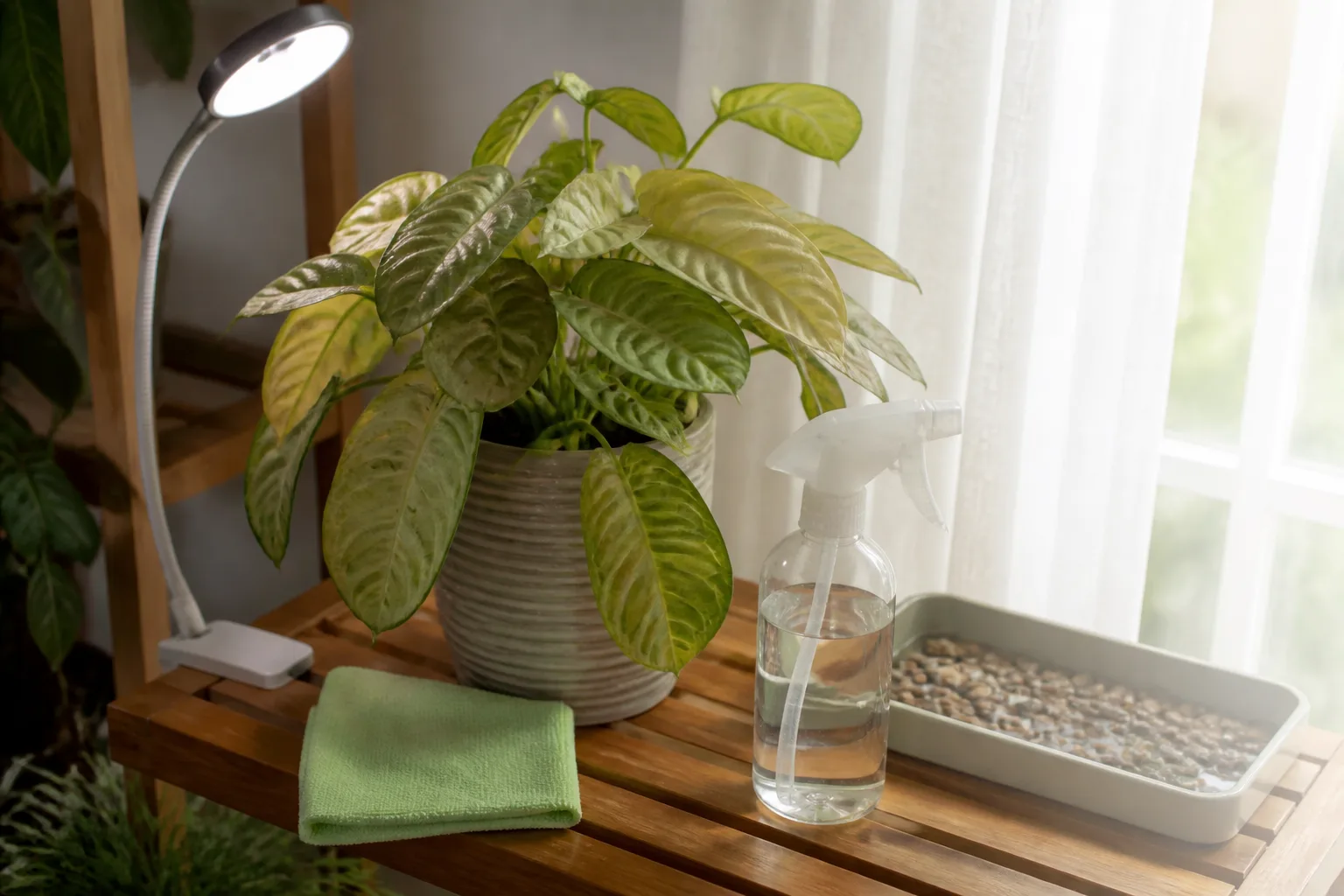
Fix low-light fade. Move closer to a brighter window or add a full-spectrum grow light before you change fertilizer. Raise intensity over one to two weeks. After the move, expect soil to dry faster — retune watering to the new dry-down. Existing washed leaves will not re-saturate; score success on darker, larger new leaves over several weeks. RHS advises moving many houseplants toward south- or west-facing windows in winter when sunlight is weaker, and wiping dust so more light reaches the leaf. (RHS)
Fix sun bleach. Pull the plant back from the glass, add a sheer curtain, or shift to gentler east light. Remove only fully dead crisp tissue after the live/dead line is clear. Bleached patches are permanent scars; protect new leaves instead of painting hope onto dead cells.
Fix variegation loss. Increase bright indirect light so patterned leaves can feed themselves. Prune fully reverted green shoots when they outcompete variegated growth. Check that the pot is not waterlogged; dull pattern plus soggy mix needs drainage correction, not only a brighter sill.
Fix mite fade. Isolate the plant. Rinse foliage — especially undersides — with a forceful spray of water, a cultural step CSU highlights for houseplants alongside wiping leaves and repeating treatments. (Colorado State University Extension) Raise humidity if the room is desert-dry, then follow label-appropriate soap or oil guidance on the spider-mites houseplants guide. Repeat treatments matter; eggs hatch on a delay.
Recovery Timeline: What Will Not Re-Green
Damaged pigment patterns on an existing leaf rarely reverse. Chlorophyll lost to bleach, severe stippling, or long low-light dulling on mature tissue stays dull. The week bands below are editorial heuristics for home scoring — not universal biology timelines. Score new growth, not old tissue.
- Days 1–3: cause stopped (light corrected, mites treated, bleach source removed)
- Week 1–2: no new stippling or new bleach; soil dry-down matches the new light
- Week 3–6: new leaves open with better color, size, or variegation contrast
If new growth stays washed after a month of corrected light, re-check mites, window distance, and whether “brighter” still means a dim north corner. Species with naturally lighter new leaves (many aroids) darken as they mature — wait for full expansion before calling a new Monstera or philodendron leaf faded. Trailing pothos and peperomias often show clearer color recovery on the next one to two nodes once intensity is steady; thick-leaved succulents may need a longer wait between flushes.
Prevention Through the Seasons
Match placement to season. Many plants need a closer winter window when daylight weakens, then a sheer or step-back in summer when south or west glass intensifies. RHS seasonal placement advice for houseplants is practical: summer south sills can be too harsh; winter north sills can be too weak. (RHS)
Keep variegated cultivars in the brightest safe indirect light year-round. Acclimate any move toward stronger sun over one to two weeks. In dry heated rooms, inspect mite-prone plants every week — undersides first. Wipe dusty leaves so the light you do have reaches chlorophyll. Water to the plant’s new dry-down after every light change so fade does not turn into a root problem.
Related Guides
- Faded leaves symptom hub — cross-species symptom overview
- Pale leaves on houseplants — chlorosis / light-green track
- Not enough light for houseplants — stretch, small leaves, meter checks
- Sunburn / scorched leaves — directional bleach and crisp scorch
- Spider mites on houseplants — stippling, webbing, treatment
- Indoor plant yellow leaves — yellowing vs washout; wet-mix handoff
- Monstera faded leaves — large aroid example
- Manjula pothos faded leaves — variegation recovery example
Conclusion
Faded houseplant leaves are a diagnosis problem before they are a shopping problem. Smooth whole-plant washout with stretch points to low light — raise intensity gradually and retune watering, the way the north-corner Monstera recovered on new leaves. Chalky window-facing patches point to bleach. Greener or all-green new growth on a patterned plant points to variegation stress or reversion. Speckling with webbing points to mites — check undersides before you “fix” fade with more sun.
Fix the matching cause, change one major variable at a time, judge recovery on new leaves, and leave fertilizer for last. Damaged tissue will not re-green — but a plant with a corrected light and pest story can look like itself again on the next flush.