Mold on Soil on Custard Apple: Causes, Checks & Fixes
Quick answer
Mold on soil on Custard Apple (Annona squamosa) almost always means the pot surface stayed wet too long—common when compost-heavy mix, monsoon rain, and fruit-fill watering overlap on shallow roots. First step: scrape off the visible fuzz, let the upper 3–5 cm dry before the next deep soak, and confirm drainage holes are open.
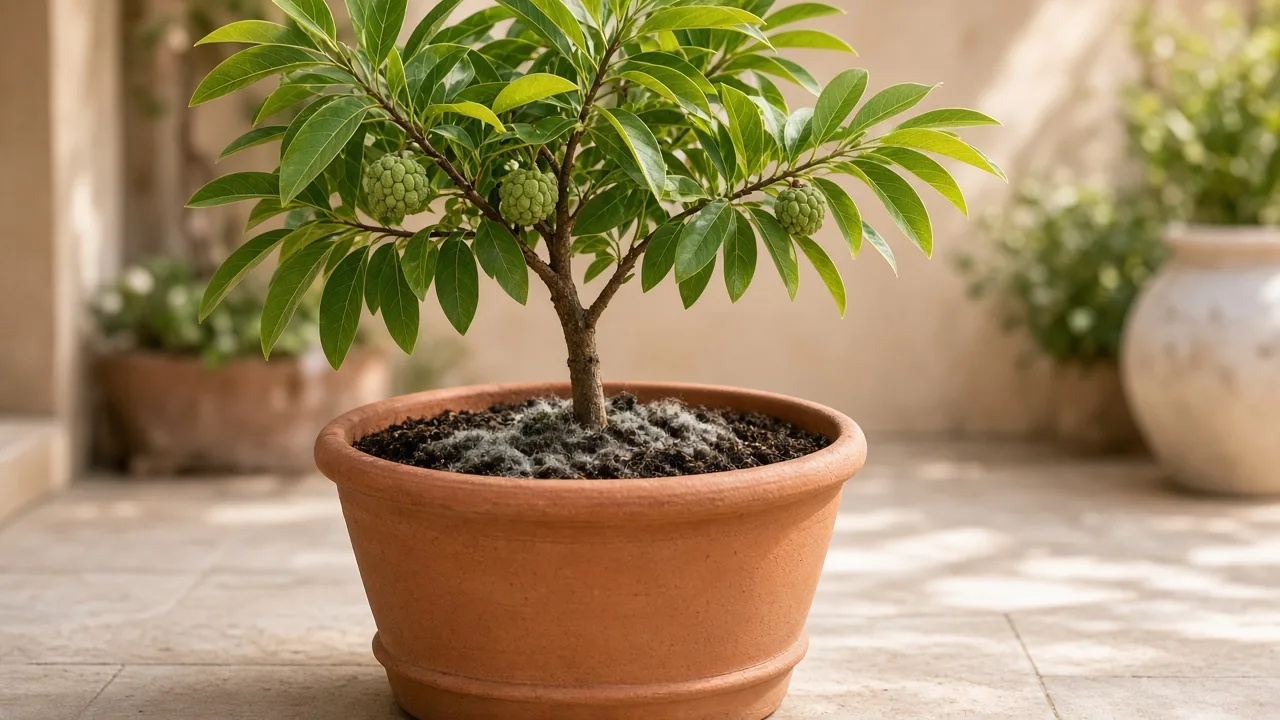
Mold on Soil on Custard Apple: Causes, Checks & Fixes
This guide covers mold on soil on Custard Apple. See also the general Mold on Soil guide, watering, and light pages for this plant.
Mold on Soil on Custard Apple: Causes, Checks & Fixes
Quick answer
White or gray fuzz on Custard Apple (Annona squamosa—Sitaphal, sugar apple, sweetsop) potting mix is usually harmless saprophytic fungus on damp organic matter—not mold eating your developing fruit or thin deciduous leaves. For how surface mold works on any container plant, see the general mold on soil guide. On Custard Apple, the pattern often shows up while the canopy still looks fine: compost-heavy terrace mix, fruit-fill watering on top of monsoon rain, a shallow root zone that cannot tolerate stagnant water, and fallen leaves or split fruit pulp feeding fungi at the soil line.
Julia Morton’s sugar apple account notes high drought tolerance once established, but water-logging is intolerable—surface fuzz is the early warning before shallow roots suffer.
First step: scrape off the top 1–2 cm of affected mix, discard it away from pets and children (Annona seeds are toxic), and do not soak again until the upper 3–5 cm feels dry to your finger. Move the pot to full sun and open airflow if you can. Do not repot, drench fungicide, or pile fresh compost on day one unless the mix smells rotten or the stem base is soft.
When to use this page vs other Custard Apple guides
This page is the surface-fuzz and top-layer moisture entry when the soil line—not the fruit—looks wrong.
| Pattern | Read next |
|---|---|
| Tiny flies at the pot rim with damp mix | Fungus gnats |
| Soft trunk base, sour smell, collapse in wet soil | Root rot or overwatering |
| Limp leaves, light pot, dry upper soil on a young tree | Underwatering |
| Yellow lower leaves with persistently wet mix | Yellow leaves |
| Whole-tree wilt with damp soil | Wilting |
| Routine depth checks through growth and fruit fill | Watering guide |
| Mix stays wet despite sparse watering | Soil guide |
What mold on soil looks like on Custard Apple
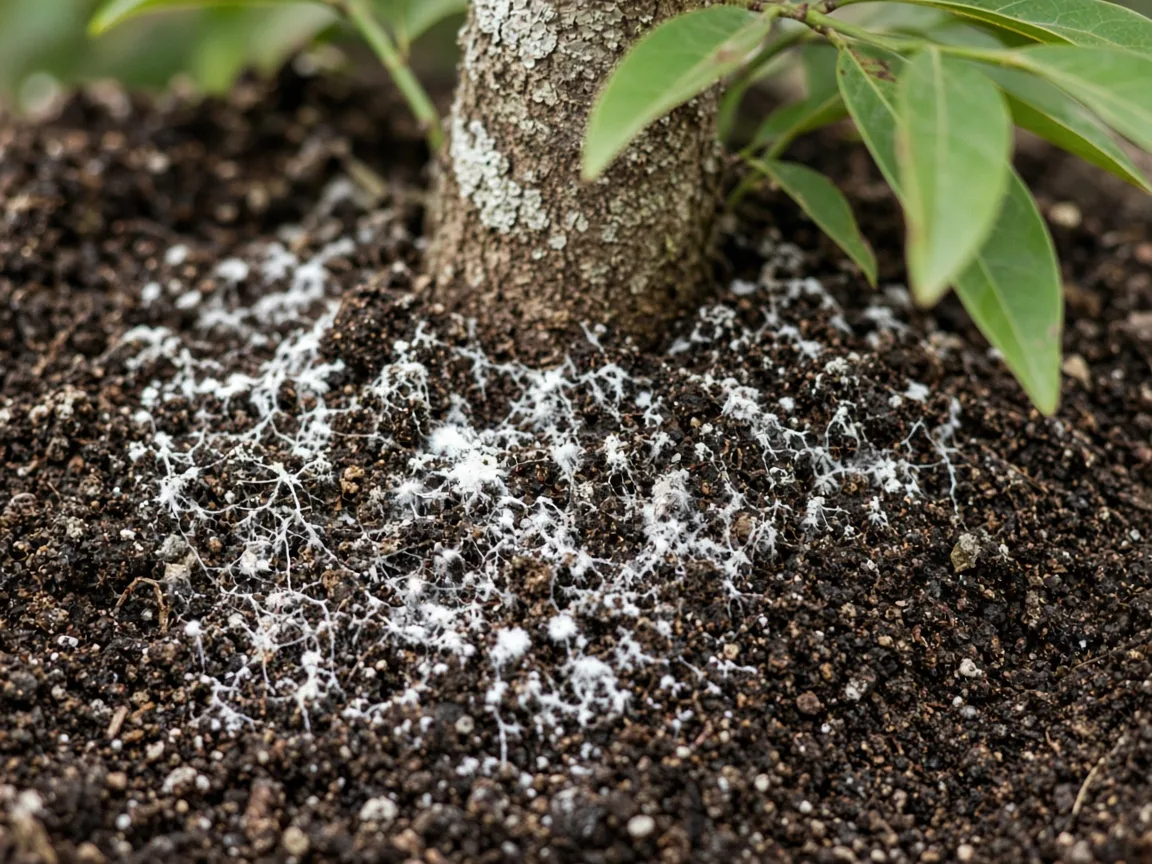
White saprophytic threads on compost at the trunk flare—compare with the dry, dusty surface you should see between deep soaks on a terrace sugar apple.
On sunny terrace or courtyard pots, you usually spot fuzz on the mix surface or pot rim while thin branches stay firm and new flush leaves look normal.
Typical mold patterns on Custard Apple pots:
- White, gray, or tan fuzzy patches on the potting surface after watering or monsoon rain
- Thread-like mycelium spreading across damp compost, aged manure top-dress, or fallen leaf litter
- Mold reappearing within a few days if the upper 3–5 cm never dries
- Optional small yellow mushroom caps in warm humid conditions—saprotrophic fungi on rich potting soil, not Annona fruit disease
- Fungus gnats hovering when you water—often in the same chronically wet pots; see fungus gnats on Custard Apple
What is usually not soil mold:
- Sunken or fuzzy spots on fruit segments—fruit rot or mechanical injury, not potting mix
- White powder on upper leaf blades—check mealybugs or aphids before assuming fungus on foliage
- Crispy brown leaf margins with dusty dry mix—underwatering during a dry spell, not surface mold
- Seasonal leaf drop with dry soil—normal rest for sugar apple; do not confuse with mold-driven decline
Lookalike quick-reference
| What you see | Location | Likely cause | First action |
|---|---|---|---|
| White/gray fuzzy threads | Damp soil surface | Saprophytic mold on wet organic mix | Scrape top layer; dry upper 3–5 cm |
| Yellow oval mushroom caps | Rising from warm wet mix | Flower-pot parasol fungus on compost | Remove caps; reduce surface wetness |
| Hard white crust that will not rub off | Pot rim or soil surface | Soluble salt buildup from fertilizer, not fungus | Leach soil; review fertilizer timing |
| Green slick film | Shaded wet surface | Algae with constant moisture | Brighten light; dry surface longer |
| Mold + sour smell + yellow leaves | Wet root zone | Advancing overwatering or root rot | Stop water; inspect roots |
Why Custard Apple gets mold on soil
Custard Apple is a shallow-rooted tropical fruit tree, not a moisture-loving foliage houseplant. Growers’ references describe a shallow, relatively weak root system that needs moisture during active growth and fruit development yet cannot succeed in poorly drained, waterlogged soil. NParks lists moderate water with good drainage as the baseline. Surface mold is the visible clue that organic matter at the top is staying damp long enough for saprophytic fungi to colonize nursery-style media.
Common Custard Apple-specific triggers include:
Fruit-fill watering stacked on monsoon rain. Morton records that irrigation during ripening increases fruit size—but open terraces in India and similar climates often receive rain on top of hand watering. If the upper 3–5 cm never dries, white fuzz and fungus gnats follow.
Compost-heavy mix in an oversized decorative pot. LeafyPixels’ soil guidance calls for compost in the blend, which is correct for nutrition—but fine compost without enough perlite or grit holds water around slow shallow roots. The surface molds while the tree shows only subtle yellowing or slow growth.
Fallen leaves, flowers, and split fruit on the surface. Sugar apple drops leaves seasonally and fruit pulp from cracked or bird-pecked fruit feeds airborne saprophytes when left on wet mix.
Cachepots, saucers, and flat terrace drains. Standing water keeps the upper layer humid for days—the same conditions Morton warns against when describing water-logging as intolerable.
Cool rest or shade after a wet monsoon. When leaf fall bridges a dry spell, water use drops. Continuing summer watering volume in a dim corner keeps the top wet longer—often alongside not enough light if the pot moved under cover.
Monsoon weeks vs dry-season dry-down on terrace Sitaphal
This distinction matters on Custard Apple more than on a generic houseplant. During active growth and fruit fill, the tree can use steady moisture—but Morton still separates drought tolerance from tolerance of stagnant water. In practice:
- Monsoon or daily rain weeks: Skip redundant hand watering when pots are already heavy; tilt saucers and clear terrace drains so the top can breathe between storms.
- Dry growth or cool rest: Extend the interval between deep soaks; verify with the 3–5 cm dry check instead of a calendar from peak summer.
- After leaf fall: A lighter pot with a briefly fuzzy patch after one storm usually needs scrape-and-dry, not a repot—unless smell or stem softness says otherwise.
Getting this seasonal rhythm wrong is why mold keeps returning on otherwise healthy Sitaphal pots.
How to confirm the cause
Work top down before you repot:
- Surface texture — Rub a small patch between your fingers. Soft fuzzy growth that lifts away is mold; hard chalky crust is salt, not fungus.
- Moisture at 3–5 cm — Match the Custard Apple watering check: the upper layer should dry between deep soaks. Cool, clinging mix days after rain or irrigation confirms the moisture source.
- Pot weight and drainage — Lift after watering. A heavy pot a week later with a fuzzy top points to poor dry-down, not a one-off splash.
- Smell — Earthy is normal; sour or swampy suggests anaerobic wet soil and possible root rot.
- Stem flare and new flush — Firm wood at the soil line, healthy new leaves, and normal bark color support cosmetic surface mold. Softening at the base with yellowing lower leaves means escalate to overwatering care.
Confirmed harmless surface mold: fuzz only on the top layer, dry test passing at depth within a week after you stop adding water, firm roots if you probe gently at the pot edge without disturbing fruiting wood.
Bagging scraped soil when pets share the terrace
Custard Apple pulp is a common food, but seeds, leaves, and roots contain toxic compounds and NParks warns that seed solutions can harm eyes on contact. When you scrape moldy mix that also holds fallen fruit pulp or old seeds:
- Wear gloves and bag the material for trash—not compost bins pets can reach
- Rinse tools before storing them where children handle potting supplies
- See the overview for full pet-safety context on pruning waste and split fruit
This is a Custard Apple-specific disposal step you would not need for a non-toxic foliage houseplant with the same surface mold.
The first fix to try
Scrape off the visible moldy top 1–2 cm of mix and pause irrigation until the upper 3–5 cm is dry.
University of Maryland Extension recommends removing the upper layer when fungal mats appear on indoor plant soil. Bag discarded material away from pets, then let the remaining mix dry. Do not mist foliage or top-dress with fresh compost while correcting moisture.
Do not start with repotting, systemic fungicide, or heavy fertilizer. Those add stress without fixing the wet surface that caused the mold.
Step-by-step recovery
After the first scrape and dry-down:
- Move to full sun and airflow — Open terrace spacing helps the surface dry. Confirm light is adequate if growth has been sluggish.
- Water deeply, then wait — When the dry test passes, soak until runoff clears the holes and empty the saucer. Resume the rhythm in the watering guide, counting monsoon rain as a drink.
- Refresh only the top layer if mold returns — Replace the upper inch with a grittier blend per soil guidance rather than jumping to a full repot unless roots smell bad.
- Clear organic debris — Remove fallen leaves, spent flowers, and split fruit from the pot surface so saprophytes have less food.
- Trap fungus gnats if present — Yellow sticky traps and dry-down support the fungus gnat page; you do not need insecticide on day one for mold alone.
If the tree is root-bound and the pot dries in a day yet molds after every soak, schedule repotting with refreshed free-draining mix—not an oversized water reservoir.
Recovery timeline
One to two weeks: Surface fuzz should not return if the upper 3–5 cm dries between soaks and airflow improves.
One to two months: New flush leaves should look normal size and color; any yellow lower leaves from brief wet stress may persist but should not spread.
Longer: Sugar apple can pause growth through cool or dry rest. If mold, gnats, and sour soil persist after six weeks of corrected watering in full sun, unpot, trim only mushy roots, and repot into fresh gritty mix. If more than half the root mass is decayed, recovery may take a full season—prioritize drainage and conservative water over forcing fruit.
Mistakes to avoid
- Treating every white patch with fungicide — Harmless saprophytes on the surface do not need chemical control; drying the mix does.
- Confusing salt crust with mold — Leach and adjust feeding if the layer is hard and crystalline.
- Watering for fruit size while ignoring rain — Morton’s ripening irrigation advice assumes you are not also saturating shallow roots daily.
- Fresh manure or compost on a wet surface — Adds organic food for fungi and keeps the line damp.
- Fertilizing to “push through” mold — Hold heavy feeding until moisture is stable.
- Leaving split Sitaphal fruit on the mix — Pulp and seeds feed mold and create pet hazards on shared terraces.
How to prevent mold next time
Align watering with season and fruit stage, not a single calendar. Use the 3–5 cm dry check, open drainage holes, and gritty mix from the soil guide. In monsoon, skip redundant hand watering when pots are already saturated. Remove fallen leaves and fruit debris promptly. Keep saucers empty after every soak.
On in-ground trees, avoid low spots that flood; prefer raised mounds or containers if your courtyard holds water—Morton’s sugar apple notes apply equally to garden plantings that stay saturated after storms.
When to worry
Treat as urgent when mold comes with rotten smell, softening at the trunk base, rapid yellowing across multiple leaves while mix stays wet, or mushy roots on inspection. Open the root rot guide within a day, not just another surface scrape.
Worry less about a one-time white fuzz patch on an otherwise healthy tree after a single overwater or storm, especially if the upper 3–5 cm dries within a week and wood stays firm.
Conclusion
Mold on Custard Apple soil is usually a terrace moisture, compost, and seasonal watering signal, not a death sentence for your Sitaphal. Scrape the surface, let the upper 3–5 cm dry, and align deep soaking with monsoon, fruit fill, and Morton’s warning that water-logging—not brief drought—is what shallow Annona roots cannot forgive. Confirm with pot weight, smell, and stem firmness when symptoms stack.
Related Custard Apple guides
- Overview — Sitaphal identity, size, seed toxicity, and placement
- Watering — 3–5 cm dry checkpoint through growth and fruit fill
- Soil — perlite, grit, and drainage for containers
- Overwatering — when wet mix damages roots beyond surface fuzz
- Fungus gnats — flies sharing the same wet-surface habitat
- Root rot — mushy roots and sour smell escalation
- Problems hub — full symptom index
Related tool
Use the Plant Problem Diagnosis Tool to narrow causes for mold on soil on this plant before changing multiple variables at once.