Drooping Leaves on Jackfruit: Diagnose and Fix the Cause
Quick answer
First check the soil below the surface and the drainage around your Jackfruit; do not water just because the leaves hang down. A dry, light root ball calls for a thorough soak, while wet soil, yellowing, sour odor, or dieback calls for stopping irrigation and fixing drainage.
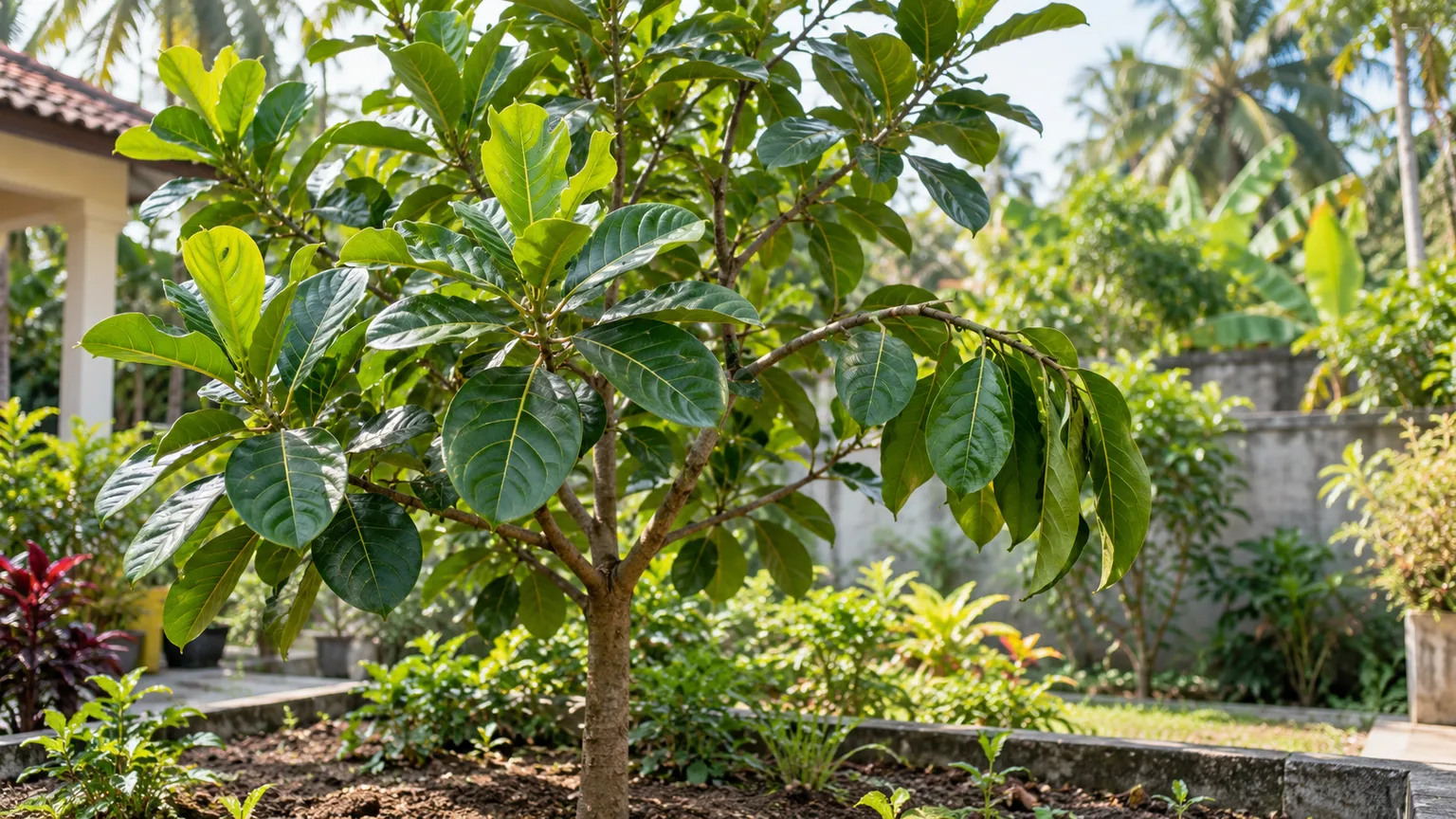
Drooping Leaves on Jackfruit: Causes, Checks & Fixes
This guide covers drooping leaves on Jackfruit. See also the general Drooping Leaves guide, watering, and light pages for this plant.
Drooping Leaves on Jackfruit: Causes, Checks & Fixes
Quick answer: check the roots before watering
Do one thing first: check moisture below the surface where Jackfruit roots are growing. A drooping canopy is not proof that the tree needs water. If the root zone is dry and a container feels light, soak it thoroughly and let the surplus drain. If the ground or pot is still wet, adding water can worsen the more dangerous Jackfruit problem: flooded roots.
Jackfruit (Artocarpus heterophyllus) is a tropical evergreen tree, not a small foliage plant. Young trees and container-grown specimens have less root volume to buffer dry weather, while mature trees are moderately drought tolerant; irrigation matters during dry periods and from bloom through fruit development, as UF/IFAS advises. The species is intolerant of continuously wet soil, and UF/IFAS warns that Jackfruit trees may decline after 2–3 days of flooding. That makes a moisture check the safest first action for both a terrace pot and a garden tree. For general leaf-posture context, see the drooping-leaves overview; the checks below focus on Jackfruit-specific risks.
What drooping looks like on a Jackfruit tree
Mature Jackfruit leaves are glossy, dark green, oval, and somewhat leathery; new shoots can carry more deeply lobed leaves. A drooping problem is a change in posture: leaves or petioles hang lower than their usual angle, often across several shoots, rather than simply having the lobed shape of young growth. UF/IFAS describes these distinct mature and juvenile leaf forms in its Jackfruit leaf profile.
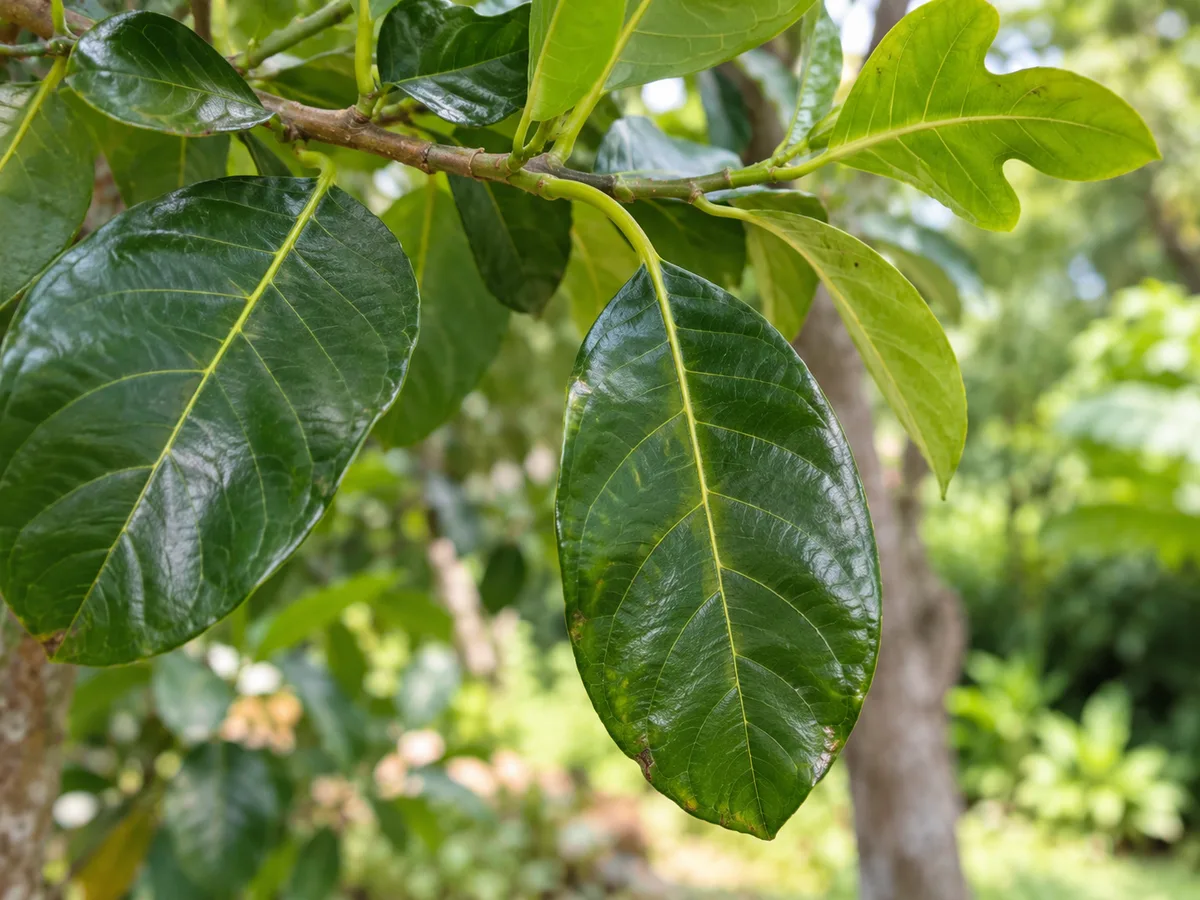
On Jackfruit, compare the affected leaves with nearby leaves of the same age; the key clue is a new downward change in posture, not the normal lobing of young shoots.
Droop may be limited to the newest flush, one exposed branch, or most of the canopy. Note which pattern you see before intervening. One branch can point to local root or stem trouble; a whole canopy change after a dry spell, heat, transplanting, or heavy rain suggests a broader stress. If the leaves also have sharply defined spots, chewing, webbing, or sticky insects, do not assume the posture change alone identifies the cause.
Why a Jackfruit canopy can droop
Dry root zone during establishment or fruiting
A newly planted Jackfruit and a tree growing in a large pot cannot draw on the same broad soil volume as an established landscape tree. During a hot, rainless spell, the root ball may dry even when the garden bed a short distance away feels damp. The canopy can then lose firmness, especially on a young plant that has not extended roots beyond its original nursery mix. UF/IFAS recommends regular watering for young trees in dry periods and irrigation for mature trees during dry periods, with water especially important from bloom through fruit development.
A dry-root explanation fits best when several clues line up: the mix is dry below the surface, the container feels noticeably lighter, recent weather has been hot and rain-free, and no part of the root zone is ponded. On a bearing tree, confirm that drip irrigation or rain has actually reached the soil beneath the canopy; a lawn sprinkler may wet the grass while missing the tree’s active root area. The Jackfruit watering guide explains how to adapt checks to containers, dry seasons, and fruiting trees.
Flooded soil and failing roots
Jackfruit’s known sensitivity to saturated ground is the species-level reason to take drainage seriously: UF/IFAS lists root-rot organisms including Pythium, Phytophthora, Fusarium, and Rhizoctonia as concerns especially when trees are flooded. That does not diagnose a pathogen from drooping alone; water history and root condition matter. Purdue’s Jackfruit account similarly says the species cannot tolerate “wet feet”. TNAU recommends deep, well-drained soil for Jack cultivation.
Waterlogged roots can lose oxygen, die, and fail to supply water normally to the canopy; slow growth and yellowing may accompany overwatering. A dry surface can also hide wetter soil below, as the Missouri Botanical Garden explains in its overwatering guide. On Jackfruit, combine those general clues with the species’ specific flood sensitivity: if the pot is heavy, the bed is still saturated, or runoff has been pooling around the trunk, do not answer drooping with another soak.
A sour odor, soft dark roots at a container’s drainage holes, yellowing leaves, stalled new growth, or branch dieback increases concern for root injury. These are general root-rot clues, not a Jackfruit-specific pathogen diagnosis. A trusted root-rot guide for houseplants describes dark, mushy roots and sour odor as warning signs. Pulling a mature tree from the ground to look at roots can cause additional damage. For an established landscape tree, check drainage and irrigation history first; seek local extension advice if decline continues despite a drier, freely draining root zone.
Brief heat response versus persistent decline
A Jackfruit may look more limp during a hot afternoon than it does the following morning. The Missouri Botanical Garden notes that many plants wilt in hot sun and may recover later, which is why it recommends checking soil moisture before watering. Treat that as a general possibility rather than a guarantee for Jackfruit: compare the tree at the same time on the next day and check the soil. If it firms up overnight and the root zone is neither dry nor saturated, avoid changing the watering routine based on one midday observation.
Persistent drooping at dawn, a droop spreading to several branches, or new yellowing or dieback deserves a closer root-zone check. Heat can increase water demand, but Jackfruit’s sensitivity to flooding means “it is hot” is not enough evidence to water a still-wet site. A thirsty seedling in a terrace pot and a flooded mature tree need opposite first corrections.
Cold, transplant, and root restriction are different clues
Jackfruit is adapted to warm tropical and near-tropical climates. UF/IFAS reports foliage may be damaged at temperatures near 0°C and branches at slightly colder temperatures. If drooping began after a cold night and is accompanied by darkened or damaged leaf tissue, do not diagnose simple thirst from posture alone; protect the plant from further cold and wait to see where living growth remains.
A recent planting, repotting, or root disturbance can also leave the canopy temporarily out of balance with the roots. Water according to the condition of the old root ball, not just the new surrounding soil, because those zones may dry at different rates. Jackfruit is particularly affected by root restriction: UF/IFAS says establish and grow poorly after planting out. A shallow, tightly root-bound container may make moisture swing quickly from wet to dry, but it does not justify watering by the calendar. Use the Jackfruit repotting guide when roots are clearly constricted or the container cannot drain.
Confirm the cause in five practical checks
- Separate pots from planted trees. For a container, check whether the pot is draining freely and compare its weight with a freshly watered pot. For an in-ground tree, inspect soil several centimetres down near the root zone, not just the dry surface or lawn.
- Check below the surface. Penn State Extension suggests feeling about two inches into container soil; it also notes containers dry faster than in-ground plantings. On Jackfruit, the useful decision is whether the root ball is genuinely dry, not whether the mulch or top crust looks pale.
- Reconstruct the last week. Record rainfall, irrigation, heat, and any move or root disturbance. A fixed timer can keep an area wet through rainy weather; UF/IFAS specifically warns that lawn sprinkler timers can overwater Jackfruit when they apply too much water too often.
- Look at the whole plant and the newest flush. Droop across the canopy after a dry spell differs from one branch declining while the rest remains firm. Check for yellowing, leaf spots, pest evidence, darkened cold-damaged tissue, broken limbs, or a wound near the trunk.
- Inspect accessible roots only when justified. On a manageable container plant with persistent decline in wet mix, slide the root ball partly out without tearing it. Firm, pale roots are different from soft, dark, foul-smelling roots. Do not excavate a large landscape Jackfruit just to confirm a hunch.
If those checks do not agree, pause before treating. One observation such as a dry top layer, a dropped old leaf, or a hot day is not enough to choose between more water and less water.
First fix: follow the evidence from the root zone
If a container Jackfruit is dry and light
Water slowly across the whole root surface until water exits the drainage holes. Let it drain completely, empty any saucer, and record how long the pot takes to become light again. Do not give repeated small sips; the goal is to wet the actual root ball rather than just the top layer. If water runs straight down the sides while the middle of the mix remains dry, re-wet gradually and check whether the medium has become difficult to absorb water.
After the soak, wait for the upper few centimetres to dry before watering again. Penn State’s finger check is a useful starting point for a container, but adjust the interval to the deep pot, weather, and Jackfruit’s growth. A young tree in a sun-exposed pot may need more frequent checks than a mature tree in ground; neither should be placed on an automatic daily schedule without observing drainage.
If the ground or pot is saturated
Pause irrigation and remove the source of repeated water first: turn off a timed sprinkler zone, clear a blocked drain, raise a container so its holes are open, or redirect runoff that collects around the trunk. Do not fertilize or prune heavily while the root system is struggling. Jackfruit needs free drainage, and a wet root zone is not fixed by adding more soil on top or by poking random holes near the trunk.
If a container’s mix stays soggy for days, check whether the drainage holes are open and whether the medium has compacted. Once the plant is stable, the Jackfruit soil guide can help you choose a deeper, freer-draining medium. A large landscape tree in a low basin may need a raised planting site or professional drainage work; changing the soil at the trunk alone will not correct a high water table.
If neither dry nor wet soil explains the droop
Hold the watering routine steady for a short observation period while you check for recent cold exposure, root disturbance, a damaged branch, or pests. Avoid stacking a repot, hard prune, fertilizer, and new watering schedule on the same day. If the tree keeps declining or the trunk base becomes soft, contact a local agricultural extension office or experienced fruit-tree specialist with photos, weather and irrigation notes, and a description of the soil below the surface.
Recovery: watch new growth, not old leaves alone
A leaf that wilted from a short dry spell may regain some firmness after the root ball is rehydrated, provided the roots were not badly damaged. A leaf with bruised, scorched, frozen, or decaying tissue may remain misshapen or drop even after conditions improve. Do not judge recovery by demanding that every old leaf look perfect again.
Instead, compare the tree over several observations: is drooping limited or spreading, does the soil now drain, has yellowing stopped, and does the next flush hold its normal posture? There is no reliable Jackfruit-specific timetable for every pot, soil, and climate, so avoid promising a fixed number of hours or days. If the canopy worsens while the ground remains wet, prioritize root survival and local diagnosis over a quick cosmetic fix.
Prevent the next episode on this tropical fruit tree
- Choose a site that drains after heavy rain. UF/IFAS advises selecting a landscape site that does not flood or remain wet after typical summer rainfall. In a low, waterlogged garden, a raised mound and clear runoff paths are safer than a basin around the trunk.
- Use deep, open containers. Jackfruit develops a stronger root system in deep pots and suffers from root restriction. Keep drainage holes unobstructed, raise containers on feet, and avoid shallow decorative cachepots that hold runoff.
- Irrigate by stage and weather. Newly planted trees need regular water in dry periods while they establish; mature trees can tolerate some drought but need water during dry spells and from bloom through fruit development. Scale back when rain has already saturated the soil.
- Keep mulch helpful, not smothering. A mulch layer can reduce moisture loss, but leave a visible gap around the trunk and check the soil underneath before turning a hose on. Wet mulch can hide waterlogging at the surface.
- Give a container tree enough sun without letting it dry unnoticed. Jackfruit is planted in full sun for best growth and production. Full sun and heat change how fast a pot dries; use the Jackfruit light guide to assess placement, then adjust inspection frequency rather than moving the tree into a dim room whenever leaves droop.
- Protect roots during planting and repotting. Root-bound trees establish poorly, but unnecessary disturbance also stresses a tree. Keep the root ball intact where possible and use the repotting guide when the pot is truly constricting roots or drainage has failed.
When to use this page vs other Jackfruit guides
Use this page when the visible issue is a new downward hang of Jackfruit leaves and you need to choose between dry roots, flooded roots, heat, cold, or recent root disturbance. The Jackfruit overview covers the tree’s climate fit and full-size landscape needs; the problems hub helps route you when leaf spots, pests, or yellowing are more prominent than drooping. For a routine watering schedule, use the Jackfruit watering guide. If water stands or the mix stays wet, go to the Jackfruit soil and drainage guide. Use Jackfruit fertilizer only when the tree has a separate nutrient reason to be fed, not as a response to drooping alone.
Related Jackfruit guides
- Jackfruit overview — climate, mature size, and care priorities for a tropical fruit tree.
- Jackfruit problems hub — route to pest, leaf, and growth issues when drooping is not the main symptom.
- Jackfruit watering — choose a moisture check and seasonal irrigation routine.
- Jackfruit soil — address persistent saturation or compacted container mix.
- Jackfruit light — understand how sun and heat affect a tree’s setting and container dry-down.
- Jackfruit repotting — use when a young tree’s roots are restricted or its pot no longer drains.
- Jackfruit fertilizer — use only for a diagnosed feeding need after root-zone stress is addressed.
Related tool
Use the Plant Problem Diagnosis Tool to compare likely causes of drooping leaves on Jackfruit before changing the tree’s watering or drainage routine.