Panda Plant Not Enough Light: Symptoms & Light Setup
Quick answer
Insufficient light on Panda Plant (Kalanchoe tomentosa) causes pale green foliage, loss of dark chocolate tooth margins, flattening downward-turned leaves, and dramatically slowed soil drying. Without adequate photons, transpiration stalls, leaving roots vulnerable to rot. First step: immediately relocate your Panda Plant to an east-facing window or within 12 inches of a full-spectrum LED grow light, acclimating gradually over 10 to 14 days to prevent leaf scorch.
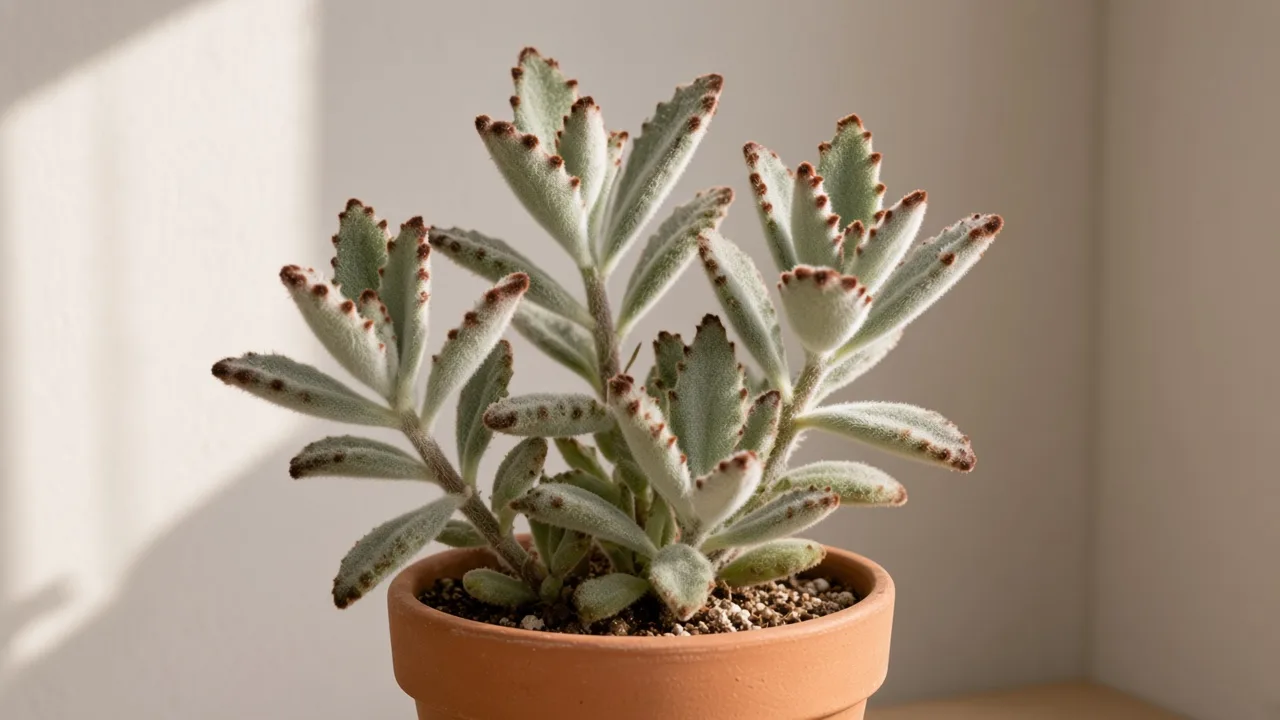
Not Enough Light on Panda Plant: Symptoms, Photometrics & Safe Relocation
This guide covers not enough light on Panda Plant. See also the general Not Enough Light guide, watering, and light pages for this plant.
Not Enough Light on Panda Plant: Symptoms, Photometrics & Safe Relocation
Quick answer
A Panda Plant (Kalanchoe tomentosa) kept in insufficient light exhibits rapid physiological decline: its velvety foliage turns pale, the celebrated chocolate-brown tooth margins fade to dull green, leaf pairs stretch apart, and the potting medium remains damp for weeks. Native to the sun-baked granite outcrops of central Madagascar, this succulent evolved to thrive under intense solar irradiance. For universal botanical lighting principles and room-by-room light audits, consult our comprehensive not enough light guide.
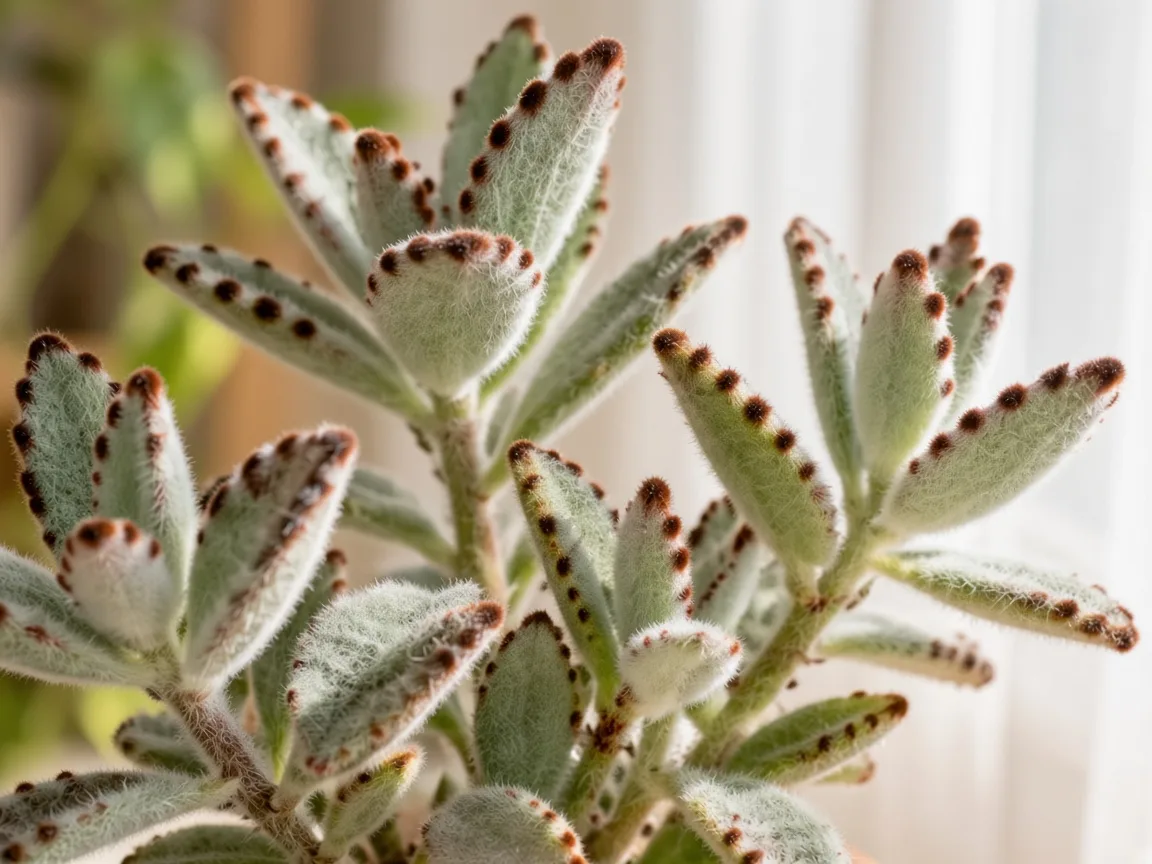
Pale, flattened Panda Plant leaves with washed-out chocolate margins from chronic low light. Your first fix is strategic relocation: move the container to a bright south- or east-facing windowsill receiving at least 4 to 6 hours of filtered sun, or position the plant 8 to 12 inches beneath a full-spectrum LED grow light. Do not move a shade-weakened plant into scorching afternoon sun on day one; acclimate it gradually over 10 to 14 days to prevent ultraviolet leaf scorch.
How low light impacts Panda Plant physiology
When Kalanchoe tomentosa is deprived of sufficient photons, multiple physiological systems break down simultaneously:
1. Anthocyanin shutdown and margin fading
According to research summarized by NC State Extension, the dark chocolate, cinnamon, and rusty-red teeth adorning the leaf edges are protective pigment concentrations (primarily anthocyanins) manufactured in response to ultraviolet and high visible light. In dim environments, anthocyanin production shuts down completely. The dark accents fade to washed-out tan, yellow, or pale green, robbing the plant of its signature cultivar traits.
2. Foliar epinasty and downward curling
Under normal lighting, Panda Plant leaves hold a stiff, upward-angled posture (45 to 60 degrees from the stem). In low light, the succulent initiates downward curling (epinasty), causing the fleshy leaves to flatten horizontally or recurve downward like an inverted bowl. This anatomical adjustment aims to maximize the surface area exposed to ceiling ambient light.
3. Transpiration stall and soil saturation trap
Photosynthesis drives water uptake through stomatal regulation. In dim rooms, Crassulacean Acid Metabolism (CAM) slows dramatically, and the plant consumes virtually no soil water. Even if you only water once a month, the soil stays damp for 20+ days, setting off opportunistic fungus gnats, surface mold on soil, and ultimately terminal root rot.
4. Etiolation and stem weakening
If light remains deficient, the plant accelerates vertical elongation, developing leggy growth characterized by wide, spindly internodes that eventually collapse under the weight of the succulent head.
Diagnosing light deficiency vs. other care stresses
| Symptom Pattern | Low Light Stress | Overwatering Stress | Underwatering Stress |
|---|---|---|---|
| Foliage Color | Faded pale green; loss of chocolate teeth | Yellowing, translucent, water-soaked lower leaves | Matte, dull grayish-green; shriveled |
| Leaf Posture | Flattened or curling downward like umbrellas | Drooping limply; leaves detach at a gentle touch | Wrinkled, deflated, soft, curled inward |
| Stem Condition | Stretching tall, thin, and spaced out | Soft, squishy, or black at the soil line | Firm, woody, dry, but upright |
| Soil Dry-Down Rate | Takes 3 to 4+ weeks to dry out completely | Soggy, heavy, stagnant, often smelling sour | Bone-dry, dusty, pulling away from pot rim |
| Root Health | Intact but dormant; white to light tan | Black, slimy, hollow, foul-smelling | Dry, brittle, papery, but rot-free |
Step-by-step light optimization and safe acclimation
Restore vibrant coloration and compact growth without shocking delicate felted foliage:
Step 1: Measure current light intensity
Clemson Cooperative Extension notes that succulents require minimum light levels between 800 and 1,500 foot-candles (roughly 8,600 to 16,000 lux) for healthy vegetative maintenance. Use a smartphone light meter app or dedicated lux meter held right at the plant’s canopy:
- Under 200 foot-candles: Extreme deficiency. Stems stretch and rot risk is severe.
- 200 to 500 foot-candles: Marginal maintenance. Foliage survives but fades to pale green without new growth.
- 800 to 1,500+ foot-candles: Optimal zone. Dense silvery velvet, tight internodes, and dark chocolate margins.
Step 2: Progressive window acclimation (10 to 14 days)
Moving a shade-grown succulent abruptly to blistering direct sun causes photo-oxidative sunburn—bleaching the velvety hair and scarring the succulent cuticle.
- Days 1–3: Move to bright indirect light 3 feet away from an east- or south-facing window.
- Days 4–7: Move onto the windowsill receiving 1 to 2 hours of gentle morning sun.
- Days 8–14: Move into the primary sunny position receiving 4 to 6 hours of direct filtered sunlight daily.
Step 3: Grow light supplemental setup
If natural sunlight is blocked by buildings, trees, or winter weather, University of Georgia Extension recommends artificial grow lights:
- Fixture type: Full-spectrum white LED grow light (5,000K to 6,500K color temperature).
- Distance: Position the light bulb 8 to 12 inches directly above the top rosette.
- Photoperiod: Run the fixture on an automatic timer for 12 to 14 hours daily. The steady supply of photons will immediately stimulate anthocyanin synthesis, restoring deep chocolate spots to newly emerging leaf tips.
Care adjustments during the recovery phase
- Drastically reduce watering until light is restored: While light is low, withhold irrigation until the pot is feather-light and the skewer test confirms complete dryness. Follow our Panda Plant watering guide.
- Withhold all fertilizer: Do not feed a light-deprived plant. High nitrogen forces weak, cellular elongation that the plant cannot structurally support.
- Rotate the container: Turn the pot 90 degrees every week to prevent one-sided leaning toward the window.
Related tool
Use our Light Requirement Calculator to calculate the exact foot-candles, daily light integral (DLI), and window placement needed to keep your Panda Plant’s chocolate margins crisp and dark.
Related Panda Plant guides
- Panda Plant overview — comprehensive natural profile and species care requirements
- Light guide — detailed foot-candle targets, seasonal window shifts, and grow light specs
- Watering guide — soak-and-dry irrigation practices to prevent root asphyxiation
- Soil guide — fast-draining gritty mineral recipes to complement high light
- All Panda Plant problems — full diagnostic troubleshooting index