Aphids on Philodendron Florida Beauty: Causes, Checks &
Quick answer
Aphids on Philodendron Florida Beauty cluster on the newest unfurling spear, fresh petioles, and leaf undersides, leaving sticky honeydew and curled new lobes. First step: isolate the vine, then rinse the affected shoot with a gentle stream of water while supporting the stem. Recheck the same tip every few days for two weeks; distorted leaves stay marked, so judge recovery by clean new spears.
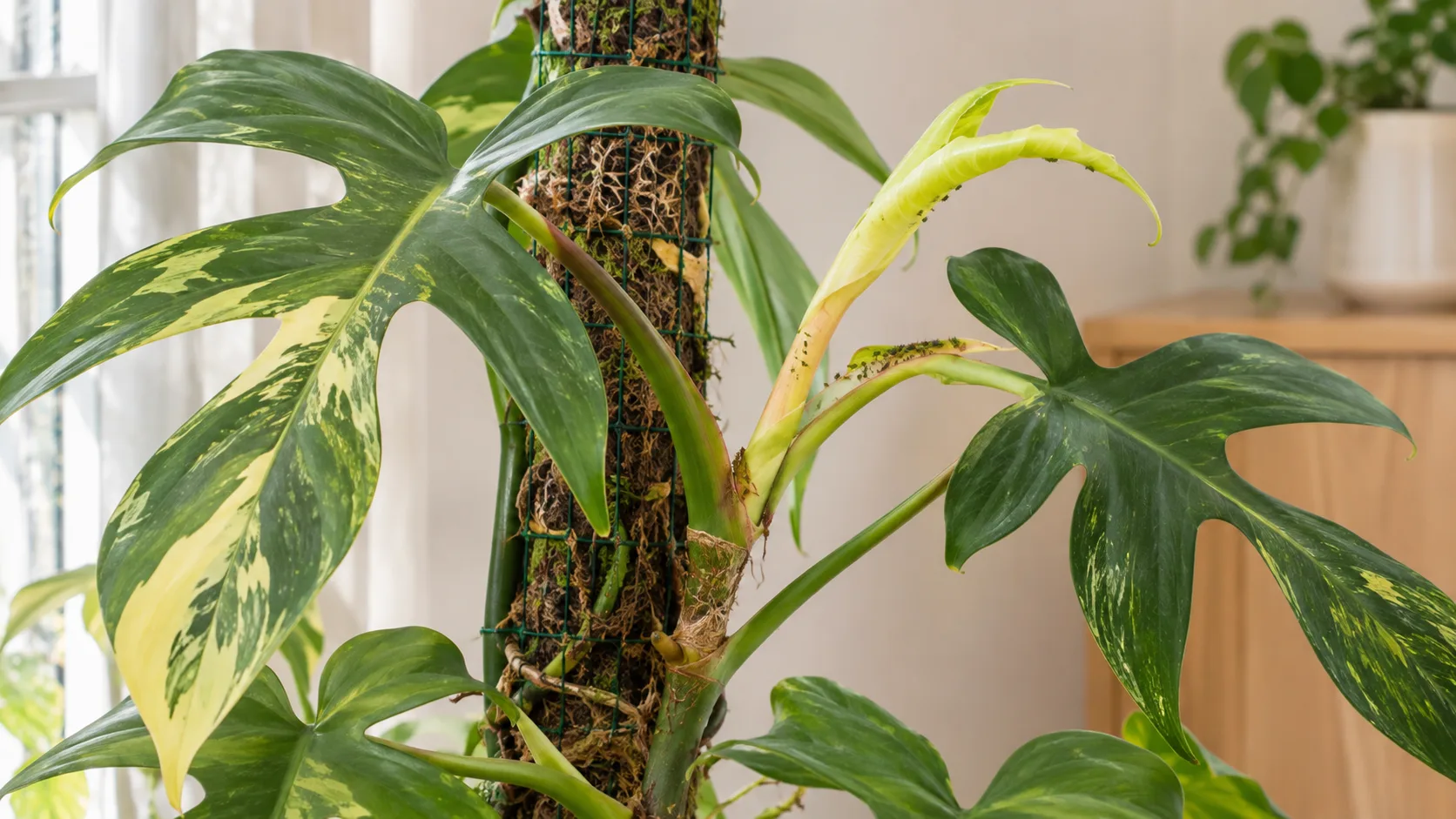
Aphids on Philodendron Florida Beauty: Causes, Checks & Fixes
This guide covers aphids on Philodendron Florida Beauty. See also the general Aphids guide, watering, and light pages for this plant.
Aphids on Philodendron Florida Beauty: Causes, Checks & Fixes
Related philodendron-florida-beauty problems:
Quick answer
If you find live aphids on Philodendron Florida Beauty, move the pot away from nearby plants, then rinse the affected shoot with a gentle stream of water. Aphids gather on the softest tissue available: the pale unfurling spear, the petiole of a young leaf, and the underside of lobes that have not yet hardened. Confirm insects before changing care, because a slow-to-open spear alone is not a pest diagnosis. The Florida Beauty overview explains the hybrid’s climbing growth and variegated leaves, which shape where colonies hide and how gently to handle a new spear.
The rinse is the first treatment. Support the stem with one hand so the new spear cannot kink, direct water across the colony from tip toward node, and shield the pot so the chunky aroid mix is not flooded. A leaf that already hardened with a curl or scar will keep it; clean new spears and no returning insects over the next two weeks are the real signs of recovery.
What aphids look like on Florida Beauty
On this vine, the first clue is usually a tight group of insects on the newest growth rather than scattered specks across mature leaves. Aphids are small, soft-bodied insects with a pear-like shape, sometimes green, yellow, red, brown, or black, with visible legs, long antennae, and a pair of tube-like cornicles at the rear. Look for several clustered together on a pale spear, not one isolated dot.
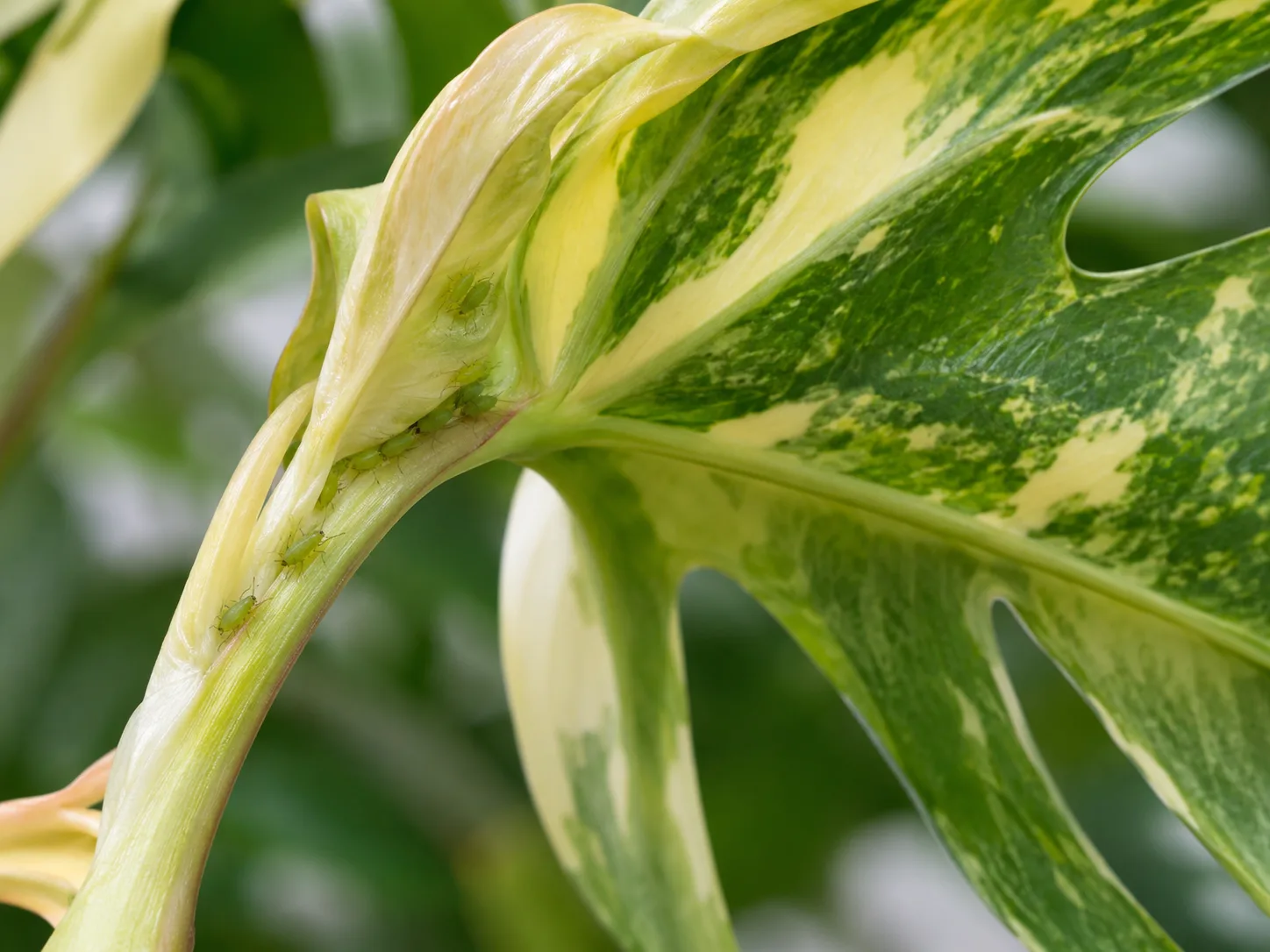
Aphids cluster on the softest new growth, where feeding can leave fresh leaves curled or distorted.
For general aphid biology and lookalike guidance beyond this plant, see our aphids guide. On Florida Beauty, the practical pattern is colonies tucked into the furled spear, along fresh red petioles, and beneath young lobes, with sticky residue on the leaf below and extra caution because cream-variegated tissue scorches easily when sprayed or sunlit while wet.
Why new spears and petioles are the inspection target
Aphids feed on plant fluids through piercing-sucking mouthparts, and tender expanding tissue is far easier for them to tap than a hardened mature lobe. They colonise shoot tips, flower buds, and the underside of younger leaves, which on Florida Beauty means the emerging spear, the soft petiole, and the node where the leaf joins the climbing stem. Feeding there can leave the new leaf stunted, curled, or unevenly lobed as it opens.
Do not assume the variegation itself attracts aphids. The cream sectors matter to your treatment choices, not as proof of preference: pale tissue burns faster under oils, soaps, and direct sun on a wet leaf. The vine habit matters to inspection. Stems trained up a moss pole hide rear-facing joints, ties, and the back of each petiole, so turn the support and look behind every fastening rather than wiping only the broad visible leaf fronts.
How to confirm aphids before treating
Inspect in this order, with a phone light or hand lens:
- Look along the unfurling spear and both sides of the youngest partly open leaf. Aphids gather where soft tissue meets the stem.
- Follow the petiole down to the node and check the leaf underside, especially the sinuses between lobes where insects shelter.
- Check the next older leaf below for tacky honeydew or dark sooty-looking residue. Honeydew is a sticky, sugar-rich excretion that supports black sooty mold, and a fresh sticky patch beneath a live colony is strong supporting evidence.
- Inspect the next vine tip and nearby plants. Winged aphids move between plants indoors, so one clear colony justifies a quick check of its neighbors.
When insects are hard to see, hold a white card under the tip and tap the stem lightly. Dislodged insects on the card are easier to inspect than a dark fold. If the plant stood near other houseplants, isolate affected plants from the rest of the collection while you monitor. Do not pull the plant out of its pot to confirm aphids; unpot only for a separate root warning such as persistently soggy mix or a sour smell.
First fix: isolate, then rinse the affected shoot
Take the pot to a sink or shower, tilt it so water runs off the foliage rather than into the mix, and hold the stem so it cannot twist. Direct a steady, gentle stream across the insects on the spear, petiole, and leaf undersides, working from the tip toward the node. If only a few aphids are visible in a tight furled spear, wipe them with a damp cotton swab instead of blasting delicate tissue apart. Manual removal and rinsing with water are the standard first responses for indoor aphid colonies, and on this plant that general method needs one adaptation: keep pressure low on the spear and never flood the chunky mix, which should still dry down between waterings.
After rinsing, let the leaves drain in a warm room in bright filtered light without harsh midday sun. Empty the saucer or cachepot, and blot water that pools in a tight leaf fold with a clean towel. Do not fertilize, repot, prune healthy growth, and apply a pesticide on the same day. One targeted change lets you read whether the insects are actually gone.
Check the same tips for two weeks
One rinse removes the aphids you can see, not necessarily every hidden nymph. Indoor colonies favor soft new growth and spread by crawling or winged forms, so a Florida Beauty pushing a fresh spear can host a second wave within days. Check the same growing tip every few days for two weeks, plus the next leaf down. If you find live aphids, rinse or swab again. If you see only old honeydew or an already misshapen lobe, wash the residue and look for fresh insects before treating again.
Record what you see: the date of each live colony, whether it sat on a new or mature leaf, and whether the next check finds fewer insects. Honeydew can linger after the insects are gone, and old distortion persists after feeding stops, so the success measure is no live aphids on repeat checks and no newly distorted spears.
When to use insecticidal soap or another labeled product
If aphids return despite careful rinsing and hand removal, a product labeled for aphids on indoor ornamental plants is the next step. Insecticidal soap must contact the insects directly, so a light mist across the tops of lobed leaves can miss a colony tucked under a petiole or inside a furled spear; UC IPM describes soap products as contact treatments. Follow the label for plant, location, dilution, coverage, and repeat interval, and never assume a homemade dish-soap mixture is equivalent to a labeled product.
Because Florida Beauty carries cream sectors that mark easily, test the labeled product on a small area of one mature leaf first and wait the label’s stated interval; injury can take a day or two to appear. Keep the plant out of direct sun while wet, and skip treatment on a wilted or drought-stressed vine unless the label permits it. If no suitable labeled product is available, continue physical removal or ask a local extension service for options in your region.
Separate aphids from common lookalikes
| What you notice | More consistent with | What to inspect next |
|---|---|---|
| Group of small soft insects on a pale spear; sticky residue on the leaf below | Aphids | Shoot tip, petiole joints, underside of the newest lobe |
| Cottony white wax in a node or leaf axil with sticky residue | Mealybugs | Sheltered joints; waxy insects individually |
| Fixed shell-like bump on a stem or petiole that stays put when nudged | Scale | Stems and petioles; scrape one bump to check |
| Fine pale stippling across older leaves with very fine webbing | Spider mites | Leaf undersides with a light; tiny moving specks |
| Silvery scrape with a slender fast-moving insect | Thrips | Fresh surface scarring on young leaves |
| New spear still furled with no insects or fresh residue | Normal unfurling | Give it time to open, then compare with the next spear |
The aphid row fits best when a visible cluster and fresh honeydew occur together. White cast skins clinging near a colony also support the diagnosis; they are molted shells, not a second pest.
What damaged leaves can and cannot recover
Once an aphid-fed lobe has hardened with a crease, curled edge, or uneven variegation, it keeps that mark. The plant does not rebuild that leaf surface after the insects are removed. A partly opened spear may still finish opening once the colony is gone, but heavy feeding can leave it smaller or distorted. Leave green supporting leaves in place even if imperfect; cutting them only removes energy the vine needs for the next spear.
Judge recovery from the next growth point: a tip that stays insect-free, a spear that unfurls flat with clean cream-green patterning, and no fresh honeydew below it. If the vine is not actively growing, repeated pest checks are the main signal. Escalate if aphids cover multiple nodes, new spears repeatedly fail to open, or leaves keep dropping after visible insects are gone; recheck for mites, mealybugs, or a separate root problem before applying stronger treatment.
Keep Florida Beauty care steady while it recovers
Aphids are an insect problem, not a request to water more. This hybrid wants the top 3–5 cm of its chunky aroid mix to dry before watering; a curled spear does not justify changing that rhythm without checking the pot. Use the Florida Beauty watering guide to keep that dry-down routine steady. Keep the vine in bright filtered light so new spears stay readable, since dim light pushes greener leaves and longer internodes; the light guide explains how to protect cream sectors from scorch. Check the soil guide if the mix stays wet long after watering, but do not swing the plant between dark corners and harsh sun while it recovers.
Do not feed extra fertilizer to force a replacement leaf, and do not repot solely because aphids were present; the insects live above the soil line. Hold feeding until new growth looks clean, and repot only for a separate soil or root problem such as failed drainage.
How to prevent aphids next time
Inspect every new plant before it joins the collection: newest spear, leaf undersides, petiole joints, and stem nodes, then keep it apart for about two weeks while you watch a fresh flush of growth. During routine care, use the same quick path each time: spear first, then petiole and node, then lower leaf surfaces, turning each leaf gently rather than pulling the vine off its pole. Leave room behind ties and supports so the stem stays visible.
Keep ordinary care consistent. Bright filtered light that protects cream sectors, a chunky draining mix, and a measured dry-down keep growth steady and make each new spear easy to read. Clean honeydew promptly so sooty residue does not linger, and discard removed material in a closed bag rather than leaving it beside the plant.
Related Philodendron Florida Beauty guides
Use this page when you can see live aphids or fresh honeydew. If you see cottony clusters instead, follow the mealybugs guide; for fine stippling or webbing without pear-shaped insects, use the spider mites guide. For general growth and support, start with the Florida Beauty overview.
Severity note: This issue is marked medium for Philodendron Florida Beauty — a triage clue, not a guarantee.
Related tool
Use the Pest Identifier Tool to narrow causes for aphids on this plant before changing multiple variables at once.