Bulb Plants: How to Choose, Plant, and Grow Them
Choose bulbs for your climate, soil, and space. Find planting, container, indoor-forcing, after-bloom, and storage advice in one practical guide.
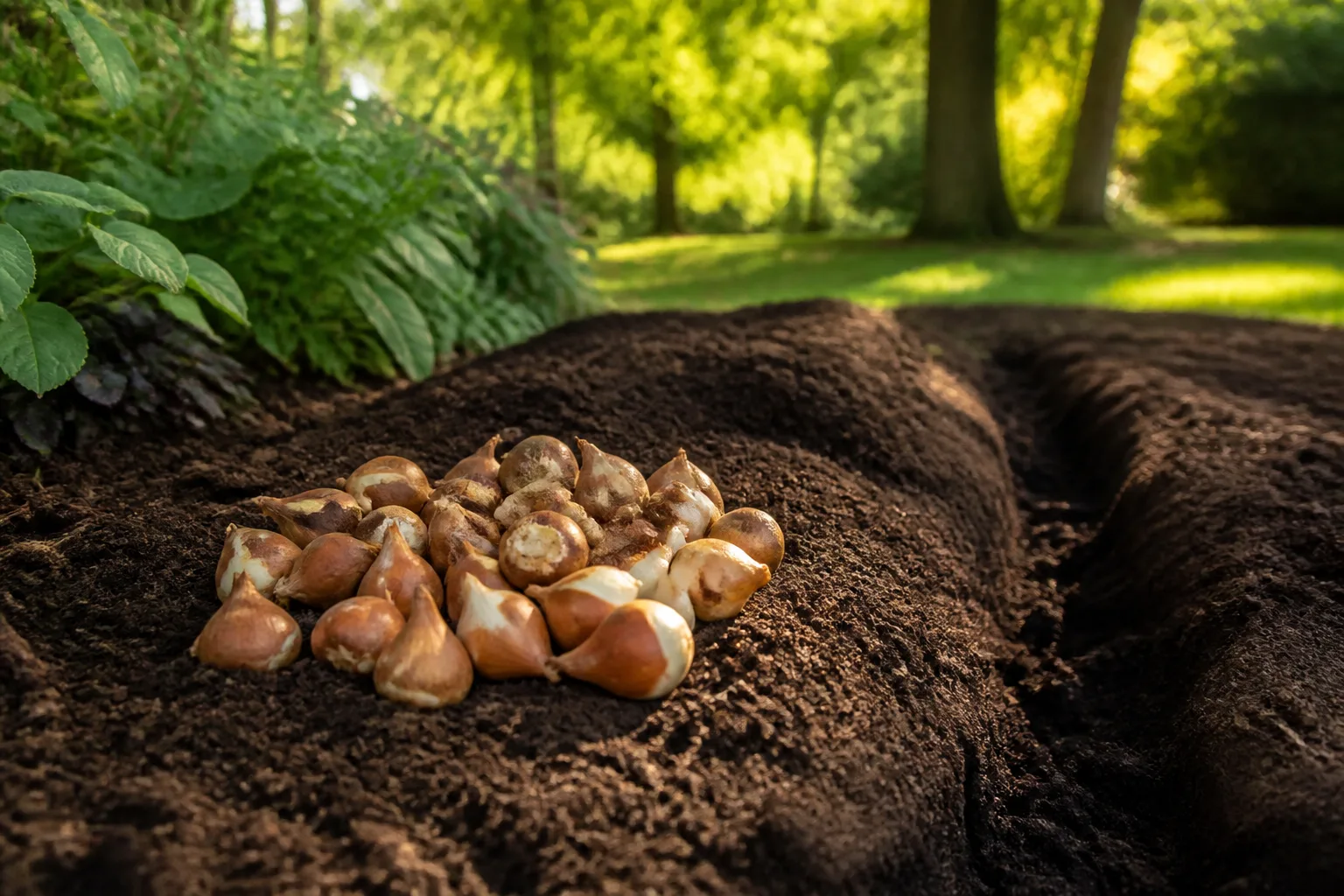
“Bulb” is one of gardening’s most useful shortcuts—and one of its least precise labels. A catalog may call tulips, crocuses, dahlias, gladioli, and irises “bulbs,” even though they store energy in different underground structures and do not all follow the same planting calendar. Knowing what you are buying helps you decide when to plant, how deeply to set it, and whether it can stay in the ground through winter.
The second key is timing by the plant’s growth cycle, not by a universal month. In much of North America, spring-flowering hardy bulbs go into the ground in fall, while frost-tender summer flowers are planted after winter has passed. The exact window shifts with species, climate, soil temperature, and local winter conditions. This guide gives you the framework; use the linked plant-specific guides and package directions for the final detail.
The simplest rule: identify the storage organ
Bulbs and similar organs are compact storage systems. They hold energy and buds below ground while a plant rests, then use those reserves to send up leaves and flowers when conditions suit it. Gardeners often use “bulb” for the whole group, but that shorthand can obscure important differences: a true bulb is made of layered or overlapping fleshy leaf bases, while a corm is a solid swollen stem, a rhizome grows sideways as a stem, and tubers store energy in swollen stems or roots.
The Royal Horticultural Society (RHS) uses “bulbs” broadly in general gardening advice, but its growing guide describes the major underground structures separately. That distinction matters because a true tulip bulb is planted point-up and can be treated by a broad bulb-depth rule; a dahlia’s tuberous root instead needs a visible growing point, frost-free planting, and often winter storage in cold regions. The photo below shows why naming the structure is more helpful than assuming every lumpy planting piece behaves alike.

Bulbs, corms, rhizomes, and tubers
True bulbs include tulips, daffodils, hyacinths, onions, and lilies. Many have a dry outer skin around fleshy scales; lilies are an example of a bulb without the papery tunic. Crocus and gladiolus are commonly called bulbs in everyday garden language, but they grow from corms. Bearded iris spreads by rhizomes, while dahlias grow from tuberous roots. The RHS bulb growing guide explains these forms and notes that gardeners often use “bulb” as an umbrella term.
For a quick buying decision, look at the plant name and the packet instructions rather than trying to infer care from the word “bulb” on a shelf label. If you want the anatomy in more depth, start with our guide to corms, bulbs, tubers, and rhizomes. The distinction is practical: it tells you whether to plant point-up, locate a tuber’s eye, set a rhizome near the surface, or lift a tender storage organ before hard frost.
Pick bulbs by the season you want
Work backward from bloom. Choose the flowering window and the site first, then select species that fit your climate and the amount of care you can offer. Spring bulbs are planted months before their display; summer bulbs are often planted after frost danger passes; some autumn-flowering types are planted in late summer. These are patterns, not fixed dates for every region.
| Goal | Typical planting window | Examples | Main check |
|---|---|---|---|
| Late-winter to spring flowers | Fall, while soil remains workable | Snowdrops, crocus, daffodils, tulips, hyacinths | Cold requirement and time before ground freezes |
| Summer flowers from hardy stock | Often fall or early spring, depending on species | Many lilies and alliums | Species label and local hardiness |
| Summer color from tender stock | Spring, after frost risk and cold soil have passed | Dahlias, cannas, many gladiolus | Frost-free planting and overwintering plan |
| Autumn flowers | Often late summer or early fall | Autumn crocus and some nerines | Planting date and drainage for that species |
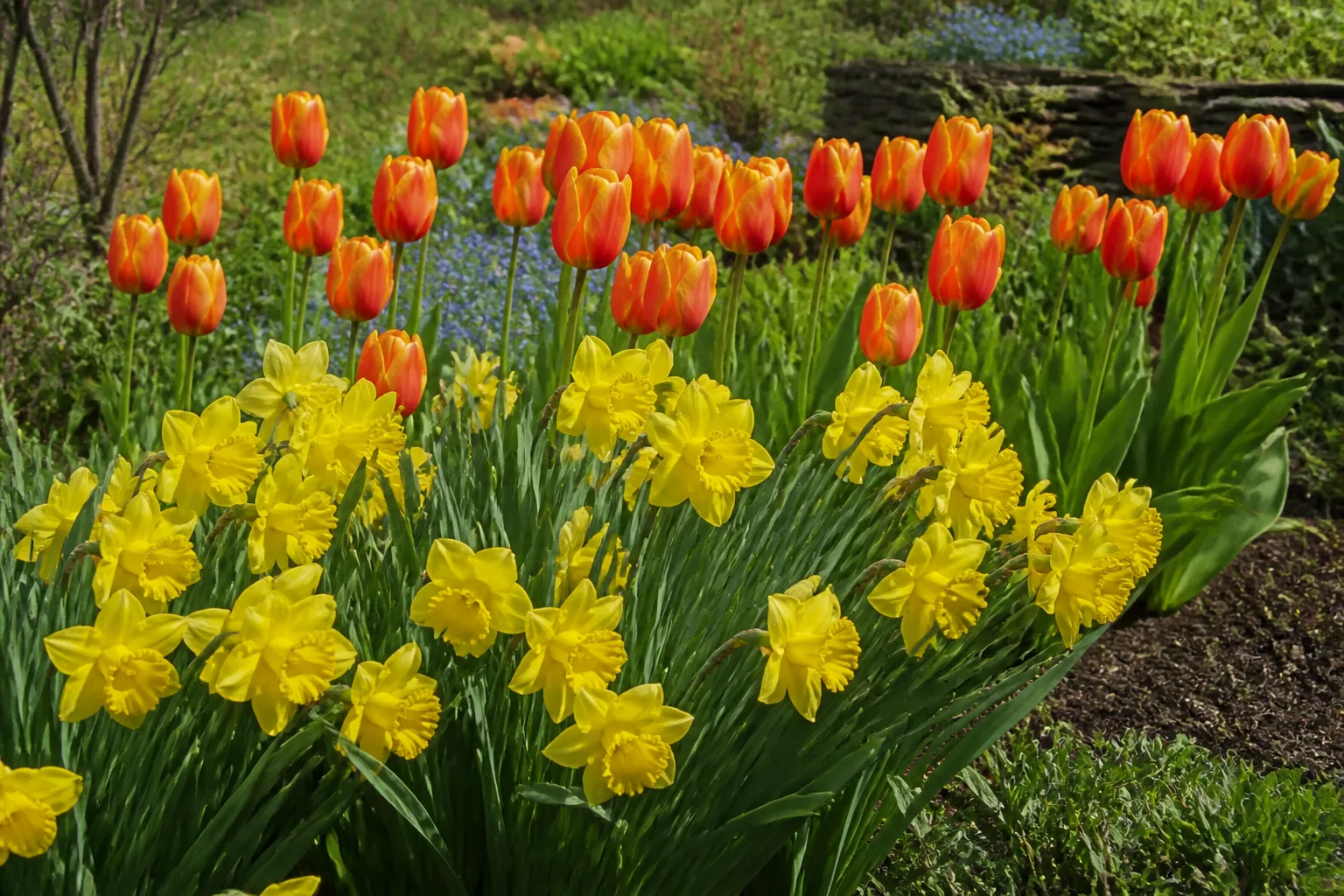
What to plant in fall
Fall is the main planting season for hardy spring-flowering bulbs such as tulips, daffodils, crocuses, and hyacinths. They need time to establish roots before winter, and many species need a period of cold conditions before they flower. The calendar varies widely: a gardener in a cold inland climate may plant earlier than someone near a mild coast, while warm-winter gardeners may need varieties suited to their conditions or a planned chilling period. The RHS autumn bulb planting guide likewise separates hardy spring and summer bulbs from tender summer bulbs, rather than assigning one month to everything.
Buy these bulbs near the planting window and store them briefly in a cool, dry, ventilated place if you cannot plant immediately. Do not leave them in sealed plastic or in a warm shed for weeks. Reject bulbs that are soft, wet, badly shriveled, or visibly moldy. A dry outer skin is normal on many species; a firm body and an intact base are better signs of health than a perfectly smooth appearance.
What to plant in spring
Spring is the usual planting time for tender summer performers that cannot tolerate frozen soil. Plant dahlias, cannas, and many gladiolus after your local last-frost risk has passed and the soil is warming; some regions may plant hardy summer bulbs in fall instead. Dahlias illustrate why the naming shortcut can mislead: they are planted from tuberous roots, and their shoots are vulnerable to frost. Better Homes & Gardens’ dahlia growing guide recommends waiting until frost danger has passed and soil has warmed for outdoor planting.
Spring planting is also useful when you missed fall, but it is not a universal replacement for autumn planting. A bulb that needs a winter chill may grow leaves without flowering if planted too late or grown in a climate that does not supply enough cold. If you find dormant spring-flowering bulbs on sale, check the species, whether the bulb has been chilled, and whether your local season leaves enough time for roots to establish. For an area-specific calendar, follow a local extension service or a nearby botanical garden’s timing rather than copying a date from a different climate.
Choose the site before ordering
Most garden bulbs perform best where they receive the light their leaves and flowers need and where water drains away. Many prefer full sun during active growth, but some spring bulbs bloom beneath deciduous trees before the canopy fills in, and certain species tolerate shade. Use the species’ mature height and seasonal foliage to place it: low crocuses look lost behind tall summer perennials, while a large dahlia can shade smaller plants if crowded into a narrow border.
Drainage is the more common make-or-break factor. Bulbs and other storage organs can rot when they sit in cold, saturated soil during dormancy. After a heavy rain, observe the bed: if puddles linger or the ground stays slick and oxygen-poor, choose another site, improve the bed’s structure, or use a raised bed or container. Do not try to solve persistent waterlogging by putting gravel only in the bottom of a small planting hole; water still has nowhere to leave the surrounding soil.
Think about the display as well as the plant. A group of the same variety usually reads more naturally than evenly spaced single bulbs, and overlapping early, middle, and late bloom times lengthens the show. Small bulbs can be tucked near a path or under deciduous trees; taller alliums and lilies deserve room to rise above neighboring foliage. Keep the position visible after flowering, because leaves must remain in place for a while.
Prepare soil for a long-lived planting
Loosen compacted ground before planting so roots can extend and rain can move through it. Mix in mature compost if the soil is poor in organic matter, but avoid turning a planting hole into a rich, water-holding pocket surrounded by dense clay. In heavy soil, improving a broader bed, choosing species adapted to those conditions, or planting in a raised area is more reliable than filling each hole with a different mix.
Do not add fertilizer by reflex. A soil test can tell you whether nutrients or pH need attention, and plant labels can provide species-specific feeding advice. Compost improves soil structure and biological activity; it is not a substitute for drainage. If a perennial bulb planting is already flowering well, aggressive feeding may add lush foliage without solving the actual cause of poor return, such as shade, premature mowing, crowding, or a species that is short-lived in your climate.
How to plant bulbs at the right depth
The familiar rule is to plant many true bulbs and corms at a depth around two to three times the bulb’s height, measuring from the bulb’s base to the soil surface. The RHS planting guide gives a three-times-height guideline for many true bulbs and corms, while stressing that different structures and plants have their own requirements. Treat the package or species guide as the final authority: some bulbs need to sit shallower, and rhizomes or tubers may be planted differently.
Set a true bulb with its pointed growing tip upward and its root plate down. If the shape is hard to read, plant it on its side; new growth can usually orient itself. Spread roots naturally rather than bending them sharply. Cover with soil, firm gently to remove large air gaps, water once to settle the planting if the soil is dry, and mark the location so you do not dig through dormant bulbs later.
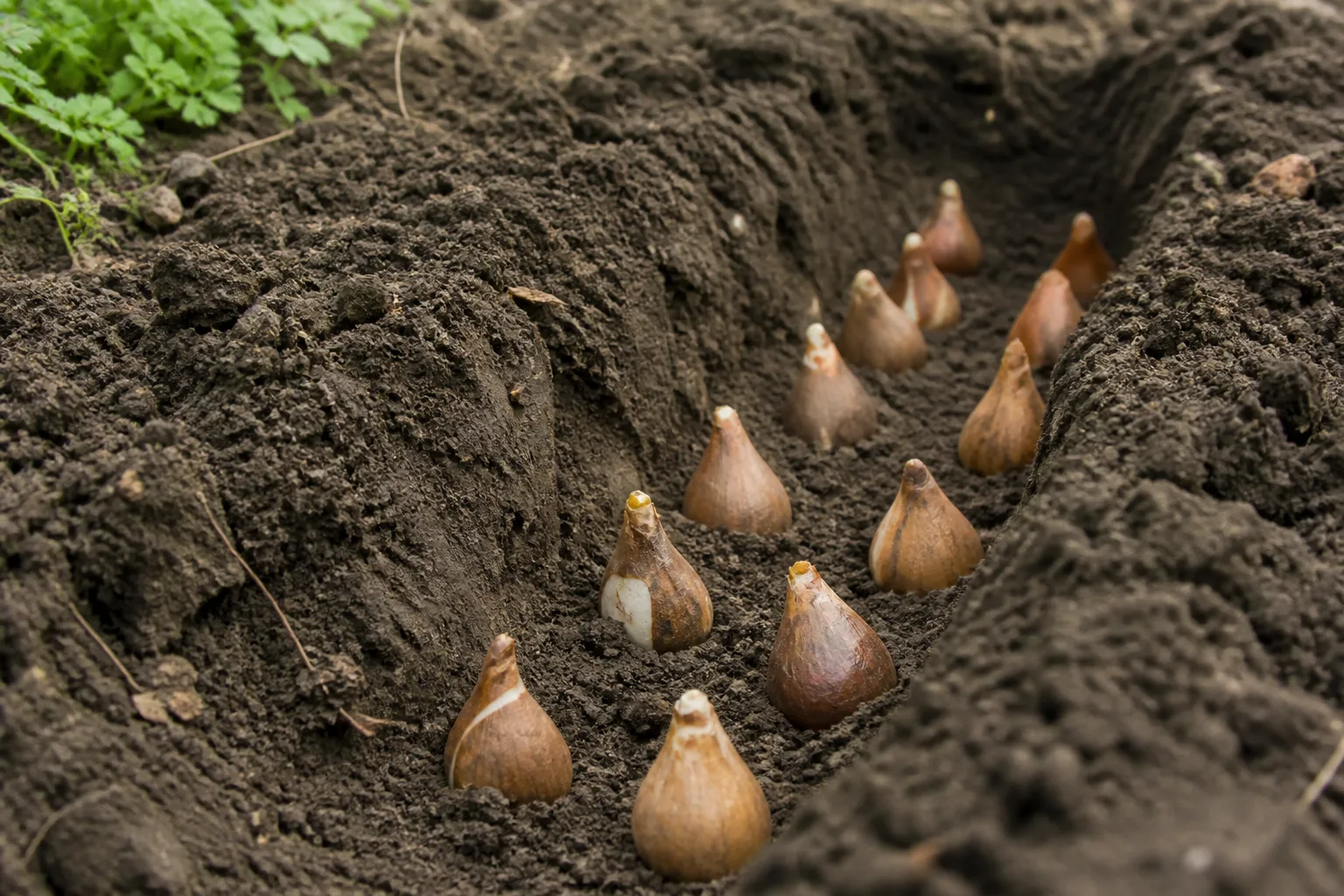
Avoid the urge to plant everything at the same depth just to simplify the bed. A shallow bulb may be exposed to temperature swings or dry out; one planted far too deep may use more energy reaching the surface or fail to flower. Spacing also affects the result. Follow the packet for a mature planting, or cluster bulbs closer for an intentionally dense display while keeping enough room for roots and offsets. For a complete step sequence, see how to plant bulbs.
Grow bulbs in containers and small spaces
Containers work well on balconies, patios, and anywhere garden soil drains poorly, but the pot must have open drainage holes. Use a free-draining potting mix rather than dense garden soil, and choose a container deep enough for the selected bulbs plus a protective layer of soil. The Flowerbulbs.com city-garden guide also emphasizes drainage and shows how containers can bring seasonal flowers into a small outdoor space.
Plant bulbs closer together in a pot than you would in a perennial border if you want a full first-year display, but do not crush them against one another or the container wall. A “lasagna” pot layers bulbs with different flowering times and planting depths: larger, later bulbs go lower; smaller, earlier bulbs sit above them, with soil between layers. Match species that share the same light and moisture needs, and check each package for the correct depth. Water after planting, then keep the pot moist but never continually saturated while roots establish.
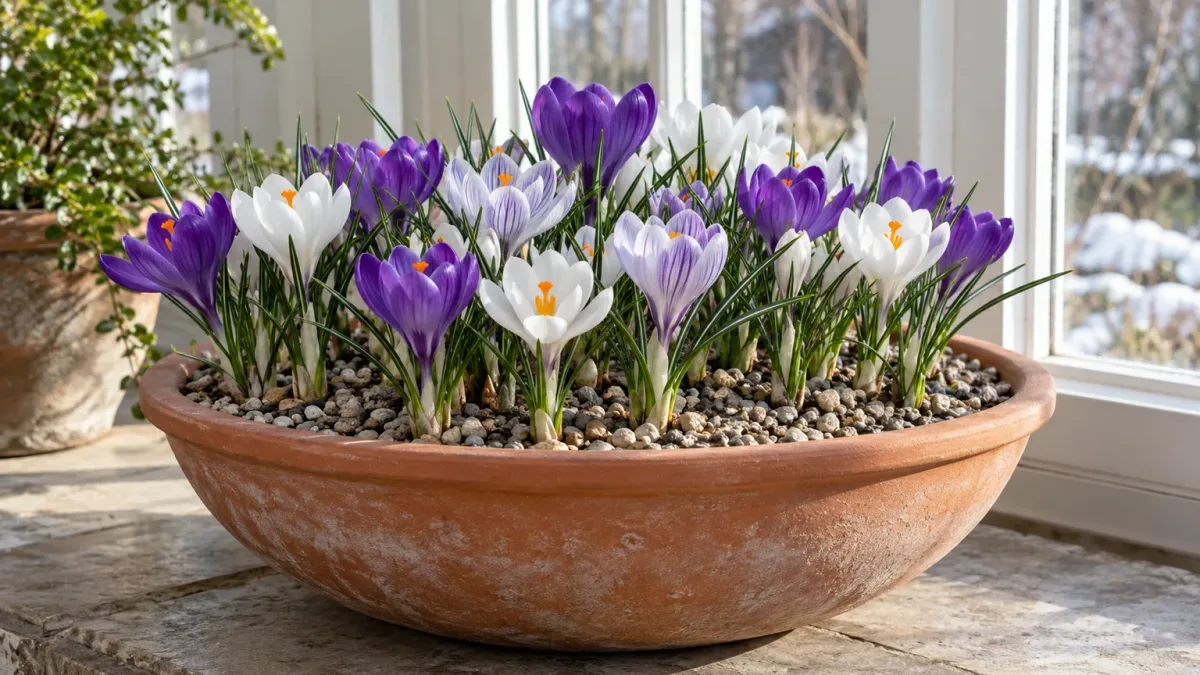
Winter is harder on bulbs in a pot than in the ground because the entire root ball is exposed to cold and freeze-thaw swings. Select hardy varieties rated for your climate, use a large frost-resistant pot, and move it to a sheltered unheated place or insulate it in severe winters. A balcony pot also dries faster than a garden bed in warm weather, so check moisture rather than following a rigid weekly schedule. Once leaves emerge, provide the light the particular species needs; a sheltered patio is not automatically bright enough.
Force bulbs indoors for winter color
Forcing means giving a bulb conditions that encourage it to flower indoors outside its normal garden season. Some spring-flowering bulbs can be forced, but not every species responds equally, and many require a sustained cold period before they will bloom. Start with bulbs sold or labeled for forcing, then follow species-specific instructions for chilling, pot depth, and the transition to a brighter, warmer room. Do not improvise by putting bulbs in a household freezer; freezing can damage the tissues.
Use a pot with drainage holes and a loose potting mix, water so the mix is evenly moist, and keep the planted bulbs in the recommended cool conditions while roots develop. After the chilling stage, move them gradually into bright, indirect light and cooler indoor temperatures if you want flowers to last longer. Warm rooms speed development and can produce weak stems or a short display. Paperwhites are a common exception because they can flower without the same cold treatment as many temperate spring bulbs. Our guide to forcing bulbs covers the process in more detail.
Care for bulbs after they bloom
When flowers fade, remove the spent flower head if you do not want the plant to set seed, but keep the leaves green. The foliage is rebuilding the stored energy that supports next year’s flowers. Do not braid, tie, or cut back leaves while they are still green, and do not mow a bulb lawn until the foliage has yellowed and begun to die back. The RHS daffodil guidance specifically advises allowing leaves to die down naturally; this is one of the most important habits for a planting that should return.
Keep watering during active growth and for several weeks after flowering if rain is scarce, then let dormant bulbs experience the drier conditions their species expects. A light mulch can moderate soil moisture and temperature, but a thick wet layer over bulbs in poorly drained soil can encourage rot. If you use a fertilizer, apply one suited to bulbs or follow a soil-test recommendation; do not pile concentrated fertilizer against the bulb itself. The RHS daffodil growing guide gives a species-level example of leaving foliage until it dies back naturally.
As the leaves fade, the bed may look messy. Interplant with later-emerging perennials, place bulbs behind plants that will fill in, or use pots that can be moved out of view as they go dormant. This is a design problem with a biological constraint: camouflage the leaves, but do not remove the leaves before they finish feeding the storage organ.
Naturalize bulbs or divide a crowded clump
To naturalize bulbs is to let them form a loose, self-renewing drift rather than a formal row. Choose plants that suit the site and can persist there, such as small crocuses in a lawn or suitable daffodils under deciduous trees. Scatter the bulbs first and plant them where they land for a relaxed pattern, or arrange them in sweeping clusters if you want more control. Avoid placing bulbs where you need to dig every year or where early mowing will cut the foliage before it dies back.
Bulbs that multiply may eventually produce fewer flowers if the clump is overcrowded. Other causes can look similar, so check the site before dividing: has shade increased, are leaves being cut too soon, is the soil wetter than it used to be, or is the cultivar not reliably perennial in your climate? If the clump is crowded and healthy, lift it after the foliage has yellowed, separate offsets gently, and replant them promptly at the depth and season that suit the species. Our bulb division guide explains how to reduce disturbance.
Lift and store tender bulbs
Some plants sold as summer bulbs are not hardy where winter ground freezes. Dahlias, cannas, and some gladiolus may need to be lifted and stored in cold regions, while gardeners in milder climates can sometimes leave particular plants in the ground. Do not assume that every summer-flowering bulb needs lifting or that every one can safely stay outside; use the plant’s hardiness and your winter drainage as the deciding factors.
For dahlias, wait until frost has blackened the foliage, cut the stems back, and lift the tuberous roots carefully so they are not cut or broken. Let them dry, remove loose soil, label the variety, and store them in a cool, frost-free place where they will not stay wet or shrivel completely. Inspect occasionally and remove any rotting material. BHG’s dahlia guide covers lifting and overwintering tender tubers; its advice is about dahlias and should not be transferred automatically to true bulbs such as tulips.
Storage details differ among plants. Some corms are lifted and cured; some hardy bulbs are best left undisturbed; some rhizomes are kept just below the surface in climates they tolerate. Keep the original labels with the plant material and look up that species before storing. If the storage area is damp, warm, or sealed, losses from rot or premature growth are more likely.
Diagnose common reasons bulbs fail
When a planting does not perform, compare what happened with the season and the plant’s life cycle before adding fertilizer or replanting everything. A bulb that has healthy leaves but no flower has a different problem from one that never emerges, and both differ from a storage organ that rotted in wet soil. Check the basics in this order: correct species and season, bulb condition at purchase, planting depth, drainage, light, foliage care after bloom, and local winter chill.
No flowers or weak returns
If leaves appear but flowers do not, the bulbs may be too young or small, planted too shallowly or deeply, shaded, crowded, or deprived of time to recharge after last year’s bloom. A warm-winter climate can also fail to provide the cold period some spring bulbs need. Let foliage die back naturally, and avoid repeated leaf-cutting or mowing. If the planting is in a mild region, choose cultivars adapted to low-chill conditions or follow a local source’s pre-chilling guidance instead of expecting every tulip or hyacinth to perennialize.
If nothing emerges, consider whether the bulbs dried out before planting, were damaged by freezing or rot, or were planted where they have been dug up by wildlife. Marking a bed helps distinguish a no-show from a dormant planting that simply has not emerged yet. Wait until the species’ normal emergence window has passed before disturbing it; then inspect one or two bulbs rather than turning over the entire bed.
Rot, drying, and animals
Soft or foul-smelling bulbs point toward rot, often associated with poor drainage or damaged planting stock. Improve the bed’s drainage and remove decayed pieces; replanting into the same waterlogged pocket repeats the problem. Shriveled stock may have dried during long or warm storage, so buy firm bulbs close to the right planting season and keep them ventilated until planting.
Squirrels and other animals may dig up freshly planted bulbs or eat them later. A firm physical barrier of mesh over the planting can protect bulbs without relying on a scent or folk remedy; remove or reposition it before shoots are trapped. Daffodils and some other species are less attractive to certain pests than tulips, but no species is guaranteed pest-proof. Adapt protection to the animal and the garden, and avoid poison or pesticide use unless the product is labeled for that situation and is safe to use around people, pets, and wildlife.
A simple first-year plan for reliable color
For a manageable first bed, pick one sunny-to-partly-sunny, well-drained site and choose two or three varieties with different bloom times. Buy firm bulbs shortly before the season when they should be planted. Read the package for depth, spacing, chill requirements, and hardiness; add compost to improve poor soil, not to compensate for standing water.
Plant a grouped drift rather than a straight row, water once if the soil is dry, and label the area. In spring, remove spent flowers if desired but leave the leaves intact until they yellow. Record when each variety flowers and whether it returns the next year. That simple log turns next season’s choices into informed adjustments: move a shaded cluster, divide only when needed, or replace a cultivar that does not fit the local winter.
Use this hub to decide what kind of storage organ you have and what its seasonal needs are. Then follow the focused guides for fall bulb planting, bulbs to plant in August, planting tulips, or daffodil care when you are ready to plan a particular display.
Conclusion
Successful bulb gardening starts with three checks: identify the plant’s underground storage organ, choose a planting window that matches its flowering season and your climate, and give it soil that drains. After bloom, keep green foliage until it yellows; for tender plants, decide before winter whether they can stay in the ground or need to be lifted. Those few choices prevent many of the most common failures and make it easier to build a display that flowers in sequence rather than all at once.



