Houseplant Flowers Turning Brown: Causes and Fixes
Tell aging from ethylene and mould when houseplant flowers turn brown, then deadhead and protect the next flush.
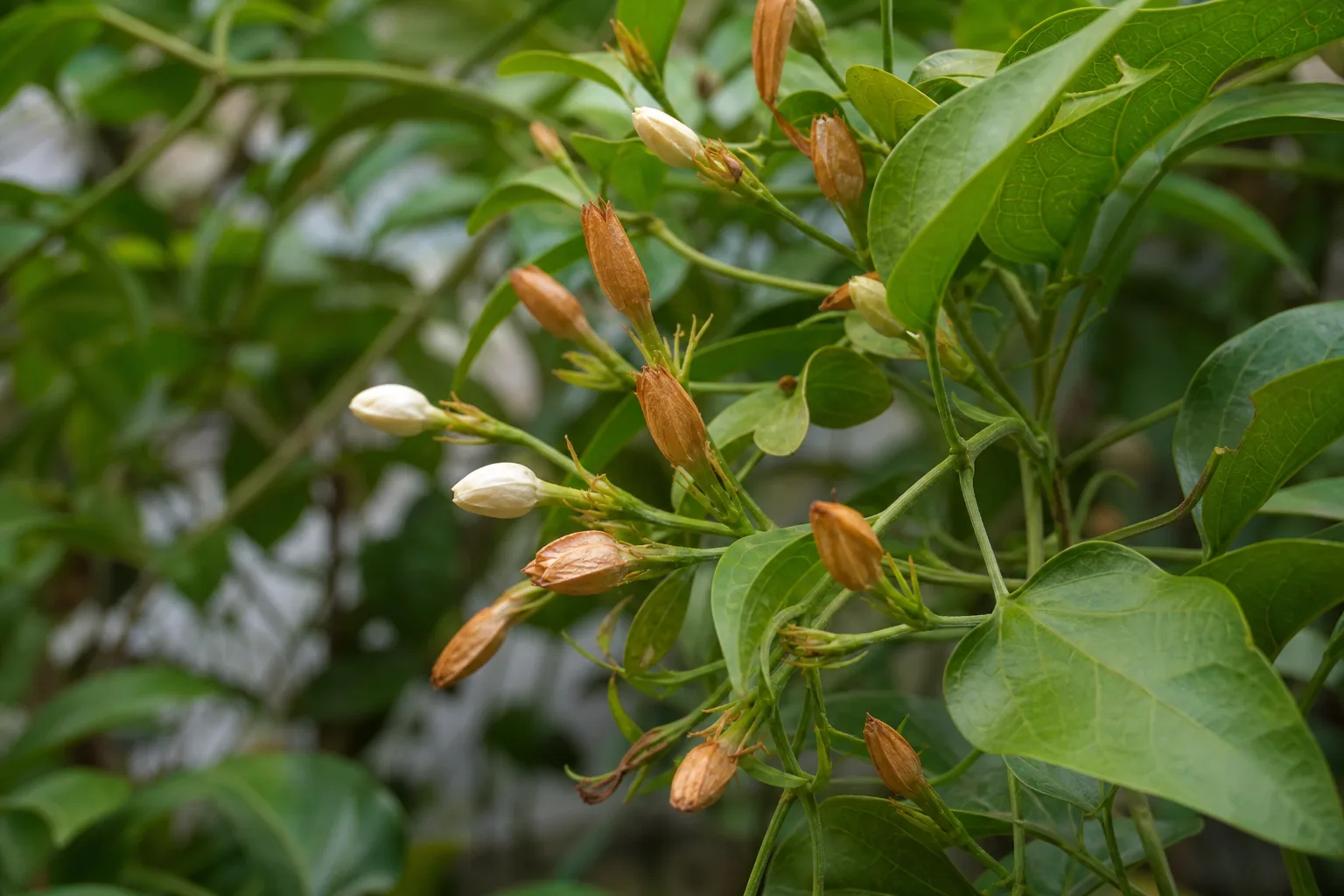
Last August, a jasmine on an east windowsill opened fragrant white clusters overnight. By the next evening the oldest petals were pink-brown at the edges—while new buds on the same stem stayed firm and kept opening. No fruit bowl, no heater blast, steady moisture. That was finished flower work, not a crisis. Two rooms away, a trailing petunia on a kitchen sill held color for more than a week until a banana-and-avocado bowl parked about 40 cm from the pot; within roughly 36 hours several fully open blooms collapsed brown while leaves still looked fine. Same symptom word—“brown flowers”—two opposite first moves.
Brown petal tissue is usually necrotic or senescent: it will not recolor. Your job is to sort normal aging from ethylene, water stress, heat, grey mould, and thrips before you buy bloom fertilizer or repot. This page is the multi-species hub for flowers turning brown on blooms that already opened (or are opening). It is not faded flowers (color loss without brown necrosis), not bud drop (unopened buds aborting), and not no flowers (buds never form).
Written by Sai Ananth (B.Pharmacy; LeafyPixels lead writer focused on flowering houseplants), who grows jasmine, African violets, Phalaenopsis, petunias, and tropical hibiscus under apartment windows. Horticultural review by Dr. Ananya Rao (plant scientist and horticulture reviewer on the LeafyPixels Editorial Review Board).
Brown Flowers vs Faded Blooms, Bud Drop, and No Flowers
Mislabeling wastes a whole flush. Flowers turning brown means petal tissue is dying or drying—edges crisp, centers soft, whole blooms papery, or mould covering spent petals. Faded flowers means open blooms lost saturation while tissue stayed mostly intact. Bud drop means buds existed and failed before opening. No flowers means the plant never initiated a bloom structure worth diagnosing.
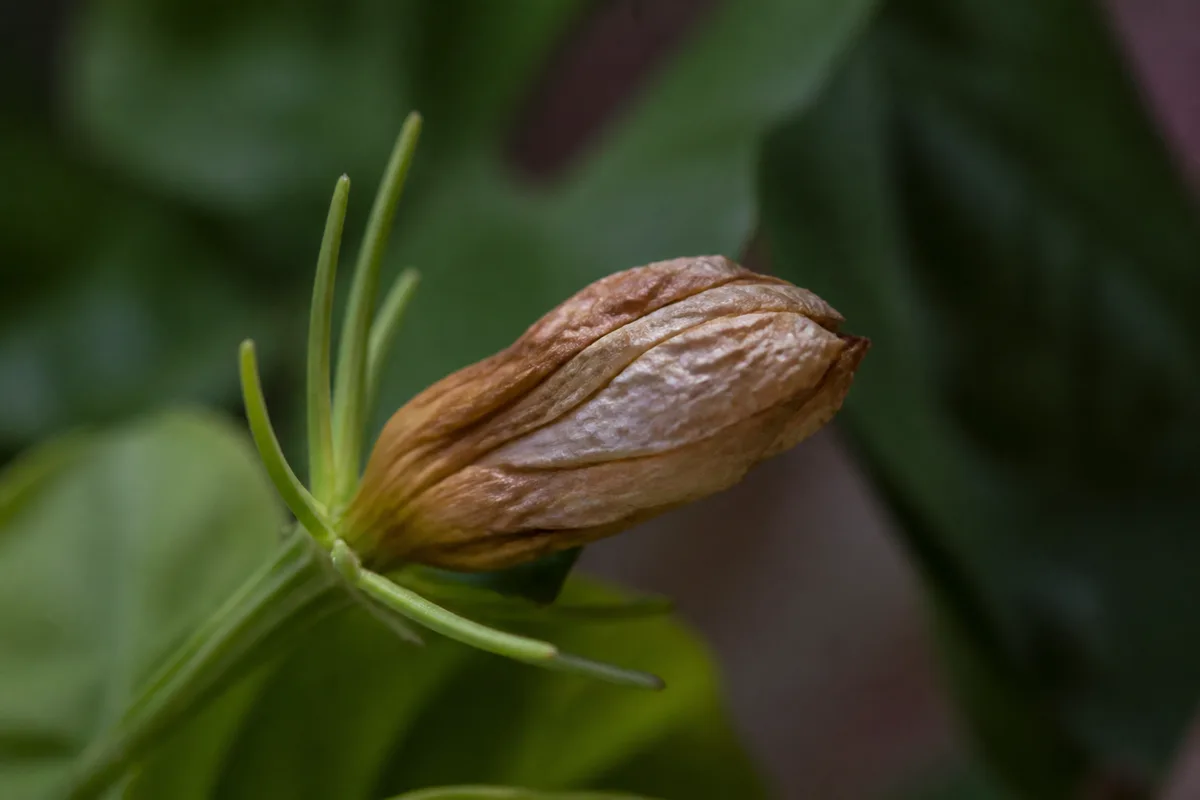
Use this split. If jasmine opens white, perfumes the room for a night, then turns pink-brown at the edges while new buds keep opening, stay on normal aging. If open petunia blooms dull and brown overnight while leaves look fine and bananas sit on the same counter, treat ethylene. If unopened orchid buds yellow and fall before a single flower opens, use bud drop, not this page. If a peace lily never makes a spathe under a dark corner, use no flowers.
The same logic applies to African violet, Phalaenopsis orchid, hibiscus, anthurium, and Christmas cactus. Species pages refine triggers; the diagnosis order below still starts the same way.
Three Questions Before You Change Anything
LeafyPixels Sort-by-Speed method: rank causes by how fast browning arrived and whether younger neighbor buds still look healthy. Change one major variable at a time. Spent tissue is closed history; the next flush is your grade.
- Are only the oldest open flowers browning while younger buds stay firm? Days-to-weeks stagger with papery petals and no fuzzy coat usually means aging.
- Did many open blooms collapse within 24–48 hours after fruit, smoke, a heater, or a dry spell? Synchronized collapse with mostly okay leaves points to ethylene, heat, or acute drought—not “needs fertilizer.”
- Do you see fuzzy grey mould, silvery streaks, or unopened buds dying with the open flowers? Escalate to Botrytis hygiene, thrips checks, or the bud drop path.
Do not stack fertilizer, repotting, and relocation in the same week after browning. Stabilize first.
Quick Diagnosis: What Pattern Are You Seeing?
Brown tissue will not re-green. Protect remaining buds and the next cycle.
| What you see | Speed | Leaf state | First check | Most likely direction | First move only |
|---|---|---|---|---|---|
| Oldest open blooms tan/papery; new buds fine | Days–weeks | Normal | Stalk age | Normal aging | Deadhead; keep culture steady |
| Many open blooms brown/collapse overnight | 24–48 hours | Often OK | Fruit, smoke, exhaust | Ethylene | Remove sources; ventilate |
| Flowers brown/fall; pot light, mix dusty dry | Days | Wilt or crispy edges | Finger probe 3–5 cm | Underwatering | Water thoroughly; empty saucer |
| Soft brown blooms + yellowing; pot heavy/wet | Days | Soft or yellow | Roots + drainage | Overwatering / root stress | Pause water; check roots |
| Crispy petal edges near vent or hot glass | Same day–few days | Tips may crisp | Heat at bloom height | Heat / low humidity | Shift off heat; steady RH |
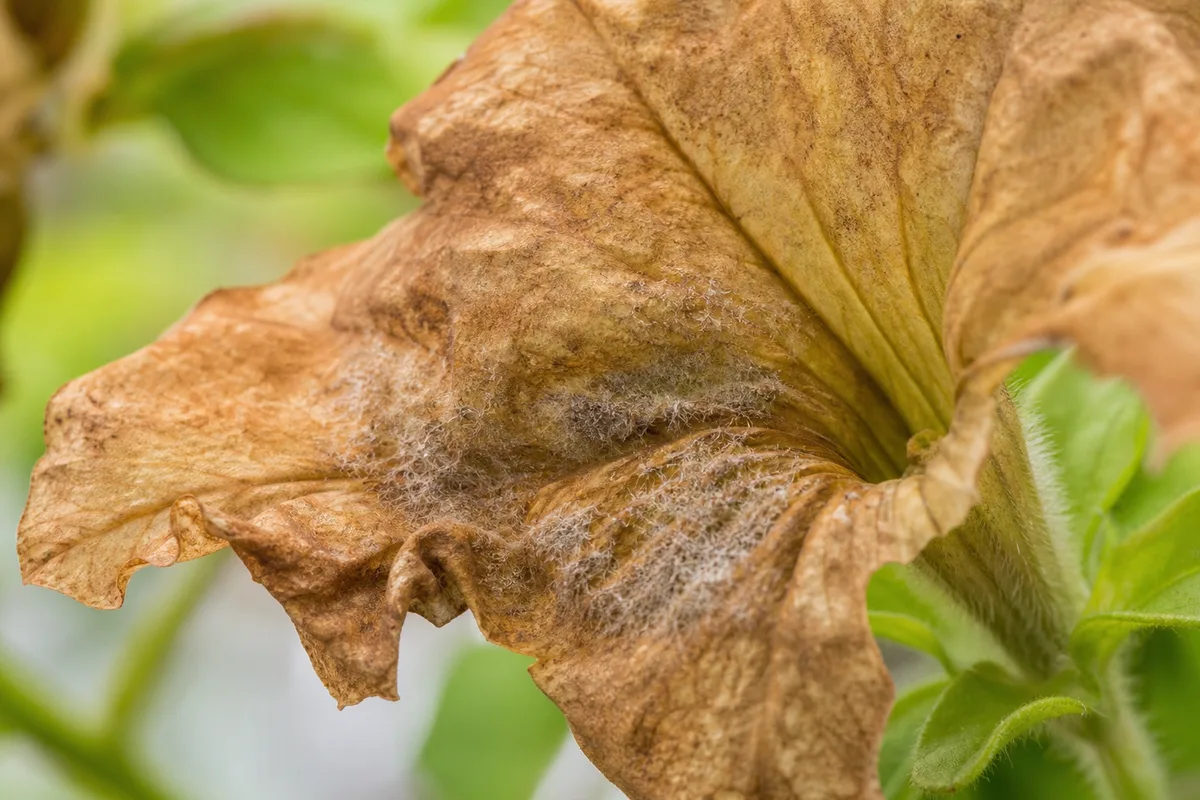
| Fuzzy grey-brown mould on soft petals | After wet/humid spell | Local | Airflow + debris | Grey mould (Botrytis) | Bag-remove; improve airflow |
| Streaked, distorted, bronze-brown petals | Variable | May stipple | White-paper tap | Thrips | Isolate; confirm pest |
| Unopened buds brown/drop; few open blooms | Days | Variable | Recent move/draft | Bud drop path | Switch hubs |
RHS guidance on poorly houseplants lists wilted leaves, brown crispy edges, and flowers that fade or fall quickly among underwatering signs—and separately flags grey mould on leaves and flowers when air stays too moist. That one pairing saves people from chasing fertilizer when the pot is simply too dry or the bathroom is a mould chamber.
Open Blooms Only vs Buds and Open Flowers Together
If browning is limited to flowers that already opened, start with aging, ethylene, heat, drought, or thrips scarring. If closed buds are shrinking or rotting at the same time, escalate to watering swings, Botrytis in humid stillness, pests inside buds, or the dedicated bud drop checklist. Do not treat “whole plant fertility failure” when you only have spent day-old petals on a heavy bloomer.
Normal Aging and Natural Senescence
Every flower has a finite display life. Pigments break down, petals thin, and tissue browns as the plant shifts energy toward seed set if you leave spent blooms attached. That is biology, not a care failure.
Aging is gradual and asymmetric. The oldest blooms brown first while younger buds stay vivid and keep opening on the same plant. Petals feel papery, not wet or slimy. There is no fuzzy grey coat, no sudden whole-flush collapse after a fruit bowl, and no silvery scarring. Short-lived bloomers—jasmine, day-blooming hibiscus, many annuals brought indoors—finish faster than long-display spathes on anthurium or peace lily.
If aging is the match, remove spent blooms and keep culture steady. Do not repot, relocate, or double-feed because a flower finished its job.
Ethylene From Fruit, Smoke, and Incomplete Combustion
Ethylene is a colorless gas plants use as a hormone. In homes it also arrives from ripening fruit, decomposing plant debris, cigarette smoke, and incomplete combustion from heaters or vehicle exhaust near open windows. Cornell greenhouse research shows ethylene can trigger leaf and flower senescence and abscission, and that some crops respond at very low concentrations. Petunias exposed to about 0.01 ppm ethylene for 24 hours showed early senescence of mature, pollen-shedding flowers within 24 to 48 hours. Those numbers come from controlled greenhouse trials—translate them at home as “fruit bowls and poorly vented combustion matter,” not as a ppm reading you can take with a kitchen tool.
If you suspect a poorly vented heater or combustion exhaust, treat ventilation and appliance safety as a household issue first, not only a plant issue. Move bloomers away from the source while you address the appliance.
How Ethylene Differs From Ordinary Aging
Ethylene browning is synchronized and fast. Many open flowers dull, wilt, or brown together within a day or two, often while foliage still looks acceptable. Aging is staggered. Ethylene often follows a placement clue: bananas or avocados on the same shelf, a plant moved near a kitchen compost caddy, smoke, or a heater that smells incomplete. Aging needs no new trigger.
American Orchid Society notes on bud blast also list ethylene among stressors that abort sensitive orchid buds—useful context when open flowers and buds both fail near fruit or combustion, but unopened abortion still belongs on the bud drop path.
Underwatering, Overwatering, and Moisture Swings
Water stress shortens bloom life from both directions. RHS links flowers that fade or fall quickly with underwatering. Clemson HGIC stresses that overwatering and underwatering both damage root function and can produce overlapping wilt symptoms—so you must check pot weight and roots, not only leaf limpness. Missouri Botanical Garden similarly notes that stress such as lack of water, overwatering, temperature change, or relocating a plant can trigger leaf and flower drop.
Dry-Pot Browning vs Wet-Root Collapse
Dry-pot pattern: The container feels light, the top several centimeters are dusty dry, open flowers brown or shatter early, and leaf edges may crisp. Water thoroughly until drainage runs, then water by weight/finger check—not by calendar. See how to water indoor plants the right way.
Wet-root pattern: The pot stays heavy, saucers hold water, flowers soften and brown, and leaves may yellow while the plant still wilts. Roots can be brown and soft. Reduce watering, improve drainage, and treat suspected rot on the root rot path rather than “helping” with more water. Clemson also notes plants often need less water after a heavy flowering flush—do not keep summer bloom watering rates when the show ends.
Moisture swings during budding are especially costly: dry spikes abort tissue, then a panic soak sits around damaged roots. Stabilize first; fertilizer later.
Heat, Drafts, and Low Humidity
Hot glass, radiator sills, and AC drafts desiccate thin petals faster than leaves. RHS links heat stress with leaves that wilt, roll, bleach, or go crispy in very hot rooms, and links low air humidity with crispy tips plus early dropping of leaves, buds, and flowers. Penn State Extension notes winter heated homes often fall below 30% relative humidity, and that misting only raises humidity until droplets evaporate—minutes, not all day.
Move bloomers off hot radiators and out of blasting vents. Group plants or use a room humidifier when thin-petaled species keep crisping; do not rely on daily misting as a humidity strategy (and misting spent soft blooms can feed grey mould). For deeper humidity tactics, use the houseplant humidity guide.
Grey Mould (Botrytis) on Spent and Soft Blooms
Grey mould (Botrytis cinerea) causes soft decay with a fuzzy grey-brown coat. It thrives in humid, still air—bathrooms, crowded shelves, plastic tents—and often colonizes dying petals first, then spreads. Clemson HGIC notes gray mold commonly begins on aging blossoms and produces a fuzzy spore coat when disturbed (Clemson HGIC — Gray Mold). RHS houseplant advice shows cyclamen with grey mould and warns that fungicides are not recommended on houseplants; hygiene and airflow come first.
What to do: Carefully bag and remove mouldy flowers and debris (spores dust off easily), improve spacing and ventilation, water at soil level in the morning, and stop misting soft blooms. Do not compost heavily sporulating material with healthy plants nearby. If only aging petals brown without fuzz, skip fungicide fantasies and deadhead.
Thrips and Other Flower-Feeding Pests
Thrips are tiny slender insects that feed hidden in buds and flowers. UC IPM notes they distort or scar leaves, flowers, or fruit, and that you often see damage before you see the insect. Colorado State University Extension’s houseplant pest guidance flags silvery scarring, dark frass specks, and flower distortion as classic cues. Brown streaking or bronze patches on partially open petals, plus stippled leaves, should push you to a white-paper tap test before you blame “bad fertilizer.”
Isolate infested plants and follow a repeated, label-directed plan—single sprays rarely clear thrips. Use the dedicated thrips on houseplants guide for identification and treatment detail. Aphids and broad mites can also distort blooms; confirm the pest before rotating products. For persistent unexplained scarring after culture is stable, a local extension or master gardener program can help with ID.
LeafyPixels Cases: Jasmine Aging and Petunia Ethylene
Case 1 — Common jasmine, east window (aging): August flush; morning sun only; 12 cm terracotta; potting mix checked every other day and watered when the top 2–3 cm dried. Indoor RH roughly 45–55% with no heater running. Oldest open flowers turned pink-brown at petal edges within about 18–24 hours of opening while younger buds on the same stem stayed firm and continued opening for three more weeks. No fruit within 2 m. Action: deadheaded spent clusters only; no fertilizer change. Outcome: next clusters opened cleanly on the same plant through the rest of the flush. Lesson: day-old brown open jasmine flowers are often finished work.
Case 2 — Trailing petunia, kitchen sill (ethylene): South-east sill; plastic hanging pot; soil kept evenly moist. Blooms held color more than seven days until a bowl of bananas and avocados sat about 40 cm away on the same counter. Within roughly 36 hours, several fully open blooms collapsed and browned; unopened buds and leaves stayed mostly fine. Action: moved the fruit bowl to another room, deadheaded spent blooms, left fertilizer unchanged. Outcome: flowers that opened four to six days later lasted a normal week again. Lesson: remove ethylene sources before changing soil or feed. Cornell’s 0.01 ppm / 24–48 hour petunia data is greenhouse evidence—not a kitchen ppm tool—but the home pattern (fruit nearby → synchronized open-bloom collapse) matches the research direction.
These cases are attributed LeafyPixels grower notes with conditions and next-flush outcomes. Your timeline may differ by species, light, and room.
Species Notes for Common Indoor Bloomers
Unique Triggers by Bloom Longevity
Day-bloomers and short-lived clusters (jasmine, hibiscus, petunia): Judge recovery in days, not months. Jasmine’s unique brown-petal trigger is often simply overnight senescence—intervene only if unopened buds brown from drought, frost, thrips, or grey mould (jasmine flowers turning brown). Hibiscus often holds a bloom for a single day; browning after that day is expected, while premature multi-bud collapse after wet/dry swings needs watering consistency. Petunia is a useful apartment ethylene indicator near fruit (petunia flowers turning brown).
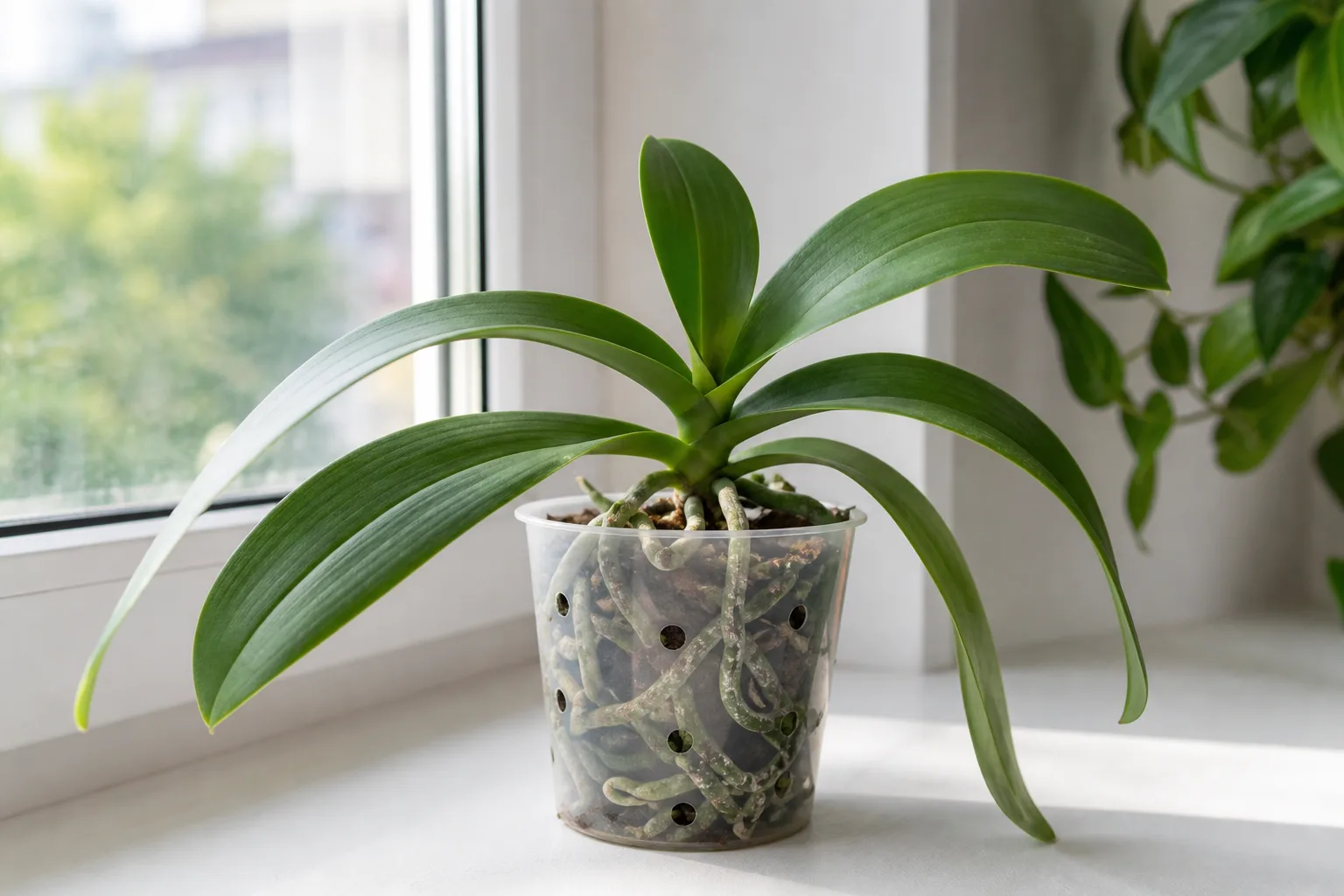
Long-display spathes and spikes (anthurium, peace lily, Phalaenopsis): Spathes age to green or brown over weeks; sudden soft browning with wet media points to moisture/root issues, while chalky fade without necrosis belongs on faded flowers. Phalaenopsis open flowers can brown from aging, ethylene, or water sitting in crowns; unopened bud blast belongs with bud drop. Keep fruit bowls away from spikes. Expect to judge the next quality flush over weeks to months depending on spike timing.
African violets and holiday cacti: African violets often show spent blooms that brown as they finish; Clemson HGIC ties reduced flowering to inadequate light and stresses careful watering (cold water on foliage is a separate leaf issue). Prompt removal of faded flowers limits debris that hosts pests and mould. Thrips leave silvery marks on violet flowers—check before assuming heat alone. Christmas cactus drops buds after moves more often than it “burns” open blooms; if open flowers brown early after a dry heater week, stabilize moisture and humidity, and avoid relocating while still flowering.
Step-by-Step Fix Plan This Week
- Sort the symptom. Brown necrosis on open blooms stays here. Pure color loss → faded flowers. Unopened abortion → bud drop. Never budded → no flowers.
- Timeline seven days. Moves, fruit, heaters, missed waterings, misting, new plants (thrips hitchhikers).
- Remove ethylene sources. Fruit bowls, compost caddies, smoke; ventilate combustion concerns as a home-safety issue, not only a plant issue.
- Check moisture at root depth. Water dry pots thoroughly; dry wet pots and inspect roots if soft brown blooms pair with a heavy container.
- Shift microclimate. Off hot glass and vents; steady humidity without soaking petals.
- Sanitize. Deadhead spent and mouldy blooms into a bag; improve airflow.
- Pest check. White-paper tap for thrips before any spray rotation.
- Wait on fertilizer. Spent tissue cannot be fed back to color. Resume dilute feeding only when new buds form under steadier conditions.
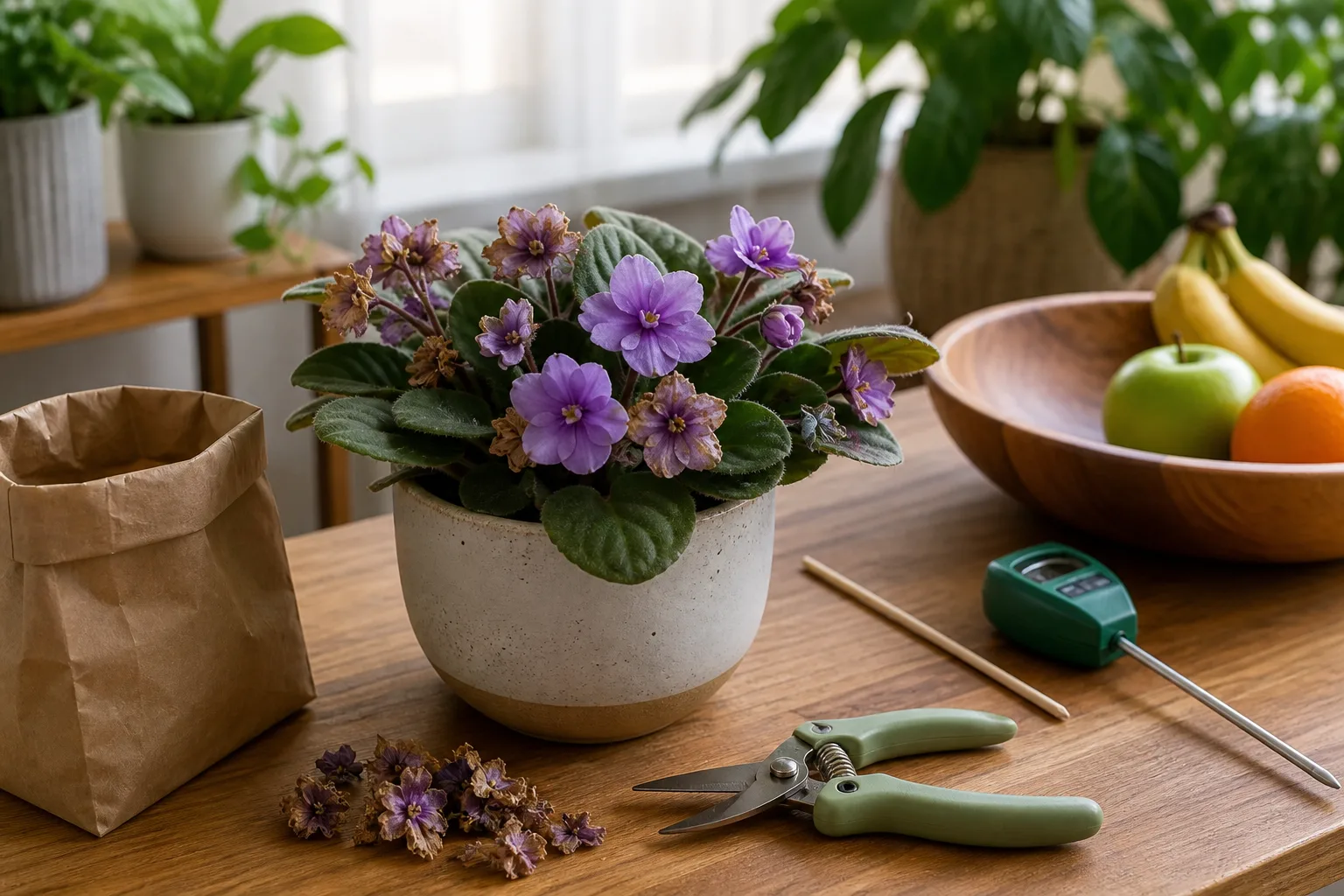
Example of changing one variable: if open petunias browned after a fruit bowl appeared, move the fruit first and leave light, pot, and fertilizer alone for a week—then grade the next open blooms.
Deadheading and How Long Until the Next Flush Looks Better
Deadheading is the removal of fading or dead flowers. RHS notes it keeps plants looking attractive, encourages more blooms on many species, and redirects energy away from unwanted seed. Pinch or snip spent blooms as soon as they start to fade; for mouldy tissue, bag first so spores do not dust the shelf.
Do not strip green buds hoping to “save energy,” and do not repot solely because petals browned. Cleanup is sanitation and cosmetics; the diagnosis still comes from pattern and timeline.
When to judge the next flush
| Bloom class | Examples | Wait before you call recovery |
|---|---|---|
| Day-bloomers / short clusters | Jasmine, hibiscus, many petunias | 3–7 days for the next open flowers to look normal |
| Medium indoor bloomers | African violet peduncles | 1–3 weeks for new stalks to open cleanly |
| Long spathes / orchid spikes | Anthurium, peace lily, Phalaenopsis | Weeks to months; grade new tissue, not the spent spathe/flower |
Prevention for the next cycle: keep ethylene sources away from bloomers; water by pot weight through bud and bloom, then ease off after a heavy flush; give flowering plants brighter light than foliage-only corners without cooking them on hot glass; hold winter humidity with a humidifier when thin petals keep crisping—Penn State is blunt that misting is not a lasting RH fix; inspect new plants for thrips before they join a bloom shelf; deadhead on a schedule during peak flush so debris never becomes a mould nursery.
Related Guides and Symptom Hubs
- Faded flowers houseplants — color loss without brown necrosis
- Bud drop houseplants — unopened buds abort
- No flowers houseplants — buds never form
- Small flowers houseplants — blooms open undersized
- Thrips on houseplants — streaked, distorted petals
- How to water indoor plants the right way — stabilize moisture
- Houseplant humidity guide — winter dry-air context
- Root rot houseplants — wet-pot collapse path
- Houseplant symptom checker — map mixed symptoms
- Flowers turning brown symptom hub — plant-by-plant pages
Conclusion
Houseplant flowers turn brown for a short list of reasons: they finished their natural life, ethylene or heat shortened that life, water or roots failed the flush, grey mould colonized soft tissue, or thrips scarred the petals. Spent blooms will not revive. Sort aging from stress with the Sort-by-Speed method—how fast browning arrived and whether younger buds still look healthy—then clear fruit and combustion sources, stabilize moisture, deadhead cleanly, and only then think about the next bud cycle. If open petunias browned after a fruit bowl appeared, move the fruit first and leave everything else alone for a week. Use faded flowers, bud drop, and no flowers when the tissue stage does not match this page—so you fix the real problem instead of feeding a flower that already ended.