Low Humidity on Jackfruit: How to Confirm Dry Air
Quick answer
Measure humidity at the Jackfruit's leaf height and check the root zone before watering or misting. Jackfruit is adapted to humid tropical climates, but species-specific sources do not give a required relative-humidity percentage; dry tips alone cannot confirm low humidity.
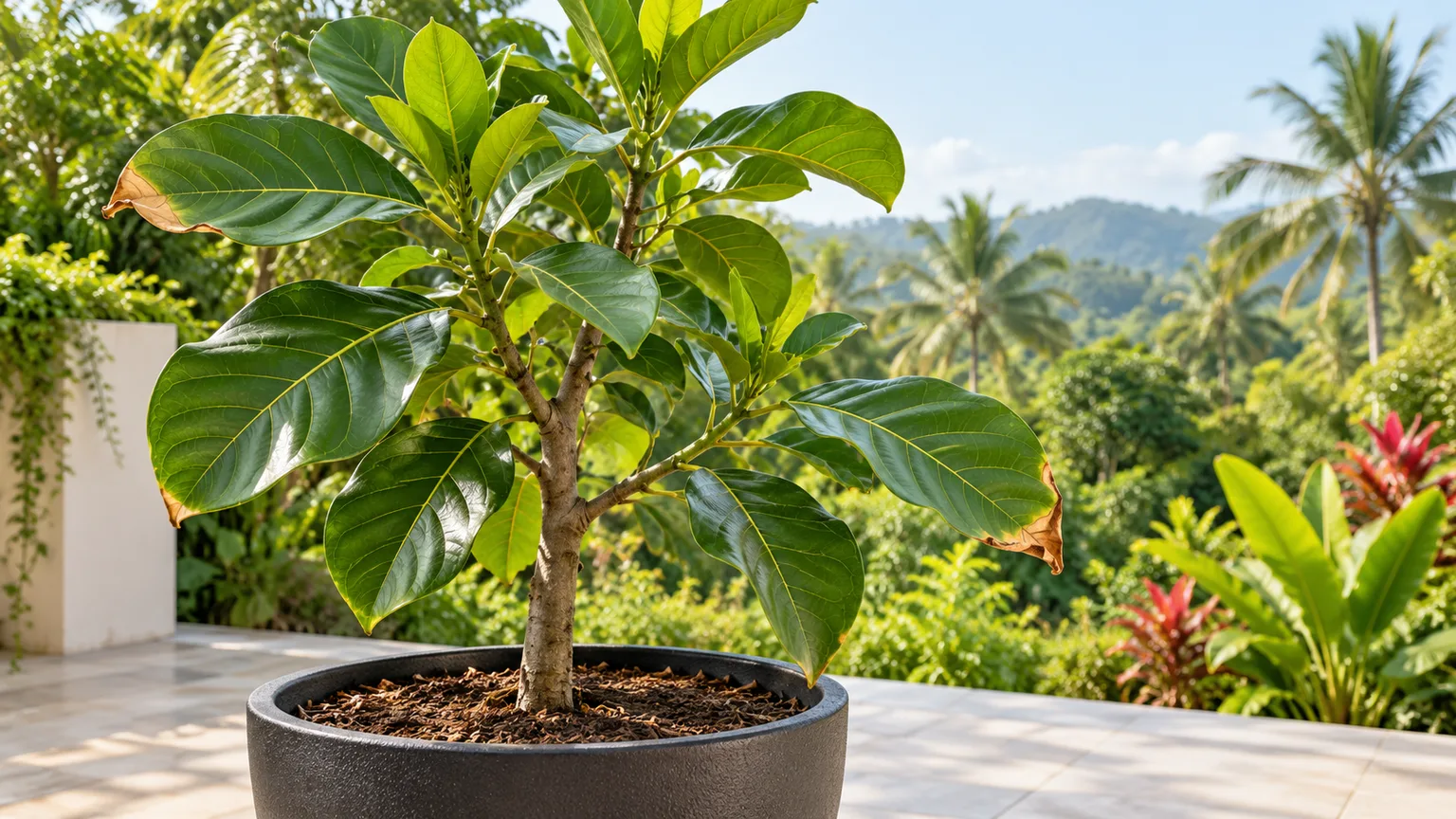
Low Humidity on Jackfruit: Causes, Checks & Fixes
This guide covers low humidity on Jackfruit. See also the general Low Humidity guide, watering, and light pages for this plant.
Low Humidity on Jackfruit: Causes, Checks & Fixes
Quick answer: measure the air before changing care
First, measure relative humidity beside the Jackfruit’s leaves and check the soil below the surface. Do not add water or mist just because a margin looks brown. Low humidity is plausible when a small potted seedling has moved from a humid nursery or outdoor climate into a heated or air-conditioned room, but leaf-tip damage is not proof that dry air is the cause.
Jackfruit (Artocarpus heterophyllus) is a tropical evergreen fruit tree, not a conventional indoor foliage plant. UF/IFAS describes it as well adapted to hot, humid tropical climates, and Purdue’s Morton summary places it in humid tropical and near-tropical climates, yet neither gives a Jackfruit-specific humidity percentage or a validated low-humidity symptom threshold. That makes the real question practical: is this tree actually sitting in unusually dry air, and do its light, warmth, wind exposure, and root moisture support that diagnosis?
For the general explanation of how very dry air can affect leaves, see the low-humidity overview. The checks below focus on where Jackfruit is grown and on the more clearly documented lookalikes: a dry root ball, flooded roots, and heat or wind stress.
What low humidity looks like on Jackfruit
Mature Jackfruit leaves are glossy, dark green, oval, and somewhat leathery; young shoots may carry lobed leaves. Normal lobing is a leaf-shape trait, not damage. A possible dry-air pattern is a new, dry, crisp edge or tip on more than one leaf, especially after a move from humid outdoor or nursery conditions into a dry indoor room; general indoor-plant low-humidity clues can include dry curled leaves and brown tips. UF/IFAS describes the species’ mature and young leaf forms.
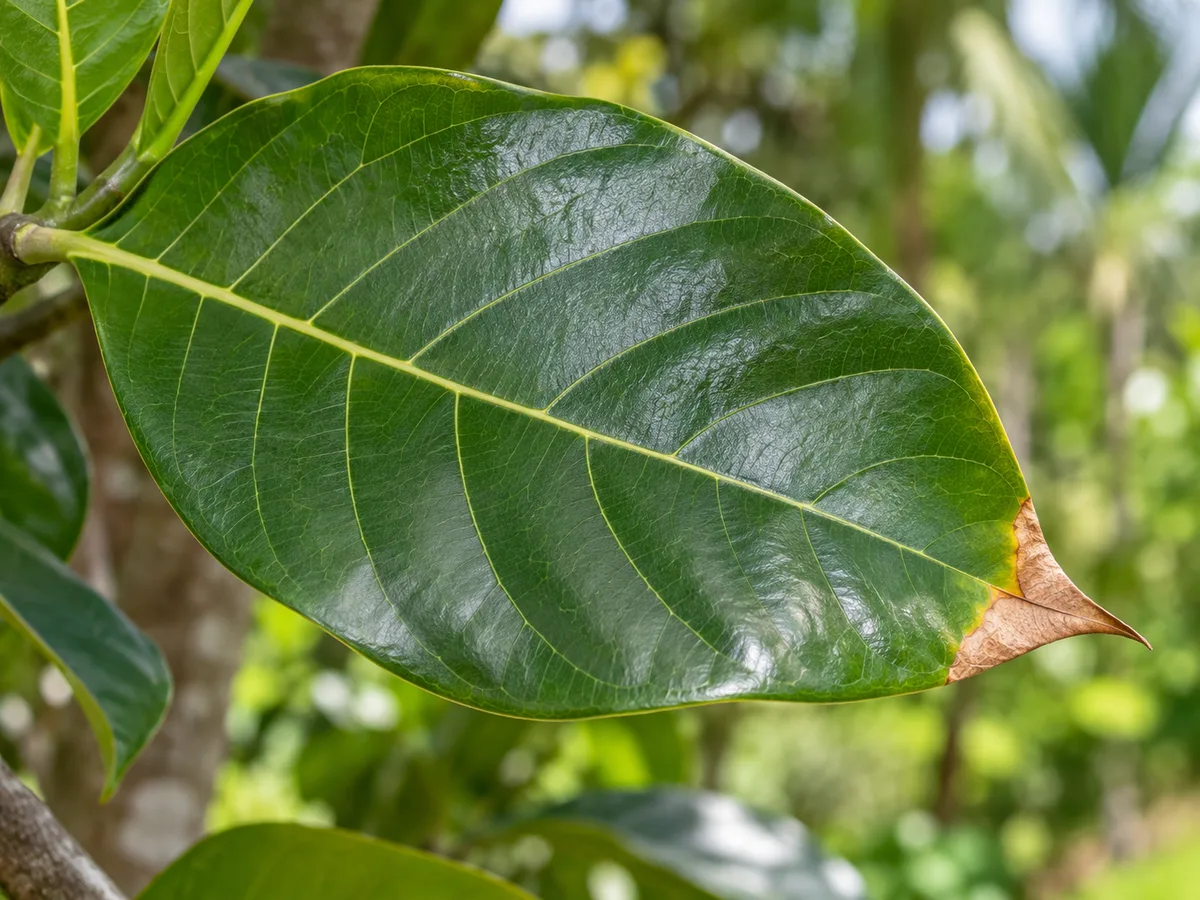
Use the leaf tip as a clue, not a diagnosis: Jackfruit’s normal glossy foliage should be compared with leaves of the same age and the conditions around the whole tree.
The symptom is more believable as a humidity issue when the air reading is consistently low at leaf height, the plant is near a heater or air-conditioner, and the root ball is neither bone-dry nor waterlogged. The University of Georgia Cooperative Extension explains that lower relative humidity increases leaf water loss, particularly in warm air. That is general indoor-plant physiology, not proof that Jackfruit has a particular minimum humidity requirement.
Brown edges remain nonspecific. Dry mix, strong reflected heat, cold injury, mineral or fertilizer salts, and root damage can also leave damaged margins. A Gardener’s Path guide on another tropical houseplant notes that brown tips may have several causes, including humidity, light, watering, and temperature; use that as a reminder to test the conditions, not as Jackfruit care advice.
Why dry air is more relevant to a Jackfruit seedling than a mature tree
UF/IFAS says Jackfruit is well adapted to the hot, humid tropics and recommends full sun for best growth and production. Purdue’s Morton summary likewise describes a tree of humid tropical and near-tropical climates. Those sources explain why a seedling can look stressed after a sharp change from a warm, humid nursery to a dry room, a cold-air-conditioned lobby, or a wind-exposed terrace.
They do not establish that Jackfruit needs a particular humidity reading to grow. The tree’s normal outdoor climate includes changing air movement, temperature, rainfall, and sun. An indoor humidity threshold borrowed from ferns or aroids should not be presented as a Jackfruit requirement. For a large established landscape tree, a week of dry weather is usually more actionable as a root-zone and irrigation question than as a request to humidify the entire canopy.
A small container seedling is different. It has less soil around its roots, may sit close to a heater or air-conditioner, and can experience a much sharper indoor climate change than a tree planted in the ground. When a seedling’s leaves dry at the margins just after such a move, confirm the air and the root ball together rather than treating one clue in isolation.
Confirm low humidity without confusing it with drought
Measure at leaf height
Use a small digital hygrometer near the canopy, out of direct sun and away from the humidifier outlet, heater, air-conditioner, or a recently misted surface. Let the reading settle and check it at the time the damage is appearing. A reading in a different room, near a window at night, or beside a vent may not describe the air around the leaves.
For interior plants generally, UGA Extension classifies relative humidity below 20 percent as low and explains that typical indoor conditions can increase leaf water loss. Treat that as a broad indoor benchmark only: it is not a Jackfruit-specific threshold, and the sources reviewed do not tell us what exact reading causes leaf damage in this species. If the room stays comfortably above that broad low range, look harder at soil moisture, heat, salts, or root health before buying humidity equipment.
Check the root ball and the weather
A genuinely dry root ball is a more direct cause of water stress than a humidity reading by itself. In a container, feel the mix a few centimetres below the surface and lift the pot if possible. A light pot with dry mix calls for a thorough watering and full drainage, not merely a humidifier. TNAU recommends deep, well-drained soil for Jackfruit, and UF/IFAS notes that the tree can decline in continuously wet or flooded soil. Waterlogged roots can also leave foliage stressed, so a heavy, wet pot is not a reason to add more water; UF/IFAS notes Jackfruit may decline or die after 2–3 days in continuously wet soil.
For an in-ground tree, review rainfall and irrigation over the previous week. Check below the mulch at the edge of the canopy, not only the topsoil near the trunk. Hot wind or reflected heat can dry the root zone quickly; a damp surface after brief rain can conceal dry soil lower down. If the tree has been through dry weather, follow the Jackfruit watering guide before assigning the damage to ambient humidity.
Read the damage pattern
Look at several leaves of the same age and note whether the damage is on exposed tips, throughout the canopy, or isolated to one branch. Compare the newest flush with older leaves. A few brown tips on the most wind-exposed leaves can fit dry air or hot wind; a whole canopy that wilts when the pot is dry points more directly to root-zone drought. Wet soil plus yellowing, sour odor, stalled growth, or dieback raises concern for root injury instead.
Also inspect the medium and plant for white crusting, recent heavy fertilizer use, visible pests, or a sudden change in sun. These clues do not prove humidity is irrelevant, but they offer a more specific explanation than “the air feels dry.” Use the Jackfruit problems hub if the main issue is spotting, pests, or growth failure rather than dry leaf edges.
First fix: remove the dry-air exposure without overwatering
If the hygrometer shows very dry air and the Jackfruit is beside a heater or air-conditioner, move the pot away from that direct stream first. Keep the tree warm and bright, then recheck the air and the newest leaves over the next flush. Do not move it into deep shade to escape a vent: Jackfruit needs full sun for strong growth, so choose a sheltered sunny spot instead. The Jackfruit light guide helps balance sun and exposure.
For a small potted seedling that must remain indoors temporarily, a room humidifier is a more controllable response than misting the leaves. Place it so the surrounding air gains moisture without leaving foliage constantly wet or the potting mix soggy. UGA Extension says misting would need to be repeated every few minutes to make a meaningful difference to local humidity; a brief spray is therefore not a lasting fix. Do not enclose a Jackfruit tree in a sealed plastic bag or terrarium: it needs room, light, and air movement, and such an enclosure is not a suitable long-term environment for a fruit tree.
For an outdoor container on a dry, windy terrace, move the pot behind a windbreak or to a sheltered position that still receives strong light. A mature in-ground tree cannot be practically humidified leaf by leaf. Protect its root zone from genuine drought with appropriate irrigation, but do not keep the soil wet to compensate for dry air. Jackfruit is particularly intolerant of flooding; UF/IFAS reports that trees may decline or die after 2–3 days in continuously wet soil.
Separate humidity from the three common Jackfruit lookalikes
| What you observe | More likely explanation | Best next check |
|---|---|---|
| Crisp tips after moving a potted seedling into a heated or air-conditioned room; the mix is still appropriately moist | Low humidity may be contributing | Measure RH at leaf height and remove direct dry airflow |
| Limp leaves with a light pot or dry mix during hot weather | Root-zone drought | Water the root ball thoroughly, then let it drain; use the watering guide |
| Yellowing or drooping while the pot or ground remains wet | Poor drainage or root injury | Stop routine irrigation and assess drainage; use the soil guide |
| Damage concentrated on the sun- or wind-facing side after a location change | Heat, wind, or sudden exposure change | Check sun hours, reflected heat, and airflow before changing humidity |
| A new leaf flush or unusual leaf shape without dry brown tissue | Normal young growth or another growth issue | Compare it with mature oval leaves and review the plant overview |
These are diagnostic patterns, not a disease key. If more than one clue fits, correct the condition you can confirm first and avoid changing irrigation, light, pot, and humidity at the same time.
Recovery: old brown tips do not turn green again
Once a leaf edge has dried and turned brown, raising humidity will not restore the dead tissue. Do not cut the entire leaf just to remove a small tip; if it bothers you, trim only the dead portion with clean scissors and leave a narrow margin of brown so you do not cut into living tissue.
Judge recovery by the next leaves, not by the old mark. If new leaves emerge without fresh crisp edges after the dry-air exposure is corrected and the root zone remains healthy, the change helped. If damage continues despite a more moderate humidity reading, check again for dry soil, waterlogging, salt buildup, abrupt full-sun exposure, cold injury, or pests. The sources reviewed do not give a Jackfruit-specific recovery timetable, so avoid promising a fixed number of days.
A mature landscape tree with extensive branch dieback, a soft trunk base, or widespread leaf loss needs more than a room humidifier. Check drainage, irrigation, recent cold or heat events, and trunk damage; ask a local fruit-tree extension specialist to assess the site if decline continues. A small seedling with a living stem and intact roots is more likely to recover than a tree whose roots or main stem have already rotted or dried out completely.
Prevent low-humidity stress in Jackfruit’s real growing conditions
- Treat indoor culture as temporary. A small Jackfruit can be moved indoors briefly for protection, but it needs outdoor sun and space for long-term growth. Avoid making a heated, dry room its permanent home just to escape weather.
- Acclimate nursery plants to the new air and sun. A seedling moving from a humid nursery into a dry terrace or a conditioned interior experiences several changes at once. Give it a warm, bright transition and check soil moisture often while it adapts; avoid stacking repotting, hard pruning, and a major humidity change together.
- Protect containers from direct vents and hot, drying wind. Use a sheltered position with airflow and sun rather than a closed, dim corner. For persistent drainage or mix problems, use the Jackfruit soil guide.
- Water for Jackfruit’s roots, not for a humidity reading. Young and container-grown trees need water during prolonged dry periods, but a damp or flooded mix is dangerous. Check the watering guide when leaves wilt or the pot dries unusually fast.
- Keep the outdoor site tropical but freely draining. UF/IFAS and Purdue describe Jackfruit as a warm, humid-climate tree, while TNAU calls for deep, well-drained soil. Humid air should not mean stagnant soil or a water basin around the trunk.
- Repot only when root or drainage evidence supports it. A small tree in a pot that drains poorly may need a deeper container or better mix, but repotting will not fix a room’s dry air. Use the Jackfruit repotting guide when roots are restricted or the container has failed.
When to use this page vs other Jackfruit guides
Use this page when dry leaf edges coincide with a measurably dry-air exposure and you need to separate it from root-zone drought, flooding, heat, or wind. Start with the Jackfruit overview for the tree’s tropical climate and full-sun needs. Use the watering guide for dry root balls, the soil guide for a pot that stays wet, and the light guide when a move or terrace exposure has changed sun and heat. If the main change is slow growth or weak flowering, the Jackfruit fertilizer guide is a separate question; do not fertilize simply because leaf tips are brown.
Related Jackfruit guides
- Jackfruit overview — climate, size, and why a large fruit tree is not a permanent indoor plant.
- Jackfruit problems hub — use when pests, spots, or growth symptoms matter more than air dryness.
- Jackfruit watering — check drought stress, container dry-down, and flood risk.
- Jackfruit soil — solve poor drainage or a mix that stays saturated.
- Jackfruit light — preserve full sun while avoiding harsh dry airflow or sudden exposure changes.
- Jackfruit repotting — use when roots are restricted or a container drains poorly.
- Jackfruit fertilizer — consider only after humidity, light, and the root zone have been checked.
Related tool
Use the Humidity Calculator to compare a measured room reading with general plant humidity guidance; it cannot set a Jackfruit-specific target that the species sources do not provide.