Mold on Jackfruit Soil: Causes, Checks & Fixes
Quick answer
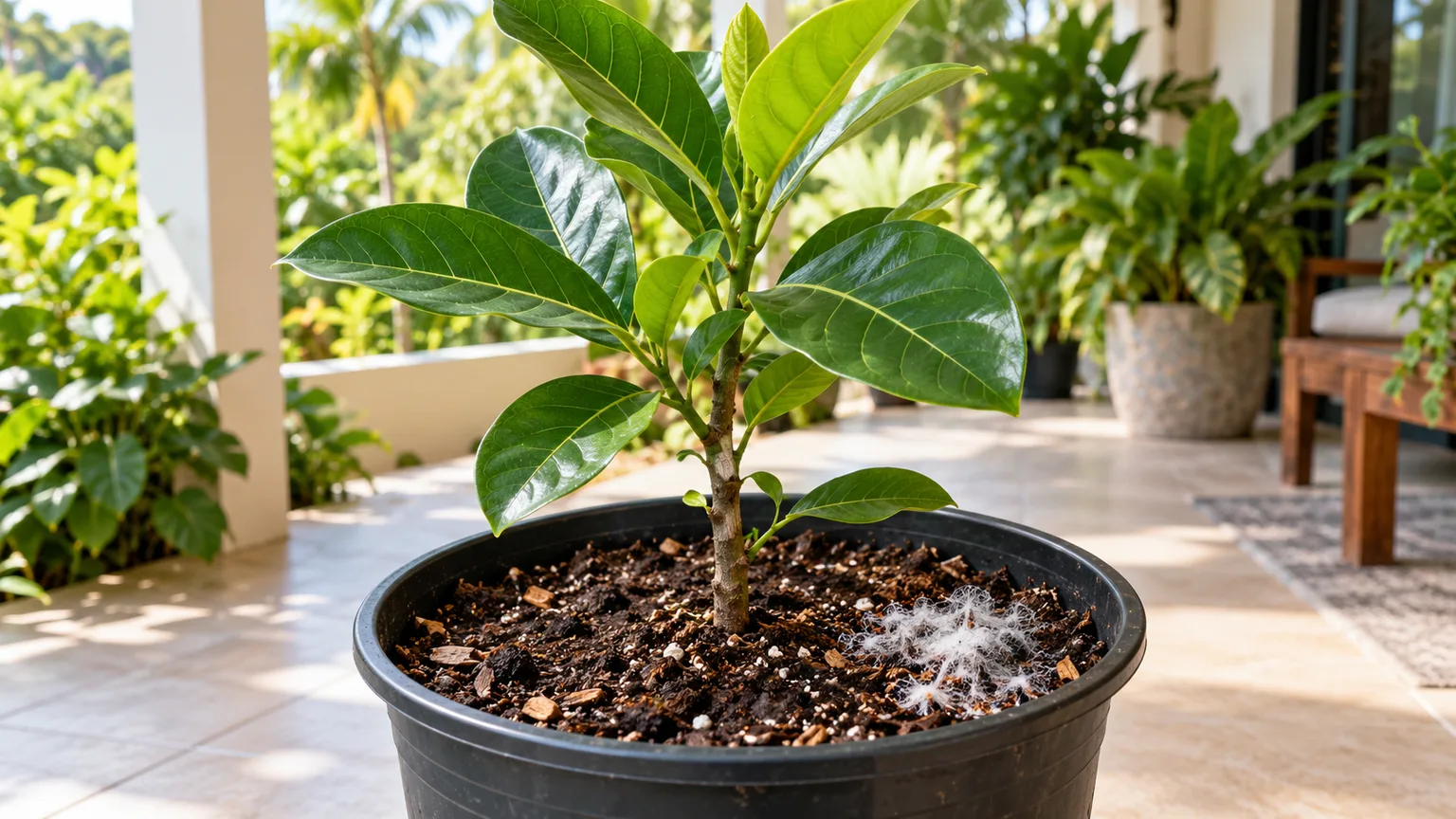
White fuzzy growth on Jackfruit soil usually marks a damp, organic-rich surface; it does not diagnose root rot by itself. First, lift off the visible growth and loose fallen debris, then check root-zone moisture before the next watering.
Mold on Jackfruit Soil: Causes, Checks & Fixes
This guide covers mold on soil on Jackfruit. See also the general Mold on Soil guide, watering, and light pages for this plant.
Mold on Jackfruit Soil: Causes, Checks & Fixes
Quick answer
If a Jackfruit pot has a small white, cottony or web-like patch across the top of the mix, remove that visible layer and loose leaf debris first. The fuzzy growth is often surface fungus using damp organic material; by itself it does not prove that the Jackfruit’s roots are infected.The Spruce’s surface-mold overview Check the soil below the surface before deciding whether to water. Jackfruit needs moisture during warm growth, but it is unusually unforgiving of a root zone left flooded for days.UF/IFAS Jackfruit guidance
Look for it on a young tree in a nursery pot, a container-grown patio Jackfruit, or a newly potted seedling where the mix stays moist and exposed. In a landscape bed, a little fungal growth on decomposing mulch after rain is a different clue from a tree whose roots are sitting in saturated ground. For the tree’s overall growing context, start with the Jackfruit care overview; this page focuses on fuzzy material on the soil surface and the moisture check that matters next.
What mold on Jackfruit soil looks like
Surface mold commonly looks like a pale white, off-white, or sometimes gray fuzzy film, fine webbing, or small cottony islands that bridge bits of bark, compost, or fallen plant matter. A light patch may sit in one damp pocket; a broader layer can appear if the surface remains humid and wet. The Spruce describes houseplant soil mold as fuzzy white patches, often associated with very wet growing media, and notes that some common surface growth is saprophytic fungus feeding on dead material.The Spruce’s soil-mold guide is useful for visual comparison, but species and root condition still need a separate check.
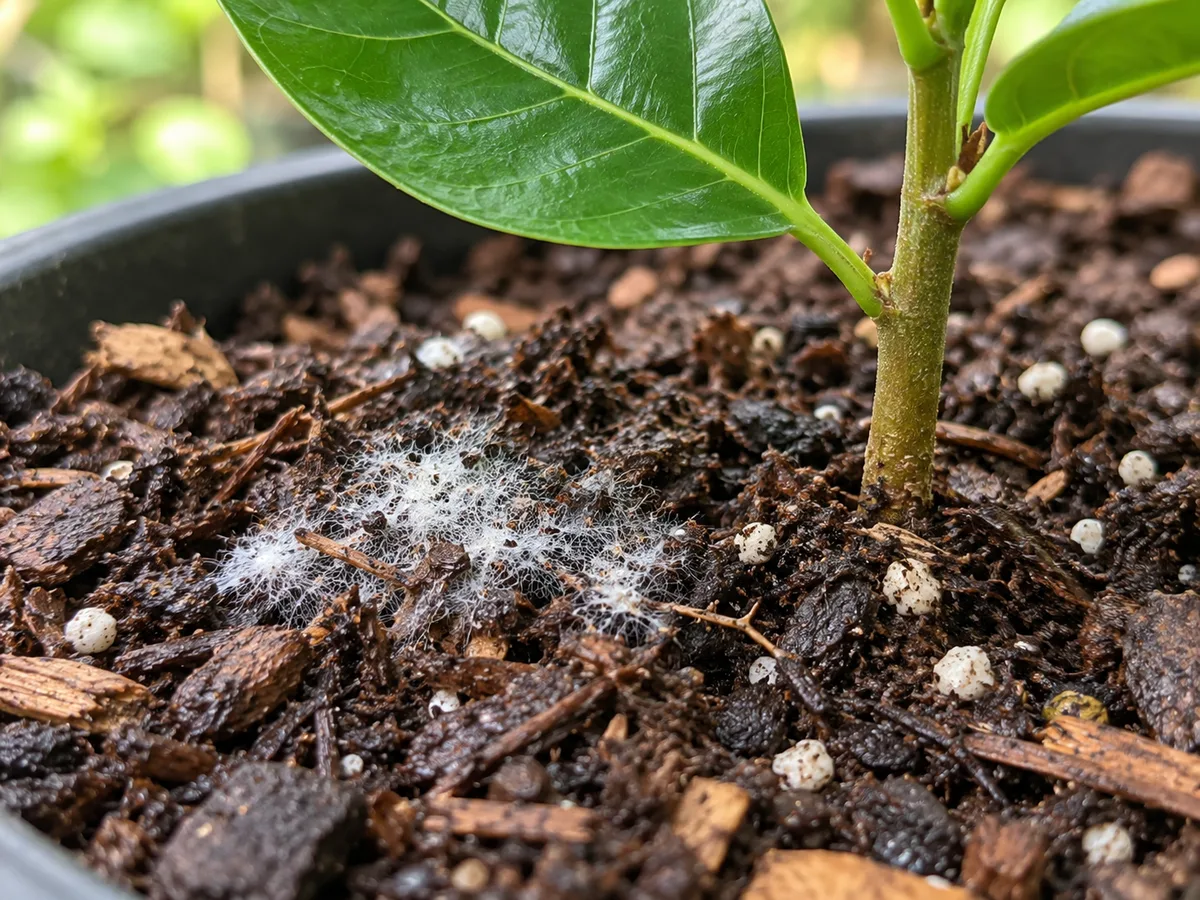
A surface patch is a moisture clue; confirm the Jackfruit’s deeper soil condition before changing its watering.
Look at how the patch sits on the soil. Fine threads or a soft fuzzy layer that catches organic crumbs fits the surface-mold description better than a flat, hard, gritty deposit.The Spruce’s visual description If the pale material is crusted, crystalline, or tightly fixed to the pot rim, it may need a separate identification. A smooth green film is also a different surface pattern from white fuzz; check how long that area stays wet instead of diagnosing a root pathogen from color alone.
Mold on the mix is also different from mold or rot on the tree itself. A surface colony does not mean the trunk base is rotting, and a Jackfruit leaf spot is not the same symptom as soil fuzz. Watch for the pattern around the crown, lower trunk, and new flush instead of treating all visible fungal growth as one disease. UF/IFAS lists separate Jackfruit problems on flowers, fruit, leaves, and roots; it specifically associates root-rot organisms with trees exposed to flooding.UF/IFAS Jackfruit guidance makes the root-zone condition—not the presence of a surface patch—the more important warning.
Why this tree’s pot surface gets fuzzy
The usual cause is not “too much water” in a single watering. It is a surface that stays damp long enough for fungi to use decomposing organic particles. Frequent small drinks can keep only the top layer wet without thoroughly wetting the Jackfruit root ball; a compact mix, blocked holes, a pot sitting in runoff, fallen leaves, shade, or little air movement can also slow drying. Gardening Know How describes moisture, condensation, reused growing material, and limited air exchange as conditions that encourage white fuzzy fungus on seed-starting media; its seedling advice is not a Jackfruit schedule, but the moisture-and-airflow mechanism is relevant to a damp pot surface.Gardening Know How’s mold discussion
Jackfruit changes the risk calculation. This is a tropical fruit tree with a deep root system, not a succulent that can be left bone-dry after every sight of white fuzz. Young and container-grown trees need water through dry periods; at the same time, UF/IFAS says Jackfruit grows best in well-drained soil, does not tolerate continuously wet or flooded ground, and may decline or die after two to three days of wet soil conditions.UF/IFAS’s flooding and soil notes That warning applies to a saturated root zone; it should not be misread as a two-day threshold for every damp surface or a reason to let the entire pot dry hard.
In a container, mix structure and the drainage path matter as much as watering frequency. UF/IFAS recommends an aerated, well-drained, lightweight container medium and unobstructed drainage holes; a loose mix can hold useful moisture while allowing excess water to leave.UF/IFAS container-media guidance A decorative cover pot, flat saucer, tightly packed old mix, or oversized pot can keep water around the Jackfruit root ball longer than the grower expects.UF/IFAS container-media guidance The Jackfruit soil guide explains how to keep a deep pot airy without making the mix so coarse that young roots dry too quickly.
Surface debris supplies food for fungi as it breaks down. Remove fallen Jackfruit leaf fragments, dead weeds, or old mulch that has compacted against the potting mix. Family Handyman’s expert interviews identify decaying leaves, inadequate drainage, and low circulation as common contributors around houseplant soil; that is practical editorial guidance rather than a Jackfruit-specific disease diagnosis.Family Handyman’s mold guide A clean surface helps you see whether fuzzy growth is returning and makes it easier to judge moisture.
Check whether the root zone is actually too wet
Before watering again, look beyond the visible mold. Press a finger or clean wooden skewer into the Jackfruit mix several centimetres below the surface, then lift the pot if its size allows and compare its weight with a pot that has just drained. The top can look dry while the centre remains wet, especially in a deep container; water can also move down a gap beside a dry core, so use a skewer or weight check instead of reading only the surface. The Jackfruit soil guide explains this dry-core pattern. If you are unsure how to interpret a seasonal change or a large tub, use the Jackfruit watering guide and follow its root-ball check rather than a fixed number of days.
For a landscape Jackfruit, probe the soil several inches away from the trunk and check whether water is still standing after a normal irrigation or rain. A surface film after a wet spell is less serious than a low spot that remains saturated around the roots. UF/IFAS recommends a site that does not flood or remain wet after typical summer rainfall; in poorly drained areas, the solution belongs at the planting site, not in repeated surface scraping.UF/IFAS site and soil recommendations
Check the pot and the tree in this order:
- Confirm that every drainage hole is open and that the container is not standing in collected water.
- Test moisture in the upper few centimetres and deeper in the root ball; do not judge from the fuzzy patch alone.
- Smell near the drainage holes and trunk base. A sour or swampy odor is more concerning when the soil is persistently wet.
- If roots are visible at a drainage hole, note whether they are firm or soft. Do not pull the tree out solely to inspect a small surface patch.
- Look at the newest leaf and shoot. A firm, expanding flush with a small mold patch is less concerning than whole-tree decline that continues while the root zone stays wet.
Tell mold apart from lookalikes
| What you see | More likely explanation | What to check on Jackfruit |
|---|---|---|
| Soft white threads or a cottony film crossing damp mix | Surface fungus on organic particles | Whether the top stays wet and leaves or mulch are decomposing |
| Hard pale crust on the mix or pot rim | A different surface pattern from fuzzy growth; identify it separately | Water source, fertilizer history, drainage, and whether it feels gritty rather than fibrous |
| Green, smooth film on topsoil | A different surface pattern from white fuzz | Light at the pot and how long the surface remains damp |
| Tiny dark flies that rise when the pot is disturbed | Fungus gnats, a separate insect issue | Look for adults around moist media; Wisconsin Extension notes fungus gnat larvae develop in growing media and adults rest near potted plants.Wisconsin Extension’s fungus-gnat guide |
| Soft, brown roots with wet-soil wilt or a bad odor | Possible root rot, not just surface mold | Drainage and the whole root ball; seek local extension diagnosis if decline continues; Wisconsin Extension describes this root-rot pattern.Wisconsin Extension’s root-rot indicators |
These patterns overlap. A photo can help with identification, but no surface image can reveal whether roots are firm. Fuzzy white growth can coexist with poor drainage without being the pathogen that caused root damage. Do not apply a fungicide simply because the word “mold” appears in a diagnosis; first establish whether the problem is cosmetic surface growth, a water-management issue, or a declining Jackfruit.
The first fix: remove the visible layer
For a small surface colony on a Jackfruit that otherwise looks stable, lift away the fuzzy material and loose dead debris with a clean spoon or similar disposable tool. Take only the top layer that carries visible growth; do not dig down through a young tree’s roots or heap removed material beside the trunk. Bag the skimmed material and discard it with household waste. The Spruce recommends scraping limited surface mold and then allowing the remaining mix to dry before refreshing the top layer; for Jackfruit, keep that next step conditional on the tree’s actual moisture needs.The Spruce’s removal guidance
After removing it, do not automatically repot or drench the tree. If the mix is still damp below the surface, wait until it reaches the normal check point in the Jackfruit watering routine. If the root ball is dry, water the soil thoroughly and allow all runoff to escape. The objective is a balanced wet-to-dry cycle, not keeping the surface constantly wet and not withholding water until a tropical tree wilts. Clear standing water from a saucer or cachepot, then let the container drain fully.
For a tree planted in the ground, do not excavate healthy soil just to remove an isolated patch in mulch. Pull loose debris away from the trunk and assess the planting area after rain. Jackfruit benefits from mulch that conserves moisture, but UF/IFAS recommends keeping mulch back from the trunk and avoiding a site that remains flooded.UF/IFAS mulch and site guidance If soil is saturated after routine rainfall, correct runoff or drainage around the root zone rather than exposing or cutting roots.
Adjust the setup if the fuzz returns
If the surface becomes moldy again after you remove the visible growth, fix the condition that kept it damp. For a container tree, lift the nursery pot from its cover and empty the cachepot after watering. Confirm the holes are not pressed against a flat surface, blocked by roots, or covered by compacted material. Keep the pot where it receives the strong light and warmth Jackfruit needs for growth; the Jackfruit light guide helps distinguish usable outdoor or terrace light from a dim indoor position that slows growth and water use.
Then review the mix. A deep Jackfruit container should drain freely without becoming an unstable, fast-drying pile of coarse fragments. If water pools on the surface, the whole pot remains heavy for an unusually long time, or the mix has collapsed into dense sludge, use the Jackfruit repotting guide to decide whether a planned root-zone replacement is justified. Repotting is a secondary correction for structural failure, chronic sogginess, or root decline—not the first response to one harmless-looking patch.
In a landscape, focus on where water goes. Redirect roof runoff, avoid a low basin that holds rain, and do not keep a timer-controlled irrigation system running while the ground remains wet. UF/IFAS warns that overwatering from timed lawn sprinklers can contribute to Jackfruit decline through root rot.UF/IFAS irrigation guidance Where high water tables or recurring floods cannot be changed, local horticulture advice may be needed to choose a raised planting position; a surface treatment cannot make a flooded root zone safe.
Remove leaf litter, old fruit fragments, and weeds that settle on a container’s surface, especially after storms or pruning. Keep mulch from touching the trunk, and avoid piling fresh organic matter over a wet, fuzzy patch. Air movement can help the surface dry, but do not point a strong fan directly at a small seedling or move an outdoor tree into harsh sun simply to sterilize the soil.Family Handyman’s airflow notes Better drainage, a clear soil surface, and watering that follows moisture are more dependable than a cosmetic powder or homemade spray.
When to inspect roots or ask for help
Escalate beyond surface care when mold keeps returning while the whole root zone remains wet, the pot has no working drainage, water has stood in a saucer for hours, or the tree begins to decline. In a container small enough to handle, slide the root ball out carefully only if the evidence points to a root problem. A large Jackfruit tub or established landscape tree is not a safe candidate for casual unpotting or root washing.
UF/IFAS identifies Jackfruit as susceptible to several root-rot organisms, including Pythium, Phytophthora, Fusarium, and Rhizoctonia, especially after flooding.UF/IFAS disease notes That is why persistent saturation plus root decline deserves more attention than white fuzz alone. If a tree has rapidly worsening yellowing, branch dieback, soft tissue, or continuing decline after drainage is corrected, take clear photos and contact a local extension service or qualified tropical-fruit grower. Do not choose a fungicide or soil drench from a surface photo; product labels and local diagnosis matter.
Recovery: what to watch over the next growth cycle
The visible patch may disappear as the surface is cleaned and conditions shift, but its disappearance does not prove the roots are healthy. Improvement means the upper mix no longer stays glossy-wet for long periods, water drains through the container, the mold does not quickly return, and the Jackfruit maintains firm new growth. Judge the canopy over time rather than expecting an old yellowed leaf to regain its color.
If roots were stressed by wet conditions, a Jackfruit may pause while it re-establishes. Do not compensate by adding fertilizer: a high nutrient load will not restore oxygen to wet roots. Wait until drainage is consistent and fresh growth appears before returning to ordinary feeding; for timing and rates, use the Jackfruit fertilizer guide. If growth resumes but the soil surface stays clean, continue normal moisture checks instead of repeating a fungicide or repot.
If the tree continues to yellow or wilt despite a drying surface, revisit the diagnosis. Dehydration is possible when a small pot dries quickly in hot weather, while wet-root stress is more likely when the mix is heavy and the plant declines at the same time. The Jackfruit problem hub helps route a different symptom to the right guide. Do not use the mold patch as a stand-in for a root inspection.
Prevent mold without drying Jackfruit out
Prevention for Jackfruit means avoiding a perpetually wet surface while keeping the deep root ball supplied during dry weather. Check soil before watering, then water thoroughly rather than offering repeated shallow sips. Let runoff drain away and empty the saucer. Container media should combine moisture retention with air spaces, and the pot must have open holes; UF/IFAS container guidance supports those basics, while UF/IFAS Jackfruit guidance explains why they matter for this flood-sensitive tree.Container-media guidance Jackfruit’s drainage needs
Keep the surface visible: remove fallen leaves and dead weeds, loosen only a thin surface crust if it is not tangled with roots, and avoid covering the mix with thick layers of wet compost. Place the container where a growing Jackfruit receives enough light and airflow for healthy growth. For a new seedling, use a deep pot with a mix designed for containers rather than garden soil packed into a nursery pot; the plant’s soil guide covers structure, moisture retention, and drainage tradeoffs.
In a garden, select an area that drains after heavy rain and keep mulch away from the trunk. In a monsoon climate, remove blocked drainage paths and redirect roof runoff before the wet season. For a patio tree, account for cooler or cloudier periods when the medium may dry more slowly; continue to check the root zone, not the calendar.The Spruce notes slower drying in cooler conditions This lets you preserve the moisture a young Jackfruit needs without keeping its roots flooded.
Related Jackfruit guides
- Use the Jackfruit care overview for the tree’s overall growing conditions and size expectations.
- Use the Jackfruit soil guide when the mix stays dense, wet, or slow to drain.
- Use the Jackfruit watering guide to decide when the root ball is dry enough for another thorough watering.
- Use the Jackfruit light guide when a shaded position may be slowing growth and surface drying.
- Use the Jackfruit repotting guide if a container mix has collapsed or drainage has failed.
- Use the Jackfruit fertilizer guide after the root zone is stable and normal growth resumes.
- Use the Jackfruit problems hub to route symptoms that do not match surface mold.
For the general symptom across different plants, see the mold on soil guide. This Jackfruit page is the better fit when the fuzzy material is on this tree’s potting mix; use the Jackfruit problems hub above when wet-root symptoms—not just surface growth—need a different diagnosis.
Related tool
Use the Plant Problem Diagnosis Tool to organize the mold, moisture, and root-zone clues before changing several parts of the Jackfruit’s setup.