Slow Growth on Jackfruit: Causes, Checks & Fixes
Quick answer
Jackfruit is a warm-climate tree that can grow quickly in suitable conditions, but it may stall in cool weather, shade, flooded soil, or a root-restricted pot. First, measure the newest shoot growth and inspect the root zone for a circling taproot or persistently wet soil; do not use fruiting age alone as a growth test.
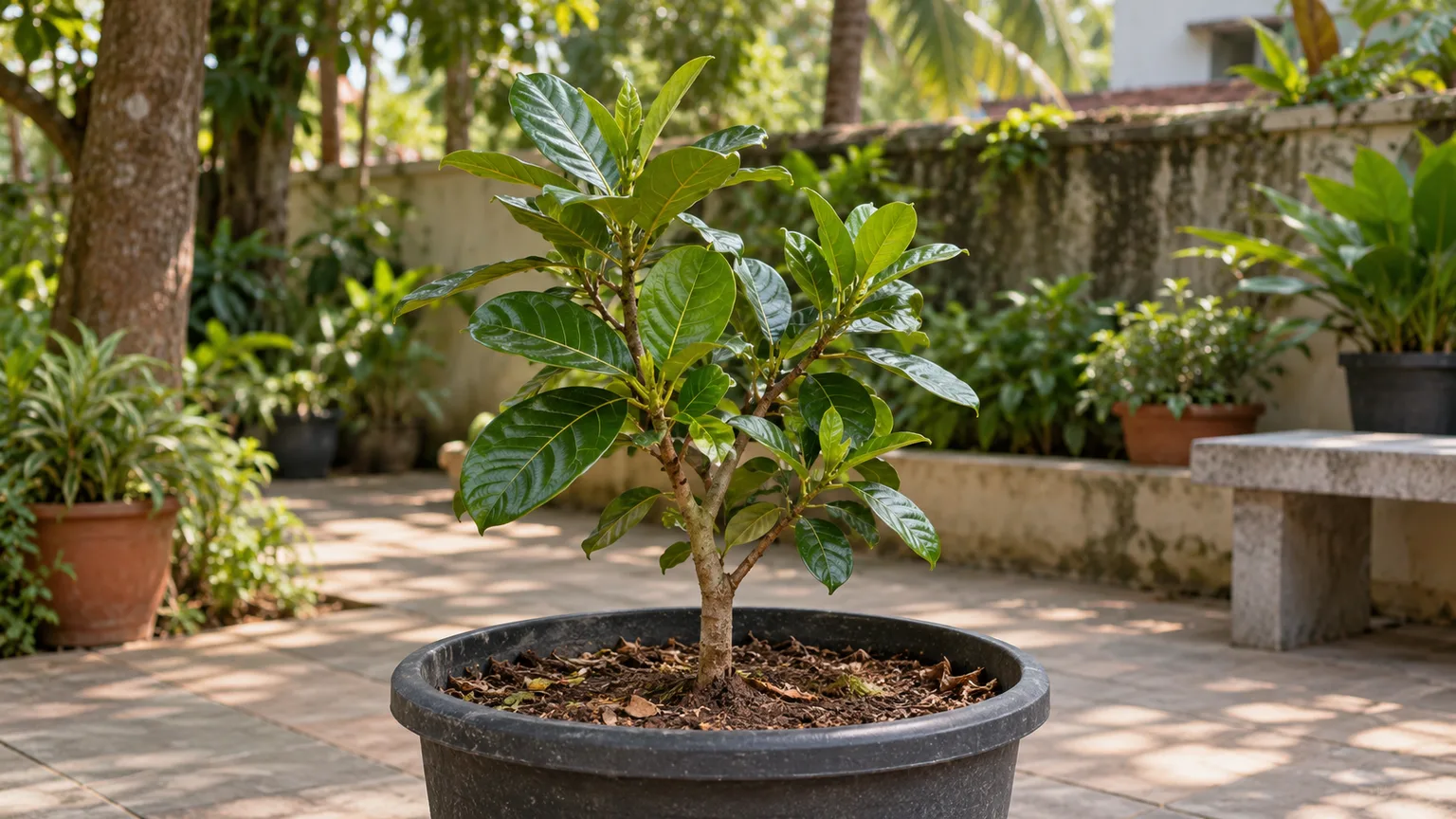
Slow Growth on Jackfruit: Causes, Checks & Fixes
This guide covers slow growth on Jackfruit. See also the general Slow Growth guide, watering, and light pages for this plant.
Slow Growth on Jackfruit: Causes, Checks & Fixes
A Jackfruit tree that has stopped extending its shoots can look underfed, but fertilizer is rarely the first diagnosis. Artocarpus heterophyllus is an evergreen tropical tree; it grows best in warm, full-sun conditions, with roots in a deep, well-drained site. For the tree’s size, site, and seasonal care, start with the Jackfruit overview. This guide focuses on a real vegetative stall, not on a young tree that simply has not started bearing fruit.
For general slow-growth patterns across plants, see the slow-growth symptom guide. On Jackfruit, check whether new shoots are extending during warm weather, then look for a specific restriction: cool conditions, shade, circling roots, flooded soil, or an unusually heavy crop. Do not change all of those conditions at once.
What slow growth looks like on Jackfruit
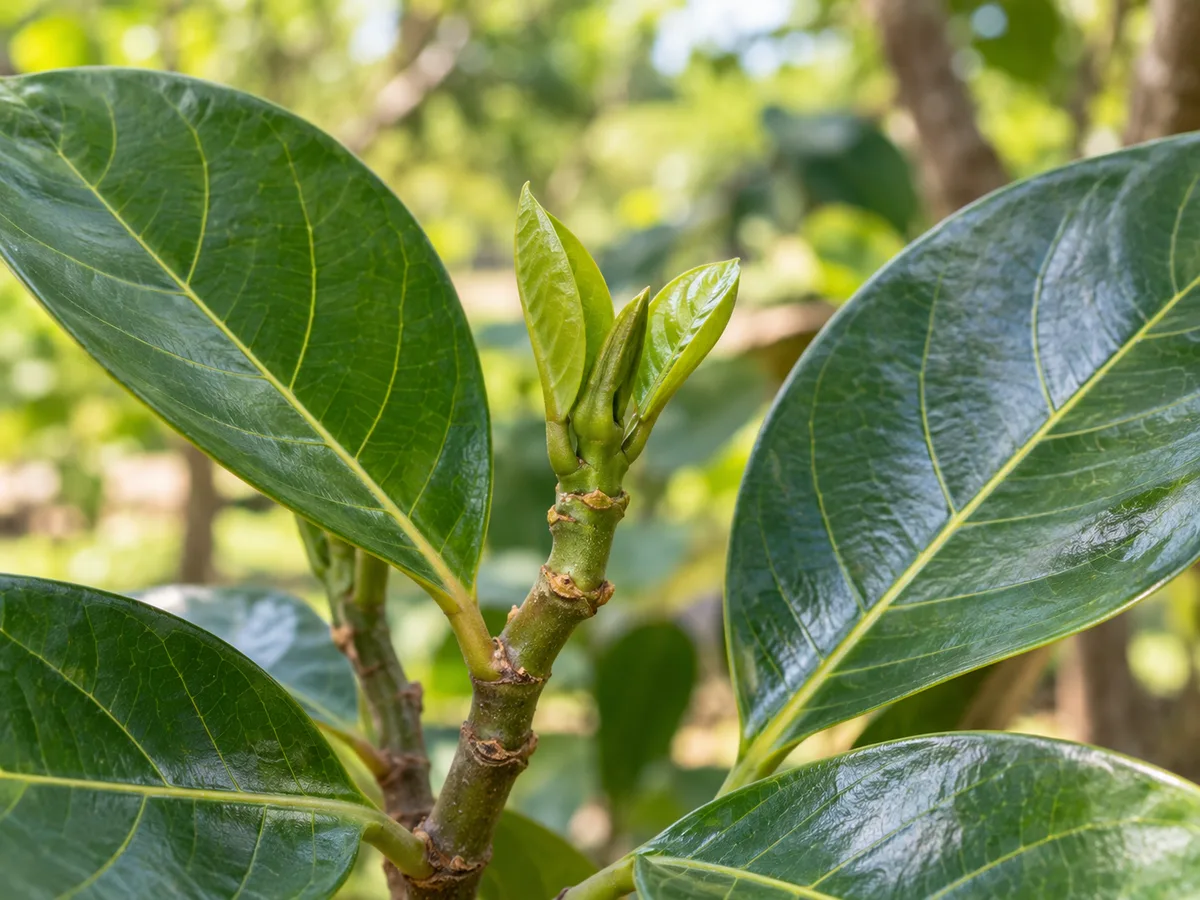
Short shoot extension and a small new leaf flush are more useful to track than fruiting alone.
A young Jackfruit may put out very little new shoot growth for a while after transport or planting. A few quiet weeks do not prove that a tree is failing. Measure the latest leader and side shoots, photograph the newest leaves, and compare again after a reasonable stretch of warm weather. Look for a pattern: little or no extension across several checks, smaller new leaves, a canopy that stays thin, or fresh shoots that start and then die back.
Jackfruit is not inherently a slow tree in the climate it suits. Purdue’s NewCROP account describes it as a fairly rapid grower. Use that as a comparison, not a promise that every seedling will grow at the same rate: cultivar, propagation, transplant history, container size, weather, and care all matter.
Do not diagnose a nutrient deficiency from short shoots alone. Check the newest leaves for uniform size and color, examine whether the root ball dries or stays wet, and note how much direct sun reaches the canopy. A healthy-looking tree that extends slowly through a cool spell is a different case from one with yellowing, wilt, soft roots, or dieback. If you see wilting as well as a stalled canopy, compare the Jackfruit watering guide before adding water or feed.
First check: does the Jackfruit root zone have room and air?
For a container tree, begin with one root-zone inspection rather than a fertilizer application. Check the drainage holes for dense roots, confirm the pot is deep enough for the young tree’s downward-growing taproot, and feel the mix several centimetres below the surface. A light, dry pot points to inadequate moisture; a heavy pot that remains wet or smells sour points toward poor drainage. Do not pull a stable, healthy tree apart simply to look at roots.
This check matters because Jackfruit is unusually sensitive to confinement. UF/IFAS reports that trees are greatly affected by root restriction, and that pot-bound trees may establish and grow poorly after planting out. If the taproot is circling a shallow nursery pot, or roots fill the container and the mix dries within a day in ordinary warm weather, plan a careful move into a deeper pot or into suitable ground. Use the Jackfruit repotting guide for timing and root-ball handling; avoid aggressive root trimming.
The opposite problem is soil that stays saturated. UF/IFAS warns that Jackfruit may decline or die after only 2–3 days in flooded soil. Purdue likewise says the tree cannot tolerate “wet feet”. If the lower mix is wet, the trunk base is soft, or roots are dark and sour-smelling, stop scheduled irrigation and open the drainage path before considering fertilizer. For a broader distinction between excess and insufficient water, see Jackfruit overwatering and Jackfruit root rot.
Why Jackfruit shoots stall
Cool weather can pause tropical extension
Jackfruit is adapted to hot, humid climates. UF/IFAS states that the tree grows well in warm, humid subtropical conditions. That makes a cool season, cold exposure, or a terrace that gets warm days but chilly nights a plausible reason for reduced shoot extension. It does not establish one universal temperature cutoff for every cultivar or region.
Look at the timing before treating. If growth slowed as the weather cooled and the canopy remains firm, wait for warm conditions and continue normal root-zone checks. If new tips blacken, leaves suddenly drop, or a branch dies back after a cold snap, treat it as cold injury rather than a fertilizer shortage. Record the tree’s age and whether it is in an exposed container or sheltered ground, since site exposure affects how you interpret the slowdown.
Do not label every slow stretch a seasonal dormancy or try to force it with high-nitrogen fertilizer. For climate suitability and other signs of cold stress, use the Jackfruit light and placement guide alongside your local weather history.
Shade limits the energy available for a large tree
UF/IFAS recommends full sun for best growth and warns that Jackfruit shaded by nearby trees or structures may not grow or produce normally. A young tree tucked under a balcony roof, between a wall and another canopy, or behind a taller building can receive bright ambient light but too few hours of direct sun. Measure sunlight at the leaves through the day rather than judging from how bright the courtyard looks.
In a garden, look for new shade from a nearby tree or from the Jackfruit’s own dense crown. A container tree may need to move away from walls or eaves, but acclimate it if it has been shaded for months. Increase exposure gradually and watch new foliage for bleaching or scorched patches. The Jackfruit light guide covers full-sun placement and safe acclimation; do not solve shade by pruning the tree hard during active stress.
A shallow or root-bound pot can limit the whole canopy
A Jackfruit taproot does not behave like the compact root system of a small indoor foliage plant. The main roots need depth to establish, and UF/IFAS specifically recommends large, deep nursery pots because confined trees grow poorly after planting. A tall sapling in a shallow decorative container can therefore remain small even if you water and feed it regularly.
Check root restriction when the pot is undersized for the height of the tree, roots circle at the drain holes, or the container becomes unstable. Do not jump directly into an oversized tub filled with wet unused mix: the small root ball may not use that volume, and it can remain saturated after rain. Move into a deeper container only when roots are filling the existing one, preserve as much of the intact root ball as possible, and keep the graft union and trunk flare above the mix.
Flooding, drought, and poor drainage can look like “not enough food”
Jackfruit needs water during prolonged dry periods, especially while young, but roots suffer when the soil stays wet. TNAU calls for deep, well-drained soil and regular irrigation until a tree is established, then water as needed. UF/IFAS recommends young trees be watered in dry periods and highlights the tree’s vulnerability to flooding.
In a container, check the top layer and pot weight before watering. In the ground, look for pooling, a low planting basin, compacted soil, roof runoff, or lawn sprinklers that keep the root zone wet. Gardening Know How notes that most fruit trees need open spaces for oxygen; Jackfruit’s own extension guidance is even more specific about its short tolerance for flooded soil. If the roots are wet and the canopy is yellowing or wilting, use the Jackfruit watering guide and correct drainage before fertilizing.
A severely dry root ball can also stop extension. Young Jackfruit and container trees need regular watering through dry spells; check whether water runs down the pot edge without wetting the core. If the soil is bone-dry at depth and the pot feels unusually light, restore moisture with one slow, thorough watering that reaches the root ball. Do not switch to daily watering automatically: the next step depends on how fast the medium drains.
A heavy crop can slow a young Jackfruit
The tree’s size and fruit load matter. UF/IFAS reports that fruit loads can stunt young trees and can cause limb decline or death, so it recommends limiting fruit on young trees until the framework is strong. If a small tree is carrying several large developing fruits while new shoots shorten, the crop may be demanding more than its young structure can support.
Do not strip fruit from every healthy tree. First check tree size, age, branch strength, and the number of fruits on each major limb. If a young or weakly rooted tree is overloaded, thin the crop conservatively and protect the main framework. This is a Jackfruit-specific reason to separate reduced vegetative growth from ordinary seasonal variation; it is not a reason to prune the canopy heavily.
Weeds, pests, and nutrient problems need visible evidence
Grass and weeds close to a newly planted Jackfruit compete for water and nutrients. UF/IFAS notes that weeds can slow tree establishment, so keep the base clear without cultivating deeply where roots spread. Use a broad mulch ring if it suits the site, but leave space around the trunk and do not bury the root flare.
Inspect the newest shoots and leaf undersides if you also see sticky residue, speckling, curled leaves, or visible insects. Slow growth by itself does not confirm a pest problem or justify a spray. If you find a pest, use the matching Jackfruit guide from the Jackfruit problems hub to identify the next step.
A nutrient problem is more likely when the new leaves show a repeatable discoloration pattern, especially across multiple shoots, or a soil test identifies a deficiency. Do not apply nitrogen just because a tree is small. UF/IFAS begins fertilizer applications after new growth starts, and its young-tree schedule is designed for a specific landscape context. In a pot, follow the product’s container label and scale back in rainy or cool periods; see the Jackfruit fertilizer guide before feeding.
A diagnosis path for a stalled tree
Work through the checks in this order and write down what you find. This keeps one symptom from turning into several simultaneous changes.
- Record growth and season. Photograph the terminal shoot with a ruler, mark the date, and compare again after several warm weeks. Note whether the slowdown began after cold weather, transplanting, a change in sunlight, or fruit set.
- Check direct sun. Watch the canopy at several times of day. If buildings or trees shade it for most of the day, plan a better site or a gradual container move.
- Check moisture below the surface. A dry core and light pot call for a thorough watering; a saturated lower root zone calls for drainage correction and a pause in scheduled irrigation.
- Check root space. Look for roots emerging from holes, a taproot circling a shallow pot, or repeated rapid dry-down after watering. Do not unpot unless a root-space or drainage problem is likely.
- Inspect the top growth. Look for insects, leaf damage, dead tips, a crowded fruit load, and whether only one branch is weak. Widespread short growth points to a different problem than one injured shoot.
- Feed only after the basics fit. If the tree is warm, sunny, rooted in free-draining soil, and actively growing but still shows a consistent deficiency pattern, test the soil or ask a local horticulturist before changing fertilizer.
First fixes by cause
If the root ball is waterlogged, the first correction is to stop adding water and clear the drainage outlet; do not flush a pot that cannot drain. If a potted tree is clearly root-bound, move it into a deeper container at the start of warm active growth and keep the root ball intact. If shade is the confirmed cause, move the pot or reduce the source of shade gradually, not by stripping branches in one session.
A tree in a suitable outdoor site with a dry root ball needs a slow, full soak through the root zone. A young Jackfruit carrying an oversized crop needs fruit thinning, not a bigger fertilizer dose. For a broad nutritional deficiency, first confirm it with a soil test or local extension advice. Correct one confirmed constraint at a time, then measure the next flush.
How long does Jackfruit take to recover?
Recovery depends on what stopped growth. A container tree that receives water after a dry spell may resume extension when the root ball is hydrated and warm. A tree in flooded soil may need longer because root damage does not repair on the same schedule as surface moisture. A root-bound Jackfruit may improve only after the root system can expand, while a tree recovering from cold injury has to replace damaged shoot tips.
Use the next healthy flush as your main progress signal. New leaves should expand without repeated blackening or immediate wilt, and shoots should continue extending after the original stress is corrected. Old short internodes, dead tips, and scorched leaves will not turn into normal tissue again. Do not judge recovery by a single new leaf, and do not feed more often simply because the tree has not changed in a few days.
Fruiting is a separate clock. Published bearing estimates vary: UF/IFAS notes that some seed-grown Jackfruit may begin production in the third or fourth year; Purdue reports a 4 to 14 year range for seedlings, with some precocious cultivars bearing earlier; TNAU lists fifth and eighth years for grafted and seedling trees under its cultivation system. Use these as regional and cultivar examples, not as a universal deadline. A healthy young tree can extend shoots while still being years from fruit.
Lookalikes: slow growth or another problem?
| What you notice | More likely explanation | What to check next |
|---|---|---|
| Shoots extend normally, but a young tree has not flowered or fruited | Juvenile or cultivar-specific bearing timeline | Compare propagation method and age; fruiting delay alone is not slow growth. |
| Long gaps between leaves and a shoot leaning toward a window or open edge | Insufficient light or directional growth | Check the Jackfruit light guide and compare direct sun at the canopy. |
| Yellow leaves with a heavy, wet pot or a sour smell | Waterlogging or root damage | Check drainage and use Jackfruit overwatering or Jackfruit root rot. |
| Limp leaves with a dry, lightweight root ball in hot weather | Underwatering or uneven wetting | Re-wet the core slowly, then adjust checks using Jackfruit watering. |
| One branch stops while other shoots continue | Local injury, pruning response, pest damage, or a damaged graft union | Inspect the branch and trunk rather than feeding the whole tree. |
| New leaves are small or pale across several shoots, but roots and light look sound | Possible nutrient or pH issue | Test soil or mix before adjusting the Jackfruit fertilizer plan. |
Prevent another growth stall
Choose a Jackfruit cultivar and growing site suited to the local climate. Better Homes & Gardens also advises growers to match fruit trees to local climates; for Jackfruit, that means a reliably warm, frost-protected location with enough open space for a large tree. UF/IFAS recommends full sun, while TNAU calls for deep, well-drained soil. In a terrace container, prioritize pot depth and drainage over decorative width.
After planting or repotting, keep irrigation consistent while the tree establishes, but do not let the soil stay flooded. Keep weeds and turf from competing at the base, inspect new growth during warm periods, and avoid forcing shoots with repeated high-nitrogen feeds. If the tree is carrying fruit while still small, protect its framework by managing the crop conservatively. The Jackfruit soil guide and Jackfruit repotting guide cover the root-zone decisions in more detail.
When to use this page vs other Jackfruit guides
Use this guide when shoot extension, leaf production, or canopy development has stalled. Use Jackfruit not-enough-light when the tree is stretched, leaning, or shaded; use Jackfruit overwatering or Jackfruit root rot when wet soil, yellowing, or root damage is the main problem. If growth is normal but a young tree has not fruited, compare seedling and grafted bearing expectations instead of treating it as a growth disorder.
For routine care, the Jackfruit overview sets the species’ scale and climate needs, watering and soil cover moisture and drainage, light covers sun exposure, and fertilizer covers feeding by tree age and setting.
Related Jackfruit guides
- Jackfruit overview — use for climate, mature size, and site planning.
- Jackfruit light guide — use when shade or weak, stretched shoots point to insufficient sun.
- Jackfruit watering guide — use when the root ball dries too quickly or stays saturated.
- Jackfruit soil guide — use when poor drainage or a dense container mix is likely.
- Jackfruit fertilizer guide — use when a nutrient issue is supported by symptoms or a soil test.
- Jackfruit repotting guide — use when the taproot is circling or the current pot lacks depth.
- Jackfruit problems hub — start here when the pattern includes a separate pest, root, or leaf symptom.
Conclusion
A slow-growing Jackfruit needs a targeted check, not an automatic feeding. Compare new shoot extension during warm weather, inspect the taproot and soil moisture, and then correct the first confirmed limit: cold, shade, a cramped pot, poor drainage, drought, competition, or excessive fruit load. Give the tree a deep, free-draining root zone and enough sun, then judge recovery by healthy new growth.
A seedling that has not produced fruit may still be growing normally. Jackfruit bearing timelines vary by propagation, cultivar, region, and conditions, so use new leaves and shoot extension to judge vegetative growth. If the tree continues to decline after root and site problems are corrected, take photos and notes to a local horticulture extension office rather than adding more treatments.
Related tool
Use the Why Is My Plant Dying? diagnostic tool to compare slow growth with light, watering, and root symptoms before changing several conditions at once.