Aphids on Maranta Red Prayer Plant: Rolled-Leaf Checks &
Quick answer
Aphids on Maranta Red Prayer Plant cluster inside soft rolled new leaves and on the undersides of low horizontal foliage, leaving sticky honeydew on red-veined blades. First step: inspect unfurling leaves and leaf undersides in daylight, then rinse colonies off with lukewarm water while shielding the shallow root zone from flooding.
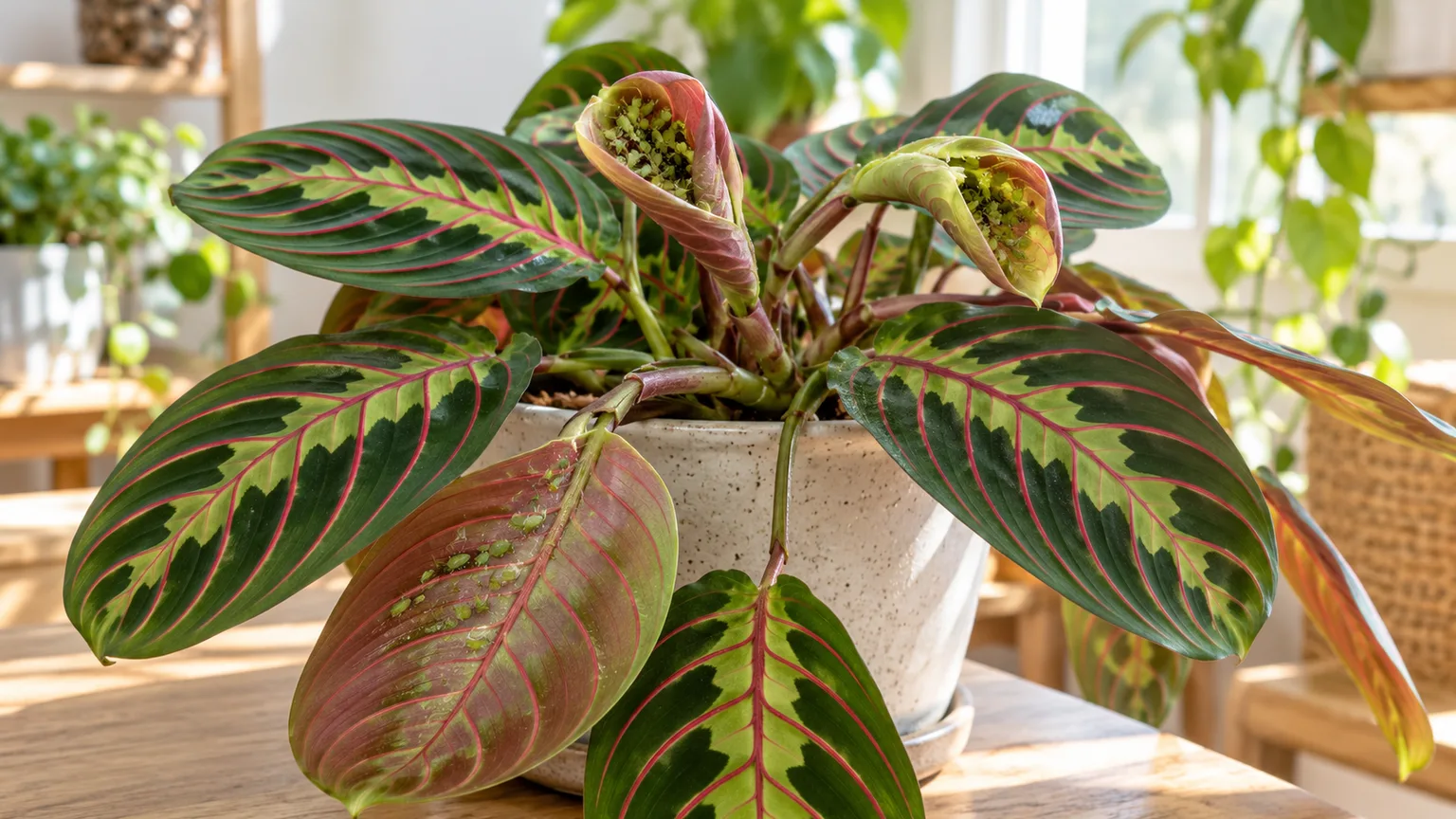
Aphids on Maranta Red Prayer Plant: Causes, Checks & Fixes
This guide covers aphids on Maranta Red Prayer Plant. See also the general Aphids guide, watering, and light pages for this plant.
Aphids on Maranta Red Prayer Plant: Causes, Checks & Fixes
Quick answer
Aphids on Maranta Red Prayer Plant almost always start in the softest rolled new leaves — the pale tubes that slowly unfurl into herringbone-patterned blades — and on the undersides of low horizontal foliage. They suck sap, leave sticky honeydew that can grow black sooty mold, and can pucker emerging rolls so they never open flat.
For how aphids reproduce, why ants defend them, and when water knockdown works in general, see our aphids pest guide. On this plant, the practical pattern is colonies tucked inside day-folded leaves and new rolls, sticky red veins on thin blades, and extra caution because prayer-plant foliage is delicate and the shallow roots flood easily during rinsing.
First step: in daylight while leaves lie flat, inspect inside one rolled new leaf and under low foliage — then rinse visible colonies off with lukewarm water while tipping the pot so runoff does not soak the shallow root zone.
When to use this page vs other Maranta Red Prayer Plant guides
This page is the soft-insect-on-new-rolls entry for sap feeders with sticky residue.
| Pattern | Read next |
|---|---|
| Fine webbing with stippled pale leaves in dry air | Spider mites |
| White cottony tufts in leaf axils or at the crown | Mealybugs |
| Tiny flies rising from mix when you water | Fungus gnats |
| Yellow lower leaves, wet mix, soft stems | Overwatering or root rot |
| Crispy brown edges without stickiness | Brown tips |
| Whole plant limp with dry mix that will not rehydrate | Underwatering or wilting |
| Leaves folding by day in normal light | Drooping leaves |
| Pale stretched stems reaching for light | Leggy growth |
What aphids look like on Maranta Red Prayer Plant
Aphids are small pear-shaped insects, often less than 1/8 inch long, feeding in dense groups on tissue that is still expanding. On a red prayer plant that means new rolls and tender undersides first, not the mature patterned blades.
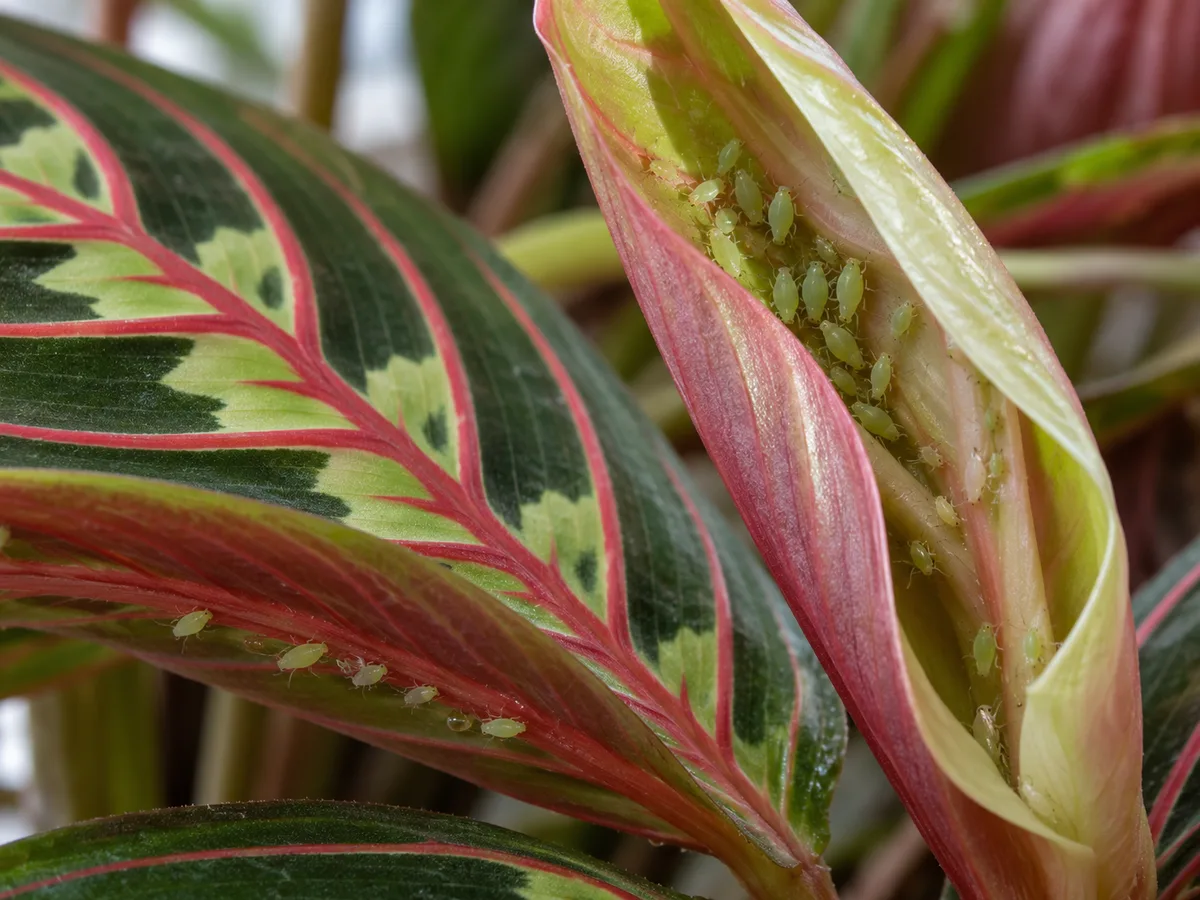
Pale aphids packed inside an unfurling roll and along the underside midrib — compare with firm mature blades lower on the stems.
- Colonies inside rolled new leaves — Gently unroll one emerging tube and look for green, yellow, brown, or black soft-bodied insects packed along the inner surface
- Clusters on leaf undersides near the midrib — Low horizontal leaves held parallel to the soil by day collect colonies underneath where sprays and eyes miss them
- Sticky shine on red veins — Honeydew makes the herringbone veining look wet or varnished and collects dust
- Puckered rolls that never open flat — Feeding distorts leaves while they are soft; overlaps with night-folding confusion, so confirm insects before treating
- Ant trails on the pot rim or shelf — Ants harvest honeydew and protect colonies from lady beetles and lacewings
- Thin black film on lower leaves — Fungus growing on dried honeydew, not leaf-spot disease
Healthy red prayer plant leaves are oval, about 5 inches long, with dark and light green feathering and red veins. Mature blades can look perfect while the newest rolls carry the whole colony — do not declare the plant clean because the outer pattern looks crisp.
Where aphids hide on a folding, trailing prayer plant
Three habits of Maranta leuconeura var. erythroneura make aphid scouting different here than on upright leafy plants.
Inside day-folded leaves. Prayer plants raise their blades to a near-vertical position at night and lower them by day. Colonies tucked into a fold at night can be nearly invisible during a casual evening glance. Always inspect in daylight when foliage lies flat, and lift each low leaf to check the underside midrib groove.
In the unfurling rolls. Each new leaf emerges as a tight pale tube from the crown or a stem tip. Aphids feed inside the tube where humidity is high and tissue is softest. Slide one suspect roll gently open between thumb and finger — a clean roll is smooth and pale inside, while an infested one shows insects and sticky wetness.
Along low trailing stems near the soil. Red prayer plants sprawl rather than climb, so the oldest stems rest close to moist mix. Aphids colonize stem tips and the undersides of leaves sitting just above damp soil, where NC State Extension notes the plant wants low to medium light and high humidity — exactly the still, humid pocket aphids enjoy. Check stem nodes where leaves meet trailing stems, not just the crown.
New plants from the nursery bench often arrive with aphids only in the newest rolls. Quarantine for two weeks and magnify unfurling growth before placing the plant beside other humidity lovers.
Why Maranta Red Prayer Plant gets aphids
Red prayer plants are fussy about atmosphere, and the conditions they like overlap with aphid comfort.
A near-constant supply of soft rolls. In warm rooms the plant pushes new leaves steadily, and each roll stays tender for days. Aphids feed on soft, new plant growth, so a plant that always has one or two unfurling tubes always has a table set.
Warm, humid, still air. The high humidity this plant requires keeps new tissue soft longer and slows drying after rinsing. A humid corner with no airflow grows bigger colonies than a brighter spot with gentle air movement. Review the light guide if every new roll is tiny and soft — weak growth plus pests reinforce each other.
Nitrogen-pushed flushes. High levels of nitrogen fertilizer favor aphid reproduction, and overfed prayer plants push extra-lush rolls. Leaves burn with over-fertilization, so colonies that explode right after feeding point to both problems at once. Cross-check the fertilizer guide and hold extra nitrogen until insects are gone.
Ant protection on low pots. Floor-level and shelf pots give ants easy routes up the pot wall. Once ants farm a colony inside a roll, predators stop visiting and numbers climb faster.
Hitchhikers on new plants and summer patio moves. Aphids enter collections on fresh nursery stock or after a humid summer outdoors. They are not a verdict on your watering — but wet crowns plus pests are a worse combination than either alone, so keep rinsing runoff out of the saucer.
How to confirm the cause
Work through these checks before you treat:
- Roll inspection — Unroll one suspect tube. Pear-shaped, slow-moving insects with long legs and antennae confirm aphids. Fine webbing with stippling in dry air points to spider mites. White cottony wax points to mealybugs.
- Underside check — Turn low horizontal leaves over. Many aphid species prefer the underside of leaves, so colonies there with clean upper surfaces still count as an infestation.
- Honeydew test — Rub a shiny red vein. Honeydew feels tacky; sooty mold smears black and wipes off. Neither pattern matches yellow leaves from old-leaf aging alone.
- Ant activity — Ants climbing the pot point to honeydew producers in the foliage above. Ant control explains rebounding colonies but will not cure aphids by itself.
- Shake test — Tap an infested leaf over white paper. Aphids fall as slow-moving specks. If a cloud of tiny white flies rises instead, suspect whiteflies rather than aphids.
- Mix check — Confirm the top of the mix dries appropriately between waterings per the watering guide. Pest damage on a soggy shallow root zone needs moisture correction alongside insect removal, or compare with root rot when stems soften.
If you find mummified tan or bronze aphid bodies, parasitic wasps are already working — monitor for a week before reaching for sprays.
First fix for Maranta Red Prayer Plant
Rinse visible colonies off rolled leaves and leaf undersides with lukewarm filtered water, tipping the pot so runoff drains away — then let foliage air-dry in bright indirect light with gentle airflow the same day.
Hold the pot at an angle over a sink. Support each thin blade with your fingers and direct a soft stream along undersides and into one gently opened roll at a time. Use lukewarm, low-fluoride water, since leaves burn with high fluorides. A sink sprayer on low pressure works; never blast delicate red-veined tissue with a hard jet.
This single step knocks aphids off and washes honeydew away before ants recruit, and it avoids chemicals on thin leaves that react badly to sprays. Re-inspect opened rolls after three days before deciding anything stronger is needed.
Step-by-step recovery
After the initial rinse:
- Scout every three to four days through warm indoor growth. Aphids can go from newborn nymph to reproducing adult in about a week when warm, so one missed roll restarts the colony.
- Wipe survivors in tight rolls with a damp cotton swab. Water cannot always reach insects deep inside a curled tube — open the roll slightly and dab them out.
- Manage ants when trails are heavy. Sticky barriers on the pot (never on thin stems) or baits placed away from the plant let predators reach aphids. Ant control alone is not a substitute for knockdown.
- Apply insecticidal soap only if two rinse rounds fail. Test one mature leaf first and wait 48 hours, because some plants are sensitive to soaps and oils and prayer-plant blades are thin. Coat aphids thoroughly, avoid drought-stressed plants, and never spray when temperatures exceed 90°F.
- Wash sooty mold off lower leaves with plain water once honeydew stops. Trim blades that stay fully blackened only if they no longer contribute to the plant.
- Hold extra fertilizer until new rolls open clean, then resume the seasonal schedule in the fertilizer guide.
Prune only rolls that are fully distorted and still infested after two rinse cycles. The plant grows from rhizomes and replaces leaves slowly in average home light — see the pruning guide before removing more than one or two leaves at a time.
Recovery timeline
Water knockdown shows results within two to three days on moderate colonies. A full follow-up cycle with scouting usually takes one to two weeks. Puckered rolls from heavy feeding often stay twisted until replaced — expect clean new rolls with crisp red veining within three to six weeks once insects stay gone.
Improvement signs: New rolls opening flat, no fresh stickiness on veins, firm low stems, stable leaf color.
Worsening signs: Honeydew spreading across multiple leaves, ants on every new roll, rolls failing to open anywhere on the plant, or colonies rebounding after two rinse rounds — escalate to targeted soap treatment, or switch to overwatering diagnosis if mix stays wet and stems soften.
Lookalike symptoms
| What you see | More likely | Quick check |
|---|---|---|
| Soft insects inside new rolls with sticky veins | Aphids | Pear-shaped bodies; tacky honeydew |
| Fine webbing plus stippled pale leaves | Spider mites | Dry air; shake test on white paper |
| White cottony tufts in axils or at crown | Mealybugs | Waxy coating; not pear-shaped |
| Crispy brown edges, no stickiness | Brown tips | Dry air or fluoride — check water source |
| Yellow lower leaves in wet mix | Yellow leaves | Soggy roots, not insects — check drainage |
| Daytime folding with dry mix | Low humidity | Mist-free humidity fix, not spray |
Mistakes to avoid
Do not flood the pot while rinsing foliage. Red prayer plants sit in shallow pots over shallow root systems that stay wet easily — empty the saucer within 30 minutes and follow the dry-down check in the watering guide.
Do not spray soap or horticultural oil on the whole plant without a test patch. Thin red-veined blades mark easily, and oils should never go on drought-stressed tissue or in heat.
Do not mist honeydew-covered leaves and walk away. Wet honeydew in still humid air feeds sooty mold; use airflow and dry-off time instead of constant leaf wetting.
Do not increase fertilizer during an active infestation. Extra nitrogen pushes the soft rolls aphids prefer.
Do not strip every distorted leaf at once. The plant needs mature blades for photosynthesis while rhizomes push replacements — remove only heavily infested tissue that fails two rinse cycles.
Do not assume one rinse finishes the job. Warm rooms and fast reproduction mean follow-up scouting matters more than the first knockdown.
How to prevent aphids next time
Scout unfurling rolls weekly during warm months — before stickiness reaches the shelf surface.
Quarantine new plants for two weeks and inspect rolls before placing them beside other prayer plants or calatheas.
Preserve beneficial insects when possible. Tolerate a tiny colony when damage is cosmetic and lady beetles, lacewing larvae, or wasp mummies are present.
Manage ants on pot rims, saucers, and nearby windowsills, especially for floor-level pots.
Keep the plant in bright indirect light with airy, moisture-retentive but well-draining mix so new leaves mature and firm up quickly instead of lingering soft.
Water under the leaves directly onto the soil, a practice Gardening Know How recommends to avoid leaf fungal issues — it also keeps foliage drier and less inviting between treatments.
When to worry
Small aphid clusters on one roll during warm indoor growth are common and rarely threaten a firm plant if you rinse early. Escalate when sticky honeydew coats multiple leaves, ants farm large colonies on every new roll, or emerging leaves fail to unfurl across the whole plant.
Act urgently if stems soften at the soil line, lower leaves yellow in waves, and mix stays wet for weeks — switch to root rot diagnosis rather than assuming insects alone are the problem.
Related Maranta Red Prayer Plant guides
- Overview — prayer-plant culture, night folding, and pet safety
- Watering — shallow-root dry-down without soggy crowns
- Light — firm herringbone growth vs soft etiolated rolls
- Spider mites — webbing and stippling in dry air
- Mealybugs — cottony patches in axils and at the crown
- Brown tips — dry air and fluoride edge burn
- Problems hub — full symptom index
Conclusion
Aphids on Maranta Red Prayer Plant are a rolled-leaf and low-foliage problem in most homes — not a mysterious whole-plant collapse. Inspect inside unfurling tubes in daylight, rinse colonies off with lukewarm water while protecting the shallow roots, and keep air moving while new rolls harden. Flat new rolls with crisp red veining are the recovery signal; older puckered blades can stay imperfect without harming the rhizome-driven plant.
Related tool
Use the Pest Identifier Tool to narrow causes for aphids on this plant before changing multiple variables at once.