How to Grow and Care for Globe Thistle
Grow globe thistle (Echinops) with full sun, gritty soil, sparse watering, and smart deadheading—plus varieties, propagation, and fixes for clay-soil flop.
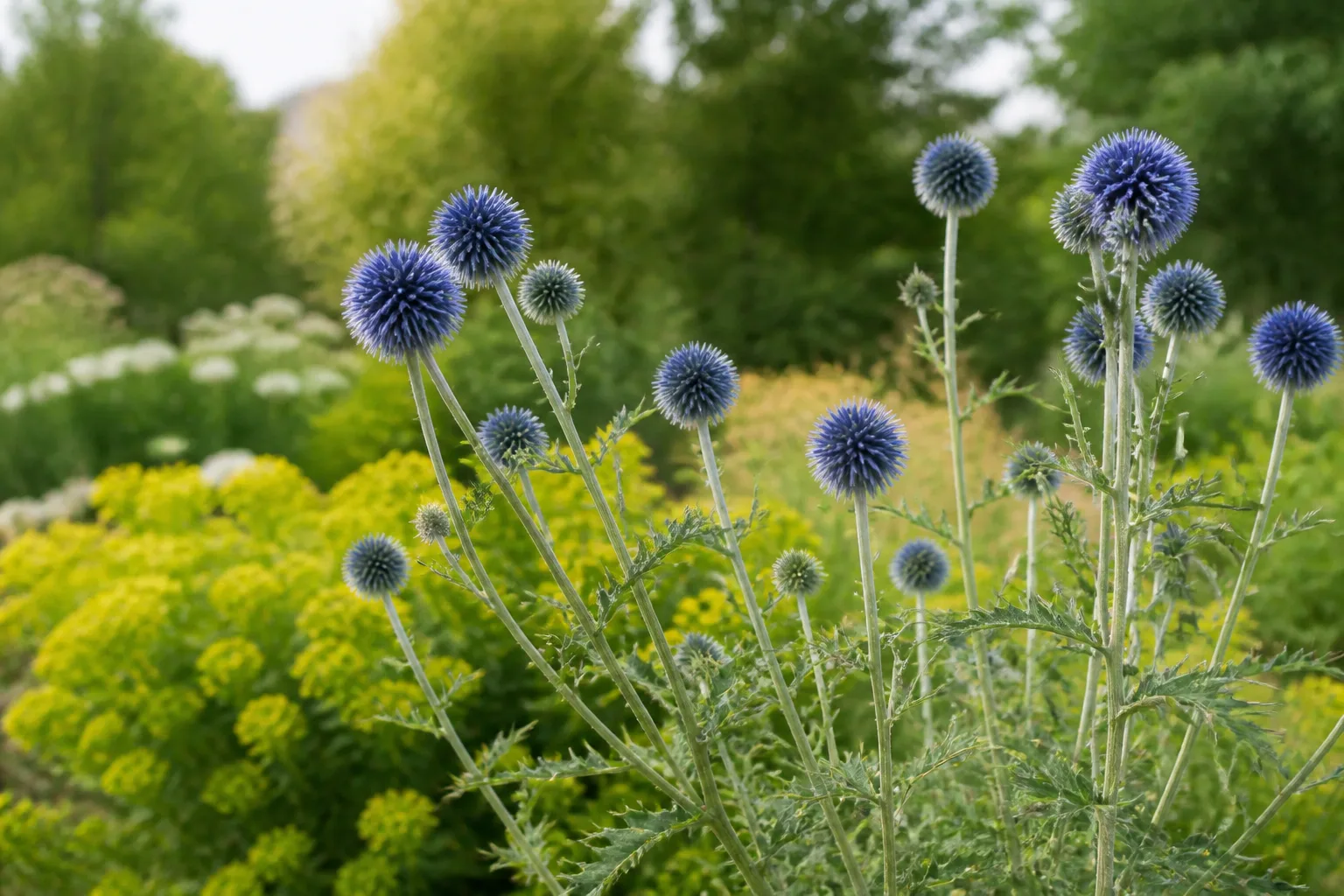
Globe thistle (Echinops spp.) looks like someone stuck steel-blue golf balls on silvery stems—and then left the foliage deliberately spiny so deer think twice. In a sunny border, that combination reads as architectural drama rather than weedy mess, especially when bees and butterflies work the tiny star-shaped florets packed into each sphere. The genus name comes from Greek echinos (hedgehog) and ops (appearance), which tells you exactly what you are getting: round, bristly flower heads on a taprooted perennial built for dry, lean soil.
Globe thistle is not a houseplant shortcut or a thirsty annual. It is a hardy perennial for full sun and well-drained ground, happiest where many showy flowers sulk—hot banks, gravelly edges, and the back of a drought-minded border paired with yarrow or Russian sage. NC State Extension describes Echinops ritro as clump-forming, 3 to 4 feet tall, drought-tolerant once established, and attractive to bees and butterflies when sited in sun with drainage that stays away from soggy clay. (NC State Extension) Missouri Botanical Garden adds the critical flip side: avoid rich soils, because fertility makes stems lanky and staking more likely. (Missouri Botanical Garden)
Globe Thistle Quick Reference
Use this table before you change watering, fertilizer, or placement. Most globe thistle failures trace back to one row here—not mysterious thistle temperament.
| Factor | Target | Warning sign |
|---|---|---|
| Light | Full sun (6+ hours) | Leggy stems, few blooms |
| Soil | Well-drained; poor to average fertility | Rot, flop in rich wet clay |
| Water | Weekly first month; then drought-only | Yellowing base, crown rot |
| pH | Slightly acid to neutral (~5.5–7) | Less critical than drainage |
| Bloom | July–September typical | Heat or shade delays color |
| Height | 2–5 ft by variety | Taplow Blue taller; Platinum Blue shorter |
| Hardiness | USDA zones 3–9 (species vary) | Pots need extra zone buffer |
| Spread | Clump 2–2.5 ft; self-seeds if allowed | Volunteers in gravel paths |
| Wildlife | Bees, butterflies; deer/rabbit resistant | Skip pesticides—host for painted lady |
| Pets | Non-toxic to cats, dogs, horses (NC State tag) | Spines still irritate skin |
For other late-season blue and purple performers, see our guide to late-summer blooming flowers. If you are building a low-input sunny bed, easy-care drought-tolerant perennials pairs well with globe thistle’s lean-soil preference.
What Globe Thistle Is (and What It Is Not)
Globe thistles belong to Asteraceae, the daisy family. Each “ball” is an inflorescence of dozens of tiny star-shaped flowers, not one single blossom. Basal leaves form a spiny rosette in spring; stiff, gray-white stems rise in summer carrying one to several globes per branch. Foliage is deeply lobed, gray-green on top and often white-felted underneath—attractive even before bloom and useful in dried arrangements after color fades.
Several species show up in gardens. Echinops ritro (southern or small globe thistle) is the classic steel-blue border plant from central and southeastern Europe into central Asia. Echinops bannaticus (Hungarian or blue globe thistle) runs taller with intense blue cultivars like Taplow Blue. Echinops sphaerocephalus (glandular globe thistle) spans Eurasia and includes white forms such as Arctic Glow. Heights, stem color, and blue intensity shift by species and cultivar, but care logic stays the same: sun, drainage, and restraint with water and fertilizer.
Globe Thistle vs Invasive Thistles
Gardeners sometimes confuse Echinops with weedy thistles—and that confusion causes both missed plantings and regretful ones. Globe thistle is not the Scottish thistle (Cirsium vulgare), a prickly biennial weed listed as invasive in parts of North America. Globe thistle is also not creeping Canada thistle (Cirsium arvense), which spreads by rhizomes and is a lawn enemy.
Globe thistle can still spread by seed aggressively in gravelly, dry sites if you skip deadheading. NC State lists self-seeding as a behavior to manage, not a reason to ban the plant. (NC State Extension) The fix is operational: bag spent heads before seeds shatter, or accept volunteers and edit them in spring. That is proliferation, not rhizomatous invasion—and it is far easier to control than true invasive thistles.
Young globe thistle leaves are technically edible like other thistles, but they are bristly and bitter compared with artichoke (Cynara), the thistle relative actually bred for the table. Treat globe thistle as ornamental first.
Best Globe Thistle Varieties to Grow
Named cultivars beat generic “globe thistle” labels at the nursery because height and color vary more than the shared common name suggests. Match mature height to your border tier before you dig.
Blue and Steel Cultivars Worth Planting
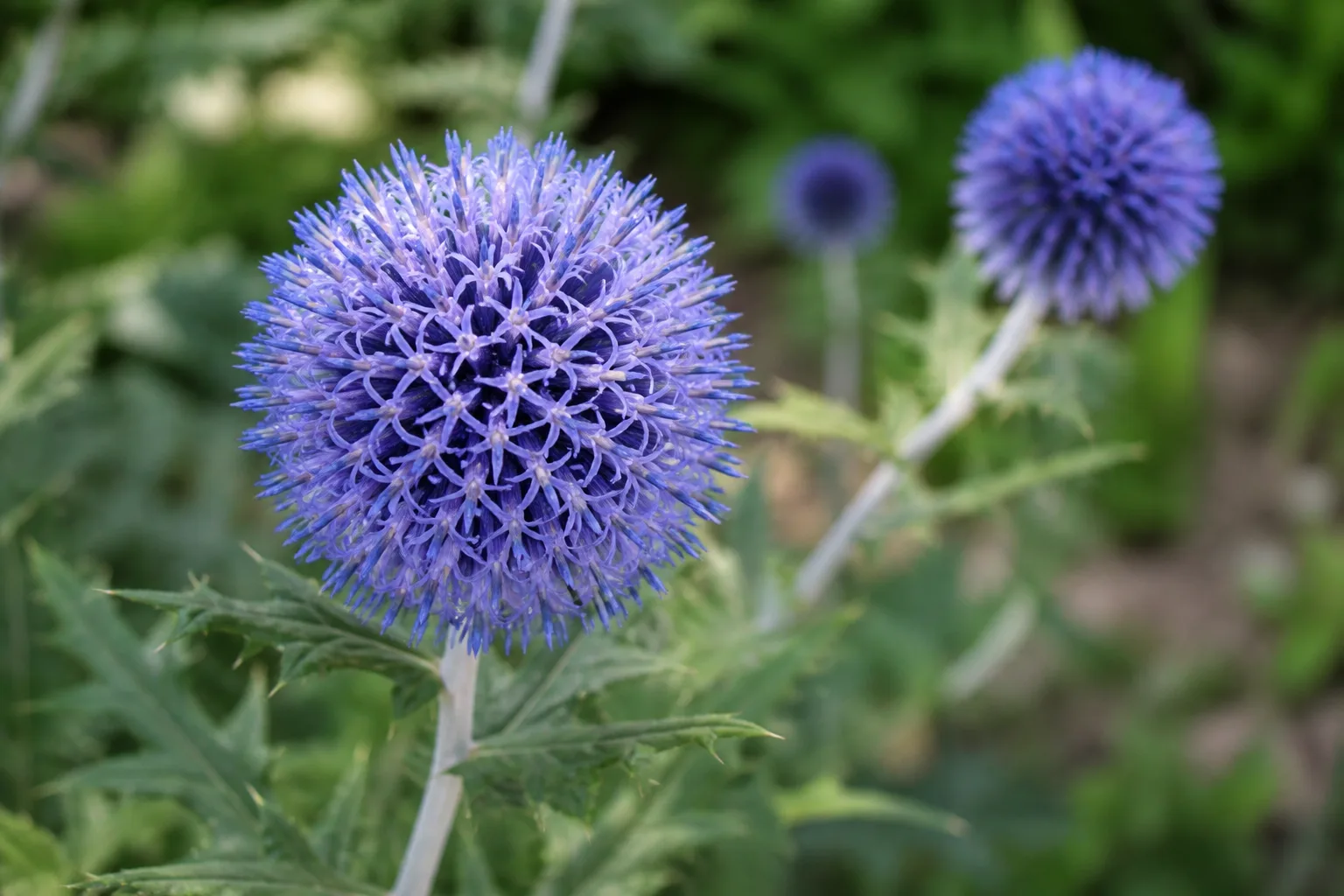
Veitch’s Blue (E. ritro ‘Veitch’s Blue’) remains a workhorse: 30–36 inches, silvery stems, deep blue 1- to 1.5-inch globes, and more flowers per plant than the straight species according to NC State’s cultivar notes. (NC State Extension) Platinum Blue shortens the stack to roughly 20–24 inches with lavender-blue spheres—useful mid-border where Taplow would overpower foreground perennials.
Taplow Blue (E. bannaticus ‘Taplow Blue’) is the back-row showpiece: steely blue heads with pale tips on 4- to 5-foot stems, gray-green foliage, and strong presence behind yellow daisies or black-eyed Susan. RHS lists Echinops bannaticus as a hardy herbaceous perennial with blue summer flowers in full sun. (RHS) Plantura notes Taplow Blue as prolific on stems and easy to propagate—helpful if you want multiple drifts without buying dozens of pots. (Plantura)
White and Compact Options
Arctic Glow (E. sphaerocephalus ‘Arctic Glow’) pairs white spheres with reddish stems and silvery leaves—a high-contrast combo for dark mulch or charcoal gravel. Star Frost (E. bannaticus) offers pure white globes near 30 inches for moon-garden schemes. White forms photograph well and blend with almost any companion color, but they still need the same sharp drainage as blue types.
When buying pots, check labels for species and cultivar. Seed-grown “globe thistle” mixes may not match the parent plant’s height or hue—important if you are repeating a designed color block.
Where, When, and How to Plant
Globe thistle rewards placement more than pampering. Think like the plant’s native stony slopes: open sky, quick drainage, and neighbors that also tolerate dry spells.
Sun, Soil, Spacing, and Drainage Rules
Site in full sun. Six hours of direct light is a minimum for compact stems and strong bloom; partial shade may work in hot-summer regions but often yields taller, floppier plants. NC State allows partial shade tolerance, yet still recommends full sun for peak color and sturdy habit. (NC State Extension)
Soil must drain fast. Sandy, rocky, or loamy ground with moderate moisture is ideal. Heavy clay that holds winter wetness is the primary killer—taproots sit in saturated soil, crown rot follows, and you blame the plant for “not being hardy.” MoBot is blunt: easily grown in average dry to medium well-drained soils; avoid rich soils. (Missouri Botanical Garden)
If clay is your reality, raise the planting zone. A berm or raised bed amended with coarse grit and compost improves drainage without turning the bed into a fertility buffet. Container culture is another escape hatch (covered below). Spacing: allow 24–30 inches between full-size clumps—about two plants per square meter for tall types; compact Platinum Blue can go near 16–18 inches. Airflow between clumps reduces powdery mildew pressure in humid summers.
Planting timing: Spring planting works for nursery pots after the last hard frost. Many perennial specialists—including Plantura—prefer autumn planting so roots establish before top growth explodes, reducing first-summer wilt stress. (Plantura) Either season succeeds if you water consistently through the first month; autumn simply gives a head start on root mass.
Dig a hole as deep as the root ball and slightly wider. Set the crown at the same depth it grew in the pot—never bury stems. Backfill with native soil amended only for drainage, not manure-heavy compost. Water thoroughly once, then follow the watering rules below.
Watering and Drainage Without Root Rot
Globe thistle’s long taproot is both drought engine and vulnerability. Once established, the plant survives dry stretches that would crisp lawn turf. During the first four weeks after planting, water weekly if rain does not arrive—enough to moisten the root zone, not flood it. After establishment, irrigate only when foliage shows drought stress: slight wilting in afternoon heat that does not recover overnight, or older leaves browning at the base.
Overwatering is more dangerous than underwatering. Symptoms of trouble include yellowing at the crown, blackened base stems, and persistent leaf wilting in soil that feels wet. Crown rot fungi thrive where soil stays moist and organic matter is high. The remedy is cultural, not chemical: improve drainage, pull mulch away from the crown, and reduce irrigation. If half the clump is mushy, remove affected tissue and consider restarting from a healthy side shoot rather than fertilizing a dying plant.
In humid regions, spacing and sun do double duty—they dry foliage and soil surface faster. If powdery mildew appears as white dust on leaves, increase airflow and avoid overhead evening watering. Our powdery mildew guide covers identification and low-toxicity management if cultural fixes alone are not enough.
Light, Temperature, and Hardiness Zones
Globe thistle tolerates heat well once rooted, which is why it persists in USDA zones 8 and 9 where summers bake. Ideal active-growth temperatures sit roughly in the 65–75°F range, but the plant does not demand thermostatic precision—it demands dry feet. High humidity without sun and spacing is what pushes disease, not the thermometer reading alone.
Hardiness commonly spans USDA zones 3–9 for E. ritro, with MoBot listing zones 3–8 for the species and NC State tagging zones 3a–8b. (Missouri Botanical Garden) Microclimate matters: low wet spots freeze and thaw worse than raised beds along a south-facing wall. Mulch is optional in ground plantings; avoid piled mulch against the crown.
Bloom timing typically runs July through September, though mild springs can push the first globes earlier and cool autumns extend the show. Individual spheres last several weeks on the plant; deadheading spent stems can trigger a second, smaller flush on some clumps in long-season climates. Flowers are scentless—all the appeal is visual and ecological, not fragrant—which matters when you situate plants near patios or windows you open in summer.
Fertilizer: When Less Is More
Treat globe thistle like a prairie lean-soil perennial, not a hungry rose. MoBot and NC State both emphasize infertile, well-drained conditions. (Missouri Botanical Garden) Skip routine bloom booster. Top-dressing with compost every spring is plenty in most gardens—and even that may be unnecessary if foliage is deep green and bloom is strong.
If leaves look pale and growth is stunted on truly impoverished sand or rock garden mix, a single light application of balanced slow-release granular food in early spring can help. Stop there. Excess nitrogen produces lush leaves and weak stems that flop, forcing staking on a plant whose main selling point is upright structure. If your globe thistle is tall and top-heavy, suspect soil richness or shade before reaching for fertilizer.
Pruning, Deadheading, and Dried Flowers
Wear gloves. Spiny leaf margins and hairy stems irritate bare skin. Clean pruners reduce disease spread if you are cutting multiple clumps.
Deadheading serves three jobs: tidiness, optional rebloom, and seed control. When a globe fades, cut the stem to its base or near a lateral bud if you want a second flush—NC State notes deadheading encourages rebloom. (NC State Extension) To prevent self-seeding, slip a small bag over the head before you cut, catching seeds that would otherwise scatter into gravel.
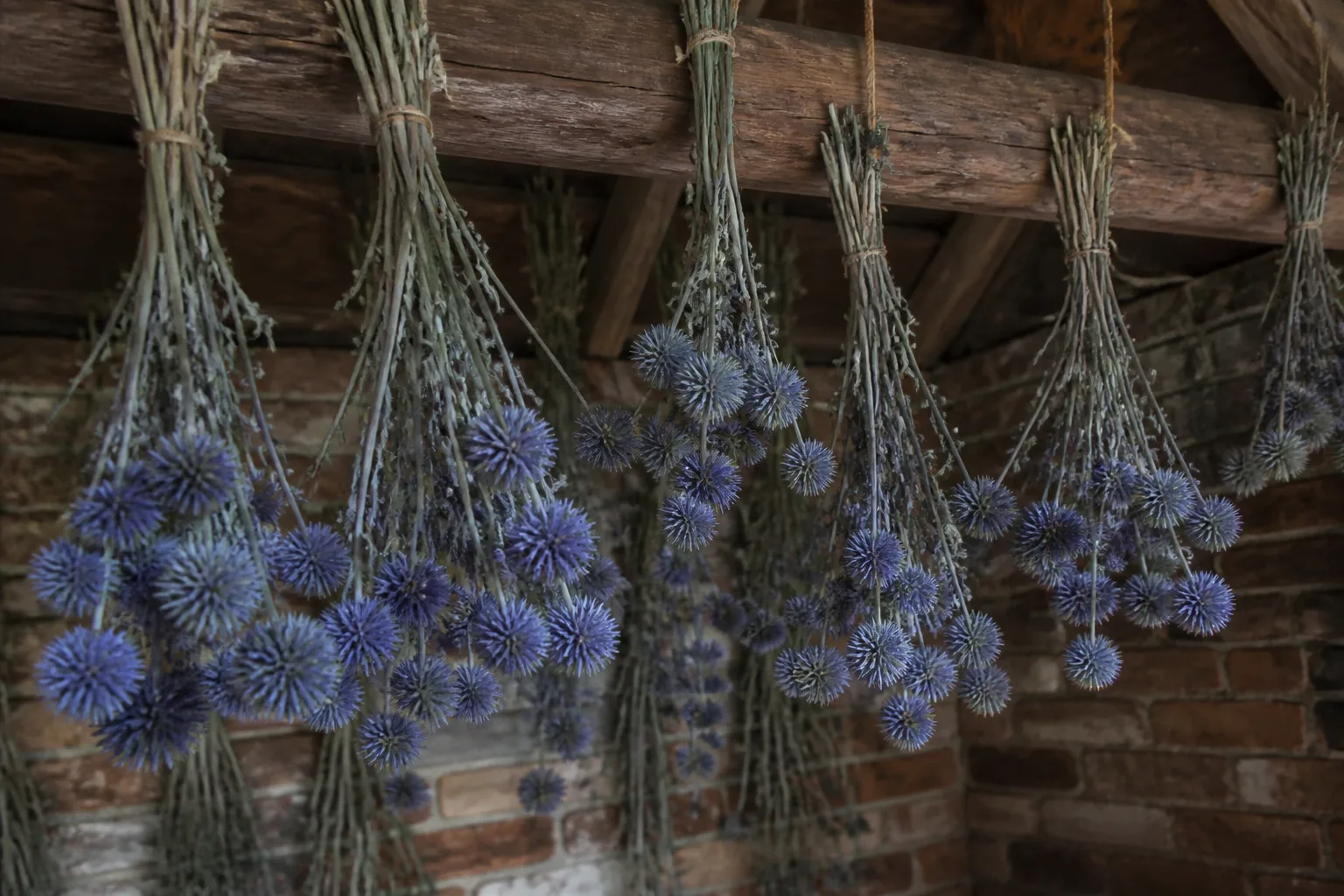
For dried arrangements, harvest stems when globes are fully colored but not fully open—Plantura recommends cutting before flowers open wide, then drying in a warm room to preserve blue tone. (Plantura) NC State likewise advises cutting young for deep color retention. (NC State Extension) Strip lower leaves, hang bundles upside down out of direct sun, and handle carefully—dried spheres shatter if bumped.
In late fall, cut dead stems to ground level. The basal rosette or dormant crown overwintering in soil needs no special wrap in ground beds. Leaving seed heads standing feeds finches if you choose wildlife over neatness—just know you may get volunteers.
Propagation by Division, Root Cuttings, and Seed
Globe thistle offers three propagation paths; pick based on plant age, patience, and whether you need a named cultivar true to type.
Division works on mature clumps three years or older when you see offsets at the base. Spring is the usual window. MoBot warns that taproots make division and transplanting difficult—expect some setback. (Missouri Botanical Garden) Dig wide, sever the taproot cleanly with a sharp spade or knife sanitized with alcohol, and replant each piece at the same depth with lateral roots intact. Water deeply once; do not fertilize until new growth appears.
Root cuttings suit late winter while the plant is dormant. Plantura describes cutting thick roots into 2–4 inch sections, laying them horizontally in moist sandy mix, and waiting for adventitious shoots. (Plantura) This method scales better than dividing a deep taproot on older specimens.
Seed is easy but genetically variable for cultivars. Collect ripe heads in fall, sow outdoors on bare soil with light cover, or stratify indoors four weeks in moist mix in the refrigerator before starting under lights at ~70°F. Germination often appears in about two weeks after chill. Seedlings need spacing 18 inches or more to avoid crowding. If you must replicate Veitch’s Blue or Taplow Blue, division or cuttings beat seed.
Container Growing and Overwintering
Pots contain spread and let you cheat clay soil—but the taproot demands volume. Choose a large terra-cotta or plastic pot at least 16–20 inches deep with multiple drainage holes. Use sandy loam or cactus mix; avoid water-retentive peat-heavy blends.
Water containers more often than in-ground plants, but still only when the top few inches dry. Repot when the clump outgrows the pot or you divide offsets—typically every three to four years.
For winter survival in pots, remember roots freeze harder above ground than soil-line roots in beds. A common rule: the plant should be hardy two zones colder than your garden zone if left outdoors in a pot, or move pots to an unheated garage after cutting back in fall. Wrap pots in burlap and bubble wrap where deep freezes persist. Resume watering in spring when new basal growth shows—not during dormant winter months.
Pests, Diseases, and Common Problems
Healthy globe thistle in sun and sharp drainage sees few serious issues. NC State lists possible aphids, leaf miners, thrips, slugs, and snails but no major chronic pests. (NC State Extension) Aphids and four-lined plant bugs may mar stems cosmetically; a firm hose blast repeated every few days often clears them without insecticides.
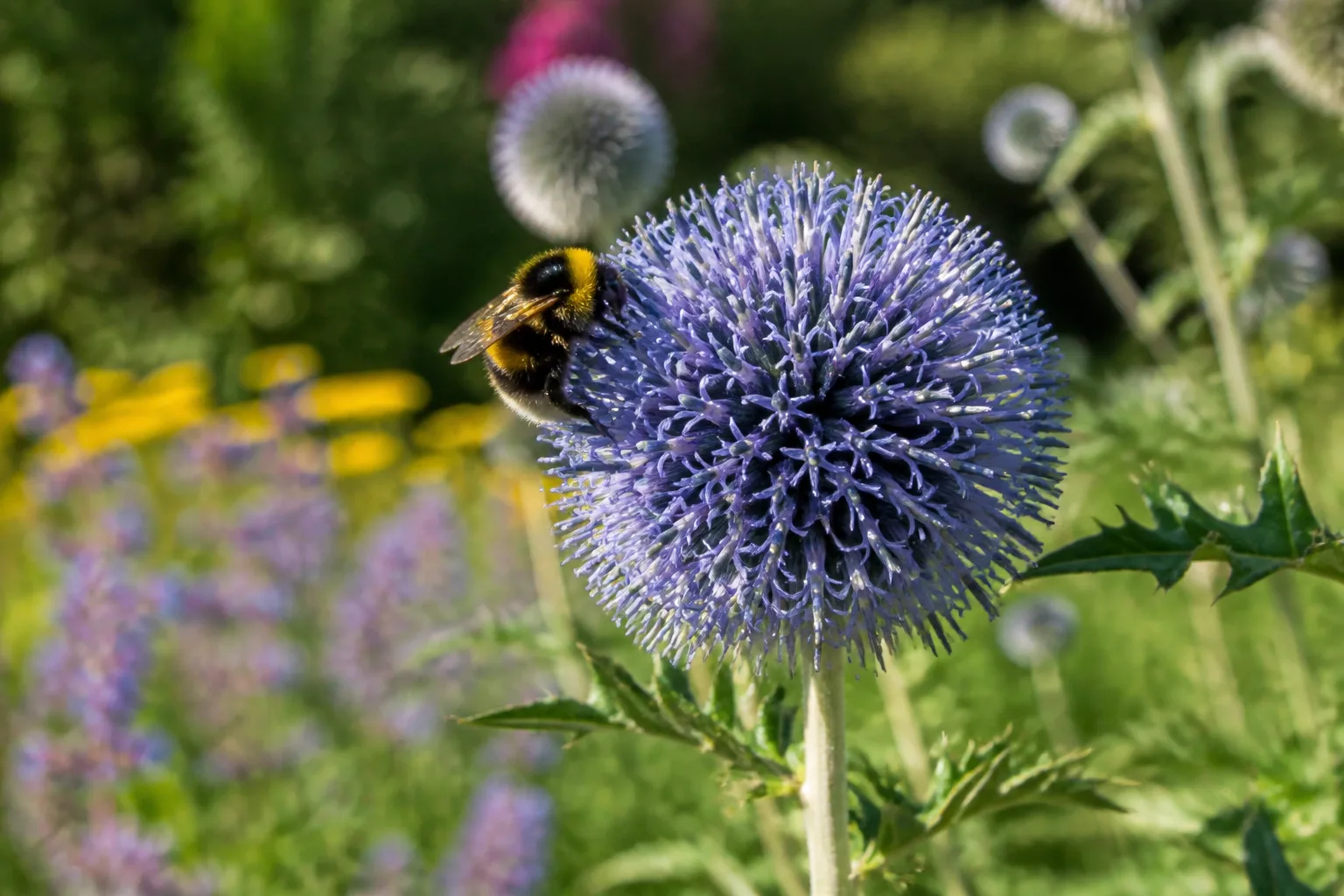
Avoid broad-spectrum pesticides on globe thistle when possible. Spiny foliage supports beneficial insects, and the plant is a host for painted lady butterfly caterpillars—spraying indiscriminately removes the pollinator value you planted for. Deer and rabbits typically pass it by thanks to texture and spines.
Crown rot and root rot remain the lethal threats, both tied to wet soil. Powdery mildew appears as a white fungal coat on leaves in humid, shaded, or overcrowded sites—fix culture first. No serious insect epidemics require chemical rescue on established plants if drainage and sun are corrected.
Fixing Leggy or Flopping Stems
Flopping is a placement or soil signal, not a mystery disease. Causes stack in this order: too much shade, too much fertility, too much water, or storm-weighted blooms on tall cultivars like Taplow Blue. Move or divide into sunnier leaner soil before staking every year. If a single heavy head droops after rain, stake discreetly or cut flowers for vases—preferable to permanent shade relocation.
If bloom count drops while foliage explodes, you are feeding or watering like a hungry annual. Pull back inputs and wait one season; globe thistle often rebalance itself when stress returns to prairie-like conditions.
Companion Plants and Border Design
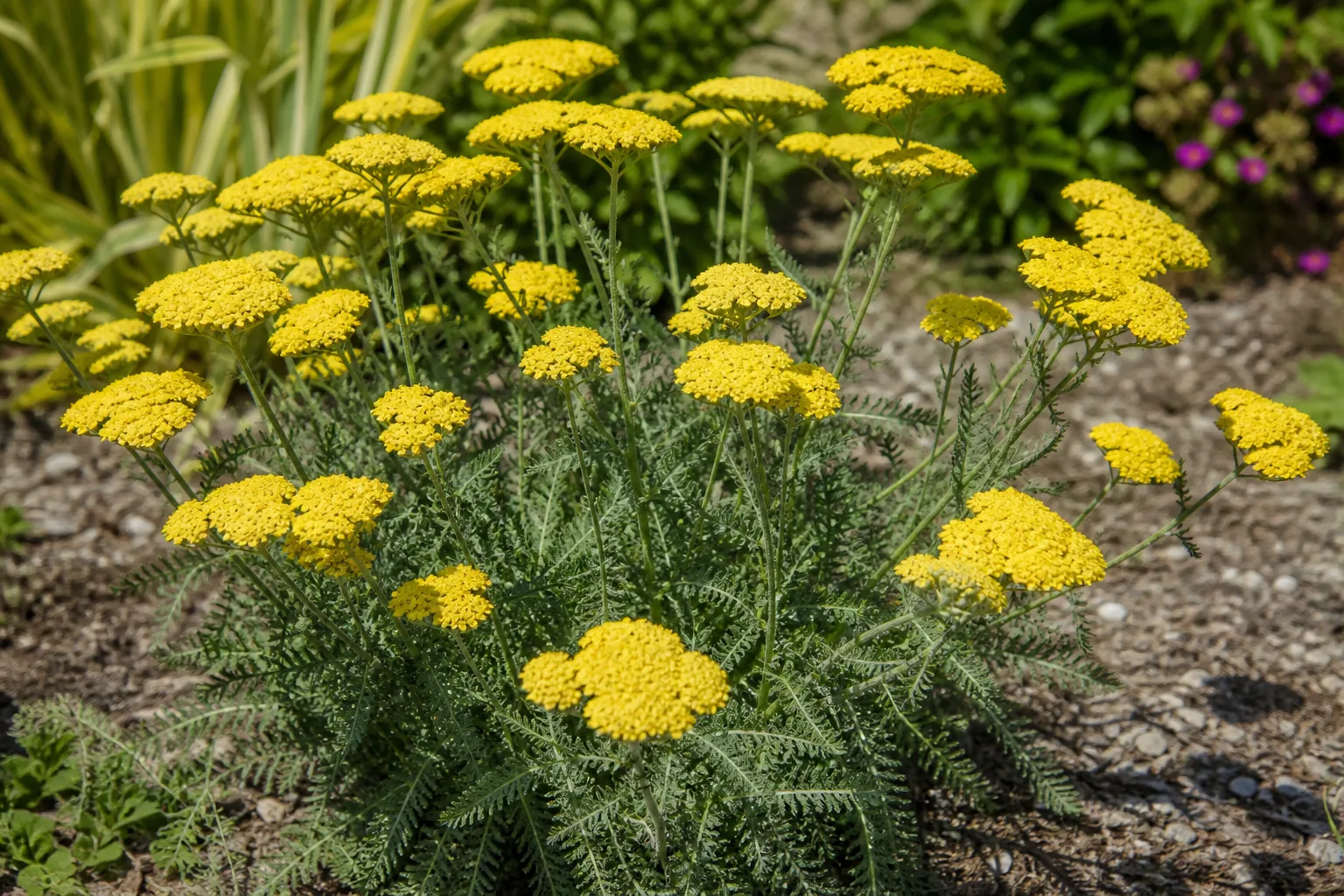
Globe thistle shines in cottage, cutting, and pollinator gardens where vertical blue spheres contrast warm yellows and oranges. NC State suggests back-of-border placement in full sun cutting gardens. (NC State Extension) Pair with drought-aligned partners: yarrow, Russian sage, catmint, sedum, ornamental grasses, and black-eyed Susan for a long-season border that does not need daily watering.
Color-wheel design is straightforward: steel blue globes against yellow daisies or rudbeckia pop visually; white cultivars like Arctic Glow work as neutral glue between hot and cool beds. Repeat drifts of three or five plants rather than single soldiers—globe thistle reads best in mass at mid to back depth.
Leave empty mulch-free space at the crown when combining with aggressive groundcovers. Competing vines or dense mat-formers hold moisture against the base—exactly what taprooted perennials hate.
Conclusion
Globe thistle earns its space when you stop fighting its prairie temperament. Give it all-day sun, gritty drainage, and sparse water after establishment, and it returns with bristly blue spheres, pollinator traffic, and stems worth cutting fresh or dry. Rich clay, shady corners, and enthusiastic fertilizer produce the same sad story: leggy flop, rot, or both.
Choose cultivars for height and color, plant in spring or autumn with a serious first-month watering plan, and propagate by division or root cuttings when you want clones—not seed, if matching a named blue matters. Deadhead if spread annoys you; leave seed heads if finches amuse you. Handle with gloves, skip unnecessary sprays, and fix soil before buying another replacement plant. Do that, and globe thistle becomes one of the lowest-maintenance vertical accents in a sunny perennial border—exactly the kind of plant you install once and enjoy for years.



