Low Humidity on Lettuce: Causes, Checks & Fixes
Quick answer
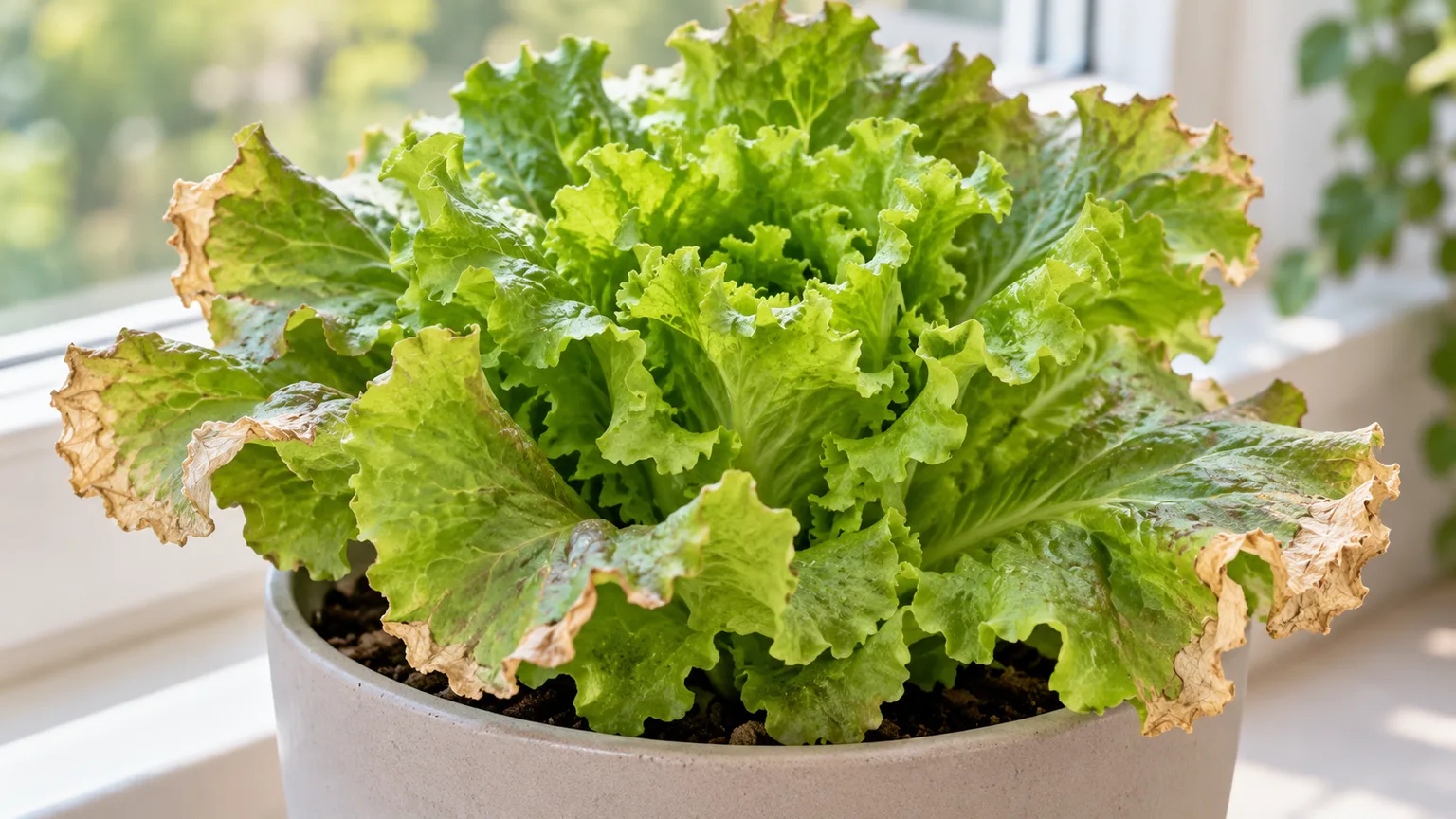
Dry indoor or windy air makes lettuce outer leaves crisp, dull, and papery while the soil may still feel moist. First, water the root zone back to even moisture and move the pot out of direct heater, fan, or hot-afternoon-sun blast, then reassess in 24 hours.
Low Humidity on Lettuce: Causes, Checks & Fixes
This guide covers low humidity on Lettuce. See also the general Low Humidity guide, watering, and light pages for this plant.
Low Humidity on Lettuce: Causes, Checks & Fixes
Quick answer
Dry air rarely kills lettuce outright, but it degrades the harvest fast: outer leaves turn dull, papery, and crisp at the margins while the heart may still look fine. On Lactuca sativa this matters more than on a thick-leaved houseplant because the crop is mostly water, grows quickly from a shallow root zone, and is picked for tender texture.
First fix: restore even root-zone moisture and get the plant out of the drying blast. Water the soil (not the head) when the upper 1–2 cm begins to dry, move the pot away from heaters, fans, and harsh afternoon sun, and check again in 24 hours. For general background on how dry air stresses foliage, see our low humidity guide — the rest of this page covers what is different on lettuce.
What low humidity looks like on lettuce
On lettuce, dry air shows first where exposure is greatest: the windward edge of the bed, the outer leaves of a rosette, and the leaves closest to a heater vent or sunny windowsill. Margins turn pale, then tan and papery. Unlike sun scorch, which often follows a sudden move into harsh light, dry-air crisping builds over several days of steady exposure and affects the most exposed tissue first.
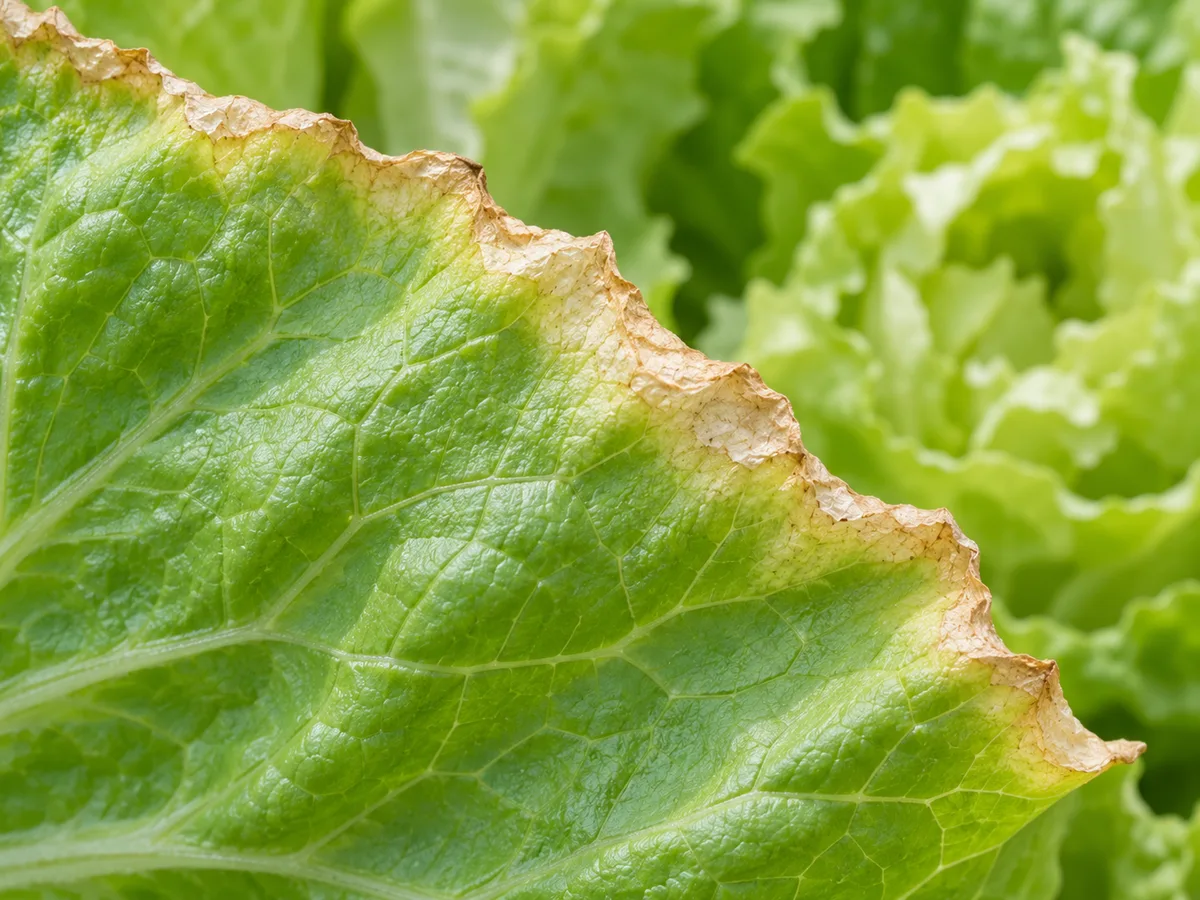
Dry papery margins on outer lettuce leaves with a healthy centre — compare with inner-leaf tipburn in the lookalike table below.
Growth also tells the story. Leaves feel tougher and less crisp-juicy, flavour can turn more bitter in warm weather, and looseleaf types may stall while heading types close more slowly. Seedlings are the most vulnerable: a small cell of mix dries in hours on a warm windy sill, and a seedling that wilts repeatedly seldom regrows into a strong rosette. That seedling response is a lettuce-specific clue — a mature pothos tolerates a dry afternoon, but a lettuce seedling does not.
Why lettuce reacts quickly to dry air
Three traits combine against lettuce when air dries out.
Shallow roots meet fast growth. Lactuca sativa feeds from a relatively shallow zone and produces tender leaves in weeks rather than months. A dry surface layer therefore affects much of the active root system, especially in containers only 15–20 cm deep. Utah State University advises about 1–2 inches of water per week and warns that moisture swings make leaves tough and slow head development — dry air accelerates exactly those swings.
Cool-season physiology under heat. Lettuce grows best below about 24°C, and the NC State Extension profile for Lactuca sativa notes that heat combined with dry soil pushes the plant toward bolting and bitterness. Dry wind or indoor heating therefore does double damage: it dries the root zone faster and signals a crop already near its heat limit to stop producing good leaves. Afternoon shade in warm weather is heat management, not a humidity cure, but it slows the drying cycle.
Calcium transport depends on water movement. Tipburn — brown margins on young inner leaves — is a local calcium deficiency in growing tissue that can occur even when soil calcium is adequate, because calcium travels in the transpiration stream toward the most actively transpiring leaves. Bayer’s review explains that hot, low-humidity, windy days pull disproportionate water through outer leaves while sheltered inner leaves receive less calcium, and that dry windy nights can disrupt the root-pressure flow that normally evens out delivery after dark. Rutgers reports the same mechanism from the night side: low nighttime humidity raises tipburn risk by driving non-stomatal water loss and cutting calcium supply to the shoot tip. So very dry air and very still humid air can both end in browned margins — on different leaves, for opposite reasons.
Looseleaf and heading lettuces diverge here. Open looseleaf rosettes expose every leaf to the air, so dry wind crisps outer margins directly. Romaine, butterhead, and crisphead shelter their inner leaves; those inner leaves transpire less and are the classic tipburn site. Treat the exposed outer crisp as a dry-air problem and the enclosed inner browning as a transpiration-balance problem.
How to confirm the cause
Work in this order before changing anything:
- Soil check beneath the canopy. Push a finger into the mix midway between stem and pot wall. If the upper 1–2 cm is beginning to dry but the layer below still feels cool and structured, the plant is in its normal watering window — crisp edges with acceptable soil point toward air, not an empty root zone. Dusty soil through the full depth points to underwatering on lettuce instead.
- Air-source scan. Note heaters, air-conditioner vents, fans, open windy balconies, and hot afternoon sun through glass. Damage concentrated on the side facing the source is a strong dry-air signal. Indoor growers can confirm with a hygrometer: houseplants generally prefer 40–60 percent relative humidity, and heated winter rooms often fall well below that.
- Leaf-locus test. Outer-leaf papery margins with a healthy centre fit dry air. Inner-leaf browning inside a closing head fits tipburn — open the tipburn guidance via brown tips on lettuce rather than misting the head.
- Crown and root check. Lift the plant slightly or inspect drainage: firm crown, white-ish roots, and no sour smell rule out root rot on lettuce and overwatering on lettuce. A soft crown on wet mix is a drainage emergency, not a humidity tweak.
- Pest sweep. Dry stressed lettuce attracts aphids on lettuce and spider mites on lettuce. If stippling, webbing, or clustered insects are present alongside crisping, treat the pest path first and read crisp edges as secondary stress.
Confirmed dry-air pattern: acceptable-to-slightly-dry soil, firm crown, crisping worst on exposed outer margins, known heater/fan/wind source. Suspected: general dullness without margin damage — recheck in a day rather than intervening heavily.
First fix for lettuce in dry air
Do one thing first: water the root zone to even moisture and relocate the plant out of the drying airflow. Apply water slowly at soil level until a little drains from the holes, empty the saucer, and move the pot away from the vent, radiator, fan, or unshaded hot afternoon position. Morning sun with afternoon shade suits warm-weather lettuce better than an exposed all-day sill.
Do not mist the head as the fix. A light morning mist raises humidity for minutes and leaves water sitting between closing leaves, which invites rot without solving root-zone swings. Pebble trays and grouping pots are safer buffers: set the pot on a tray of pebbles with water below the pot base so evaporation humidifies the air without waterlogging roots.
Step-by-step recovery
- Water at soil level when the top 1–2 cm begins to dry; confirm moisture penetrated below the surface.
- Empty saucers and clear drainage holes so the pot never sits in runoff.
- Shelter from drying sources: heater and fan distance, sheer curtain on harsh afternoon glass, windbreak or morning-sun-only spot outdoors.
- Add a pebble tray or group containers to buffer the microclimate; keep water below the pot base.
- Mulch beds lightly around established plants to slow surface evaporation, keeping mulch off the crown.
- Remove only fully dead papery edges with clean scissors; leave partly green leaves working.
- Recheck new centre growth in 7–14 days before deciding anything is fixed.
For container and bed routines, align this with the lettuce watering guide and the lettuce soil guide so frequency matches your pot size and mix rather than a calendar.
Recovery timeline
Outer crisp does not reverse — judge recovery by what emerges next. Tender centre leaves should look clean and unblemished within one to two weeks of steadier moisture and gentler air. Looseleaf types show this fastest because every new leaf is visible; heading types need longer before the inner leaves prove themselves. If fresh growth also emerges with brown margins despite stable watering, suspect tipburn physiology or a cultivar prone to it and review fertility in the lettuce fertilizer guide rather than adding more water.
Lookalike symptoms
| What you see | Likely cause | Key check |
|---|---|---|
| Papery margins on exposed outer leaves, firm crown | Dry air | Damage faces the heater, fan, or wind; soil may still be moist |
| Limp whole plant that perks up after watering | Underwatering | Soil dusty through the depth; pot feels light |
| Yellow outer leaves, soft crown, wet mix | Overwatering / root rot | Sour smell, soggy soil, soft stem base |
| Brown edges only on young inner leaves of a closing head | Tipburn / calcium-transport issue (brown tips) | Outer leaves normal; head shelters the damaged tissue |
| Pale stretched plants with wide spacing | Not enough light / leggy growth | Long internodes; whole plant reaches toward light |
| Stippling, webbing, or clustered insects plus dullness | Spider mites / aphids | Pests visible on undersides and tips |
| General stall with no margin damage | Slow growth | Review season, spacing, and nutrition |
Persistent wilt despite moist soil and drooping leaves deserve their own diagnostic paths when the crown or roots look abnormal.
What not to do
- Do not flood a crisped plant to compensate — saturated mix on a shallow root zone invites damping-off and crown softness.
- Do not mist inside a closing head late in the day or keep foliage wet overnight.
- Do not fertilize stressed lettuce to force new leaves; excess nitrogen pushes soft rapid growth that tipburns more easily.
- Do not repot or heavily prune while the plant is stabilizing — one correction at a time reads clearly.
- Do not add calcium to the soil as a reflex for every brown edge; soil calcium applications are often ineffective because the problem is local transport, not soil supply.
Lettuce care cross-check
Dry-air damage is usually the visible end of a seasonal mismatch. Confirm the sowing window suits your climate — lettuce is a cool-season crop, and persistent heat ends the harvest regardless of humidity tweaks. Check spacing: crowded heads trap moisture and reduce airflow, while isolated small pots on a windy sill dry fastest. Review light in the lettuce light guide: full sun suits cool weather, but morning sun with afternoon shade is the safer warm-weather position. If seedlings are involved, revisit sowing depth, thinning, and transplant timing in the lettuce propagation guide and final-container timing in the lettuce repotting guide.
How to prevent it next time
Sow in the cool window, choose bolt- and tipburn-tolerant cultivars for warm shoulder seasons, and space heading types so air moves without blasting. Keep the root zone evenly moist with checks beneath the canopy, water in the morning, and mulch established beds. Indoors, keep lettuce away from heat sources and fan outlets, group pots to share transpired moisture, and use a pebble tray rather than overhead misting. Harvest looseleaf outer leaves young during heat spells instead of waiting for a perfect head — that both reveals the root zone for checks and reduces the transpiring leaf area.
When to worry
Escalate when the crown softens, damage spreads from margins into the heart within days, several plants collapse together, or insects colonize the stressed tissue. A single crisped outer leaf on an otherwise growing rosette is routine; a soft stem base on wet mix, or inner-head browning across most of a bed near harvest, needs prompt diagnosis beyond humidity buffering. The lettuce problems hub collects the full issue list when more than one symptom overlaps.
When to use this page vs other lettuce guides
- Start with the lettuce overview for cultivar types, season, spacing, and harvest.
- Use this page when exposed outer margins crisp in dry, windy, or heated air with a firm crown.
- Open brown tips on lettuce when browning sits on young inner leaves inside a closing head.
- Open underwatering on lettuce when soil is dusty deep and the whole plant wilts.
- Open overwatering on lettuce or root rot on lettuce when the crown softens on wet mix.
Related lettuce guides
- Lettuce overview — cultivar groups, season, and harvest.
- Lettuce watering — the top 1–2 cm check and container vs bed routines.
- Lettuce soil — moisture-retentive but freely draining mix near pH 6.0–6.7.
- Lettuce light — cool-season sun and afternoon-shade heat management.
- Lettuce fertilizer — feeding without forcing tipburn-prone growth.
- Lettuce problems — full issue hub for overlapping symptoms.
- Brown tips on lettuce — inner-leaf tipburn differentiation.
- Underwatering on lettuce — whole-plant drought pattern.
- Wilting on lettuce — wilt that persists despite moisture checks.