Companion Planting Chart for Vegetable Gardens
Use this companion planting chart to pair vegetables, herbs, and flowers by purpose, spacing, timing, competition, and crop rotation.
Companion planting works best as a garden-planning method, not a magic list of plants that “like” one another. The useful question is not simply whether basil belongs beside a tomato. It is whether the two plants can share the available light, water, root space, airflow, and harvest window—and whether the claimed benefit is strong enough to justify the space.
The chart below separates practical pairings from weaker folklore. Use it to create diversity, fill temporary gaps, support pollinators, and manage space. Continue to scout for pests and diseases: a companion plant cannot cure blight, replace a barrier, or make an overcrowded bed healthy.
What companion planting can and cannot do
Companion planting means growing different species near one another for a plausible benefit: staggered harvests, physical support, shade on the soil, habitat for beneficial insects, or disruption of a pest’s ability to find a host. University extension guidance notes that some pairings have a clear mechanism while others are based on observation and are not equally reliable.
The most dependable benefits are often geometric. Radishes mature before a pepper canopy closes. A trellis lets beans grow upward while lettuce occupies the lower space. Flowers provide nectar and visual diversity. Those are real outcomes even when a claim that one plant “repels all insects” is not.
How to use the chart without overcrowding
Plant companions close enough to share a bed, not so close that their leaves touch from the moment they are planted. A practical starting point is the same spacing you would use for either crop, with flowers and herbs tucked along edges. The more vigorous plant gets its full mature spacing first; the companion fills the remaining, temporary space.
Match light, roots, water, and maturity
Put tall crops on the north side of the bed in the Northern Hemisphere so they do not shade shorter neighbors. Pair crops with similar water needs. Keep a drought-tolerant rosemary plant away from a cucumber that needs consistently moist soil. Use maturity dates as a design tool: plant quick greens between slow tomatoes, then harvest before shade and humidity increase.
Vegetable companion planting chart
| Main crop | Useful companions | Why the pairing can work | Watch out for |
|---|---|---|---|
| Tomato | Basil, calendula, carrots, lettuce, parsley | Diverse understory, temporary interplanting, pollinator habitat | Shade, shared disease, crowding |
| Pepper | Basil, carrot, onion, marigold | Similar warm-season timing; edge flowers | Do not let flowers block airflow |
| Eggplant | Beans, basil, marigold, thyme | Low companions and insect habitat | Eggplant still needs full sun |
| Potato | Bush beans, horseradish, peas, radish | Different canopy timing and root zones | Keep away from tomato beds |
| Bean | Cucumber, corn, radish, squash | Vertical support or different harvest timing | Separate from onions and garlic |
| Pea | Carrot, radish, spinach, cucumber | Cool-season overlap and trellis use | Peas dislike hot weather |
| Corn | Bean, cucumber, melon, squash | Support and space stacking | Plant corn in a block for pollination |
| Cucumber | Bean, dill, radish, nasturtium | Trellis, flowers, early radish harvest | Vines can smother neighbors |
| Squash | Corn, bean, dill, nasturtium | Ground cover and pollinator draw | Give each plant several square feet |
| Brassica | Dill, onion, thyme, beet, lettuce | Flowering herbs and mixed root zones | Shared caterpillars still need scouting |
| Carrot | Chive, leek, onion, radish, rosemary | Slow roots beside quick radish; scent diversity | Do not use woody herbs as shade |
| Beet | Bush bean, cabbage, lettuce, onion | Compact roots and leafy canopy | Avoid dense wet foliage |
| Lettuce | Carrot, cucumber, radish, strawberry | Cool, quick crop under taller plants | Pull before heat and shade stress |
| Onion | Beet, carrot, lettuce, brassica | Slow upright roots with low companions | Keep away from beans and peas |
Reliable pairings by crop
Tomatoes, peppers, eggplant, and potatoes
Tomatoes, peppers, and eggplant are all nightshades. Basil, parsley, calendula, and low lettuce can occupy nearby space, but the most important rule is airflow. Avoid turning one plant into a wall of foliage around another. Stake tomatoes early and plant companions on the sunny side where they will not disappear under the canopy.
Potatoes also belong to the nightshade family, so keep them in a separate block from tomatoes when possible. Separation does not guarantee disease prevention, but it makes scouting and rotation easier and reduces the chance that one dense canopy becomes a shared disease environment.
Beans, peas, corn, cucumbers, and squash
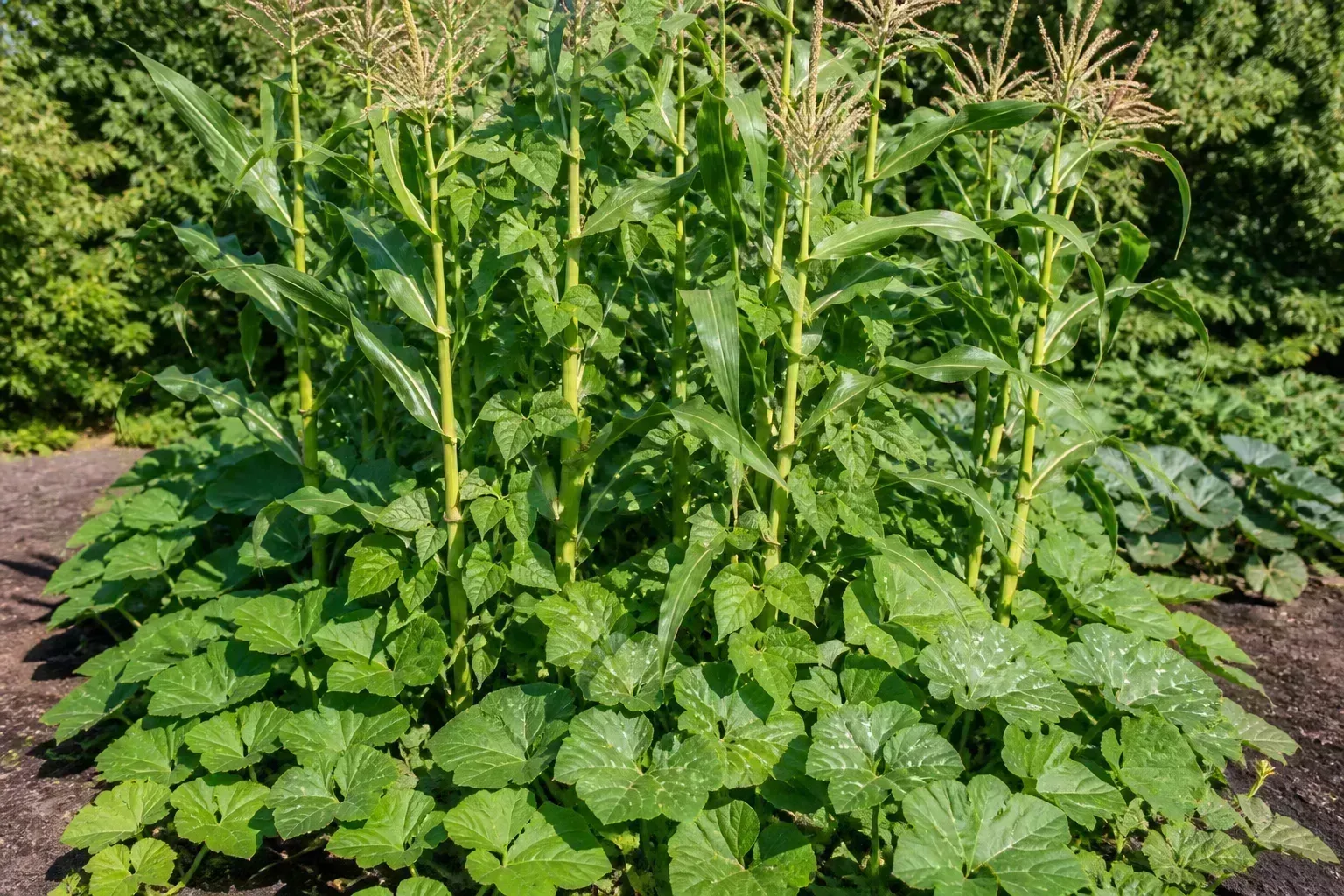
Beans and corn can be paired when the corn is planted in a block strong enough to support the beans and the site is fertile enough for both. Cucumber can climb a trellis near bush beans, while radishes or dill occupy the edge. Squash needs more ground than most charts admit; its vines are not a filler plant for a small square.
Beans and peas should be kept away from onions, garlic, and other alliums when space allows. The practical reason is competition and the possibility of stunting in tight mixed beds, not a universal chemical rule. If a small garden forces the pair together, increase distance, observe growth, and rotate the block next season.
Brassicas, carrots, beets, onions, and greens
Brassicas benefit from a diverse bed with dill, thyme, onions, beets, or lettuce, but no companion makes cabbage whiteflies or caterpillars disappear. Use row cover while plants are small, inspect leaf undersides, and remove pests early.
Carrots and radishes are a classic timing partnership: radishes mark the row and mature quickly while carrots take longer. Once the radishes are harvested, the carrots have more room. Onions, beets, and lettuce are useful low plants around a taller crop as long as watering remains compatible.
Herbs and flowers as companions
Herbs are valuable companions when you grow them for harvest, scent, flowers, or structure—not because a single sprig guarantees pest control. Dill, fennel, cilantro, and parsley can feed beneficial insects when they flower, but fennel can spread and may compete with nearby vegetables. Grow aggressive herbs in containers or a defined edge.
Pollinator strips and beneficial insects
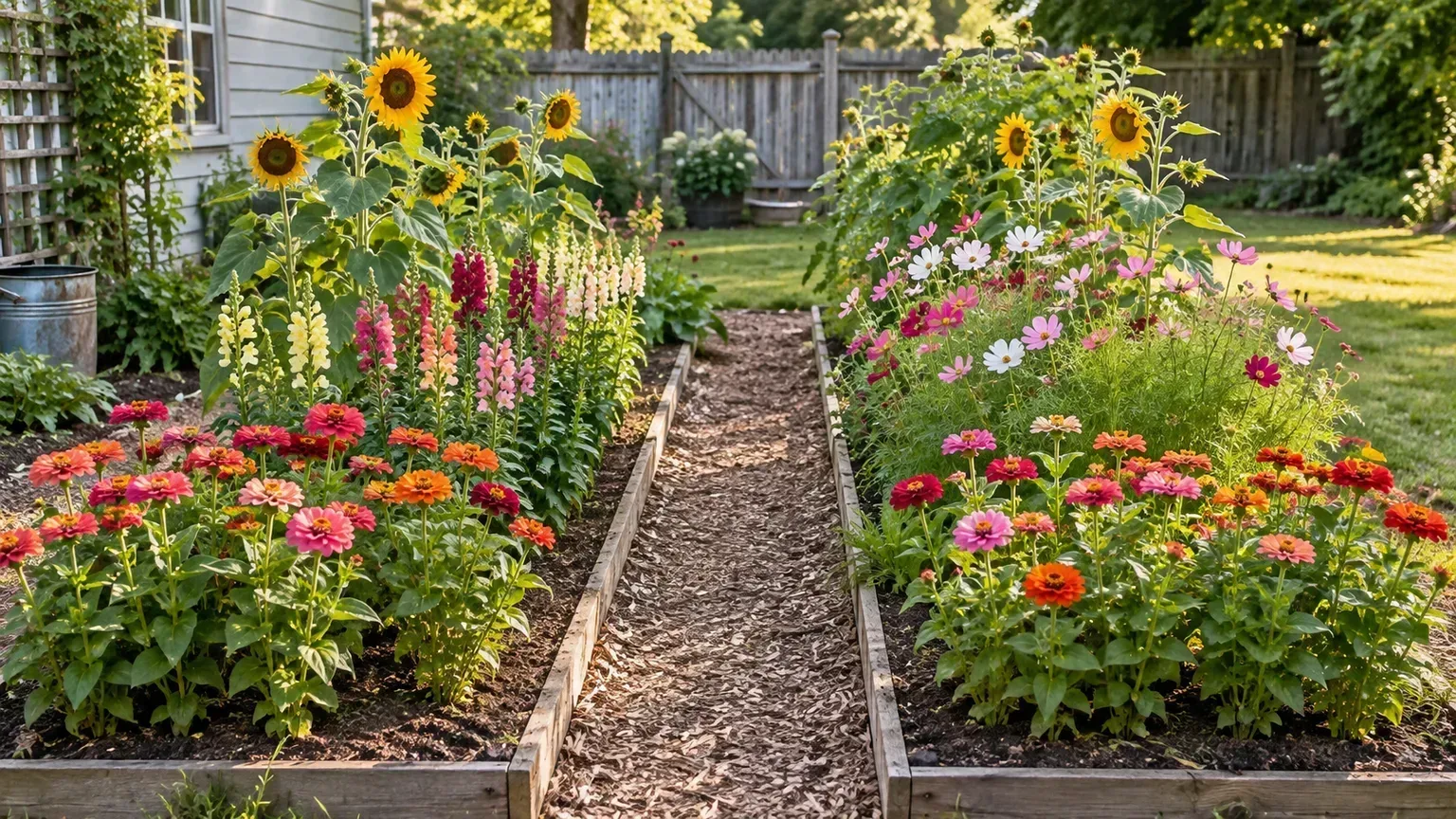
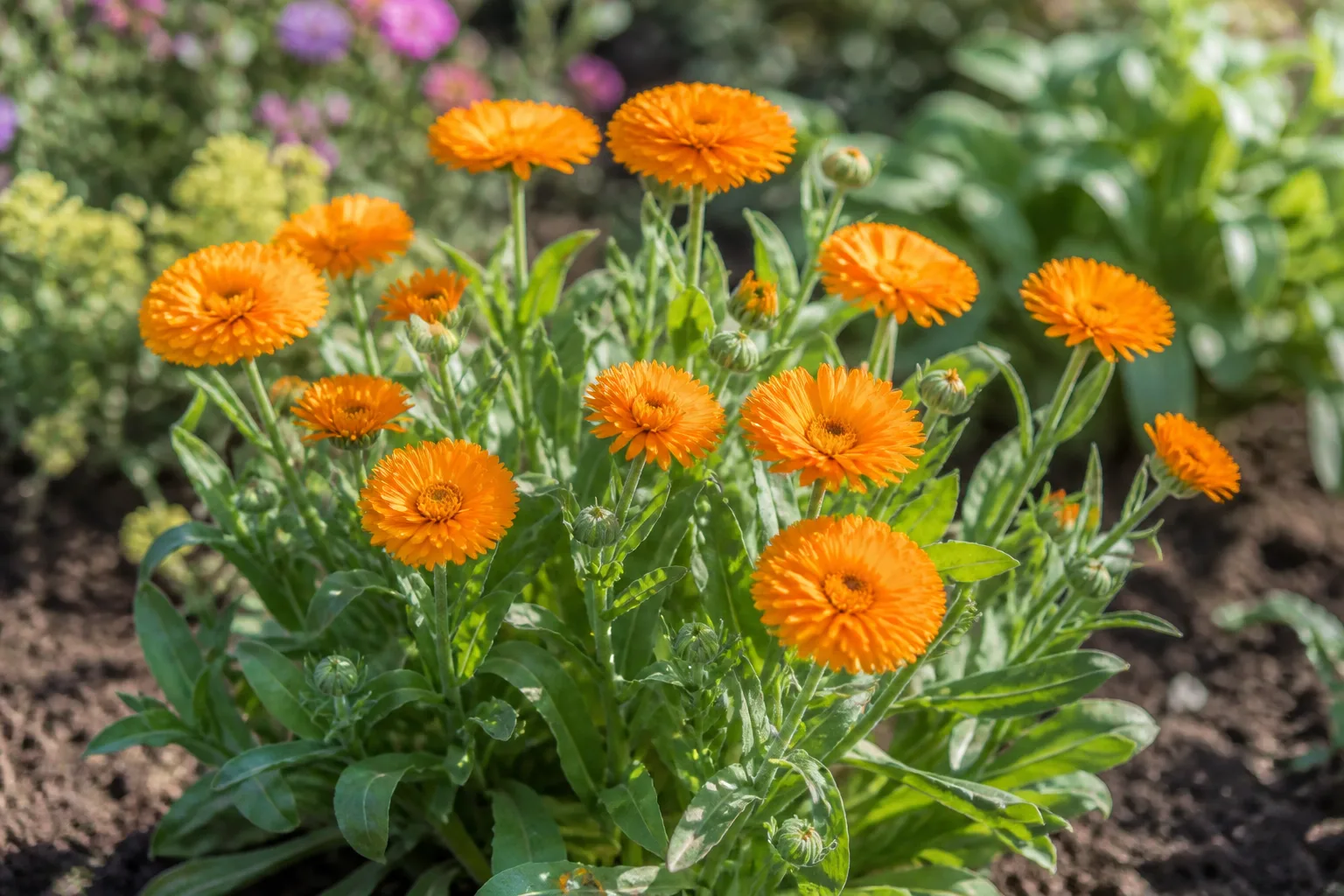
Calendula, alyssum, borage, dill, and marigold can provide nectar or habitat. Plant them in a short strip or small cluster so insects can find the resource, and put the strip at the bed edge where it will not shade vegetables. Continuous diversity generally gives you more ecological value than one decorative flower at each corner.
Trap crops and what to do when they attract pests
Nasturtiums can be used as a sacrificial edge planting in some gardens, but a trap crop is only useful if you inspect it. If aphids or caterpillars build up, remove the worst leaves or plants before the pest population moves inward. A heavily infested plant in the center of a bed is not protection; it is a pest nursery.
Pairings to separate or avoid
Avoid fennel near most vegetables when possible; it is a poor neighbor for a mixed food bed and can be difficult to contain. Keep tomatoes and potatoes in separate blocks or at least at opposite ends of the plot because they share diseases and make rotation more difficult.
Separate beans and peas from onions and garlic if you have space. Do not put corn beside tomatoes in a small bed where both become tall, heavy feeders. Keep two vigorous climbers off the same small trellis, and never pair a sprawling zucchini with a delicate seedling and pretend the seedling will receive enough light.
A simple 4-by-8-foot companion layout
Start with the north edge. Put two trellised cucumbers or a row of peas there, leaving the spacing required by the variety. Place tomatoes or peppers in the next band, with basil or calendula on the sunny side. Use the front half for lettuce, radishes, beets, and bush beans that can be harvested early.
Leave a path or stepping stones outside the bed so you never compact the soil to reach the center. Mark when radishes should be pulled. If the cucumber vines run across the lettuce, guide them upward rather than allowing “companion” foliage to become a blanket.

Crop rotation matters more than a perfect pairing
Companion charts can distract from the larger disease-management rule: do not plant the same crop family in the same soil year after year. Rotate nightshades, brassicas, legumes, and cucurbits through different beds. A tomato beside basil is still a nightshade block if tomatoes return to that soil every season.
Keep a simple map with the family, not just the crop name. Next year, move the nightshade block and use the old space for a different family. This reduces repeated exposure to crop-specific pests and lets you improve the soil without chasing a new pairing every weekend.
Conclusion: use the chart as a map, not a promise
The best companion planting plan combines a few defensible pairings with good spacing, staggered harvests, flowers at the edges, and crop rotation. Basil and calendula can share a tomato bed; radish can mark a carrot row; a trellis can turn beans and cucumbers into vertical crops.
Use the chart to decide who shares space, then let light, water, airflow, mature size, and weekly scouting make the final call. That is more reliable—and more productive—than treating any pairing as a guarantee.