How to Grow and Care for Basil
Learn how to grow basil from seed or transplants. Get variety picks, planting timing, watering, pinching, harvest cuts, and fixes for yellow leaves and bolting.
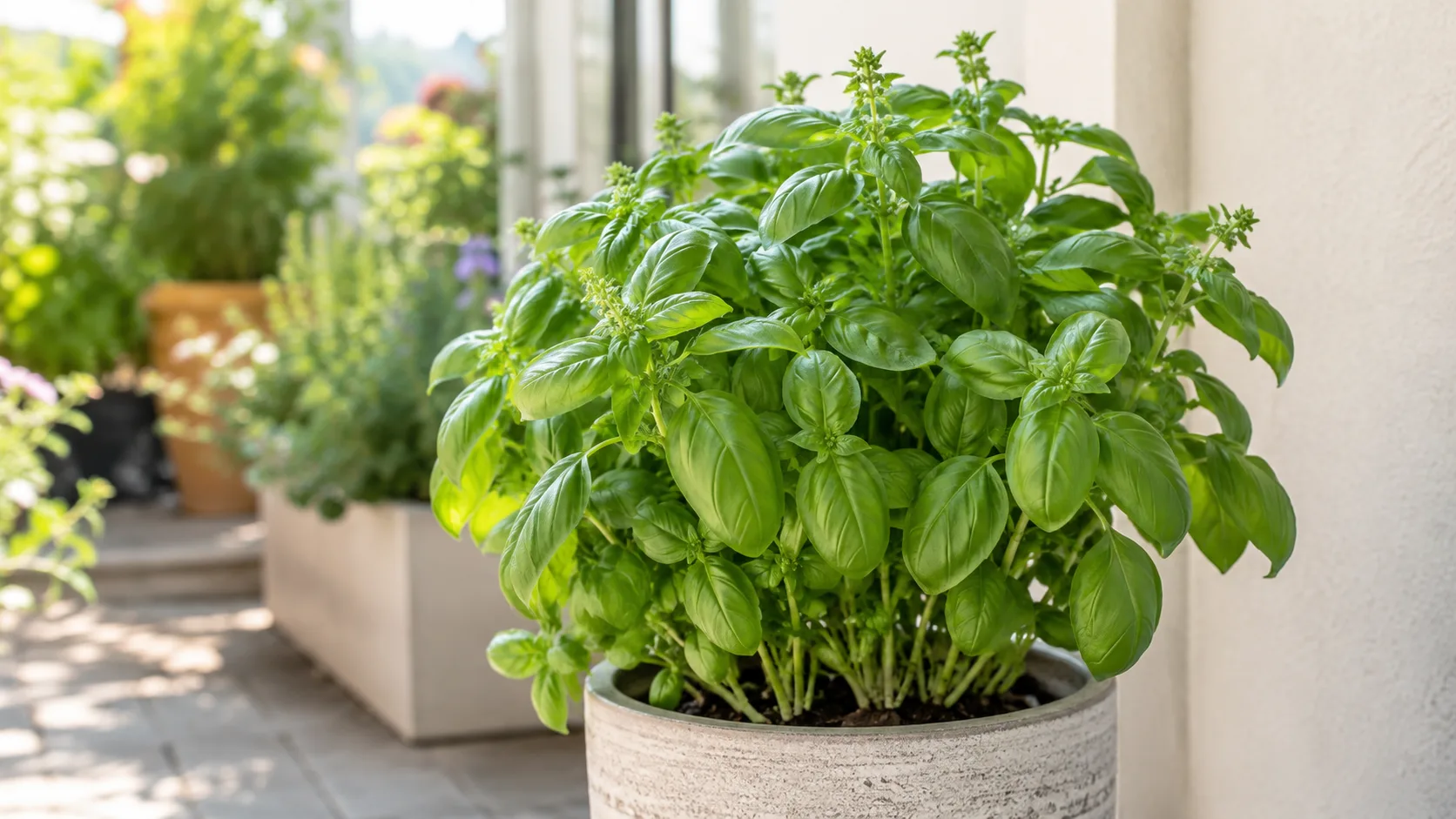
Basil (Ocimum basilicum) is one of the most rewarding herbs for a home cook because it grows fast, smells incredible, and responds visibly when you give it what it wants: warm soil, strong light, steady moisture, and regular harvesting. The hard part is not keeping a plant alive for a week. The hard part is choosing a variety, planting at the right time, and staying ahead of heat, crowding, and flowering so you still have tender leaves in late summer.
This guide covers the full cycle—variety selection through harvest, container culture, propagation, pests, and the fixes readers usually search for after a plant starts yellowing or going to seed. For species-specific watering and light depth, see our basil care hub, watering guide, and light guide.
Basil at a Glance
Basil belongs to the mint family (Lamiaceae). It is native to tropical Asia and Africa, which explains why it sulks in cold soil and cheers up when nights stay warm. Most gardeners treat it as a warm-season annual replanted each spring. In USDA zones 10–11, plants can persist as short-lived perennials, but flavor and vigor still decline as woody stems age.
| Trait | Typical range |
|---|---|
| Mature size | 12–24 inches tall and wide (variety-dependent) |
| Sun | Full sun; 6–8 hours daily |
| Soil | Rich, well-drained; pH roughly 6.0–7.5 |
| Germination | 10–14 days in warm soil |
| First harvest | About 6 weeks after transplant; sooner if you bought a full pot |
| Hardiness | Frost-tender; damage below ~50°F |
Basil is not a showy ornamental, but bees and other pollinators visit the flowers. Flower buds are edible, though leaf flavor changes once blooming ramps up—more on that in the pinching section.
Quick growing profile
If you need a single starting rule: do not plant basil outside until nights are reliably above 50°F and the soil has warmed. Cold, wet soil is how promising seedlings turn leggy, purple, and stalled. Warmth matters more than an early calendar date.
Choosing the Right Basil Variety
The hardest decision is often which basil to grow, not how to grow it. Flavor, leaf size, disease resistance, and container habit all shift by cultivar.
Sweet and Genovese types for pesto
Genovese, Italian Large Leaf, Napoletano, and Lettuce Leaf basils are the classic pesto and pasta basils. Leaves are broad, tender, and strongly aromatic. Penn State Extension groups these as large-leaf culinary types. For maximum leaf production in a bed, Genoa Green is a standout foliage producer in Utah State University Extension trials.
Thai, lemon, and specialty basils
Thai basil (O. basilicum var. thyrsiflora) brings anise-licorice notes for stir-fries and curries. Lemon basil and hybrids like O. × citriodorum add citrus brightness. Purple basils such as Red Rubin and Dark Opal look sharp in the garden and tint vinegar, but some purple types produce less leaf mass than green Genovese types.
Dwarf forms—Spicy Globe, Minette, Minimum—stay compact in pots and edges. They are excellent when you want a full-looking container without a 2-foot canopy.
Disease-resistant cultivars worth knowing
Basil downy mildew and fusarium wilt ruined many gardens in the 2010s. Modern DMR (downy mildew resistant) lines include Rutgers Devotion, Obsession, Passion, Thunderstruck, Prospera, Everleaf, and Amazel Basil. Nufar and some Prospera lines also carry fusarium resistance. If you buy only generic sweet basil every year and leaves yellow from the underside with gray fuzz, switching cultivars is often faster than fighting an endemic pathogen. Discard infected plants; do not compost them.
When and Where to Plant Basil
Timing separates lush basil from stunted basil more than any fertilizer bottle.
Frost timing and soil temperature
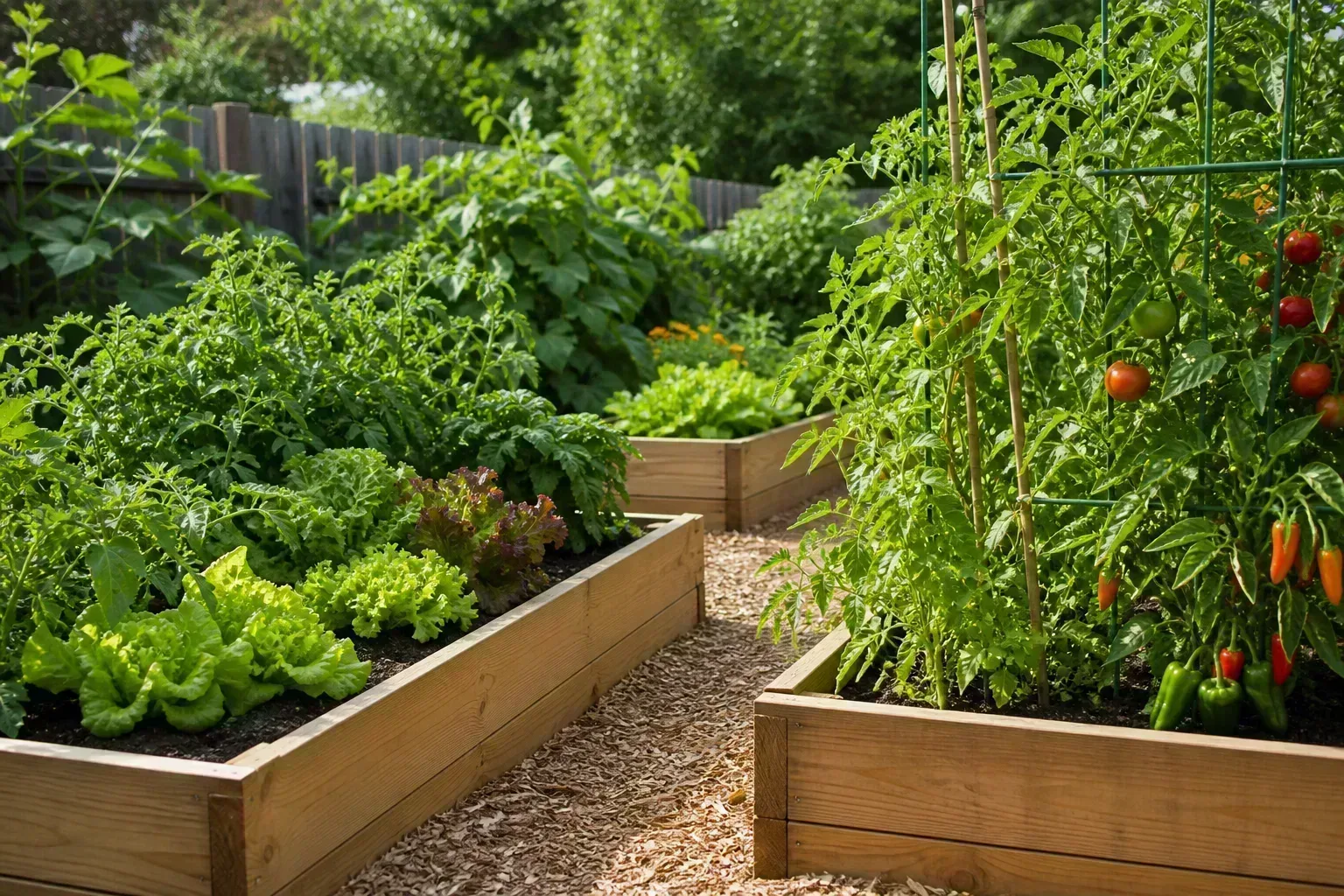
Plant transplants or sow outdoors after the last spring frost. Seeds germinate best when soil temperatures reach 75–85°F and usually sprout in 10–14 days, per Utah State Extension. Indoors, start seeds 6–8 weeks before your last frost date under bright light or a grow lamp. Move seedlings out when night temperatures stay above 60°F and days are warm; Penn State Extension notes basil is sensitive to cold, drought, and water stress.
A soil thermometer is worth the five-dollar investment. If the bed is still cold but the air feels pleasant, wait.
Garden beds vs containers
Basil thrives in raised beds, in-ground rows, and pots. Beds hold moisture longer and suit succession plantings. Containers let you chase sun on a patio and replace soil yearly if disease was a problem last season. Our herbs in pots vs ground guide walks through drainage and mobility trade-offs.
Pick a site with good air movement. Stagnant, humid corners invite mildew even on resistant varieties.
How to Plant Basil
You can start from seed, buy transplants, or root cuttings. Each path has a best-use case.
Starting from seed indoors
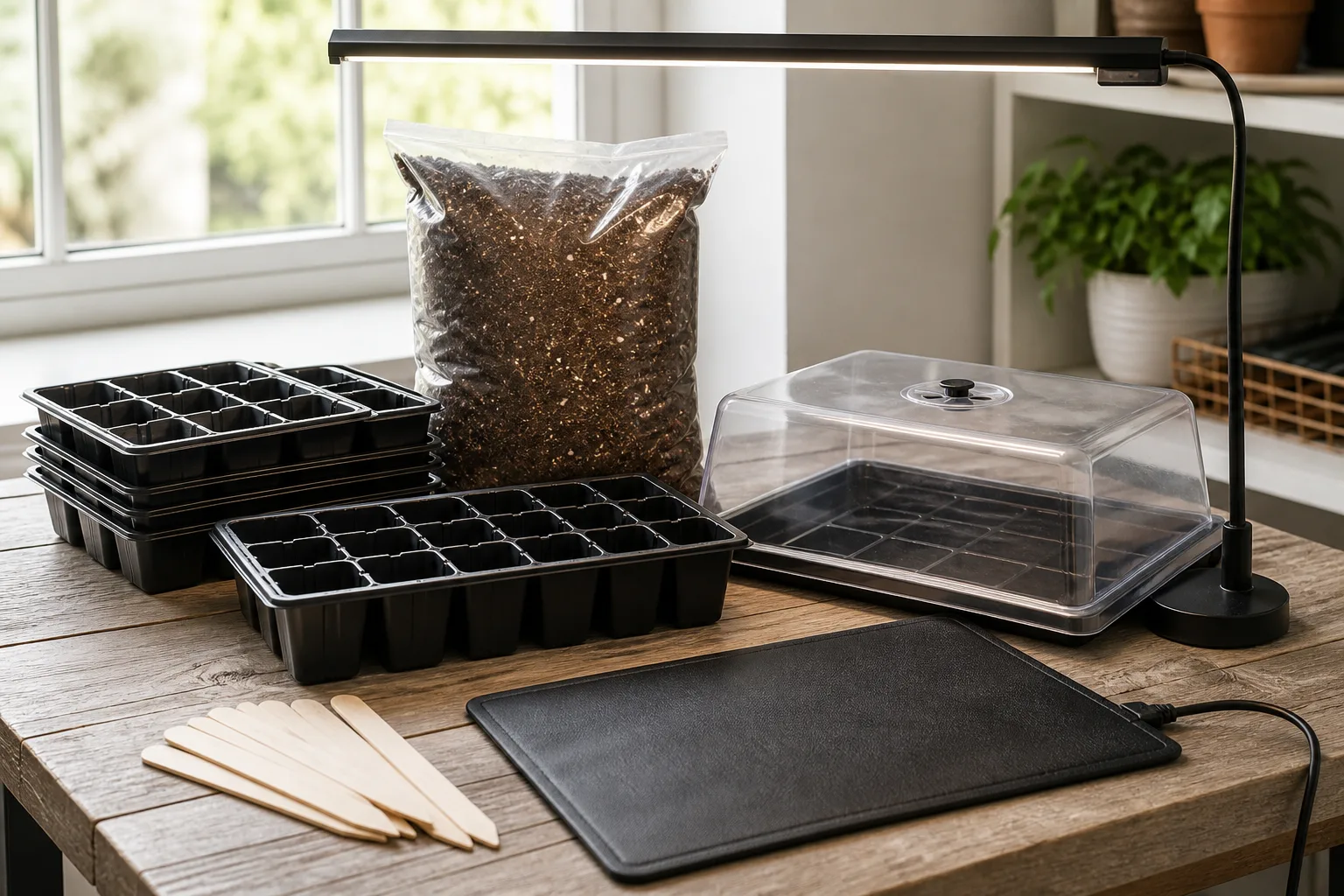
Fill trays or small pots with sterile seed-starting mix. Sow seeds 1/8 to ¼ inch deep, cover lightly, and keep the mix evenly moist—not saturated. A heat mat speeds germination. Give seedlings 14–16 hours of bright light daily once they emerge; weak light produces thin, floppy stems that never recover fully outdoors.
Harden off for a week before planting out: gradually increase outdoor hours and wind exposure so leaves do not scorch.
Direct sowing and transplanting
Direct sow after frost when soil is warm. Sow shallowly, water gently, and thin aggressively. Utah State Extension recommends thinning seedlings to 3–4 inches, then to a final 12-inch spacing as plants size up. Thinned seedlings are edible or can be potted up.
For transplants, plant at the same depth they grew in the pot. Water in well and shade for a day if the weather is hot and windy.
Spacing and depth
Final spacing of 12–18 inches balances leaf yield with airflow. Tight 6–8 inch spacing looks full in a decorative pot but raises mildew and aphid risk in humid summers. In the ground, wider spacing plus mulch beats cramming for “instant fullness.”
Light, Soil, and Water Requirements
Basil is straightforward when light and drainage are right and frustrating when they are not.
Sun and heat stress
Basil wants full sun—about 6–8 hours of direct light. Full-sun plants develop stronger flavor and more essential oils than shaded plants, according to Utah State Extension. In desert or low-desert summers, afternoon shade or a light shade cloth can prevent wilting and sun scorch without turning the plant into a shade herb.
Indoor basil needs a bright south window or supplemental grow lights. See our basil light guide for foot-candle targets and fixture placement.
Soil prep and feeding
Work compost into the top 6 inches of garden soil before planting. Basil is a leafy crop that appreciates nitrogen for repeated harvests. A balanced slow-release fertilizer at planting is enough for many beds; heavy harvesters benefit from a dilute liquid feed every 2–3 weeks or a light sidedress along the row.
In pots, use quality potting mix with perlite or bark for drainage. Avoid garden soil alone in containers—it compacts and suffocates roots.
Watering without root rot
Basil likes consistent moisture but not wet feet. In garden beds, about 1 to 1½ inches of water per week including rain supports vigorous growth in Utah State trials. Pots dry faster; check daily in heat and water when the top 1–2 inches of mix begin to dry.
Our dedicated how often to water basil page explains the finger test, saucer drainage, and why wilting on wet soil means stop watering—not add more.
Temperature, Humidity, and Season Length
Basil grows fastest when days sit in the 70s–80s°F and nights stay above 50°F. Growth slows sharply when nights dip into the low 50s; leaves can blacken after frost. Row covers may buy a few degrees but will not turn basil into a fall crop in cold climates.
High heat plus drought pushes plants to flower early and can make leaves bitter. Mulch with straw or shredded leaves to cool soil and even out moisture. In extended heat waves, harvest in the morning and keep soil from swinging bone-dry to flooded.
Pinching, Pruning, and Preventing Bolting
Pinching is how you turn one stem into a bush. When seedlings have 3–4 sets of true leaves, pinch the top ¼ inch above a leaf node. Two new shoots emerge from the axils. Repeat every few weeks on vigorous plants.
Once flower spikes form, leaf production shifts toward reproduction. Flavor often turns sharper or thinner. Removing flower buds can extend the leaf phase, but Utah State Extension notes that repeated bud removal may encourage flowers in leaf axils and still reduce yield—succession planting every 2–3 weeks is often smarter than fighting a single old plant.
For pollinator gardens, let one Thai or African Blue plant bloom; bees love the spikes. Keep your pesto pot pinched instead. More detail lives in our basil flowering guide.
Our basil pruning page covers cut height, tool hygiene, and recovery after a hard trim.
Harvesting Basil the Right Way
Start harvesting when plants reach 6–8 inches with enough leaves to spare. Always cut above a leaf node with clean scissors, leaving at least two leaf sets on the stem so the plant can branch. Harvest in the morning after dew dries for the best oil content.
Pick regularly—even if you are not cooking that night. Unused harvests can be stored stems-down in water at room temperature for a few days, or wrapped in a damp paper towel inside a loose bag in the refrigerator for about a week. Do not refrigerate bare leaves without protection; they blacken from cold injury.
Alternate which stems you cut so the plant stays balanced rather than lopsided.
Growing Basil in Pots
Basil is an excellent container herb if you respect pot size and drainage. Choose a pot at least 8–10 inches wide for one full-size plant, or 16 inches or larger for three compact varieties. Every container needs a drainage hole.
Use the knuckle test daily in summer: if the top 2 inches are dry, water until a little runs out, then empty the saucer. Feed every 2 weeks with half-strength liquid fertilizer during peak growth because nutrients flush out with each watering.
Crowded mixed herb bowls look cute for two weeks and then collapse from competition and mildew. Give basil its own pot or pair it with shallow-rooted companions that share sun and water needs.
Propagation and Succession Planting
Basil roots easily from 4–6 inch cuttings taken before heavy flowering. Strip lower leaves, place stems in water or moist potting mix, and roots often appear in 7–14 days. Our step-by-step how to propagate basil guide covers timing, node placement, and when cuttings are too woody to root.
Succession sowing—planting a fresh batch every 2–3 weeks from late spring through midsummer—beats one heroic plant that bolts in August. A late July sowing can produce a young pot for early fall if your first frost is still weeks away.
Companion Planting and Pollinators
Basil’s strong scent may help mask tomatoes from some pests, and Penn State Extension notes it can deter egg-laying by certain moths and armyworms near tomatoes. Practical pairings include tomatoes, peppers, and asparagus in shared beds—just honor spacing so basil is not shaded out.
Pollinator-friendly varieties with ornamental blooms include African Blue, Cardinal, and Siam Queen. Let those flower while you keep culinary Genovese pots pinched.
Common Pests and Diseases
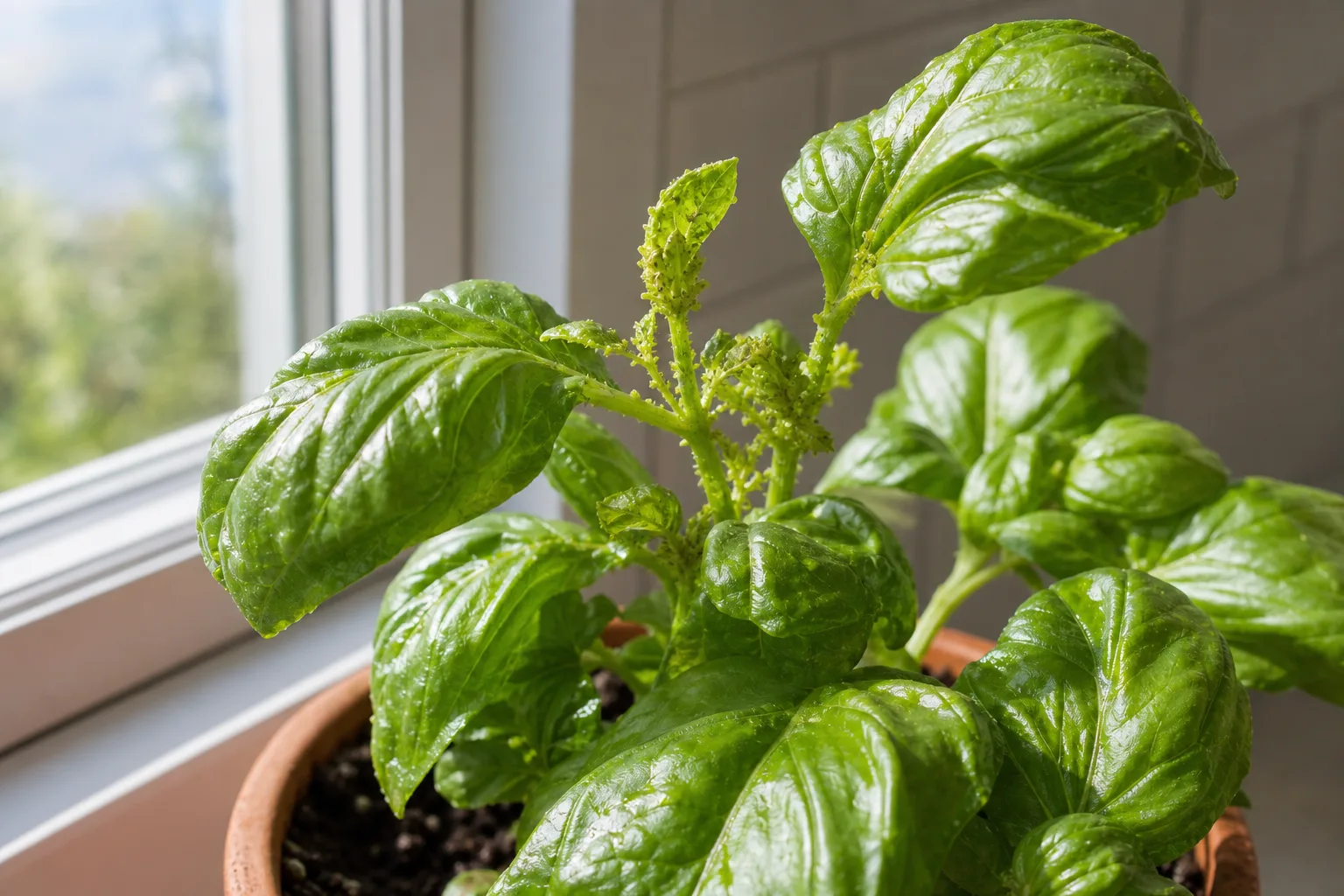
Healthy, spaced, well-drained basil has fewer problems. Watch for these recurring issues.
Aphids cluster on tender tips, especially indoors. Rinse with water, then use insecticidal soap on edible crops following label harvest intervals. See aphids on basil.
Japanese beetles and slugs chew holes in outdoor leaves. Handpick beetles into soapy water; use slug traps and reduce evening surface moisture for slugs.
Powdery mildew and downy mildew show as white or yellow-gray growth, often on crowded plants. Increase spacing, water at soil level, and choose DMR cultivars in humid regions. Destroy severely infected plants.
Fusarium wilt causes wilting on one side, brown stems, and sudden collapse. There is no cure; rotate planting sites and use resistant seed.
Root rot follows overwatering in cool weather. Yellow lower leaves on wet soil mean check drainage before spraying anything foliar.
Troubleshooting Basil Problems
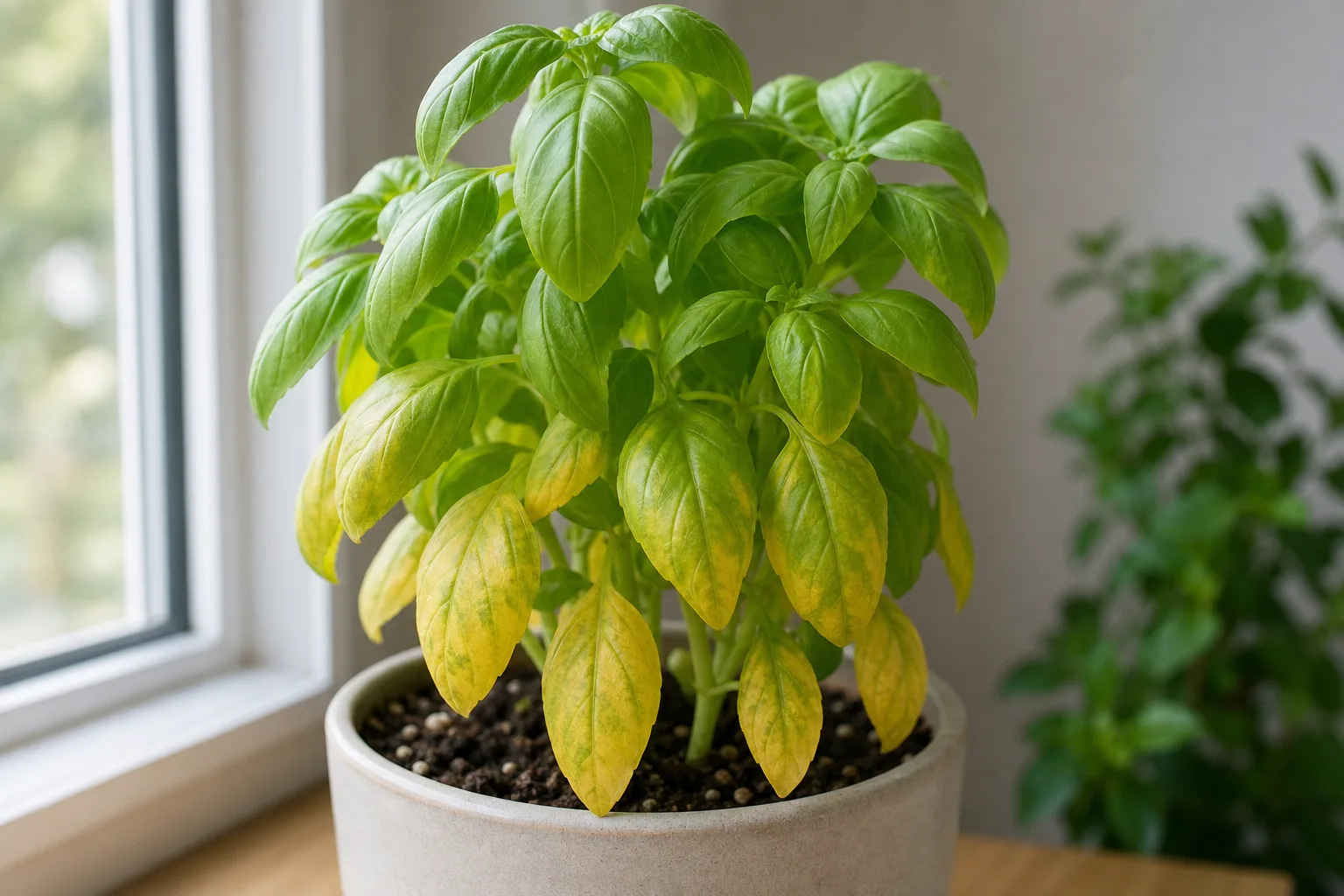
Yellow leaves usually mean overwatering, nitrogen shortage, or cold stress—not always “more sun.” Feel the soil, check night temperatures, and review our yellow leaves on basil page.
Brown spots or blackened leaves after a cold night indicate chill injury; move pots indoors or harvest and replant. Persistent black spots with yellow halos may be disease—see black spots on basil.
Leggy, sparse growth is almost always low light or overcrowded seed-starting. Pinch tops and add light rather than fertilizer alone. Our leggy basil guide covers recovery steps.
Wilting at midday on dry soil is thirst. Wilting on wet soil is root trouble—do not keep watering.
Storing and Preserving Basil
Fresh basil loses quality fast below 50°F, so treat the fridge carefully. For short storage, jar-and-bag method above works best.
Drying is simple but dulls flavor compared with fresh leaves. Hang small bunches in shade until crisp, then jar airtight. Freezing in olive oil cubes or pesto portions preserves flavor better for cooked dishes, though texture softens. Utah State Extension notes whole-leaf freezing in ice cubes as a workable compromise.
Dried basil is not a teaspoon-for-teaspoon swap for fresh in finishing dishes. Plan preservation around how you actually cook.
Conclusion
Basil rewards gardeners who respect warmth, harvest often, and replant before old plants bolt. Choose a cultivar that matches your kitchen—Genovese for pesto, Thai for stir-fries, DMR types if mildew visits every year—then plant after frost into rich, draining soil with full sun. Water deeply on a schedule driven by soil checks, pinch early for bushiness, and sow again in midsummer so you are not fighting one tired plant in August.
When something looks off, diagnose soil moisture and temperature before reaching for spray bottles. Our basil problem guides cover species-specific fixes if yellowing, pests, or flowering outpace your harvest plans.