Calcium Deficiency on Amla: Causes, Checks & Fixes
Quick answer
Calcium deficiency on Amla shows as cupped, scorched, or stunted pinnae on the newest feathery branchlet flush while older canopy often looks normal. First step: confirm damage is on expanding spring shoot tips—not iron chlorosis, drought scorch, or gall caterpillar tunneling—and apply one measured half-strength complete fertilizer with calcium on moist, well-drained soil at the start of active growth.
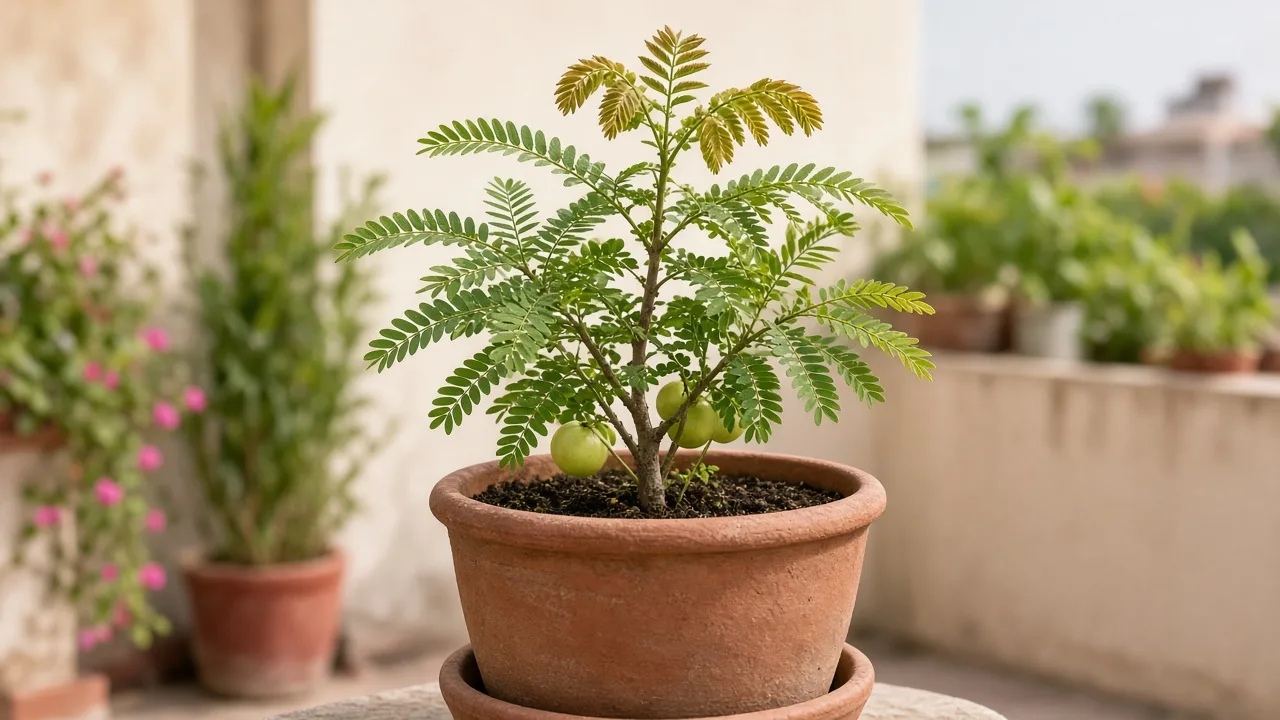
Calcium Deficiency on Amla: Causes, Checks & Fixes
This guide covers calcium deficiency on Amla. See also the general Calcium Deficiency guide, watering, and light pages for this plant.
Calcium Deficiency on Amla: Causes, Checks & Fixes
Quick answer
Calcium deficiency on Phyllanthus emblica (Amla, Indian gooseberry, aonla) shows as cupped, scorched, or stunted pinnae on the newest feathery branchlet flush while older canopy on the same shoot often looks normal. Calcium is plant-immobile, so deficiency appears on young expanding tissue first—not on mature lower pinnae the way nitrogen deficiency does.
See our calcium deficiency guide for general new-tissue distortion mechanics. On Amla, inspect the softest spring or post-pruning shoot tips where compound leaves unfold—mature feathery branchlets below can stay green while the apical pinnae cup inward or brown at the margins.
First step: confirm cupped or necrotic tissue on the newest expanding branchlet pinnae, not yellow-green-vein iron chlorosis, drought scorch, or gall caterpillar tunneling at the growing tip.
When to use this page vs other Amla guides
| Pattern | Read next |
|---|---|
| New branchlet pinnae cupped or margin-burned | Calcium deficiency (this page) |
| Yellow pinnae with green veins on new flush | Iron deficiency |
| Pale lower old pinnae without tip cupping | Nitrogen deficiency |
| Interveinal yellow on older mid-canopy pinnae | Magnesium deficiency |
| Brown scorched margins on older canopy | Potassium deficiency or Brown tips |
| Apical dieback with side shoots below tunnel | Caterpillars — gall caterpillar on rainy-season shoots per TNAU |
| Yellowing and drop on wet monsoon soil | Overwatering or Root rot |
| Sparse canopy in deep shade | Not enough light or Slow growth |
What calcium deficiency looks like on Amla
Amla carries fine, feathery compound leaves on slender deciduous branchlets—a sun-loving fruit tree built for terrace pots and open ground, not dim indoor corners. Healthy new growth emerges as pale green pinnae along a soft branchlet tip after winter rest or post-pruning flush. Calcium supports cell wall formation in expanding tissue, so when uptake fails, the newest pinnae still opening show damage while older feathery canopy on the same limb often looks fine.
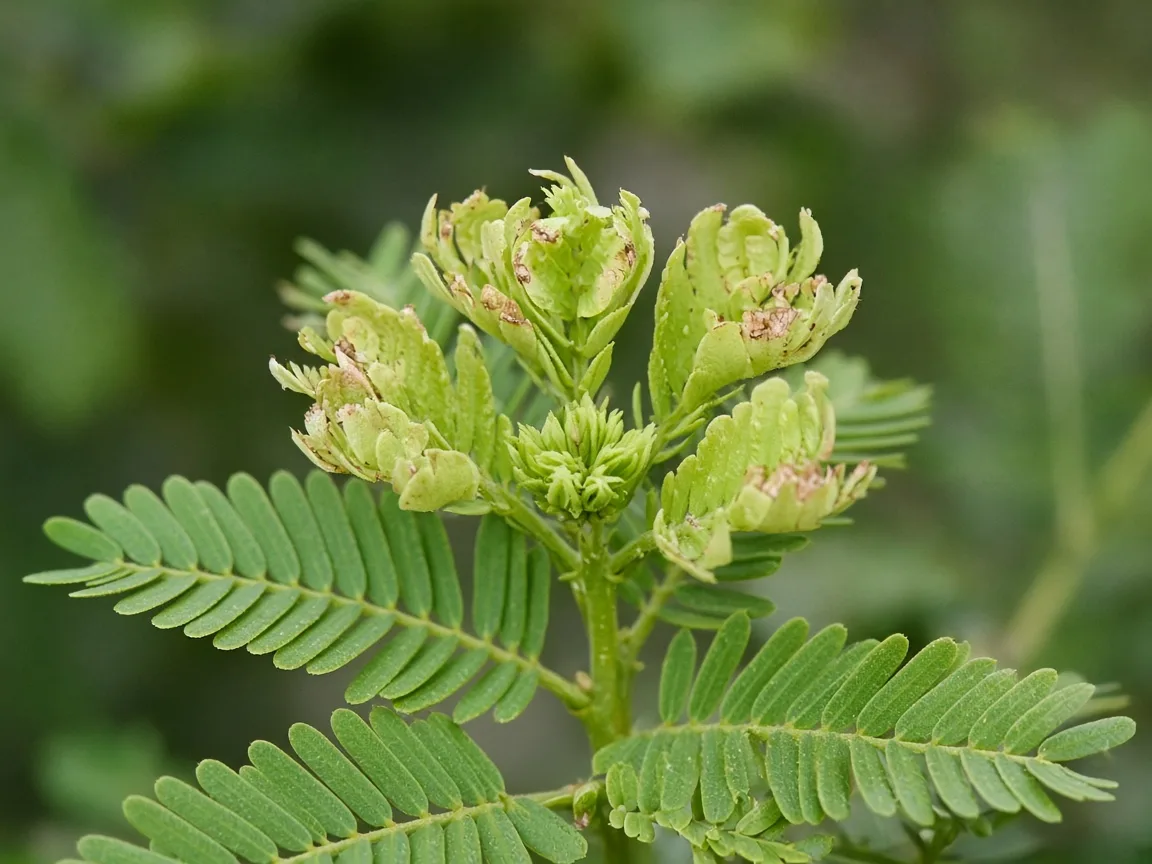
Newest pinnae at an expanding branchlet tip with inward cupping and tan necrotic margin spots—older feathery leaves below may look normal.
Typical signs:
- Inward cupping or hood-like curling on the margins of the newest pinnae before they fully harden
- Small tan or brown necrotic spots along the expanding pinna margin or near the rachis
- Stunted or narrow new pinnae compared with the prior flush on the same branchlet
- Center of the pinna expands while edges stay tight, leaving a rippled feathery profile
- Older lower branchlets on the same tree may look completely normal
- Firm wood and white roots if the root zone is healthy; soft base on wet monsoon soil suggests rot instead
Not calcium deficiency:
- Yellow new pinnae with dark green veins across the flush—Iron deficiency
- Pale lower old pinnae without tip distortion—Nitrogen deficiency
- Interveinal yellowing on older mid-canopy pinnae—Magnesium deficiency
- Uniform pale wash on many open pinnae—Pale leaves from shade or general stress
- Apical tunnel with checked regrowth and side shoots—gall caterpillar per TNAU plant protection guidance; see Caterpillars
- Crispy margins after a heat wave with dry soil—Underwatering or Wilting
- Yellow stems on persistently wet soil—Overwatering or Root rot
Why Amla gets calcium deficiency
Amla is a hardy deciduous fruit tree that tolerates lean, well-drained soils when other crops struggle—but each spring and monsoon flush still demands calcium for rigid cell walls in those fine pinnae. Very acidic depleted pot mix, incomplete fertilizer, inconsistent watering during active growth, or root stress from chronic wet feet limits uptake and shows on the newest expanding branchlet while older feathery canopy stays healthy.
Amla-specific causes:
- Seasonal flush without complete feed — TNAU recommends manuring immediately after pruning with FYM plus NPK for bearing trees. Skipping the spring window after March–April pruning, then pushing only high-nitrogen urea, expands pinnae area without calcium for cell wall integrity in the new rows.
- Container leaching on terraces — Frequent deep watering in summer heat washes soluble calcium from a closed pot faster than open ground. Trees on balconies that get rainwater only without mineral replacement can show tip scorch on the first warm flush.
- Monsoon waterlogging — Amla fails in soggy soil per the soil guide. Calcium moves with water through the xylem to growing tips; roots sitting anaerobic through heavy monsoon rains starve the apical branchlet even when lower tissue absorbed enough for mature pinnae.
- Acidic depleted sandy loam — Penn State notes calcium deficiency can be a problem in acid soils, with stunted root exploration into deeper layers. Terrace pots that acidify over years without compost refresh limit uptake.
- Nitrogen-heavy feed without micronutrients — Orchard splits from NHB aonla guidance balance FYM with N, P, and K across January–February and August. Dumping nitrogen during flush without phosphorus, potassium, or calcium-bearing amendments distorts the nutrient ratio.
- Drought stress during flush — Clemson Extension warns against feeding drought-stressed woody plants because moisture is required for uptake. A tree pushed through flowering on dry soil, then soaked abruptly, may show transient tip burn on the next pinnae row.
- Iron or pest confusion — Iron chlorosis yellows new pinnae with green veins—a different vein pattern than margin cupping. Gall caterpillar tunnels the apical shoot during rainy season and forces distorted side regrowth that mimics nutrient failure.
Feathery branchlet flush and pinnae margin check
Amla allocates calcium to each expanding pinna as a new branchlet opens after pruning or spring warmth. When uptake fails, the center of the new pinna may expand while margins stay stunted—producing cupping, hood-like curling, or cracked edges along the unfurling margin. Calcium is extremely immobile in plants, and NC State calcium deficiency work notes marginal curling on new expanding leaves before older tissue is affected.
That pattern differs from nitrogen or magnesium deficiency, which show on older lower pinnae first. It also differs from normal deciduous shedding—Amla drops branchlets and leaves seasonally, but off-season tip death with cupped new pinnae on an otherwise firm tree points to uptake failure, not dormancy.
Judge severity by successive branchlet flushes: one slightly wrinkled unfurl after a dry spell differs from three consecutive cupped flushes on stable care. On Amla, the feathery pinna texture makes margin burn easy to spot against healthy green—look at the softest tip still lighter green, not fully hardened lower canopy.
Post-pruning spring feed window
Commercial aonla nutrition is timed around pruning and flush, not year-round spoon-feeding. TNAU lists manuring immediately after pruning for bearing trees, and NHB splits FYM plus half the N and K in January–February with the remainder in August. That early-year window matches when Amla pushes the feathery branchlets that need calcium for cell walls.
Home terrace growers often prune lightly in March–April, then forget complete feed until fruit swell—by then the first flush pinnae may already show margin cupping. Closing the gap means one measured complete application at flush start per the Amla fertilizer guide, scaled down sharply for containers, not waiting until midsummer nitrogen alone.
Clemson Extension recommends applying fertilizer when woody plants are actively growing and holding feed during drought or winter rest. Match that rhythm to Amla’s deciduous cycle: feed when new shoots appear after pruning, pause when growth stalls in cool weather.
Terrace pot dry-down during monsoon
Container Amla on Indian terraces faces a calcium trap that ground trees avoid: summer leaching plus monsoon saturation in the same pot. Deep watering when the top 3–5 cm dries per the watering guide moves nutrients—including calcium—through the root zone. But if the saucer holds water through weeks of rain, roots go anaerobic and xylem flow to the apical branchlet stalls.
The fix is not more nitrogen. It is drainage first, then complete feed on moist—not soggy—mix. Elevate pots, clear blocked holes, and let the surface dry between drinks before adding calcium-bearing fertilizer. Chronic overwatering in monsoon shade mimics deficiency on new tips while mature pinnae stay green—a pattern that fools growers into feeding a drowning root system.
Lookalike symptoms
| Pattern | Check | Likely cause |
|---|---|---|
| New branchlet pinnae cupped or margin-burned | New vs old tissue | Calcium deficiency (this page) |
| Yellow pinnae, green veins | Vein pattern on new flush | Iron deficiency |
| Apical tunnel, side shoots below | Rainy-season shoot tip | Gall caterpillar — Caterpillars |
| Old lower pinnae pale first | Leaf position | Nitrogen deficiency |
| Interveinal yellow on old pinnae | Mid-canopy pattern | Magnesium deficiency |
| Crispy margins after heat + dry pot | Soil moisture | Underwatering |
| Soft wood, sour soil, mushy roots | Root feel | Overwatering or Root rot |
How to confirm
- New vs old tissue — Distortion confined to the newest branchlet pinnae while older feathery leaves on the same shoot look normal strongly suggests calcium.
- Pruning and flush timing — Damage appearing right after March–April pruning or first spring warmth matches the seasonal uptake window.
- Pest inspection — Check the apical shoot for caterpillar tunnels or dieback before feeding; cut and inspect if the tip is hollow.
- Water source and leaching — Rainwater-only terrace pots without mineral replacement; white salt crust at the pot rim.
- Fertilizer completeness — Calcium and micronutrients on the label vs nitrogen-only urea or years without FYM refresh.
- Root health — Firm wood and white roots vs brown mush from soggy monsoon soil.
- Successive flushes — Two or more distorted branchlet flushes in a row on stable care points to uptake failure, not one-time heat scorch.
First fix for Amla
One half-strength dose of complete water-soluble fertilizer containing calcium and micronutrients on already-moist, well-drained soil—only after confirming firm roots, stable top 3–5 cm dry-down rhythm, and no active caterpillar tunneling at the apical shoot tip.
Do not repot, hard-prune, and triple-feed a recently relocated tree the same week. Stabilize watering per the Amla watering guide first—water deeply when the surface layer dries, never leave terrace pots sitting in a full saucer through monsoon weeks.
If you use rainwater exclusively, ensure your feed supplies calcium. Penn State notes calcium deficiency affects meristems and new tissue first when supply fails—irrigation alone will not correct deficiency on a tree pushing a spring branchlet flush in full sun.
Step-by-step recovery
- Rule out gall caterpillar by inspecting the apical shoot—cut above a tunnel only if pests are confirmed; see Caterpillars.
- Apply half-strength complete feed once on moist mix at flush start; repeat at six- to eight-week intervals through active growth if the next branchlet responds per the fertilizer guide.
- Work well-rotted FYM or compost into the topsoil of ground trees after light pruning—TNAU bearing-tree baselines start near 10 kg FYM with balanced NPK, scaled to pot size for containers.
- Maintain consistent dry-down—uptake fails when roots alternate between saturated monsoon soil and bone-dry summer heat in the same pot.
- Repot into fresh sandy loam mix if roots circle the pot and distortion persists after two measured feeds on healthy roots—see Amla repotting.
- Ensure full sun for the next flush—weak light slows pinnae hardening and masks recovery on shaded terraces.
- Monitor the next two branchlet flushes—currently cupped pinnae rarely straighten; recovery shows on subsequent new growth.
Recovery timeline
The currently cupped pinnae rarely flatten once cell walls set as the leaflets harden. The next one or two branchlet flushes after corrected complete feeding and stable watering usually open with cleaner margins within six to ten weeks on firm roots—slower on young grafted trees still building canopy than on established bearing specimens.
Severe growing-tip death from advanced deficiency may force bushy side shoots per Penn State calcium deficiency descriptions, needing a full season to reshape. Root damage from chronic monsoon waterlogging may delay recovery until the following spring flush.
Mistakes to avoid
- Do not confuse gall caterpillar apical dieback with calcium cupping—inspect the shoot tip before feeding.
- Do not use rainwater or RO water without ensuring fertilizer supplies calcium.
- Do not heavy-feed a tree on wet monsoon soil—fix drainage before fertilizer.
- Do not expect currently cupped pinnae to flatten—judge the next branchlet flush.
- Do not stack repotting, hard pruning, and full-strength feed the same week on a stressed tree.
- Do not dump high-nitrogen urea alone at flush—Clemson warns excess fertilizer can injure woody plants through burn.
Prevention
- Follow seasonal FYM plus balanced NPK splits per the Amla fertilizer guide—NHB January–February and August timing matches natural flush rhythm.
- Manure after pruning when new shoots appear, per TNAU guidance.
- Maintain top 3–5 cm dry-down per the watering guide; elevate pots before monsoon saturation.
- Use deep, well-draining sandy loam per the soil guide—Amla tolerates lean soil but not waterlogged clay.
- Keep trees in full sun so each flush hardens cleanly.
- Inspect new branchlet tips monthly during spring and early monsoon—early margin cupping is easier to correct than stunted apical growth.
Related Amla guides
- Amla overview
- Amla problems hub
- Amla fertilizer
- Amla watering
- Amla soil
- Iron deficiency — yellow pinnae with green veins
- Magnesium deficiency — interveinal yellow on older pinnae
- Distorted leaves — caterpillar, heat, and mechanical damage before nutrient gaps
Use the Fertilizer Dilution Calculator to work out a safe half-strength dose before changing multiple variables at once.
Conclusion
Cupped or margin-burned new pinnae on Amla branchlet tips point to calcium uptake failure on expanding tissue—confirm the new-vs-old pinna pattern, rule out gall caterpillar tunneling and iron chlorosis, stabilize dry-down watering and root health, ensure seasonal complete feeding supplies calcium especially on leached terrace pots, and judge recovery by the next branchlet flush.